REVIEW · LISBON
Sailing tour to the sunset in Lisbon
Book on Viator →Operated by Bloo Boat Charter · Bookable on Viator
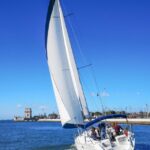
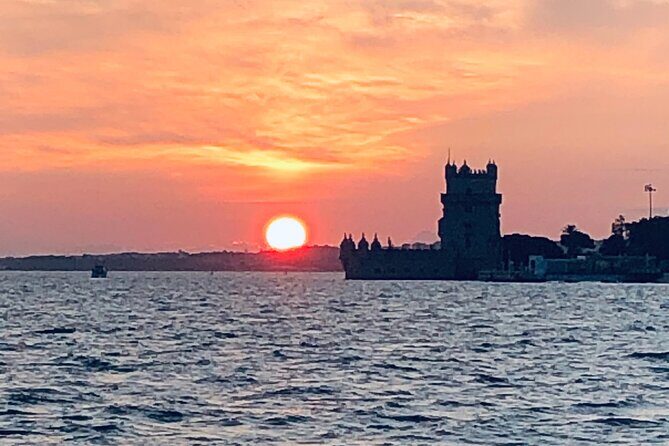
Lisbon at sunset hits differently from a boat. I like the small-group feel and how the crew keeps things relaxed, not rushed. I also really appreciate the built-in sightseeing sweep of Belém and downtown landmarks, with commentary in English. One catch: this is weather-dependent, so you’ll want a backup plan if the Tagus gets rough.
The route is designed for easy viewing. You’ll glide past some of Lisbon’s most photogenic spots without the fatigue of hopping on and off buses. It’s also a nice way to end a day, especially if your feet are already filing complaints.
For me, the best part is that the crew doesn’t just point and talk. They try to make the sail feel personal—like when there’s wildlife around, they’ll often slow down so you can actually see it.
In This Review
- Key things to know before you sail at sunset
- Sunset Sailing on the Tagus: What You Get in Two Hours
- Where to Meet at Bloo Boat Charter in Belém (and How to Get Ready)
- Welcome Drink, Light Snacks, and a Crew That Actually Guides
- Belém Discovery-Era Monuments You’ll See from the Water
- Central Tejo and MAAT: Lisbon’s Industrial Side in One View
- Jerónimos Monastery: When the City’s Big Names Appear
- 25 de Abril Bridge and the River Crossing Energy
- Alfama and Lisbon’s Cathedral Area from a Different Angle
- Praça do Comércio: Lisbon’s Grand Entryway Meets Sunset Light
- Cristo Rei: A Beloved Lisbon Silhouette Across the Tagus
- Price and Value: Is $45.66 a Fair Deal?
- Who This Sunset Sail Fits Best (and Who Might Want Something Else)
- Should You Book Bloo Boat Charter’s Sunset Sail?
- FAQ
- How long is the Lisbon sunset sailing tour?
- How much does the tour cost?
- What languages are offered on the boat?
- What’s included in the price?
- What should I bring since meals aren’t included?
- What happens if the weather is poor?
Key things to know before you sail at sunset
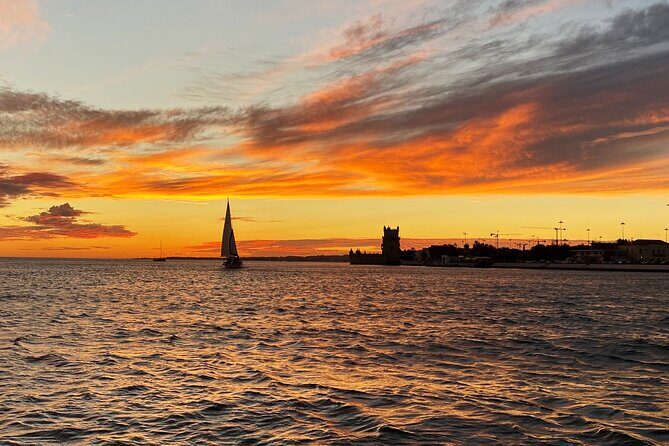
- Small group up to 12 travelers, so you can move around and find a good viewing spot.
- English-speaking crew (plus Portuguese, French, and Spanish), with friendly explanations during the trip.
- Welcome drink + light snacks (peanuts, cashews, fried corn), so you’re not hungry mid-sunset.
- Belém to central Lisbon viewpoints, including Jerónimos Monastery and the 25 de Abril Bridge area.
- Good weather matters since the activity depends on conditions on the Tagus.
Sunset Sailing on the Tagus: What You Get in Two Hours
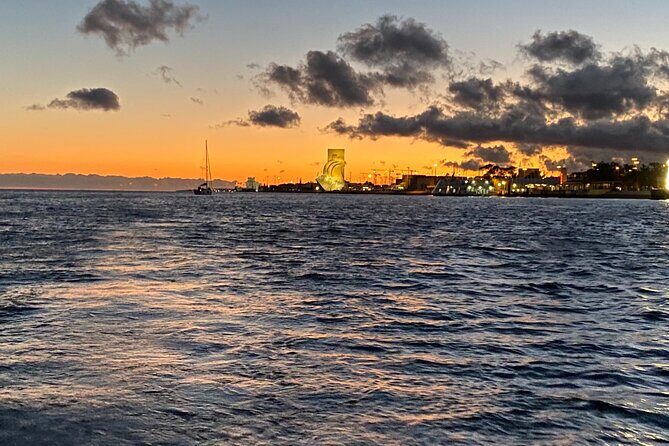
This is a straightforward sunset sail—about 2 hours—built for the late-day light. The value here is simple: you get water-level views of major Lisbon landmarks in a short window of time, with food-and-drink basics handled for you.
I like the pacing. It’s long enough to feel like an actual experience, not a quick photo stop. The crew also has time to give real context, so you’re not just staring at buildings while your mind wanders.
The “sailing” part also matters. If you’ve mostly done city tours on land, this gives you a break from crowds and hills. On the water, the city’s different—less like a list of attractions, more like a living river city.
You can also read our reviews of more boat tours in Lisbon

Where to Meet at Bloo Boat Charter in Belém (and How to Get Ready)

You’ll start at Bloo Boat Charter at Doca do Bom Sucesso, gate 3, 1400-038 Lisboa. Plan to arrive with enough time to find the exact gate and settle in before departure. With a small group cap, getting there early helps.
You’ll also have a mobile ticket, which is usually painless if you keep it accessible in your phone. Service animals are allowed, and the meeting area is listed as near public transportation, which is handy if you’re not driving.
What I’d bring: a light layer. Even in warmer months, river breezes can cool you off at sunset. If you’re the type who likes photos, bring a phone strap or small grip case—boat decks can be slippery when there’s spray.
Welcome Drink, Light Snacks, and a Crew That Actually Guides
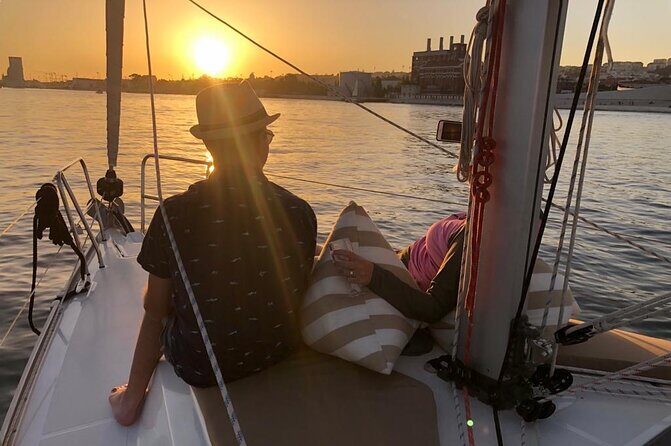
This sail includes a welcome drink and light snacks: peanuts, cashews, and fried corn. That’s a small set, but it’s exactly what you want for a 2-hour outing. It also keeps the mood easy: you can relax and snack while the first sights come into view.
The biggest quality boost is the crew. They’re the ones handling safety, fuel, and the onboard experience, and they speak Portuguese, English, French, and Spanish. In practice, that means you can ask questions without forcing everything into gestures and guessing.
And yes, the boat can be a little more like a shared evening than a strict tour. One memorable moment you should hope for: dolphins. The Tagus sometimes brings them close, and when they appear, the crew may adjust timing to watch them longer. Even if you don’t see dolphins, the crew’s willingness to slow down keeps the whole thing from feeling mechanical.
Belém Discovery-Era Monuments You’ll See from the Water

Your sail focuses heavily on the Belém side of Lisbon—where Portugal’s Age of Discoveries story lives in stone. From the river, these landmarks look grander and more intentional, like they were designed for the water approach.
One major sight is the National Monument to Infante Dom Henrique (the Navigator). The monument’s architecture is credited to Cottinelli Telmo, and the sculptures to Leopoldo de Almeida. What makes it interesting from the boat is the way the design becomes readable at river level: the main figure holds a caravel model, and ramps on both sides display 32 figures representing the history of the discoveries. You don’t need a museum ticket here; you just need the patience to watch details as you pass.
You’ll also spot a structure connected to the old maritime departures. The description points to a rocky outcrop in the Tagus, opposite the old beach of Belém, built to replace an earlier artillery ship anchored in that area when fleets left for the Indies. It’s the kind of detail you’d easily miss from land—but from the river, it anchors the whole theme: Lisbon as a launching point, not just a stop.
What I love about this portion: it gives context fast. Even if you skipped reading before you arrived, the monuments and explanations help you connect the dots between Belém and Portugal’s seafaring identity.
Central Tejo and MAAT: Lisbon’s Industrial Side in One View
After the early-history theme, the sail swings toward something different: Lisbon’s industrial and contemporary layers.
You’ll see Central Tejo, also called Central Tagus, built between 1908 and 1951. It’s described as a thermoelectric power station that supplied electricity to Lisbon and the surrounding region. From the water, this kind of building can feel almost sculptural—big, sturdy, and a little industrial-romantic.
This isn’t just a “cool building” stop. It’s a reminder that Lisbon kept changing long after the sailing age ended. And then you get that connection to modern culture through MAAT (Museu de Arte, Arquitetura e Tecnologia), a contemporary art museum made up of two poles: the old Central Tagus and a newer building.
From a practical standpoint, this is great for photo timing. Industrial architecture + sunset light often makes sharp shadows and dramatic contrast.
You can also read our reviews of more evening experiences in Lisbon



Jerónimos Monastery: When the City’s Big Names Appear
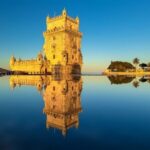
The Jerónimos Monastery is one of Lisbon’s heavyweight sights, and it appears in this sail experience in a way that’s easy to absorb. It’s a Portuguese monastery built at the end of the 15th century by King Manuel I. It became a National Monument in 1907 and later a UNESCO World Heritage site in 1983, listed with the Tower of Belém. It also was named one of the seven wonders of Portugal in 2007.
Here’s the useful angle: from the water, you can really appreciate how the complex relates to its surroundings. On land, the monastery is big—but you also feel boxed in by streets. From the Tagus, you get breathing room, and the façade looks less like a single attraction and more like part of a whole riverside story.
I’d treat this as a “slow look” moment. Even if you’re standing near the rail just for a few minutes, take a second to notice details rather than just snapping shots. The sunset light helps.
25 de Abril Bridge and the River Crossing Energy
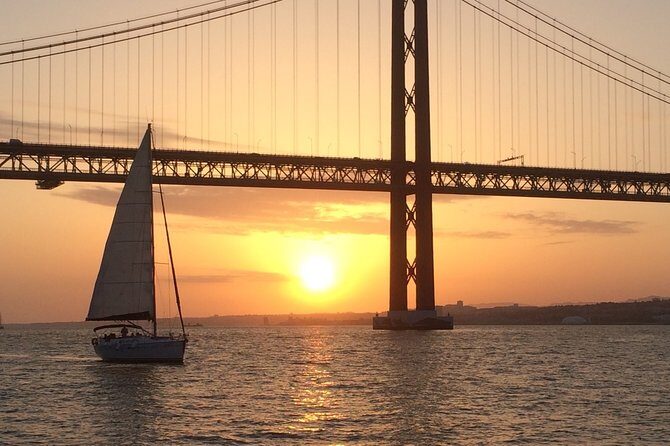
The sail includes a view of the 25 de Abril Bridge—a road-rail suspension bridge over the Tagus connecting Lisbon (north bank) to Almada (south bank). Until 1974, it was known as the Ponte Salazar, so the name reflects Portugal’s 25 April 1974 revolution.
The key value for you is how quickly a bridge can shift your perception of the city. The Tagus isn’t only about heritage and monuments. It’s also about movement, daily life, and a modern connection across the river.
The sail’s sunset timing makes the bridge especially interesting. Suspension bridges tend to show off their geometry when the light drops. You might find yourself lingering even if you planned a quick photo and go.
Alfama and Lisbon’s Cathedral Area from a Different Angle
The itinerary places emphasis on historic neighborhoods you usually associate with walking. Here, you see them by river approach instead, which changes your mental map.
You’ll get views tied to Alfama, Lisbon’s oldest and most typical neighborhood. The name is said to come from Arabic al-hamma, meaning fountain of warm waters. Alfama is famous for restaurants, fado houses, and the Santos Populares festivities—especially Santo António on the night of 12 to 13 June. On this sail, you won’t be doing the neighborhood walking, but you’ll still get that feeling of “this area has depth” when you see it from water.
You’ll also see the Cathedral of Lisbon, known as Church of Santa Maria Maior or Sé. Construction began in the second half of the 12th century after Lisbon’s conquest from the Moors. Today it mixes architectural styles and holds National Monument status.
From the river, the cathedral area can feel calmer, almost like a watching post over time. It’s a good reminder that Lisbon’s layers aren’t only vertical (new on old). They’re also along the shoreline, with each era leaving marks near the water.
Praça do Comércio: Lisbon’s Grand Entryway Meets Sunset Light
Downtown Lisbon comes into view through Praça do Comércio—often still called Terreiro do Paço. It once held the palace of the kings of Portugal for about two centuries. Now it’s partially occupied by government departments.
This square is famous for scale: it’s listed as one of the largest squares in Europe, and it historically served as Lisbon’s noble river entrance. The marble steps of Cais das Colunas were where important figures arrived and were received.
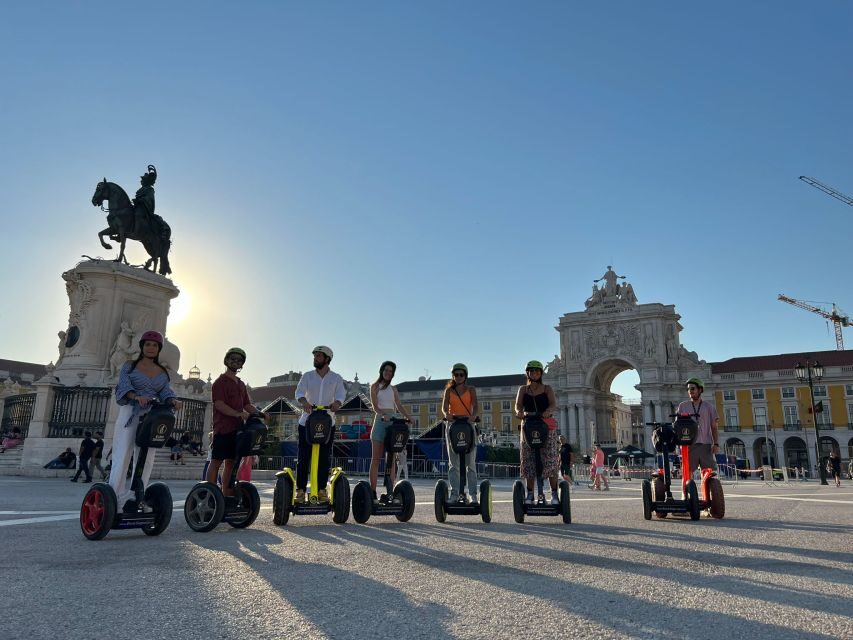
You’ll likely notice the equestrian statue of Dom José, erected in 1775 by sculptor Joaquim Machado de Castro. On the north side, there’s the Triumphal Arch of Rua Augusta, the entry to Baixa.
This is a strong part of the sail because sunset tends to flatter open spaces. The square can look especially grand when the light turns gold and the river reflects it.
Cristo Rei: A Beloved Lisbon Silhouette Across the Tagus
Later in the sail you’ll see Cristo Rei. This is the National Sanctuary of the Sacred Heart of Jesus, located about 133 meters above the Tagus. The site includes a 75-meter-high portico designed by architect António Lino, topped by a statue of the Holy Redeemer with open arms facing Lisbon. The statue itself is described as 28 meters high, designed by sculptor Francisco Franco de Sousa.
Why I like this part: it adds a second “listen to the city” note. Belém tells you about Portugal’s past and departures. Cristo Rei feels like a later statement of faith and identity, placed where you can see the city as a whole.
It also turns the sunset sail into something slightly more emotional. Bridges and monasteries are impressive, sure. But Cristo Rei makes the view feel complete—like Lisbon is being framed for you.
Price and Value: Is $45.66 a Fair Deal?
At $45.66 per person for about 2 hours, the price makes sense when you factor what’s included.
You’re paying for:
- Boat time and fuel
- A welcome drink
- Light snacks
- All fees and taxes
- A crew that provides guidance and speaks multiple languages
You’re not paying extra for meals, which are simply not included. For many people, that’s a good thing: if you’re on a tight sightseeing schedule, you can eat before or after instead of choosing between what the boat offers and what you actually want.
Also, with a maximum of 12 travelers, you get a small-group experience. That matters. Crowded sunset cruises can turn into shoulder-to-shoulder photo sessions. Here, the vibe is more relaxed, and you can access different sides of the boat more comfortably.
Who This Sunset Sail Fits Best (and Who Might Want Something Else)
I’d recommend this to you if:
- You want Lisbon views without walking uphill for hours
- You like guided context, in English, without turning it into a classroom
- You’re aiming for a relaxed evening with snacks and a drink
- You’d enjoy seeing the city’s major landmarks from a single, moving viewpoint
It might be less ideal if:
- You’re the type who needs a long, stop-and-explore tour
- You only travel when weather is guaranteed. This one depends on good weather, and if conditions are poor, you’ll be offered a different date or a refund.
Should You Book Bloo Boat Charter’s Sunset Sail?
Yes—if your goal is an easy, scenic Lisbon evening with real landmark context. This is good value for money because it includes the basics you’d otherwise budget for, and the small-group limit keeps it from feeling like a cattle call. If you love photos, you’ll get plenty of angles, especially around open riverfronts and big monuments.
My final advice: book it when you have flexibility. Lisbon sunset is weather-smart planning, not weather-forcing luck. If conditions look iffy, trust the weather rules and go with the plan that keeps your evening calm.
FAQ
How long is the Lisbon sunset sailing tour?
The tour lasts about 2 hours.
How much does the tour cost?
The price is $45.66 per person.
What languages are offered on the boat?
The crew speaks English, along with Portuguese, French, and Spanish.
What’s included in the price?
Included are the crew, fuel, welcome drink, light snacks, and all fees and taxes.
What should I bring since meals aren’t included?
Meals are not included, so I’d plan to eat before or after. You’ll have light snacks during the sail, but they’re not a full meal.
What happens if the weather is poor?
This experience requires good weather. If it’s canceled due to poor weather, you’ll be offered a different date or a full refund.