REVIEW · LISBON
Queer Lisbon Historical Tour
Book on Viator →Operated by Queer Lisbon Tour · Bookable on Viator
Lisbon has a queer story you can walk.
This 4-hour Queer Lisbon historical tour strings together the big picture and the street-level details, moving from early public LGBTQ+ demonstrations to church and dictatorship-era control, then into today’s queer activism. You’ll also get an updated Queer Map (PDF) so the ideas don’t stop when the walk ends.
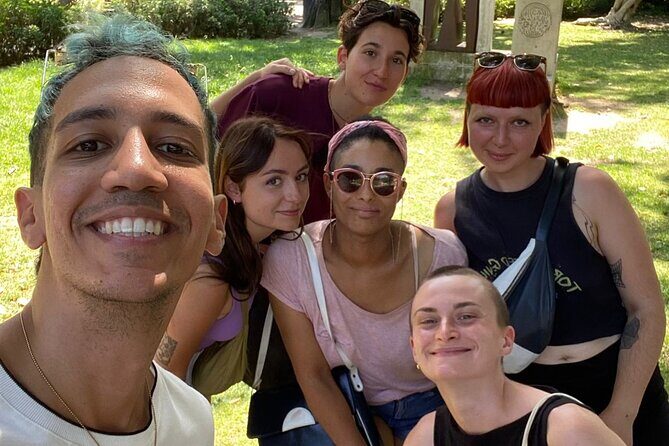
I really liked two things right away: the tour is led by a Portuguese and English-speaking local guide, and the group stays small (up to 20 people). The vibe is part educational, part human, and it feels led by energetic young entrepreneurs who keep it moving without turning the topic into a lecture.
One thing to keep in mind: it runs on good weather and you’ll walk enough to need moderate physical fitness, since Lisbon’s hills are part of the route.
In This Review
- Key highlights you should know before you go
- A Queer Lisbon Walk That Connects Rights, Rules, and Resistance
- Price and what you’re really paying for (about $72.29)
- Route basics: where you meet and how the timing works
- Stop 1: Principe Real’s homophobia memorial and the first public activism
- Stop 2: Bairro Alto, Bica, and Cais do Sodré—views plus a talk on access
- Stop 3: Largo Trindade Coelho and Padre António Vieira’s role in regulating sexuality
- Stop 4: Largo do Carmo—revolution, dictatorship, and enforced family roles
- Stop 5: Praça Martim Moniz and today’s queer movements shaped by migration
- Stop 6: Graça’s queer-owned stop at Criolense Kitchen Club
- What the small-group format changes for you
- Who should book this Queer Lisbon Historical Tour
- Should you book this tour?
- FAQ
- What is the duration of the Queer Lisbon Historical Tour?
- How much does the tour cost?
- What languages is the tour offered in?
- Where does the tour start and end?
- Is dinner included?
- What is included in the ticket price?
- Is the tour a big group?
- Do I need to worry about tickets at the stops?
- Is the tour dependent on weather?
- What is the cancellation policy?
Key highlights you should know before you go
- A small-group queer historical walk through Lisbon’s most relevant districts
- Start in Principe Real at a monument tied to victims of homophobia
- Stop at the Padre António Vieira monument, with a focus on how the church shaped attitudes
- Largo do Carmo connects LGBTQ+ resistance to the Portuguese revolution and the long dictatorship era
- End in Graça at Criolense Kitchen Club, honoring Black queer resistance
- You leave with an updated Queer Map (PDF) to keep exploring after the tour
A Queer Lisbon Walk That Connects Rights, Rules, and Resistance
If you want more than a label on a map, this tour gives you a storyline you can actually follow on foot. You’ll link social attitudes to real places, then connect those historic pressures to how queer life is negotiated today. That’s the value: history here isn’t an abstract timeline. It’s built into plazas, monuments, and the way neighborhoods change depending on time and power.
The pacing is also a big plus. You get short stops at meaningful sites and viewpoints, then the guide ties it together with questions you can carry in your head. The tour lasts about 4 hours, and the route is designed to keep you mentally awake, not just physically busy.
One more practical win: you get a mobile ticket, and you’ll finish in Graça. That matters if you’re planning dinner or a post-tour wander with a clear endpoint.
You can also read our reviews of more historical tours in Lisbon


Price and what you’re really paying for (about $72.29)
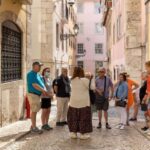
At $72.29 per person for about 4 hours, this isn’t a cheap add-on, so I think it’s fair to ask what you’re buying. You’re paying for a local guide who can explain Portuguese LGBTQ+ history in English, a small-group setting (so questions don’t get swallowed), and a Queer Map of Lisbon PDF you can actually use afterward.
Also, several stops are structured around public spaces and monuments, and the experience is organized so you’re not chasing separate ticket lines. That keeps the time focused on learning and walking, not paperwork.
If you’re the kind of person who likes context—why laws and social pressure show up in family expectations, religion, and public life—this price makes more sense. If you only want general vibes with no history, you might feel like you could get something similar on your own with a self-guided map.
Route basics: where you meet and how the timing works
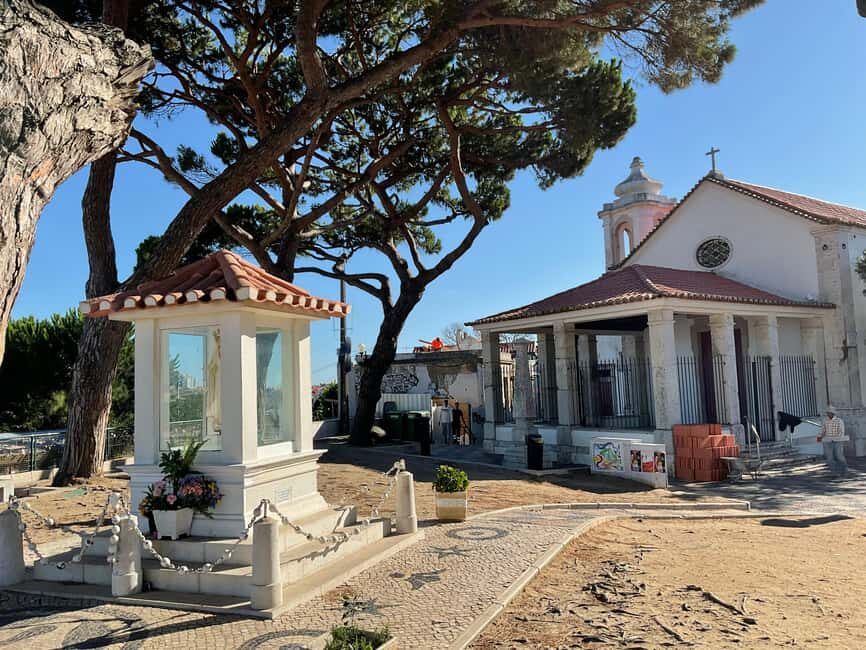
The tour starts at Juniper tree arbor, Misericórdia (1250-095 Lisboa) and ends in Graça. It’s planned as a walking route with multiple stops, and the total time is about 4 hours.
You’ll also be near public transportation, so you’re not totally dependent on getting a taxi every time you move. Still, Lisbon’s hills are real. The tour lists moderate physical fitness, and you’ll feel that in the hills between viewpoints and neighborhoods.
Group size stays capped at 20 people, which helps the guide keep the tone personal. And because you’ll get an updated map in your hands at the end, you’re leaving with a practical tool, not just memories.
Stop 1: Principe Real’s homophobia memorial and the first public activism
You kick things off in Principe Real at a monument honoring victims of homophobia. The first minutes matter because the guide sets the emotional and historical stakes early. You’re not just learning dates—you’re reflecting on what public discrimination costs.
This stop is also where the tour gives you the beginnings of the LGBTQ+ movement in Portugal. You’ll hear about the first Pride March and the public demonstrations that came with it. Starting here is smart: it frames Pride and activism as something built from courage, not just something that appeared out of nowhere.
What I like about this opening is that it gives your brain a lens. When you later hear about church influence or dictatorship-era rules, you understand that these weren’t abstract ideas. They were forces people had to face publicly, and sometimes at personal cost.
Practical note: this is a memorial area, so expect a quieter, reflective start before the walk picks up.
Stop 2: Bairro Alto, Bica, and Cais do Sodré—views plus a talk on access
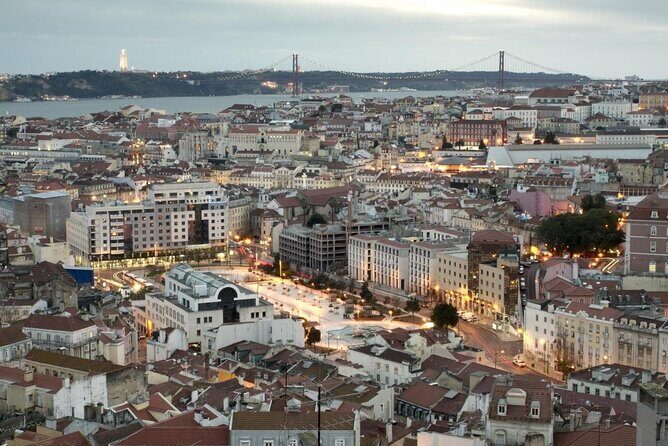
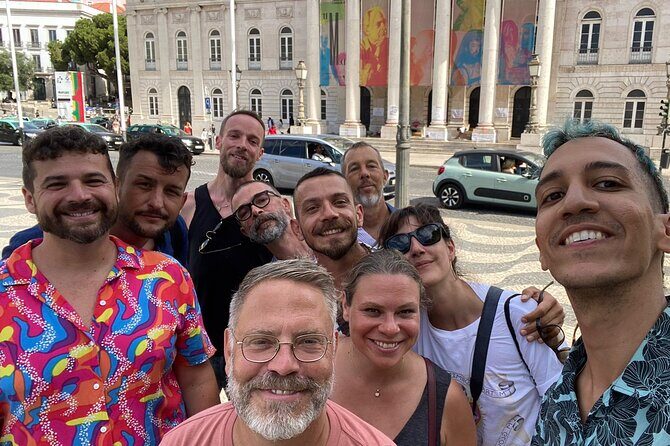
Next you move into the Bairro Alto, Bica, and Cais do Sodré area. This part of the tour balances scenery with analysis. You’ll pause at a viewpoint where you can see the hills and layout of Lisbon, then keep going through the streets.
The guide talks about how the LGBTQ+ neighborhood shifts from day to night, and the discussion centers on a concept many people miss: access and privilege. In other words, not everyone experiences queer spaces the same way. The tour points out how patriarchal and colonial mindsets can show up in everyday behavior, even when people think they’re being inclusive.
I like that the questions stay grounded. You’ll hear prompts such as whether inclusion in Portugal is truly for everyone, and whether there’s a way to make it better. That’s the tour’s style: short pauses, then big questions.
One drawback for some people: if you’re looking for a party-style crawl, this isn’t built like that. It’s more street-level walking plus social critique, with a viewpoint moment thrown in.



Stop 3: Largo Trindade Coelho and Padre António Vieira’s role in regulating sexuality
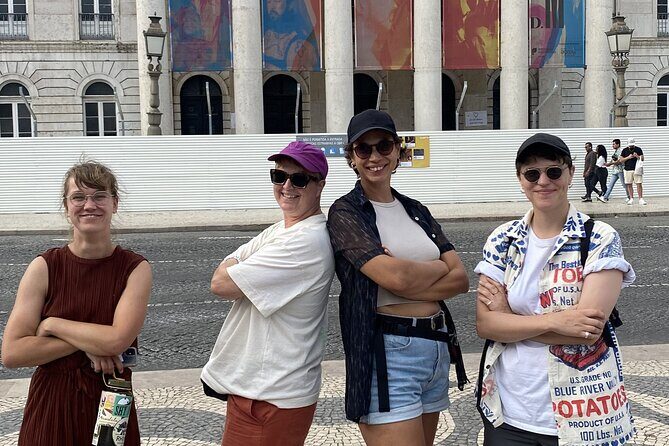
At Largo Trindade Coelho, you’ll see the monument to Padre António Vieira. From there, the guide shifts to a heavy but important subject: how the church helped regulate sexuality and how religious authority influenced attitudes toward homosexuality and anything outside the social norm of sameness.
This stop is where the tour gets into the power of institutions. You’re not just told that religion played a role. You’re shown a specific public monument tied to a historical figure, and you’re asked to connect that presence to the way norms get enforced.
If you’re someone who wants a cause-and-effect story, this stop is a key piece. It helps explain why family structures, public expression, and “acceptable” behavior have such deep roots. It also sets you up for the next stop, where politics puts structure behind those norms.
For many people, this is the moment they realize the tour isn’t only about queer identity. It’s also about systems—who had authority, who enforced rules, and who resisted.
Stop 4: Largo do Carmo—revolution, dictatorship, and enforced family roles

Largo do Carmo is another major turning point. You’ll explore the site where the Portuguese revolution began, then connect that moment to the dictatorship that followed, described as the longest-lasting in Europe.
The tour focuses on how that regime shaped mindset and pushed a strict family model: a man, a wife, and happy children—nothing different. The message isn’t just moral pressure. It’s social engineering through what’s allowed, celebrated, or shamed.
You’ll also hear about the resistance of key LGBTQ+ figures during that time. The point is to show survival and pushback, not only punishment. Even if history can feel dark, the tour keeps returning to action—people finding ways to live, organize, and challenge enforced silence.
This stop can feel intense, and it deserves your attention. If you don’t like getting emotionally loaded on public tours, you might want to bring a little extra patience for this segment.
Stop 5: Praça Martim Moniz and today’s queer movements shaped by migration
After the dictatorship-era pressure, the tour turns toward the present at Praca Martim Moniz. Here, you’ll talk about contemporary queer movements challenging structures and raising hard questions.
What I found especially useful is the focus on immigration. The tour explains how immigrants are bringing new strength and perspectives to LGBTQ+ movements in Portugal. That keeps the story moving forward in a realistic way: queer communities aren’t frozen; they change through new arrivals, new identities, and new priorities.
This stop also helps you notice something that’s easy to miss while sightseeing: the “queer question” isn’t only about sexuality. It’s also about belonging, rights, and power—who gets heard, who gets protected, and who gets left out.
If you enjoy conversations that feel current—social justice, community-building, and who gets to define inclusion—this is one of the most rewarding segments.
Stop 6: Graça’s queer-owned stop at Criolense Kitchen Club
You end in Graça at a queer-owned venue: Criolense Kitchen Club. The purpose here is to honor Black queer resistance in the Graça neighborhood, connecting queer history to ongoing community presence.
Ending at a real venue makes the whole tour land. Instead of stopping at a monument and sending you off into the city, you finish somewhere you can recognize as part of the living present. It’s a thoughtful move, because your last lesson isn’t theoretical. It’s about a community actively creating space.
Dinner is not included, so you can pay for your own meal and drinks if you want to stay. I like that freedom—after a 4-hour walk, you can choose whether you want a sit-down ending or just keep exploring.
This is also a good place to ask the guide for quick suggestions if you want next steps in Graça, since the tour ends where many people would naturally want to linger.
What the small-group format changes for you
With a maximum of 20 travelers, the tour has room for questions and small course corrections. That matters because queer history in Lisbon isn’t one-size-fits-all. People have different interests: some want activism history, some want religion/politics context, and some want how communities function on the ground.
A small group also helps the guide manage pacing. You get short stops—often around 20 to 30 minutes at each point—so you’re not stuck standing in one place too long. And because the stops are spread across areas like Principe Real and Bairro Alto, the group size keeps the walk feeling manageable.
If you prefer personal, human-scale guiding over big-bus style info dumps, this format fits well.
Who should book this Queer Lisbon Historical Tour
This tour is a great match if you want:
- A queer history focus tied to real Lisbon places, not generic storytelling
- A guide who can explain in English and Portuguese, depending on how the group is set up
- A mix of serious context and reflective questions, with enough variety to stay interesting
It may be less ideal if:
- You want a party crawl or nightlife-first route
- You dislike discussions of religion and dictatorship-era social control
- You don’t handle walking hills well, since the tour lists moderate physical fitness needs
If you’re traveling solo, as a couple, or with friends, the small group feel can be comforting. You can also use the PDF map afterward to keep exploring the same themes on your own time.
Should you book this tour?
I’d book it if you want queer Lisbon history you can feel in your feet. The route is intentionally structured: memorial and origins in Principe Real, social dynamics in Bairro Alto and surrounding areas, institutional control tied to Padre António Vieira, the dictatorship’s enforced family model and LGBTQ+ resistance at Largo do Carmo, then contemporary movements in Martim Moniz, ending with Black queer resistance at Criolense Kitchen Club.
For $72.29 you’re not just paying for walking time. You’re paying for guidance, interpretation, and an updated Queer Map (PDF) you can keep using.
If you’re weather-sensitive or you want an all-fun itinerary, you might hesitate. But if you like learning that’s grounded in streets and real community spaces, this is a strong choice.
FAQ
What is the duration of the Queer Lisbon Historical Tour?
The tour lasts about 4 hours.
How much does the tour cost?
The price is $72.29 per person.
What languages is the tour offered in?
The tour includes a local guide who speaks Portuguese and English, and the experience is offered in English.
Where does the tour start and end?
It starts at Juniper tree arbor in Misericórdia and ends in Graça.
Is dinner included?
No. Dinner and drinks are not included, and you pay for your own meal and drinks at the restaurant.
What is included in the ticket price?
Included items are an updated Queer Map of Lisbon (PDF) and a Portuguese and English-speaking local guide.
Is the tour a big group?
No. The tour has a maximum of 20 travelers.
Do I need to worry about tickets at the stops?
The stop details provided indicate admission ticket is free at the listed sites.
Is the tour dependent on weather?
Yes. It requires good weather, and if it’s canceled due to poor weather, you’ll be offered a different date or a full refund.
What is the cancellation policy?
You can cancel for free up to 24 hours in advance for a full refund. If you cancel less than 24 hours before the experience starts, the amount paid is not refunded.