REVIEW · LISBON
Private Evora Heritage and Alentejo Wine Tour from Lisbon
Book on Viator →Operated by YesExperiences Portugal · Bookable on Viator
Évora makes a strong first impression.
This private day tour strings together panoramic views over the Tagus, several serious Alentejo wine stops, and then lands you in Évora’s unforgettable historic core. It’s built for people who like their travel days to feel both scenic and substantive, with pickup from your hotel and an English guide.
I especially like how the schedule balances wine with real context. You get time at major wineries (not just quick sips), plus added food moments like cheese and smoked sausages during the day. I also like the local-guide feel, with stories and side stops that help Évora click fast, even if it’s your first time in town.
One consideration: it’s a long, packed day. With 9 to 11 hours on the clock and no lunch included, you’ll want comfortable shoes and a simple plan for eating, especially if you’re not fully in a wine mood.
In This Review
- Key highlights you’ll care about
- Lisbon to Alentejo: why a private driver matters on a 9–11 hour day
- Portuguese Golden Gate: start with views, not a rushed sprint
- Alentejo wineries: how the schedule works (and what’s really included)
- João Portugal Ramos: modern winemaking, indigenous grapes, and international styles
- Enoturismo Cartuxa: the monastery name that shapes the brand
- Pêra Manca (Quinta São José da Pêra Manca): 16th-century roots and serious reds
- Ervideira: since 1880, with multi-generation production
- Herdade do Esporão: longer stop, the cellar as the heart of the harvest
- The food and break part: cheese and smoked sausages
- Chapel of Bones: the macabre stop that’s short on time and heavy on mood
- Évora in an hour: what to focus on inside the medieval walls
- Templo Romano de Évora (Temple of Diana): a quick hit of Roman scale
- Corticarte cork factory: learn how cork becomes real products
- No lunch included: how to plan food without ruining the pacing
- Price and logistics: is $335.19 per person good value?
- Should you book this Evora and Alentejo wine tour?
- FAQ
- What’s the duration of the tour?
- Is pickup and drop-off included?
- Is lunch included?
- Are entrance fees included?
- Do you get wine tastings?
- Is this a private tour?
- What language is the tour offered in?
- Can I cancel for a full refund?
- Are service animals allowed?
Key highlights you’ll care about
- Private pickup and drop-off from your accommodation in Lisbon, with an air-conditioned vehicle
- Portuguese Golden Gate viewpoint to start you oriented over Lisbon and the Tagus River
- Major Alentejo estates on the itinerary, from monastery-linked Cartuxa to long-running families like Ervideira
- Chapel of Bones in Évora, a 16th-century “human bones” experience that’s intense but short (30 minutes)
- Corticarte cork factory where you learn the process and shop for Portuguese cork items on-site
- Wine tastings plus food included, with alcoholic beverages and snack-style tastings during the day
Lisbon to Alentejo: why a private driver matters on a 9–11 hour day
This tour lives in one big chunk of time. You’re out for about 9 to 11 hours, and the drive between Lisbon and the Évora area is not trivial. That matters because the day includes multiple stops, some of them time-specific like the Chapel of Bones and winery visits that run to an appointment rhythm.
A private vehicle helps you avoid the usual hassle: you’re not timing train platforms, parking lots, or squeezing into a larger group. Pickup and drop-off at your accommodation also means you can stay in your own zone before you leave and not burn time figuring out where to meet.
The tour runs in English with a certified guide. That’s a big deal on a day that mixes wine, Roman/medieval sites, and something as startling as the Chapel of Bones. You’ll understand what you’re looking at instead of just snapping photos and moving on.
You can also read our reviews of more private tours in Lisbon


Portuguese Golden Gate: start with views, not a rushed sprint
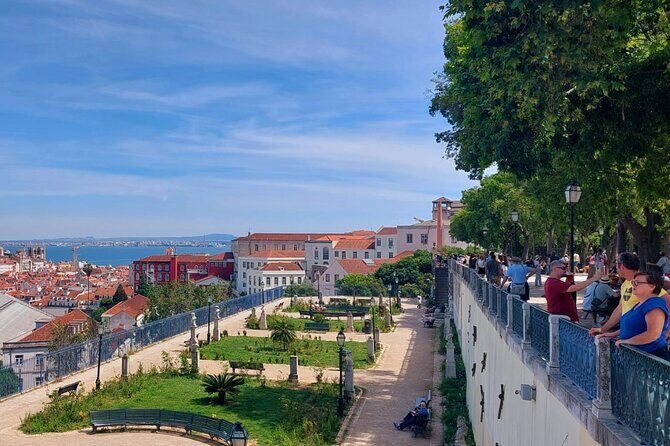
The first “wow” moment is the viewpoint at the Portuguese Golden Gate, overlooking Lisbon and the Tagus River. It’s the kind of stop that doesn’t just look pretty. It gives you a geographic frame of reference for the rest of the day, so Évora later feels like a real destination rather than another dot on the map.
If you’re the type who likes a quick orientation photo, this is a great early move. You’re also less likely to feel travel-scrambled here, since you’re starting with a calm, outdoor moment before the day turns into a run of tastings and indoor sites.
Practical tip: bring sunglasses and water. Lisbon light can be strong, and you’ll appreciate it before your first winery stop.
Alentejo wineries: how the schedule works (and what’s really included)
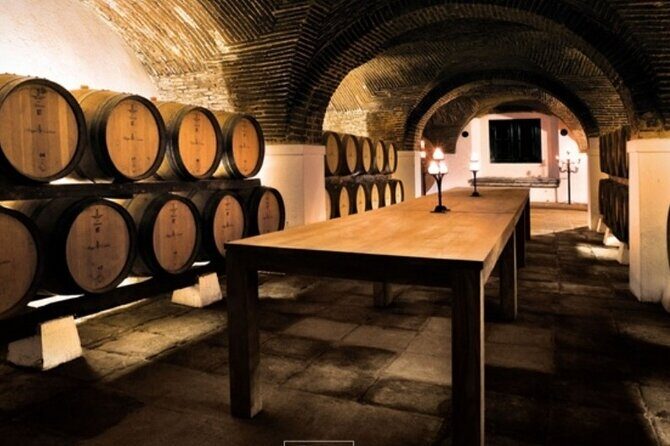
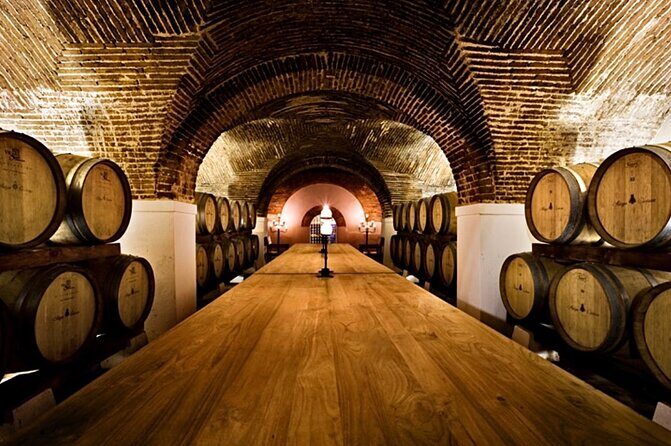
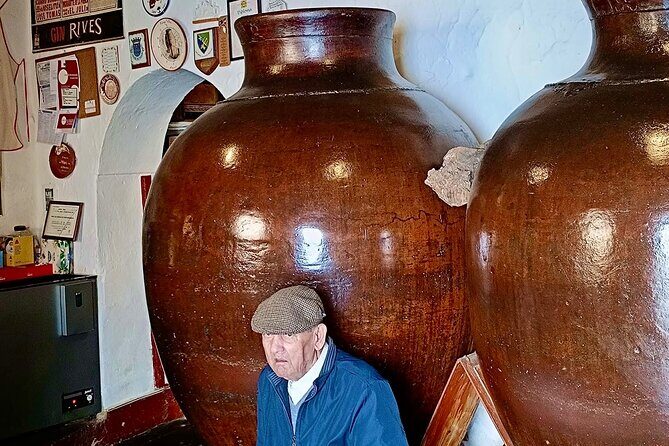
The winery portion is the backbone of the day. Several estates are on the route, with admission included at each winery stop. Also, the day includes wine tasting at two wineries, plus alcoholic beverages as part of that tasting experience.
So here’s how I’d think about it: you’ll likely get the best tasting depth at two longer tasting points, while the other wineries are still worth your time for the guided introduction and the chance to see how different Portuguese estates operate.
This is a good tour style if you like comparing approaches. In Alentejo, estates can feel worlds apart—family scale versus larger modern operations, monastery-linked identity versus estate-wide history. The variety is part of the value.
João Portugal Ramos: modern winemaking, indigenous grapes, and international styles
At João Portugal Ramos, the focus is on a blend of modern methods with respect for traditional winemaking. You’ll hear how their portfolio spans both Portuguese grape varieties and international ones.
Expect to learn about wines from grapes like Alvarinho and Verdelho on the white side, and Touriga Nacional plus Syrah on the red side. Even if you don’t memorize grape names, the takeaway is useful: you’ll start noticing how Alentejo can still feel Portugal-first while using winemaking techniques that travel well on the international stage.
Enoturismo Cartuxa: the monastery name that shapes the brand
Enoturismo Cartuxa ties its identity to the 16th-century Mosteiro da Cartuxa (Cartuxa Monastery), right next to the winery and part of the Eugénio de Almeida Foundation’s patrimony. That monastery connection isn’t just trivia. It helps explain why Cartuxa speaks in a certain tone—quality, individuality, and a long lens on winemaking.
If you like heritage tied to place, this stop is satisfying. It’s also a nice tempo shift after the Portugal Ramos style—less about modern contrast, more about continuity.
You can also read our reviews of more historical tours in Lisbon


Pêra Manca (Quinta São José da Pêra Manca): 16th-century roots and serious reds
Quinta São José da Pêra Manca dates back to origins in the 16th century and is known for its prestige in Portuguese wine culture. The brand is especially associated with red wines, made from regional varieties like Aragonez, Trincadeira, and Alicante Bouschet.
What I’d watch for here is the “why” behind the grape choices. Those varieties often bring structure and aging potential, and that’s what makes a tasting experience feel like more than just pleasant sips.
Ervideira: since 1880, with multi-generation production
Ervideira is one of the longstanding names in Portugal, producing wine since 1880. The estate runs with active producers across the fourth and fifth generations.
They have 160 hectares of vineyards, distributed by family properties in Vidigueira and Reguengos. If you want a sense of Alentejo as a working, multi-generational machine (not just a scenic backdrop), this is a strong stop. You’ll also hear how the mission has been to create wines that stay true to Portuguese quality while still fitting the international market.
Herdade do Esporão: longer stop, the cellar as the heart of the harvest
Herdade do Esporão leans into history and the rhythm of production in Reguengos de Monsaraz. You’ll likely hear about how wines in that area can be balanced and seductive, with good aging potential.
This stop runs longer—about 2 hours—which gives you time to slow down. It’s a good moment to ask the guide questions about how harvest timing, cellar choices, and grape character work together. If you’re the type who enjoys tasting with a purpose, this is often where your “wine brain” comes alive.
The food and break part: cheese and smoked sausages
You’ll also get snack-style included food: cheese tasting and smoked sausages, with bottled water and wine tastings. This helps keep the day enjoyable, especially if you’re going from one tasting room to the next.
If you know you get snack-hungry fast, I’d still plan for lunch later, because lunch is not included.
Chapel of Bones: the macabre stop that’s short on time and heavy on mood
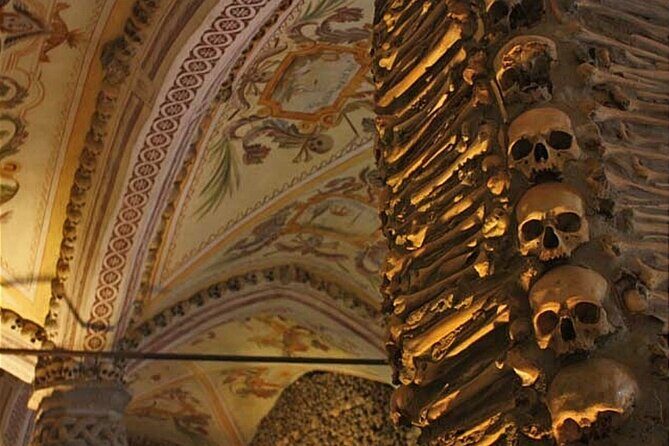
Then the day turns. The Chapel of Bones sits attached to the Church of St. Francis (Igreja de São Francisco). Built in the 16th century by Franciscan monks, the chapel’s goal is to remind visitors of mortality and life’s transience.
The walls and pillars are covered in human bones, believed to be from around 5,000 monks. They were exhumed from nearby cemeteries due to lack of space and then arranged into patterns. There’s also a creepy inscription above the entrance that translates to We bones that are here await yours.
This is the kind of stop you either love for its strange history or find emotionally intense. Good news: the time is manageable. You get about 30 minutes, which is enough to take it in without feeling trapped.
Tip: if you’re squeamish, go anyway with a quick mindset. Treat it like a historical artifact and get in, observe, and step out.
Évora in an hour: what to focus on inside the medieval walls
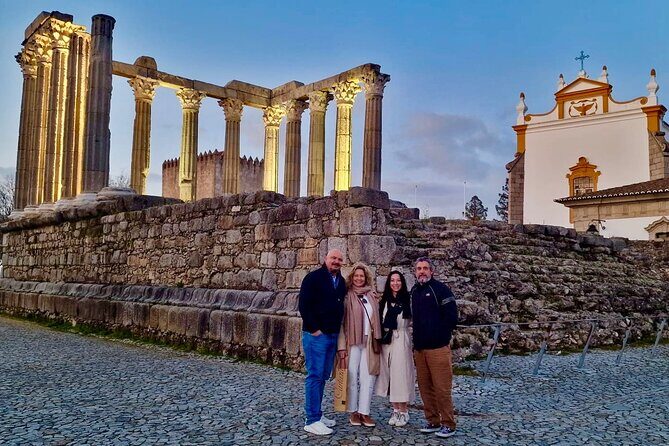
Next comes Évora, a UNESCO World Heritage city with roots that go back to Roman times. You’ll see the Roman layer, the medieval layer, and a lively modern layer all at once.
In a short 1-hour stop, I’d focus on the structure of the city:
- the medieval walls that enclose the historic center
- the narrow whitewashed streets and small squares
- the cathedral area and the overall feel of a living old town
- the fact that Évora has a university founded in the 16th century, which adds constant energy
Évora isn’t just stone. It’s a place where people still live inside the walls. That makes it easy to remember after you leave, especially after the strange emotional punch of the Chapel of Bones.
A practical note: the streets can be a mix of flat and uneven. Wear shoes you trust for walking.
Templo Romano de Évora (Temple of Diana): a quick hit of Roman scale

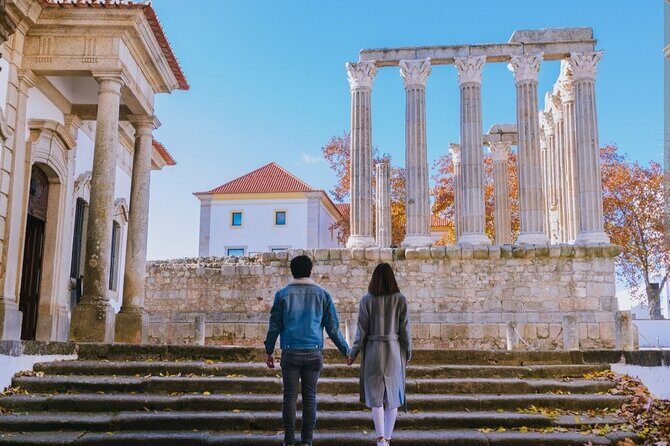
The Templo Romano de Évora, also known as the Templo de Diana, is the Roman stop you’ll want to see before you run out of daylight.
It’s a pagan monument built around the beginning of the 1st century AD, located on the former Roman Forum area. Over time it suffered changes during barbarian invasions and later during the Christian period. The major restoration back to its original grandeur happened in the 19th century.
The visit is short—about 10 minutes—but it’s a satisfying payoff. Seeing the scale of Roman architecture right in the middle of a medieval city gives the whole day context.
Corticarte cork factory: learn how cork becomes real products
Then you end with something practical and very Portuguese: cork. Corticarte – Arte em Cortiça is a cork factory visit that walks you through the process, from cork harvesting to quality selection and the final products.
You’ll see how cork goes from tree to packaging and what makes it valuable beyond bottle stoppers. There’s also a shop where you can pick up authentic Portuguese souvenirs.
I like this stop because it turns a souvenir into a story. And yes, buying cork products here makes more sense than grabbing generic items back in Lisbon. If you plan to shop, do it at the source.
No lunch included: how to plan food without ruining the pacing
Lunch isn’t included on this tour. That said, you do get included food breaks (especially cheese and smoked sausages) and plenty of guided tasting moments.
So your best approach is simple:
- treat the included food as a snack break, not a full meal
- plan to buy lunch on your own when the day gives you the time
Your guide often knows where people like to eat locally, and a smart recommendation can save you time and guesswork. In other words: use the guide as a shortcut, not as a walking encyclopedia.
If you’re scheduling your evening back in Lisbon, keep dinner flexible. This is a full day, and wine tastings can add up.
Price and logistics: is $335.19 per person good value?
At $335.19 per person, this isn’t a bargain-basement outing. You’re paying for a lot of things working together:
- private pickup and drop-off
- an air-conditioned vehicle for a long day
- a certified English guide
- admission fees at multiple stops (wineries, cork factory, Chapel of Bones, and Temple of Diana)
- wine tastings at two wineries plus alcoholic beverages
- included snack-style tastings (cheese and smoked sausages)
If you tried to cobble this together yourself, the hard parts would be coordination and transportation time. The private format lets you keep a steadier pace and get explanations at each stop instead of spending half the day in transit.
Now, the balanced truth: this tour is best if you actually want the wine + history mix. If your top priority is lounging, beach time, or a lighter schedule, you may feel overstimulated by the number of stops. Also, the Chapel of Bones has a strong emotional impact, even though it’s brief.
Should you book this Evora and Alentejo wine tour?
Book it if you want a private, structured day that hits Lisbon views, multiple Alentejo wineries, Évora’s UNESCO core, and cork-making culture—without you having to organize logistics. It’s a great fit for couples and small groups who enjoy comparisons: modern versus traditional winemaking, monastery-linked identity, long-running estates, and Roman-meets-medieval city textures.
Skip or rethink it if you:
- want lunch included in the price
- prefer a relaxed schedule with fewer transitions
- feel strongly uncomfortable with the macabre tone of the Chapel of Bones
- aren’t interested in wine tasting (because the wineries are the heart of the day)
If you’re on the fence, I’d decide based on this question: do you enjoy structured days with guided stops? If yes, this tour is a strong value. If no, you might want a shorter Évora-only plan and a separate wine day later.
FAQ
What’s the duration of the tour?
It runs about 9 to 11 hours.
Is pickup and drop-off included?
Yes. Pickup and drop-off are included from your accommodation.
Is lunch included?
No. Lunch is not included.
Are entrance fees included?
Yes. All entrances listed on the tour are included.
Do you get wine tastings?
Yes. The tour includes wine tasting at two wineries, and alcoholic beverages are included.
Is this a private tour?
Yes. It’s private, so only your group participates.
What language is the tour offered in?
The tour is offered in English.
Can I cancel for a full refund?
Yes. You can cancel for a full refund if you cancel at least 24 hours in advance of the experience start time.
Are service animals allowed?
Yes. Service animals are allowed, and most people can participate.