REVIEW · OBIDOS
Óbidos: Medieval Tales & Secrets Spots Guided Walking Tour
Book on GetYourGuide →Operated by Silver Coast Travelling · Bookable on GetYourGuide
Óbidos tells stories on every corner. This guided walking tour strings together medieval streets, Moorish-era walls, and real art—so the town doesn’t feel like a pile of old stones. I especially like the ginjinha tasting in a chocolate cup and the chance to see Josefa de Óbidos paintings tied to the churches you visit. The one thing to plan for is walking on old, sometimes slippery stone paths, so wear real shoes.
This tour also shines because the guide brings the place to life. You’ll likely hear names you can remember—guides such as João Pedro, Ivo, JP, Jorge, Bruno, and others are repeatedly praised for answering questions and slowing down for photos when a stop looks good.
One more consideration: it’s not an easy stroll for everyone. It isn’t suitable for wheelchair users or people with mobility impairments, and it may not be a good fit after recent surgeries.
In This Review
- Key moments you’ll love
- First impressions: Óbidos is all walls and meaning
- Walking route in plain terms: what you’ll do in 2 hours
- Entering the castle area: Moorish origins you can actually picture
- Church art that turns religious sites into real stories
- The Town of the Queens: Portugal’s royal women left fingerprints
- Bookstores with history: Ler Devagar and beyond
- Moorish and Jewish neighborhoods, towers, and the maze effect
- The out-of-the-walls walk and the ginjinha payoff
- Price and value: what $41 buys you in practice
- Who should book this tour (and who should skip it)
- Should you book this Óbidos walking tour?
- FAQ
- How long is the Óbidos Medieval Tales & Secrets Spots Guided Walking Tour?
- What does the tour cost?
- Where do we meet?
- What’s included in the price?
- Is food included?
- What do we taste during the tour?
- What major sites are visited?
- What art is included in the tour stops?
- What language is the guide?
- Is the tour suitable for wheelchair users or people with mobility impairments?
- Could the tour be canceled due to weather?
Key moments you’ll love
- Ginjinha de Óbidos in a chocolate cup: classic local sour cherry liqueur, served as part of the experience.
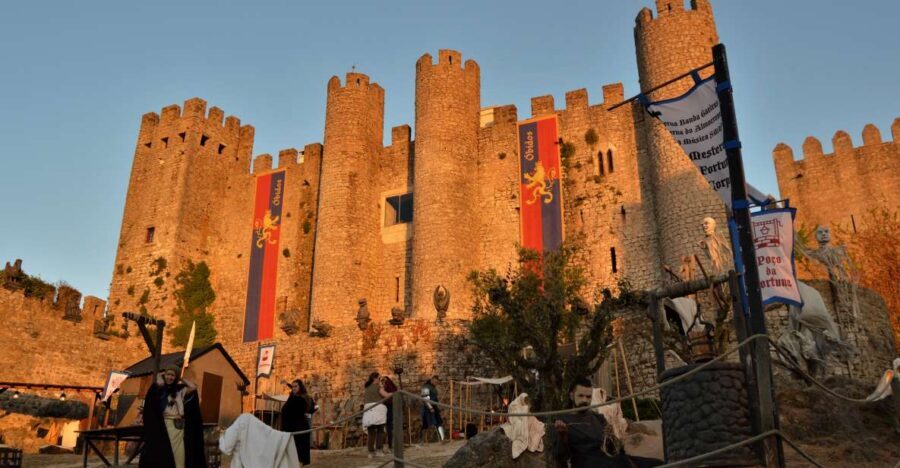
- A 1300-year-old Muslim/Moorish-origin castle: you get context, not just a quick look.
- Josefa de Óbidos artwork: you see 5 original paintings plus major religious art connected to the churches on the route.
- The Town of the Queens: Portugal’s royal women, especially Leonor de Avis and her Holy House of Mercy, shape what you’ll notice.
- Bookstore stops with big history: Ler Devagar (in a former royal chapel) plus São Tiago and a market-style bookstore.
- Off-the-walls exploring: an end-of-tour walk that helps you feel the town beyond the main viewpoints.
First impressions: Óbidos is all walls and meaning
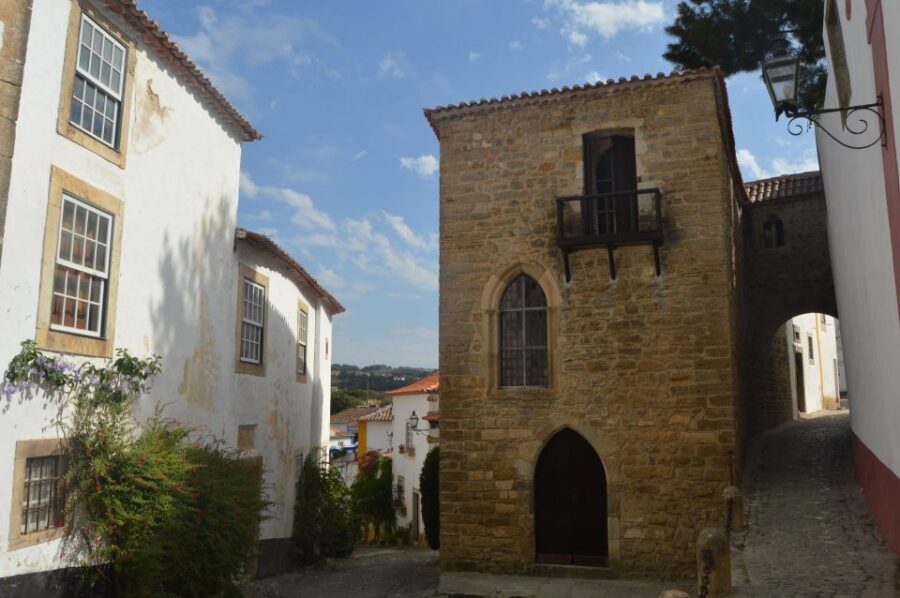
Óbidos is one of those towns where the buildings don’t just look medieval—they explain why people cared about this place. Inside the walls you’ll notice how the streets funnel you toward churches, towers, and the castle area, which makes the walk feel purposeful instead of random wandering.
What makes this tour useful is that it connects places with stories: who lived here, what the queens did, and how different eras (Moorish, Jewish, Christian) left their mark. That context matters because Óbidos can look like a postcard, but the tour helps you read it like a timeline.
You also start in a practical spot: meet at the front of the Óbidos Tourist Office, near the main parking, outside the walls. It’s an easy handoff point, and you can get your bearings before you step into the walled town.
You can also read our reviews of more walking tours in Obidos
Walking route in plain terms: what you’ll do in 2 hours
This is a compact, 2-hour walking tour, so the pace is steady and you’ll cover a lot of ground without feeling rushed every second. The payoff is that you’ll hit both the famous anchors (castle and major churches) and the smaller “wait, what is that?” corners that make Óbidos feel lived-in.
The stops are a mix of church sites, art moments, towers, plaza space, and neighborhood sections. Along the way, expect the guide to explain what you’re looking at, including the why behind the architecture and the human stories tied to each place.
One small practical tip: plan on taking your time for photos, because a guide who’s paying attention will naturally steer you to good angles. The route also includes an out-of-the-walls stretch at the end, so you’ll finish with a sense of how the town sits in its landscape.
Entering the castle area: Moorish origins you can actually picture
The tour’s biggest “wow” is the Castle of Óbidos, described as having Moorish origins and about 1300 years of history. When you’re standing there, the best value isn’t just the view—it’s hearing how the fortress fit into older power and defense patterns.
This kind of context helps you notice details you might otherwise ignore. You start to read the fortification as a system, not just a scenic backdrop. And because the tour is time-bound, you’ll get enough structure to understand the castle without turning it into a full-day history seminar.
A castle stop also changes your walking rhythm. Even if the route is steady, the castle area tends to make you pause—look up, look around, then keep going. That breaks the tour into emotional beats, which is part of why this works so well for an intro to Óbidos.
Church art that turns religious sites into real stories
Óbidos has churches packed with art, and this tour takes that seriously. You’ll visit the Museum of the Saint John the Baptist Church and other church-linked stops, where you’ll encounter major works connected to local masters and Renaissance sculpture.
Two standouts you should be excited about:
- Josefa de Óbidos: the tour includes seeing 5 original paintings by her. She’s singled out as a major figure—Portugal’s first female artist to have works exhibited in the Louvre in Paris.
- The pietá by Nicolau de Chanterene: this is part of the art component you’ll see during the church visits.
Why this is valuable: when you’re only given a quick glance at a chapel, you often miss the significance. Here, the art becomes a guide for understanding the people behind the town’s image—local talent, outside recognition, and how Portuguese culture presented itself through religion and patronage.
If you like art and you also want the town’s stories, this section is a good reason to book now rather than later. The tour is short, so it focuses on high-impact art moments instead of trying to cover everything.
The Town of the Queens: Portugal’s royal women left fingerprints
Óbidos earned its nickname as the Town of the Queens, and the tour explains why. You’ll hear about queens connected to Portugal such as Catherine of Austria, Isabel of Aragon (known as Queen Saint Isabel), and Leonor de Avis.
The most practical thread to remember is Leonor de Avis and what she built through her vision. She created an early branch of her “Holy House of Mercy,” described here as the oldest surviving hospital and relief network in the world. It also became a model that traveled overseas during the Portuguese Empire.
This isn’t trivia for trivia’s sake. Once you understand that queens weren’t only “court names” but also backers of social support and institutions, the churches and civic spaces you walk past start to make more sense. You begin to see Óbidos as a place where power was expressed in both spectacle and service.
You can also read our reviews of more guided tours in Obidos
Bookstores with history: Ler Devagar and beyond
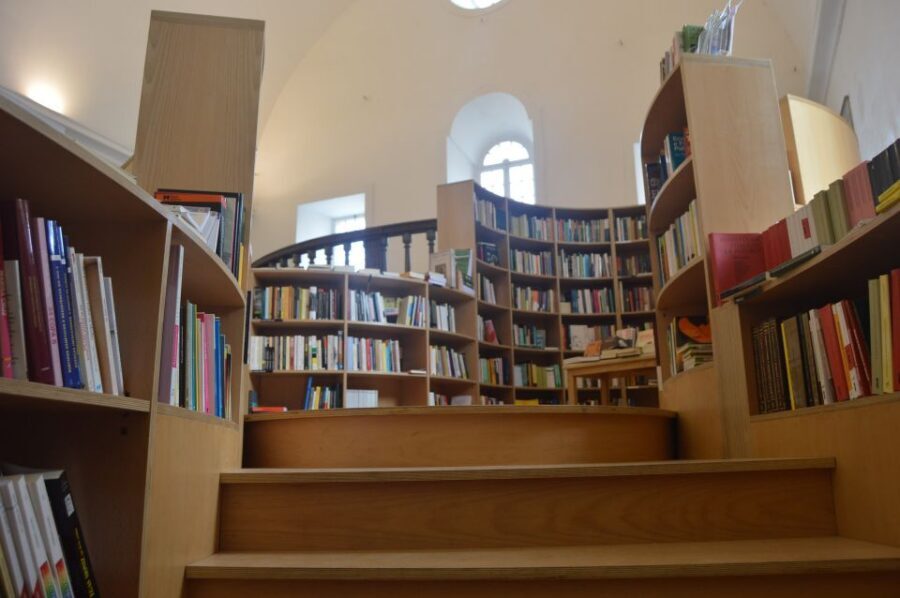
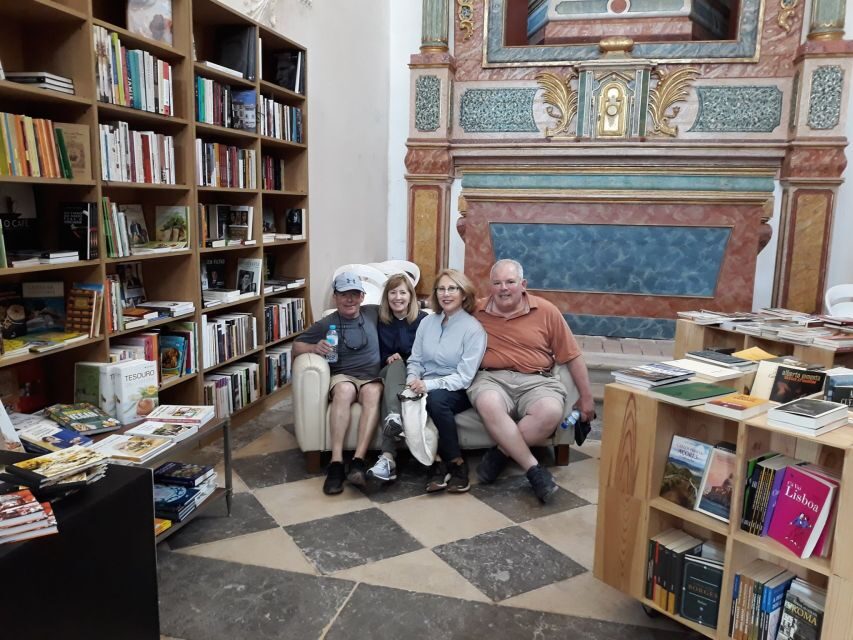
If you love bookshops, you’re going to have fun here. The tour includes not just one, but multiple bookstore-style stops, including the standout Ler Devagar. It’s described as being located in a former royal chapel, which means you’re not only browsing books—you’re stepping into a repurposed historical building.
You’ll also visit other literary stops such as:
- Market Bookstore (Livraria do Mercado), which is also an organic products shop
- São Tiago Bookstore, located in a former church and royal chapel
Even if you’re not a big shopper, this part adds texture. Óbidos can feel like it’s all medieval stone, but bookstores give you a modern pause inside that old shell. And because the tour only runs about two hours, these stops are treated as story stops, not time sinks.
One thing I’d pay attention to: these locations tend to invite slow looking. If you’re the type who likes to browse, plan a quick scan and then listen for the guide’s historical notes so you get the full value of the stop.
Moorish and Jewish neighborhoods, towers, and the maze effect
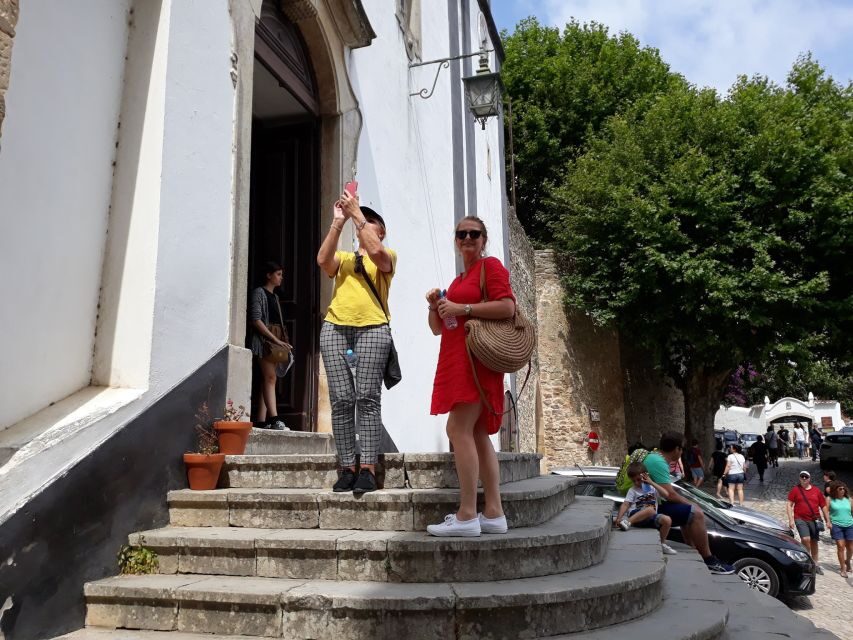
Óbidos isn’t just castle-and-church. The tour moves through Moorish and Jewish neighborhoods, which helps you see how layered the town has been. Even if you don’t identify every architectural detail, the explanation gives you a framework for what you’re walking through.
Stops along the way include places like Maney’s Tower, plaza and church spaces (such as Saint Mary Plaza and Saint Mary Church), and smaller religious sites like the Saint Martin Chapel and Almshouse Church. This mix keeps you from feeling like you’re repeating the same kind of view.
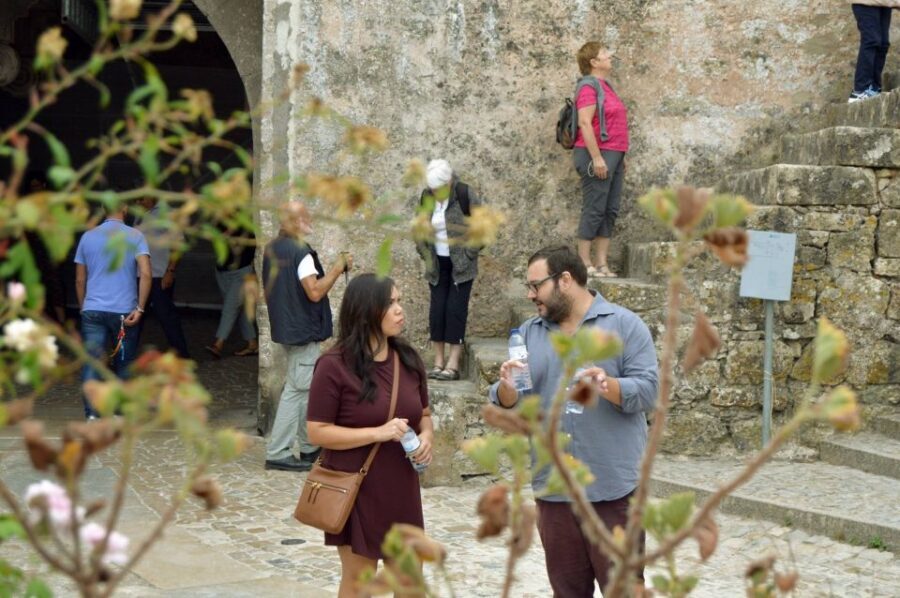
What you’ll like most here is the “maze effect.” The streets and alleys create moments where you turn a corner and get a new angle—then you get the story behind what you’re seeing. That’s why some guides are praised for steering groups away from the most crowded routes: it lets the town feel like a medieval town again, not a theme park corridor.
The out-of-the-walls walk and the ginjinha payoff
Near the end, you step out of the walls for a short walk that helps you reset your sense of place. Inside the walls you’re focused on the medieval core; outside, you remember Óbidos sits in a wider world.
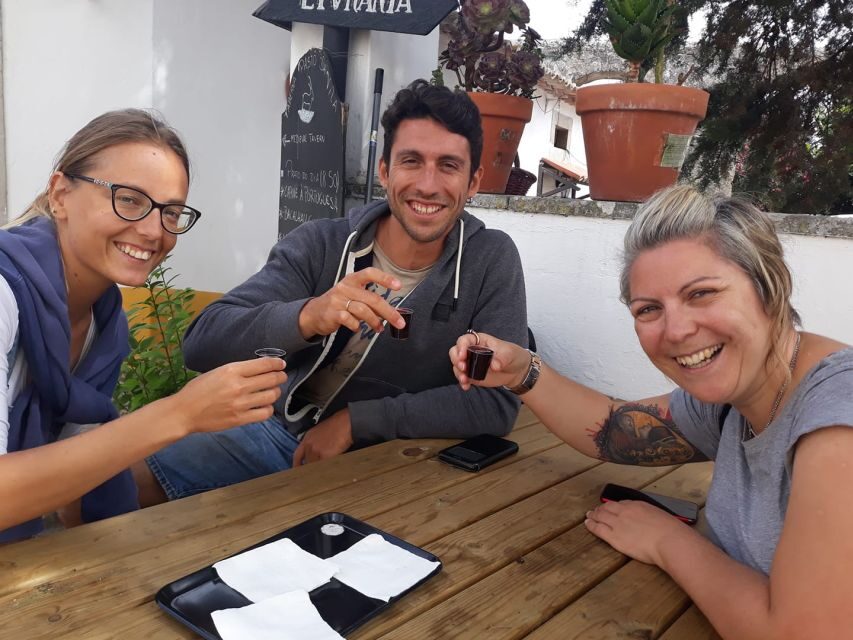
Then comes the signature taste moment: Ginjinha de Óbidos, a sour cherry liqueur served on a chocolate cup. It’s a small thing in time—just one tasting—but it’s memorable because it’s local, and it ties into Óbidos’ foodie identity. If you like trying regional specialties, this is one of the easiest “yes” decisions in Portugal.
Important reality check: the tour includes the tasting, but not food. If you arrive hungry, you may want to plan a meal either before you start or right after you finish.
Price and value: what $41 buys you in practice
At $41 per person for about 2 hours, the value isn’t in a long list of stops—it’s in the concentration of stops that would be harder to connect without a guide. You’re paying for interpretation: art context, queen-linked stories, and the way different sites fit together into one picture of Óbidos.
You also get two things that commonly cost extra or take more time on your own: the guide’s route-planning (especially around the castle and church cluster) and the included liquor tasting. With no food included, the budget stays focused on sights and stories rather than meals.
For me, the strongest value argument is simple: Óbidos can be visited on foot without help, but a good guide changes what you notice—and that’s what makes a short tour worth booking.
Who should book this tour (and who should skip it)
This tour is a great fit if you want an organized first look at Óbidos with art and royal-story context, not just a casual walk.
You’ll likely be happiest if you:
- enjoy church art and local artists like Josefa de Óbidos
- want the social side of history (queens, mercy institutions, how power showed up in real life)
- like bookstores and small stops that go beyond the main street
You may want to choose another option if you:
- have mobility concerns or need wheelchair access, since this walk isn’t suitable for wheelchairs
- are dealing with a recent surgery
- dislike walking on uneven stone paths
Should you book this Óbidos walking tour?
Yes—if you want a high-impact, 2-hour introduction that ties together the castle, church art, queen legends, and bookstore stops, this is a strong choice. The combination of included ginjinha tasting, major local art (Josefa de Óbidos and the pietá by Nicolau de Chanterene), and the castle makes it feel worth the price rather than like a generic overview.
Book it early in your Óbidos stay if you can. You’ll come away with the town’s “map in your head,” so your later self-guided wandering makes more sense. And if your goal is photos plus stories—this tour is built for exactly that pace.
FAQ
How long is the Óbidos Medieval Tales & Secrets Spots Guided Walking Tour?
It lasts about 2 hours.
What does the tour cost?
The price listed is $41 per person.
Where do we meet?
You meet in front of the Óbidos Tourist Office, near the main parking, outside the walls.
What’s included in the price?
The tour includes a guide and a liquor tasting.
Is food included?
No. Food is not included.
What do we taste during the tour?
You get a tasting of the traditional Óbidos ginjinha (sour cherry liqueur) served on a chocolate cup.
What major sites are visited?
You’ll visit the Castle of Óbidos and several churches and neighborhood areas inside the medieval town.
What art is included in the tour stops?
The tour includes seeing original paintings by Josefa de Óbidos and a pietá by Nicolau de Chanterene.
What language is the guide?
The tour is offered in English and Portuguese.
Is the tour suitable for wheelchair users or people with mobility impairments?
No. It is not suitable for people with mobility impairments or wheelchair users, and it may not be appropriate after recent surgeries.
Could the tour be canceled due to weather?
Yes. The tour can be canceled due to weather conditions.