REVIEW · SINTRA
Sintra Walking Tour – The Portuguese Fairytale
Book on Viator →Operated by Hi Lisbon Walking Tours · Bookable on Viator
Sintra can feel like a movie set. This walk strings together the sights that make Sintra famous, with real historical threads connecting palaces, castles, and symbolic gardens. I especially like how the route keeps moving so you get context fast, not just postcard views.
What I like second is the feel of a guided story. With a professional guide (and strong use of photos to connect details), you’ll understand why Quinta da Regaleira’s tunnels matter, and why Pena Palace looks so unlike anything else in Portugal.
One thing to watch: the biggest ticketed stops are not included. If you’re expecting everything to be bundled into the low tour price, you’ll need to budget separately for admissions at the palaces and castle.
In This Review
- Key highlights you’ll actually notice
- How this Sintra walk turns “fairytale” into real context
- Quinta da Regaleira: tunnels, Templar vibes, and Rose Cross symbolism
- Sintra National Palace: moorish roots with Gothic and Manueline flourishes
- Castelo dos Mouros: Moorish defense, then a 19th-century refresh
- Pena Palace: why it’s a European star of styles
- The easy, free stops that add up: city hall, fountains, and first open-air museum
- Price and what you’re really paying for
- Timing, meeting points, and how to plan your walking stamina
- Who should book this Sintra Fairytale walk
- Should you book it? My straight answer
- FAQ
- FAQ
- Is the tour offered in English?
- How long is the Sintra Walking Tour?
- What is the tour price?
- Where does the tour start and end?
- What time does the tour start?
- Do I need to buy admission tickets for the major palaces and the castle?
- Are any stops free?
- How many people are in the group?
- Is a mobile ticket used?
- What if the weather is bad?
- Can I cancel and get a refund?
Key highlights you’ll actually notice

- A tight 2.5-hour route that still hits the major Sintra characters: Regaleira, Pena, and the old palaces
- Guided context (including how architecture styles and symbols connect across stops)
- No wasted time: a mix of palace stops and quick city moments so you get bearings fast
- Ticketing is split: some famous sites require separate admissions
- Small group size capped at 15, which helps questions and pace
How this Sintra walk turns “fairytale” into real context
Sintra’s reputation is big. You’ll see why the second you start moving: the town is packed with palaces, religious sites, and forts built by different rulers over different centuries. The trick is understanding what you’re looking at without spending days in museums.
This tour is designed for that. You get a guided flow from a symbol-heavy estate to a historic royal palace, then up toward the Moorish defensive walls, and finally to the grand, colorful star of Sintra: Pena. Along the way, you also get quick breaks in town—fountains, a museum stop, pastries, and church architecture—so it’s not all gates and grand halls.
And because it’s capped at 15 travelers, the guide can keep the pace from turning into a stampede. It’s still a walking tour, so you’ll want comfortable shoes and a head for lots of stairs and slopes.
You can also read our reviews of more walking tours in Sintra



Quinta da Regaleira: tunnels, Templar vibes, and Rose Cross symbolism
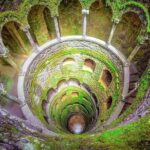
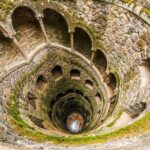
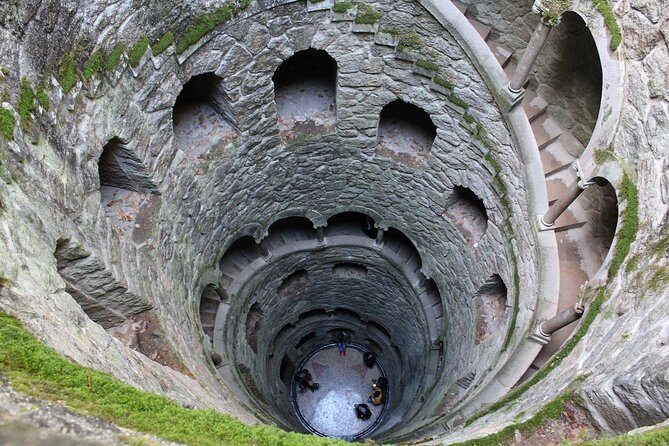
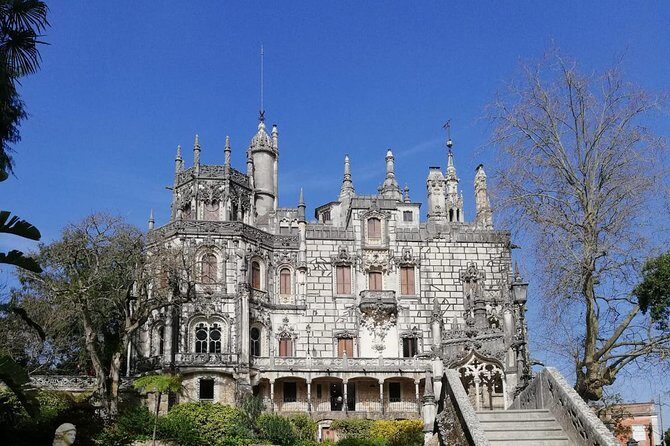
Quinta da Regaleira is where Sintra’s fairytale mode kicks in, but it’s not random fantasy. The estate is described as having influence from the Templars, the Rose Cross, the Order of Christ, and Masonry. That matters because the site’s design and symbolism are part of the experience, not just pretty landscaping.
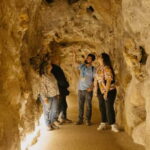
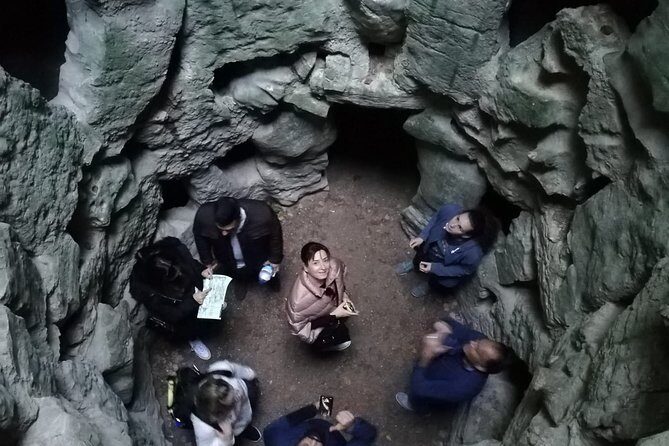
What you’ll notice here is scale and layout. The massive gardens spread out with plants coming from all over the world, and the grounds include tunnels and connections that link different areas. Even with limited time, the guide can help you spot the logic of the paths: you’re not just wandering, you’re moving through a designed sequence.
The main consideration is time. The stop is short, and admissions are not included, so you’ll want to have your entry plan ready. If you love gardens and symbolism, this is the kind of place where you could easily spend longer on your own after the tour.
Sintra National Palace: moorish roots with Gothic and Manueline flourishes

The Sintra National Palace is the oldest palace in Sintra, originally built during Moorish rule in the 8th century. That old foundation is why the palace feels layered. Later, different architectural influences show up, including Gothic and Manueline.
This is a good stop when you want a royal-and-religious timeline in one glance. The palace was described as a favorite among many Portuguese kings, so you’re not just looking at a building—you’re looking at power and continuity.
One practical note: the stop is quick, and the admission ticket is not included. So treat this as orientation. You’ll get the key features and the big “why,” then you can decide if you want a deeper self-guided visit later.
Castelo dos Mouros: Moorish defense, then a 19th-century refresh
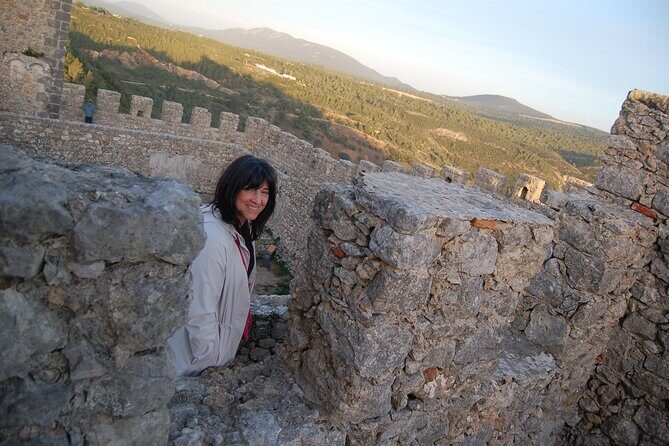
Castelo dos Mouros tells a different story than the palaces. It was built in the 8th century by the Moors to protect Sintra, and later it was refurbished in the 19th century by King Fernando II.
That combination changes the feel of the place. The original purpose was military and strategic. The later refurbishment suggests attention to preserving and reshaping the castle as part of Sintra’s royal-era identity.
This stop also works as a mental reset. After the palace grandeur, you get something more rugged and defensive. It’s a short visit, and the admission ticket is not included, but the value is in the framing: you’ll understand what the walls were for, and why the castle belongs in Sintra’s “Portuguese fairytale” package.
Pena Palace: why it’s a European star of styles
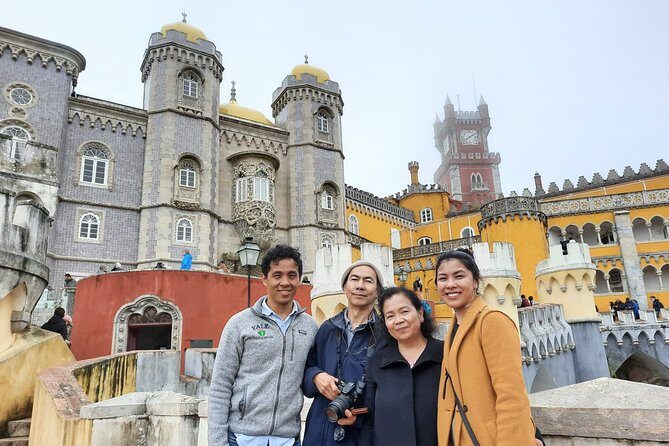
If you want one place that proves Sintra’s fairytale reputation is earned, it’s the National Palace of Pena. It was built by King Fernando II in the 19th century, and the site is famous for mixing styles: Neo-Manueline, New-Gothic, Neo-Renaissance, and Neo-Islamic influences.
That style-mix is the point. Pena doesn’t try to look like it belongs to one single era. It reads like a statement. Even in a short stop, the guide can help you connect the visual clues—so you’re not just taking photos, you’re learning how the palace is constructed to feel dramatic and themed.
It’s also listed as one of the 7 wonders of Portugal, which you’ll feel the moment you’re there: the scale and theatricality are hard to ignore. Again, admissions are not included, and time is limited, so this is best as a highlight visit with enough context to make your own follow-up meaningful if you want it.




The easy, free stops that add up: city hall, fountains, and first open-air museum
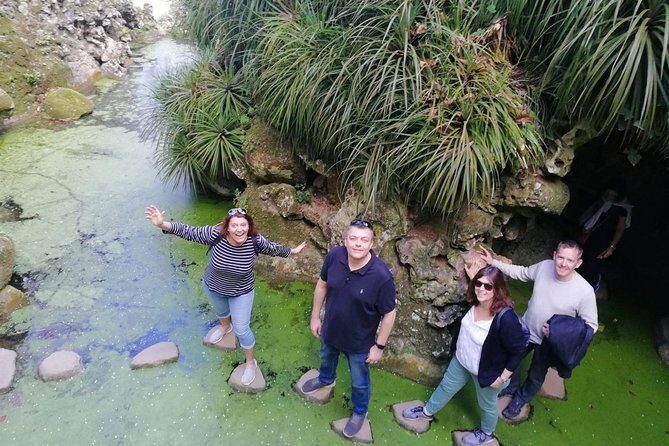
Not every good moment needs a ticket.
Between the palace-heavy segments, the tour includes several free stops that help you see Sintra as a living place, not just a destination of big monuments:
- Câmara Municipal de Sintra (City Hall): a beautiful example of Neo-Manueline style. This is the kind of architecture clue that helps you recognize the “Sintra look” beyond the big-ticket sights.
- Fonte Mourisca (Moorish Fountain): built in the 20th century to remember Moorish fountains from the Arabic world. It’s a reminder that Sintra’s connections to Moorish influence didn’t just vanish centuries ago.
- Anjos Teixera Museum: described as the first open air museum in Portugal. Even if you only get a short look, it’s the kind of place that makes you slow down and notice street-level culture.
- Casa Piriquita: famous for making queijadas for King Carlos I in the late 19th century, and still in business. This is your built-in sugar-and-history moment.
- Igreja de Sao Martinho: the parish started to be built in 1147 after the conquest of Sintra by King Afonso Henriques. It’s a quick stop with a long timeline behind it.
- Lawrence Hotel: noted as the oldest hotel in the Iberian Peninsula. You’ll get that sense of old-tourism roots in the way it’s framed during the walk.
- Valverde Sintra Palácio de Seteais: the endpoint. The palace was built in the 18th century and now holds a luxury hotel, which makes for a satisfying finishing line after Pena.
These free moments are not “filler.” They give you variety and keep the walk from feeling like a checklist. Just remember they’re short—so focus on what the guide is pointing out, not trying to read every detail yourself in a few minutes.
Price and what you’re really paying for

The tour price is listed as $3.60 per person, and that’s strikingly low. Here’s how I’d think about value: you’re mainly paying for a professional guide and the structure of the route, while the big monument tickets are mostly separate.
Admissions are explicitly not included for:
- Quinta da Regaleira
- Sintra National Palace
- Castelo dos Mouros
- National Palace of Pena
On the other hand, the tour includes guided stops at several free sites like city hall, the fountain, the open-air museum, Casa Piriquita, and more.
So the math is simple: if you plan to visit all the major ticketed sights anyway, this tour can be a smart way to get meaning fast. If you only want one or two paid stops, you might compare the cost of the guide against what you’d do solo.
Also, the tour is booked on average 24 days in advance, which suggests it’s popular. If you’re traveling in busier months, booking earlier keeps your options open.
Timing, meeting points, and how to plan your walking stamina
This tour runs about 2 hours 30 minutes, starting at 11:00 am. That timing is practical: you’re not committing to an entire day of palaces, but you’re also not rushing through at midnight-light speed. It’s enough time for a guided “greatest hits” plus free cultural stops.
The meeting point is at Jardim Correnteza, Alameda Combatentes da Grande Guerra 11, 2710-569 Sintra, Portugal. The walk ends at Valverde Sintra Palácio de Seteais, R. Barbosa du Bocage 8, 2710-517 Sintra, Portugal.
Because several segments are up-tempo and some places involve walking up and down slopes, plan your day like this:
- Wear shoes you trust on uneven ground and stairs
- Bring water, since the itinerary hits outdoor spaces
- If you’re heat-sensitive, try to keep breaks purposeful during the free stops
Also, there’s an important reality check: the tour requires good weather. If weather turns, it may be rescheduled or refunded, so keep an eye on conditions.
Who should book this Sintra Fairytale walk
This tour fits best if you want maximum context with minimal guesswork.
Book it if:
- You like guided explanations that connect architecture and symbolism
- You want a short route that hits the biggest names in Sintra
- You’re traveling with limited time and still want the “why,” not just the “what”
- You appreciate a small group format capped at 15
It may not be the best match if:
- You prefer slow, long museum-style visits at each site
- You dislike ticket math (since multiple key admissions are not included)
- You’re traveling when weather is unreliable and you can’t be flexible
One more thing I take seriously: this experience leans on your guide. Guides like Kate and Mariah are known for tying details together and using photos to make the sights click. If you enjoy storytelling that helps you see patterns, you’ll likely enjoy this.
Should you book it? My straight answer
Yes, I’d book this if you want a smart, fast introduction to Sintra and you plan to visit Pena and at least one other major paid site. The guide-driven explanations plus the mix of ticketed and free stops make the low tour price feel earned.
I’d skip or rethink it if you’re hoping for a fully all-in price or you want lots of independent time inside each palace. This is about getting the story and the highlights, not about living in the museums all afternoon.
If you’re on the fence, think of it this way: you’re buying structure and interpretation, and then you decide how deep you want to go once you know what matters most to you.
FAQ
FAQ
Is the tour offered in English?
Yes. The tour is offered in English.
How long is the Sintra Walking Tour?
It’s about 2 hours 30 minutes (approx.).
What is the tour price?
The price is listed as $3.60 per person.
Where does the tour start and end?
It starts at Jardim Correnteza, Alameda Combatentes da Grande Guerra 11, 2710-569 Sintra, Portugal. It ends at Valverde Sintra Palácio de Seteais, R. Barbosa du Bocage 8, 2710-517 Sintra, Portugal.
What time does the tour start?
The start time is 11:00 am.
Do I need to buy admission tickets for the major palaces and the castle?
Yes. Admission tickets are not included for Quinta da Regaleira, Sintra National Palace, Castelo dos Mouros, and National Palace of Pena.
Are any stops free?
Yes. Several stops are listed as free, including Câmara Municipal de Sintra, Fonte Mourisca, Anjos Teixera Museum, Casa Piriquita, Igreja de Sao Martinho, Lawrence Hotel, and Valverde Sintra Palácio de Seteais.
How many people are in the group?
The tour has a maximum of 15 travelers.
Is a mobile ticket used?
Yes. It includes a mobile ticket.
What if the weather is bad?
The tour requires good weather. If it’s canceled due to poor weather, you’ll be offered a different date or a full refund.
Can I cancel and get a refund?
Free cancellation is available. You can cancel up to 24 hours in advance of the start time for a full refund. If you cancel less than 24 hours before, the amount paid is not refunded.