REVIEW · LISBON
Lisbon: Sesimbra/Arrábida Natural Park Coasteering Adventure
Book on GetYourGuide →Operated by Vertente Natural · Bookable on GetYourGuide
Coasteering here feels like climbing the coast. This Arrábida Natural Park adventure has you working along the rugged shoreline near Sesimbra, swapping between scrambling, rappels, and jump spots under expert coaching. I like that the guides keep it structured and fun, with people like Diogo (often called Mountain Jesus) and Francisco setting an upbeat pace while staying serious about safety.
One possible drawback: it’s not a casual outing. You’ll be in saltwater, hauling yourself over rock, and committing to jumps only when you’re ready, plus you’ll need to handle the mandatory rental wet gear (shoes and shorts).
In This Review
- Key moments I’d plan around
- Coasteering in Arrábida Natural Park: what you’re signing up for
- Sesimbra pickup and Porto de Abrigo: how the day starts
- Suits up: the gear system (and what it changes for you)
- The route rhythm: climbing, rappels, swimming, and controlled jumps
- Jumps: choose your comfort level, then gradually level up
- Climbing and rappelling: what actually feels hard
- The coastline stops: what you’ll see from the sea edge
- Why the boat ride back matters (it’s not just travel time)
- Gear rules and rental reality: shorts, shoes, and what to bring
- What you should bring
- What isn’t included (and what the tour requires)
- Quick heads-up on eyewear
- Camera tip if you want photos
- Safety and guides: the human part that makes coasteering work
- Group pacing: expect the day to flex
- When the route feels too intense, you still have options
- Price and value at around $76: what you’re getting for the money
- Who should book this (and who should think twice)
- Quick practical checklist before you go
- FAQ
- How long is the coasteering adventure?
- What’s included in the price?
- Is food and drink included?
- Do I need to bring shorts and shoes?
- Where do we meet in Sesimbra?
- Is there pickup from Lisbon?
- What languages are the guides?
- What should I bring and what is not allowed?
- Should you book this coasteering adventure?
Key moments I’d plan around
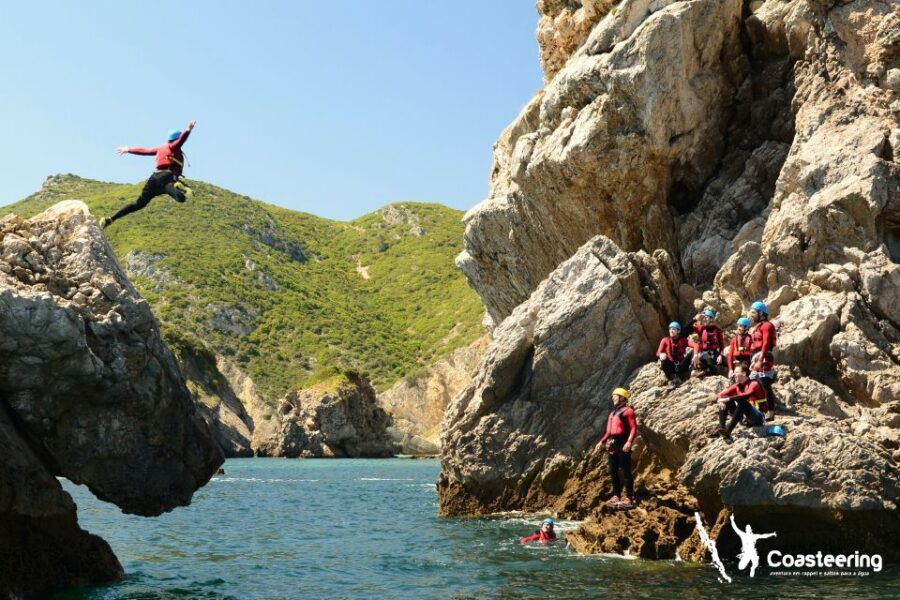
- Arrábida coastline on hard rock: jumps, traverses, and rappels along cliffy sections.
- Pro guidance you can feel: guides like Diogo and Francisco coach the moves and keep the group moving safely.
- Water time is real: expect swimming between rock sections with buoyancy support.
- Shorts and shoes are part of the deal: you’ll rent them and you should plan for them to get wrecked a bit.
- Boat back to Sesimbra adds a breather: you get breeze time before heading back toward Lisbon.
Coasteering in Arrábida Natural Park: what you’re signing up for
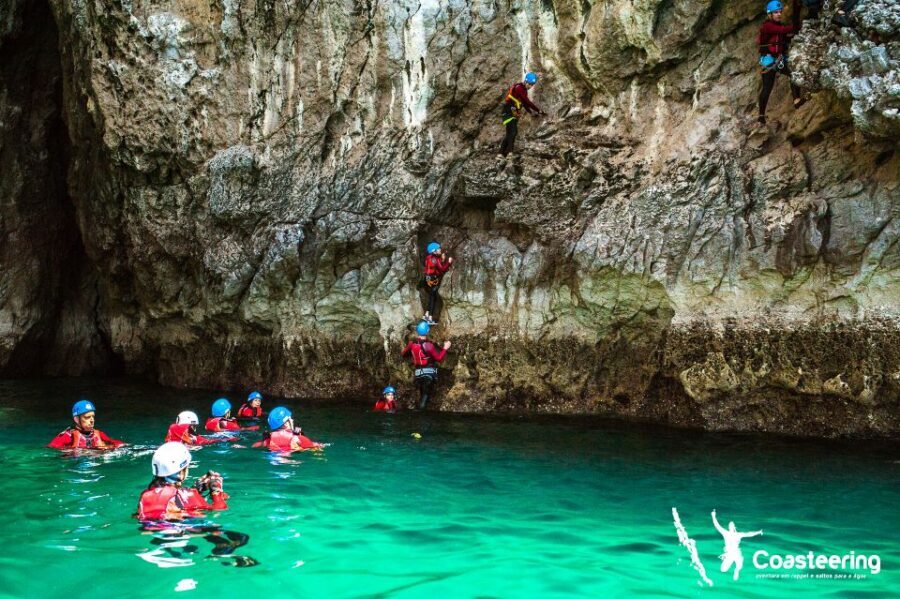
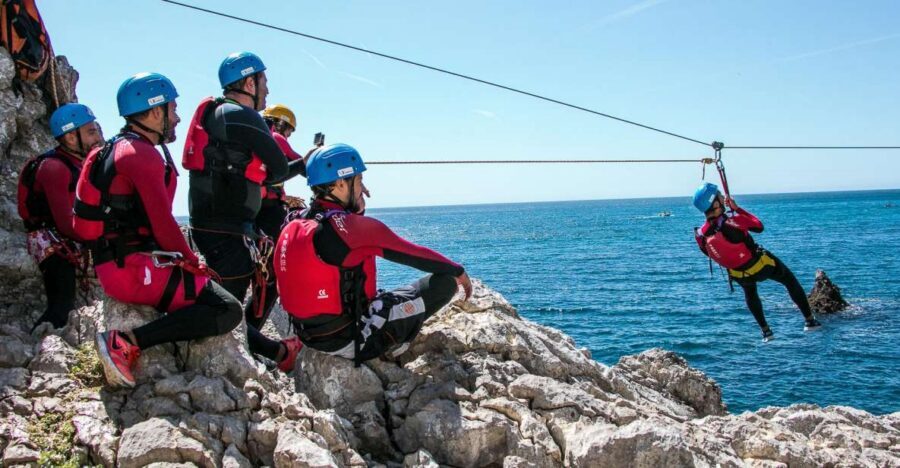
This is coasteering in the Arrábida Natural Park area, run from Sesimbra along dramatic cliffs and wild-looking coves. The day is built around moving like a team along the coast: you’ll climb, reach better ledges, do controlled rappels, and then swim or jump to the next section.
It’s part sport, part coastline tour. Guides tend to point out plants and wildlife, and you’ll get a close view of where the land drops straight into the sea. If you like the mix of physical challenge plus scenery, this fits.
You can also read our reviews of more tours and experiences in Lisbon.



Sesimbra pickup and Porto de Abrigo: how the day starts
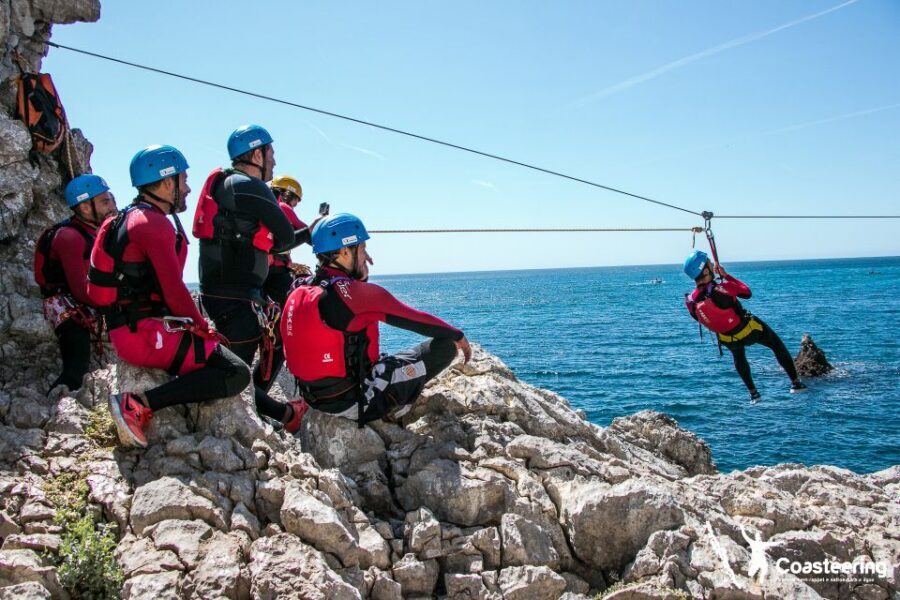
You’ve got two ways to get going. Some departures include pickup from Lisbon, while others have you meet at Porto de Abrigo in Sesimbra.
Either way, the first phase is straightforward: you arrive, meet the team, and get kitted up. Then you move out to the coastline where the route begins. The drive from Lisbon is typically around 45 minutes, so if you’re starting in the city, plan your morning around that chunk of time.
Suits up: the gear system (and what it changes for you)
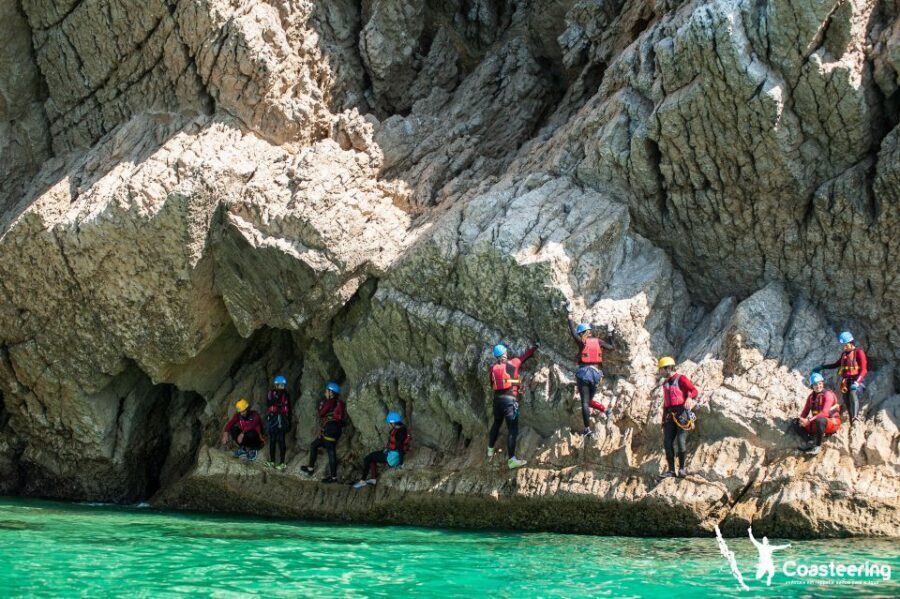
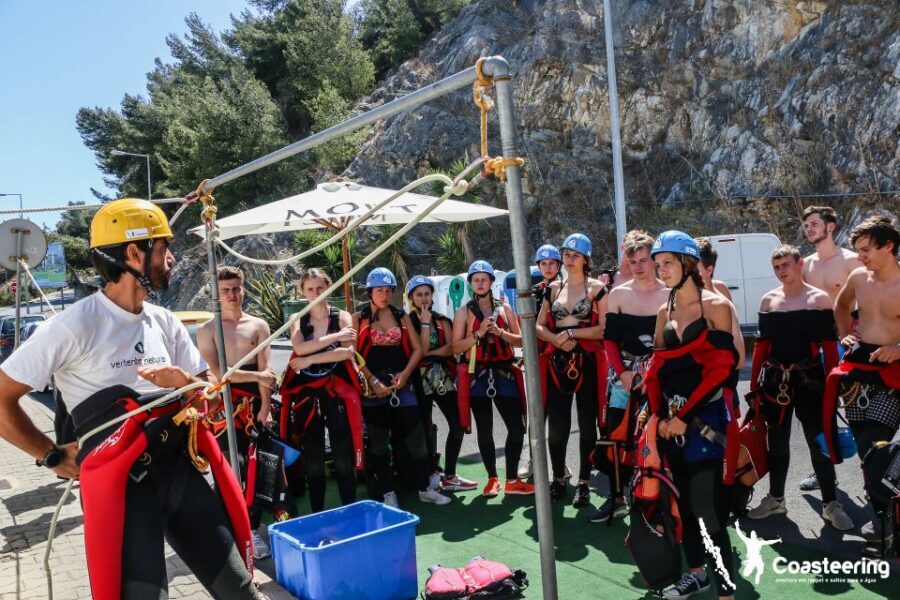
This tour is built on safety gear and clear instructions, not guesswork. You’ll be given a helmet and a buoyancy aid, and you’ll wear a wet suit. For rappel sections, you’ll use harness and rappel equipment too.
Here’s what I like about this setup from a value and comfort point of view: you’re not trying to improvise safety in unfamiliar water. The gear turns coasteering from a risky idea into a guided, repeatable skill route—especially on steep or awkward rock.
Also note the clothing rules. Open-toed shoes aren’t allowed, and you should expect the day to be wet and dirty. Sunglasses and glasses can be a problem; the activity rules specifically say you can’t wear glasses/shades during the run.
The route rhythm: climbing, rappels, swimming, and controlled jumps
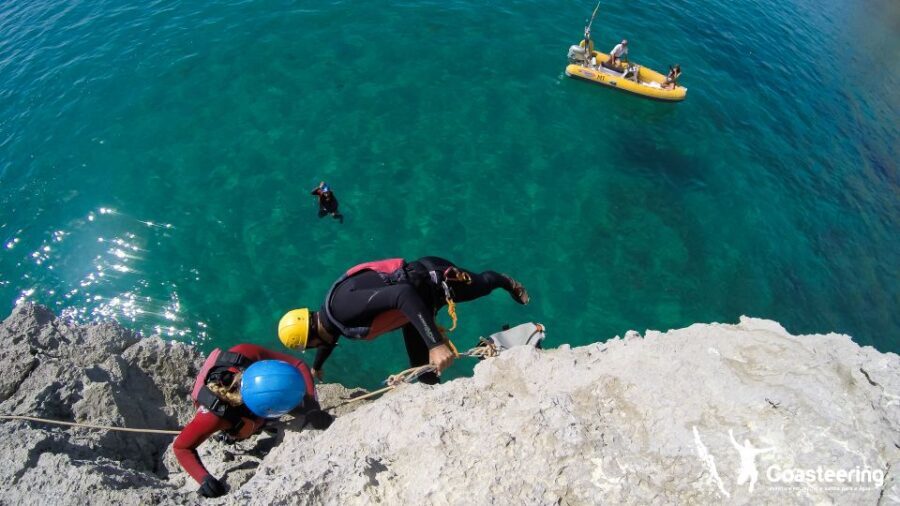
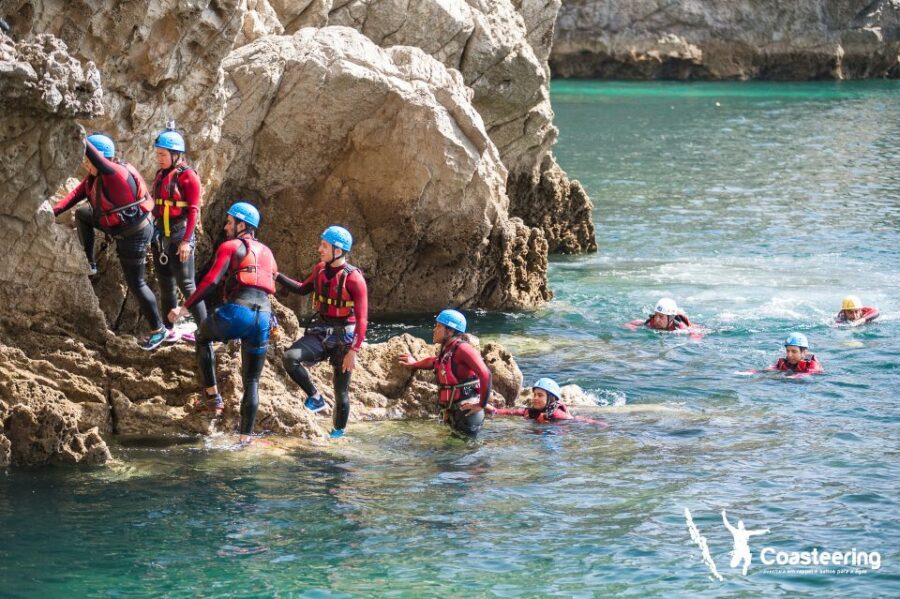
The core experience is a sequence you’ll repeat throughout the day: scramble up rocky sections, get anchored for a rappel when needed, and then move toward the waterline. Between rock moves, you’ll swim to the next point using flotation support.
The best part is how the coastline forces you to stay present. You’re watching your footing, reading the rock route, and then scanning for the next handhold or landing spot. When the guides call the next move, it feels like problem-solving with views.
Jumps: choose your comfort level, then gradually level up
Jumps are the headline, but the key detail is that you don’t have to all-or-nothing it. The tour is structured so the guides can steer you toward easier options or lower jumps if you want to build confidence first.
Height can run up to several meters on many outings. You’ll feel it in your heart rate, especially once you’ve accepted the idea of stepping out and letting the sea do the landing. Guides like Diogo, Francisco, and Henrique are repeatedly praised for being patient and encouraging while still keeping the safety plan tight.



Climbing and rappelling: what actually feels hard
The rock climbing part can be more challenging than people expect, even if you’re athletic. You’re not just hiking. You’re climbing uneven surfaces, adjusting your grip, and moving with a harness and wet suit on—so balance matters.
Rappelling adds a different kind of focus. You’ll be shown how to set yourself, and you’ll use the ropes and harness system correctly before you go down. This is where the guide team’s calm coaching really matters.
The coastline stops: what you’ll see from the sea edge
The route is designed to take you through a mix of rocky escarpments, wild beaches, and secret-feeling coves. That’s the reason the activity is so memorable: you get perspectives most people only see from a distance.
You also see why this coastline is famous for its cliffs. The rock doesn’t gently slope into water; it drops. So as you climb and descend, you’re getting that dramatic line where land meets sea over and over again.
On a good day, you might even get wildlife surprises. I’ve seen at least one report of a dolphin pod during the experience, which is exactly the kind of bonus you’d hope for in coastal Portugal.
Why the boat ride back matters (it’s not just travel time)
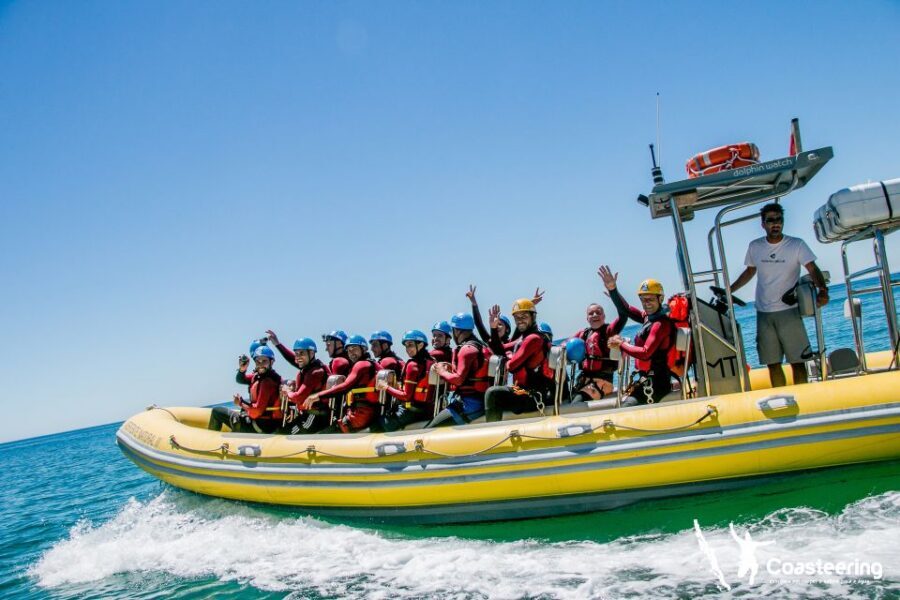
At the end, you return by boat back toward Sesimbra. That boat segment is a real decompression moment. Your body gets a break after hours of climbing and water time, and the sea breeze helps you reset before heading back toward Lisbon.
It also helps you see the coastline without the constant scramble. From the water, the cliffs and coves look even bigger. You’ll get that last “wow” moment while you’re sitting down, which is a smart way to end a high-adrenaline day.
Gear rules and rental reality: shorts, shoes, and what to bring
Here’s the practical part you should not skip: you need the right clothing and shoes for climbing and being in the water.
What you should bring
- Swimwear
- Towel
- Sports shoes
- Shorts
What isn’t included (and what the tour requires)
The tour notes that shorts and running shoes are mandatory and rented on site. Even if you have good shoes, this is one of those sports where your feet and the gear are part of the safety system, and water will do its thing fast. Plan for rentals.
Also, bring a mindset that your shorts and shoes are likely to get wet and dirty. One of the most repeated tips is to expect this and not treat your own gear gently.
Quick heads-up on eyewear
If you need glasses for daily life, you’ll want to plan ahead. The activity rules state you can’t wear glasses/shades during the adventure. That likely means contact lenses (if you use them) or you’ll need to follow the operator’s guidance on what’s acceptable.
Camera tip if you want photos
You’ll be moving fast and getting water splashes, so if you want photos, bring a way to protect it. A waterproof camera is a smart call.
Safety and guides: the human part that makes coasteering work
This is a team sport with a safety plan. The guides are doing more than leading you—they’re managing risk, timing, and group pacing so people stay together and moves stay controlled.
What shows up again and again in the experience feedback is that guides are patient with different comfort levels and keep instructions clear. Names that come up a lot include Diogo, Francisco, Henrique, Leticia/Leonardo, Fabio, Mariana/Mariana, and others. Different personalities, same core idea: you should feel safe enough to try, but never rushed.
Group pacing: expect the day to flex
Because this is a group activity, the pace can adjust. If you’re moving slower on climbs or you want extra time before a jump, the group may wait or slow down at transitions. That’s normal for safety and logistics. If you’re the type who hates waiting, plan to use that time to rest your legs and listen for the next briefing.
When the route feels too intense, you still have options
Even on a tough day, you can usually choose easier routes or lower jump options. Guides also tend to adjust the order of jumps so you don’t feel thrown into the deep end.
Price and value at around $76: what you’re getting for the money
At about $76 per person for a 4 to 5 hour adventure, you’re paying for real instruction and real equipment, not just a scenic walk. You get the coasteering gear (helmet, buoyancy aid, harnesses, rappel equipment), guided support through the most technical steps, and personal accident insurance.
Food and drinks aren’t included. That’s worth planning for so you don’t spend energy hungry. But the core value is that you’re buying coaching plus equipment plus the route itself, in a place where the coast is the “playground” and the operator handles the complexity.
In plain terms: if you want to do this type of coastal activity without buying and figuring out your own climbing and water setup, this is a strong deal.
Who should book this (and who should think twice)
If you love adrenaline sports and don’t mind being active for hours, you’ll likely have a blast. This fits well for people who enjoy climbing, scrambling, and being in the ocean.
It also works if you want a guided day with options. Even if you’re nervous about heights, you can usually build up with lower jumps and a supportive pace.
Who should think twice? Anyone who can’t handle sustained climbing and swimming, or anyone who’s uncomfortable getting wet and handling wet gear for the whole outing. Even with options, coasteering isn’t gentle.
If you have a strong swimmer vibe and some determination, you’ll probably feel more confident quickly.
Quick practical checklist before you go
- Wear or pack swimwear and expect wet conditions.
- Bring a towel so you’re not sitting around freezing in damp clothes.
- Use shorts and running shoes rental on site and don’t stress about protecting your own.
- Skip sunglasses and glasses/shades for the activity.
- Bring a waterproof camera if you want to capture the cliffs and jumps.
FAQ
How long is the coasteering adventure?
The tour runs about 4 to 5 hours.
What’s included in the price?
You get coasteering equipment, a guided tour, and personal accident insurance.
Is food and drink included?
No. Food and drinks are not included.
Do I need to bring shorts and shoes?
Shorts and running shoes are mandatory, and they are rented on site. The tour also lists bringing sports shoes and shorts, so plan to follow the operator’s on-site fitting and instructions.
Where do we meet in Sesimbra?
The meeting point can vary depending on the option booked. One option uses Porto de Abrigo in Sesimbra.
Is there pickup from Lisbon?
Some options include pickup from Lisbon, while others have you meet at the Sesimbra starting point.
What languages are the guides?
The live tour guide is available in English, French, Portuguese, and Spanish.
What should I bring and what is not allowed?
Bring swimwear, a towel, sports shoes, and shorts. Open-toed shoes are not allowed.
Should you book this coasteering adventure?
Yes, if you want a guided, adrenaline-heavy way to see Portugal’s coastline up close—and you’re okay with being active in wet conditions. I’d book this for people who like hands-on challenges, enjoy cliff views, and want professional guides to handle the technical parts like rappels and jump safety.
If you’re looking for an easy beach day or you’re worried you’ll hate swimming and scrambling, you may find this too intense. But if you’re willing to listen, go step by step, and choose a jump height that matches your comfort, this is the kind of Lisbon-area adventure you’ll remember for a long time.