REVIEW · LISBON
Lisbon Revelation Tour
Book on Viator →Operated by Lisbon Walker · Bookable on Viator
Lisbon does a great job of hiding its best stories. This walking tour is a smart way to connect the streets you see with the events that shaped them.
I like that the tour keeps things practical and on-foot: you get an easy city overview in about 3 to 4 hours, then you’re done early enough to enjoy your afternoon your way. Two things I especially love are the professional art historian guide and the small food tasting included (either a pastel de nata or a ginjinha). The one thing to plan for is walking with some hills and steps, so bring water and wear real shoes.
You’ll also notice a clear theme in how the guides teach: Lisbon becomes a timeline you can follow. Guides such as Filipa, Philippa, Alex, Hugo, Mia, and José come up often for their careful pacing and the way they tailor stops to what people want to know—history, photo spots, and where to head next.
In This Review
- Key things to know before you go
- Lisbon in 3–4 hours: the value of a morning walking tour
- Meeting point at Praça do Comércio and why it sets the tone
- Baixa, Rossio, and Restauradores: Lisbon after the big reset
- Praca da Figueira and Praca dos Restauradores: quick stops, real local texture
- Praca Dom Pedro IV and the 10-minute march toward views
- Elevador de Santa Justa: the 360° payoff
- Largo do Carmo and 1974: history you can point to
- Chiado & Carmo, plus an epic-poet tribute and the bohemian side of Lisbon
- Igreja de São Roque: a Baroque stop that feels like a statement
- Miradouro São Pedro de Alcântara: the end view over Castle Hill
- Food tasting: pastel de nata or ginjinha with a local-history day
- Guides, pacing, and what you’ll actually get from the storytelling
- Walking-smart tips so you don’t suffer unnecessarily
- Price and timing: why $30.25 can be a good deal
- Who this tour suits best (and who should consider alternatives)
- Should you book the Lisbon Revelation Tour?
- FAQ
- How long is the Lisbon Revelation Tour?
- What’s included in the ticket price?
- Where does the tour start and end?
- Is there admission cost for the stops?
- What time does the tour begin?
- Is the tour suitable for kids or families?
- Can I cancel and get a refund?
Key things to know before you go
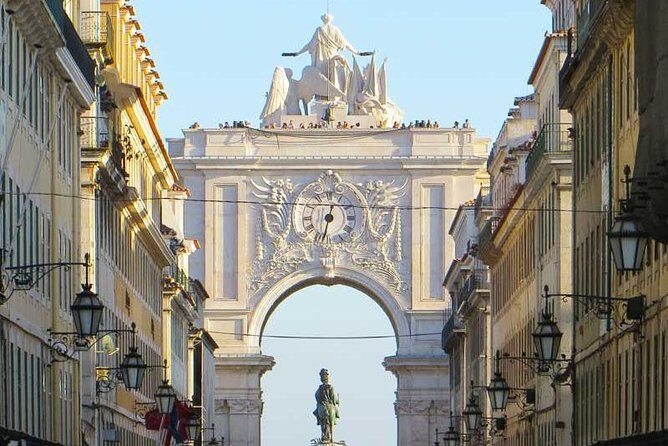
- Starts at Praça do Comércio (Terreiro do Paço), so you begin where Lisbon feels like power and trade
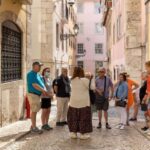
- Max group size of 16, which makes it easier to ask questions and move at a human pace
- Includes a pastel de nata or ginjinha tasting, so you get a taste of Lisbon while walking
- Ends at Miradouro de São Pedro de Alcântara for a strong finale over Castle Hill
- Operates in all weather conditions, so dress for sun, wind, or rain
- Moderate fitness helps since you’ll handle steps and some elevation during the day
Lisbon in 3–4 hours: the value of a morning walking tour
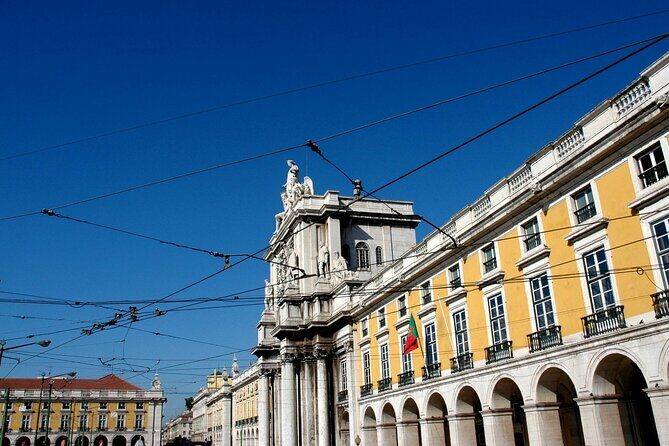
This is one of those tours that works because it doesn’t try to do everything. You cover a lot of central Lisbon—squares, neighborhoods, churches, and viewpoints—in roughly 3 to 4 hours, then you’re left with the afternoon to explore on your own.
At $30.25, the value comes from what’s included versus what you’d normally pay for separately. You’re getting a professional art historian guide plus a short local food tasting, and the route hits major landmarks that give you an instant sense of how Lisbon is laid out. It’s not a museum-heavy day, so it’s a good fit if you want orientation fast.
Also: the group is small, up to 16 people. That matters because Lisbon streets can be busy, and a smaller group makes it easier to stop, look, and ask questions without getting lost in the crowd.
You can also read our reviews of more tours and experiences in Lisbon.



Meeting point at Praça do Comércio and why it sets the tone
The tour starts at Cervejaria Antártida Lisboa, right by Praça do Comércio on R. C 20-23. Beginning here is smart. Praça do Comércio (Terreiro do Paço) has that “everlasting center of power” vibe, and it’s the kind of place where you immediately understand why ships, trade, and Lisbon’s public life mattered.
You spend about 20 minutes here. Expect the guide to connect the square to Lisbon’s larger story—how this area became a focal point and what that meant for the city’s rise. Admission isn’t included for this stop, so you’re mostly touring the public space and architecture from outside.
If you like photo moments, this is a great opener. The light tends to catch the wide square nicely, and you’ll have an easy baseline for later comparisons as the tour moves toward the reconstructed downtown.
Baixa, Rossio, and Restauradores: Lisbon after the big reset
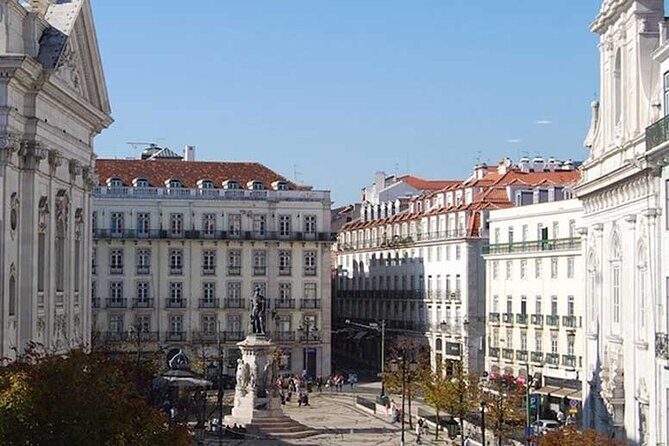
From there, the walk moves into the Baixa/Rossio/Restauradores corridor. This is where the tour shifts from “center of power” to “new city built after the Earthquake,” which is one of the clearest storylines Lisbon offers.
You’ll spend about 30 minutes in this stretch. It’s not just sightseeing—it’s a lesson in city planning. Lisbon’s downtown feels more organized than its older areas, and that’s not an accident. The guide’s job is to help you see those patterns while you’re moving, so the streets make sense instead of feeling random.
Rossio and Restauradores are also practical for you as a visitor. If you later want to shop, grab coffee, or plan where to go next, you’ll know this zone by the time the tour is over. The tour also keeps the pace steady here, which helps if you’re traveling with limited time.
Praca da Figueira and Praca dos Restauradores: quick stops, real local texture
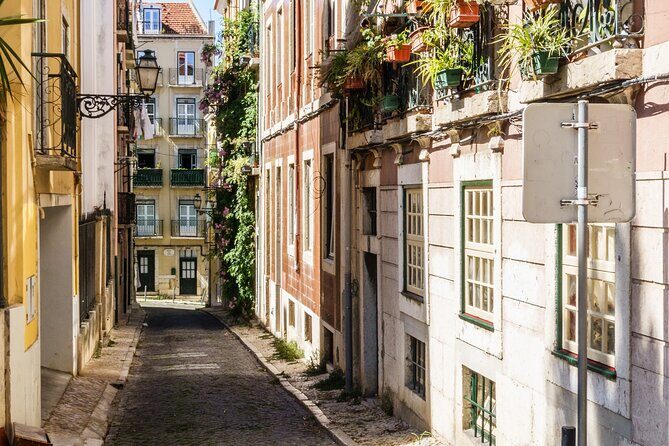
Next come two short square moments—each only about 5 minutes. Praca Da Figueira is described as a traditional market square. Even if you don’t shop, the point is atmosphere and scale: you see how everyday life sits next to big civic landmarks.
Then you hit Praca dos Restauradores, which the tour frames as the image of a European capital. That phrase is useful because it tells you what to look for: more formal grandeur, wide perspectives, and monuments that communicate status.
These quick stops are good for two reasons. First, they keep the tour from dragging. Second, they give you enough “anchors” that later, when you walk around without the guide, you can still remember where you are.
Praca Dom Pedro IV and the 10-minute march toward views
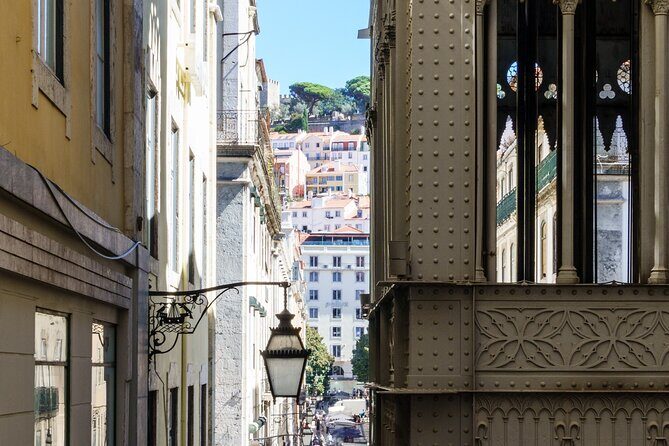
About 10 minutes are spent around Praca Dom Pedro IV, described as the heart of downtown. This stop is a good bridge between squares and the viewpoint-heavy finale.
When a walking tour adds one more central “hub,” it’s usually because you’ll likely revisit that area later. Even if you don’t, this is where your internal map starts to click.
You’ll feel the tour’s elevation in small ways as you move from flat-feeling downtown toward the areas with better vistas. The good news is that the tour keeps it manageable for most people with moderate fitness, but you should still plan for stairs and uneven pavement.

Elevador de Santa Justa: the 360° payoff
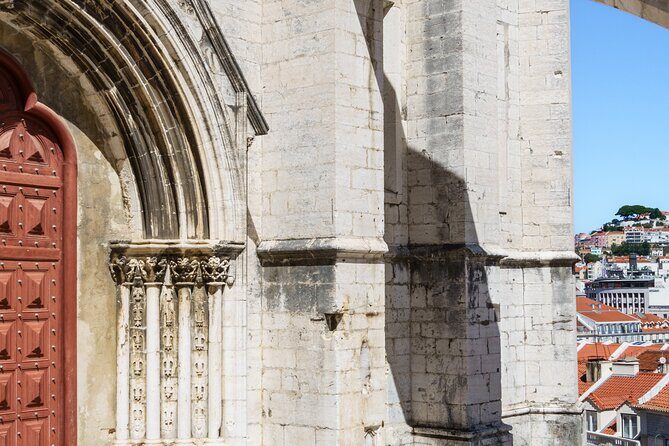
One of the most visitor-friendly parts is Elevador de Santa Justa, with a 360-degree view over the downtown district. The tour gives you about 10 minutes here, which is usually enough time to orient yourself and then pick a direction for photos.
Even though the stop is marked as admission ticket free in the tour structure, you should treat this as a “look and understand” moment rather than a full ride. If you want the elevator itself, you’d need to plan for that separately.
Still, the value is high. Once you see the downtown from above, Lisbon’s shapes become clearer. Streets that felt confusing start to feel like a system, and you get a sense of how Castle Hill and the older districts relate to the modern core.
Largo do Carmo and 1974: history you can point to
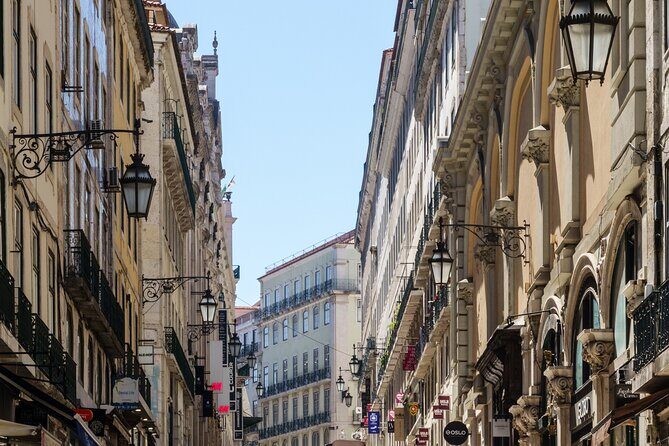
Then the tour shifts again, this time to Largo do Carmo, tied to the democratic revolution of 1974. This is the kind of stop where the guide’s narration matters more than the view.
You’ll spend about 5 minutes here. The timeframe is brief, but it’s not random. These stops give you a human dimension to Lisbon’s story—politics and public life—so the tour isn’t only about architecture.
If you like understanding why a city changed, you’ll appreciate how this stop interrupts the postcard moments and reminds you that Lisbon isn’t just beautiful; it’s also lived-in and politically shaped.
Chiado & Carmo, plus an epic-poet tribute and the bohemian side of Lisbon
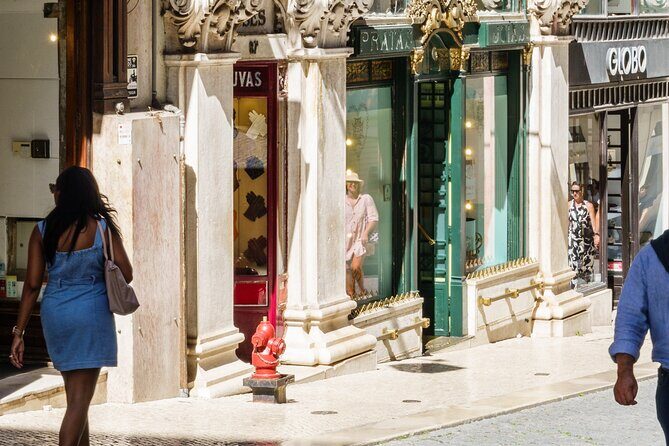
As the tour moves through Chiado & Carmo, you’re told about the only Gothic monument of the city. That matters because you can often miss “rare” architecture when you’re rushing. The guide helps you spot it and understand why it’s notable in Lisbon’s mix of styles.
After that, the route includes a tribute to the Discoveries epic poet, then it moves into the lively bohemian district. Those stops give you variety in a small time window: art and writing from the age of exploration, then the feel of a neighborhood with personality.
You’ll spend about 10 minutes in this section. This is a good portion of the tour if you like walking through places that don’t feel like a single monument. Lisbon’s charm often comes from the contrast: big history next to casual life.
Igreja de São Roque: a Baroque stop that feels like a statement
The next highlight is Igreja de São Roque, described as a Baroque extravaganza, with around 10 minutes allotted.
Even when you’re not going inside, a Baroque church can hit hard from the street. The façade and presence are part of the experience, and the guide can point out what makes Baroque work so dramatic—how it uses scale, detail, and contrast to create an emotional effect.
This stop also works as a pacing tool. You’ve been outdoors through multiple squares and viewpoints, and a church stop gives you a brief visual reset. It’s a natural moment to slow down, stand still, and take in the details your eyes might skip on your own.
Miradouro São Pedro de Alcântara: the end view over Castle Hill
The tour finishes at Miradouro de São Pedro de Alcântara, with about 10 minutes dedicated to the final panorama over the Castle Hill area.
This is the kind of ending that makes the whole walk feel worth it. You’ll see how the city stacks and angles, and you’ll understand what you’ve been looking at since the morning. If you’re the type who likes a photo at the end of a day, this is a good one.
It also helps that the meeting point for the ending is practical. You’re in a viewpoint zone, but close enough to continue exploring without feeling like you’re stranded.
Food tasting: pastel de nata or ginjinha with a local-history day
One included extra is food tasting: you’ll try either a pastel de nata (cream custard) or a ginjinha (brand cherry liquor).
This kind of stop is more useful than it sounds. It prevents the tour from turning into only walking and staring. It also gives you a memorable, taste-based anchor for Lisbon—sweet, rich, and very much part of local identity.
If you want to play it safe, you can decide based on taste preference. If you prefer something non-alcoholic, the pastry is your move. If you enjoy Portuguese flavors with a kick, ginjinha is a fun way to end the tour’s long line of scenes.
Guides, pacing, and what you’ll actually get from the storytelling
The best thing about this tour is the way the guide ties everything together. People consistently highlight guides for their attention to guests, their ability to answer questions, and how they connect each neighborhood to a bigger timeline.
You’ll feel that during the walk through the mix of squares and viewpoints. The guide isn’t just listing buildings; they explain why Lisbon looks the way it does and what changed over time. That makes it easier to move around later because you’re not only collecting sights—you’re collecting reasons.
Also, the pacing tends to land in a practical zone: enough time to understand each stop, not so long that you feel stuck. That’s why you get an earlier finish and can plan the rest of your day with confidence.
Walking-smart tips so you don’t suffer unnecessarily
This is a walking tour with moderate fitness needs. That means you should show up with the basics covered, not with bravado.
I recommend:
- Wear shoes you can walk in for hours. Cobblestones and uneven streets are real.
- Bring water, especially in warmer months.
- Dress for all weather since the tour runs in all conditions. Lisbon weather can change quickly.
- If you’re sensitive to elevation, take your time on the uphill portions. The tour structure is meant to be manageable, but you still have to physically move.
If you come prepared, you’ll enjoy the viewpoints more, not just tolerate them.
Price and timing: why $30.25 can be a good deal
Let’s talk value honestly. $30.25 isn’t expensive for a guided, art-history-focused walking tour that includes a food tasting and covers a lot of central Lisbon.
What you’re paying for is:
- A professional art historian guide
- A route that gives you orientation in a short window
- A tasting that saves you money compared with stopping for snacks on your own
- Small group size (up to 16), which improves the experience
Timing also matters. With a morning start at 10:00 am, you get Lisbon early, then you’re free in the afternoon. That’s a big deal in a city where you might want to do tram rides, day trips, or neighborhood wandering without feeling rushed.
Who this tour suits best (and who should consider alternatives)
This tour is a strong choice if you want:
- An intro to Lisbon’s layout and major sights
- A history-driven walk without the stress of museum schedules
- A small-group guide who can help you plan the rest of your trip
It’s also a good first day activity because it helps you place landmarks in context. If you come on day one, you’ll feel less lost later.
On the other hand, if you dislike walking, hate stairs, or have very limited mobility, this might feel like too much. The tour is rated as moderate fitness, and the route includes elevation and multiple street-level stops.
Should you book the Lisbon Revelation Tour?
If you want a smart morning start with a guide who connects places to stories, I’d book this. The combination of city orientation, small-group pacing, and included food tasting makes it a practical, good-value introduction to Lisbon.
I’d skip it only if you strongly prefer vehicle-based sightseeing, or if you know you won’t handle hills and steps comfortably. Otherwise, this is the kind of tour that turns your first hours in Lisbon into a map you can actually use for the rest of your trip.
FAQ
How long is the Lisbon Revelation Tour?
The tour runs about 3 to 4 hours.
What’s included in the ticket price?
You’ll get a professional art historian guide and a food tasting of either pastel de nata or ginjinha.
Where does the tour start and end?
It starts at Cervejaria Antártida Lisboa near Praça do Comércio, and it ends at Miradouro de São Pedro de Alcântara.
Is there admission cost for the stops?
Some stops are noted as admission ticket free, while Praca do Comercio is noted as admission ticket not included.
What time does the tour begin?
The start time is 10:00 am.
Is the tour suitable for kids or families?
Children must be accompanied by an adult, and the tour is rated for moderate physical fitness.
Can I cancel and get a refund?
Yes. You can cancel for a full refund up to 24 hours before the experience’s start time.