REVIEW · LISBON
Lisbon: Portuguese Riding School Trainig with Lusitano Horse
Book on GetYourGuide →Operated by Book N Tour · Bookable on GetYourGuide
Watch equestrian art begin in the stable. This short, focused experience lets you see Lusitano horses and riders preparing for the level of precision the Portuguese School of Equestrian Art is known for—up close, with period music and costume.
I love that you get more than a quick peek. You’ll watch warm-ups and resourcefulness exercises with riders in period costume, then sit in as the training builds toward the rehearsals for the “court” atmosphere.
One thing to consider: it’s a morning event (10am–1pm), so if you’re hoping for a full day of stable time, you may wish it stretched a bit longer.
In This Review
- Key Points You Should Know Before You Go
- A 3-Hour Window Into Portuguese School Discipline
- Henrique Calado Riding Ring: Where You Really See the Work
- Period-Costume Warm-Ups: Rhythm and Resourcefulness on the Ground
- Handlers and the Alter Real Stud Farm Connection
- Equestrian Art Rehearsals: From Training Into Court Choreography
- Audio Guide: Your Best Friend in Stable-Mode
- Timing Tips: When to Arrive for the Best Balance
- Photography, Etiquette, and What to Bring
- Price and Value for a Lisbon Horse Morning
- Who Should Book This (and Who Might Skip It)
- Book It or Skip It: My Practical Recommendation
- FAQ
- How long is the experience?
- What’s included in the ticket?
- Do I need headphones?
- What languages is the audio guide available in?
- Can I take photos or use flash?
- Is it wheelchair accessible?
Key Points You Should Know Before You Go
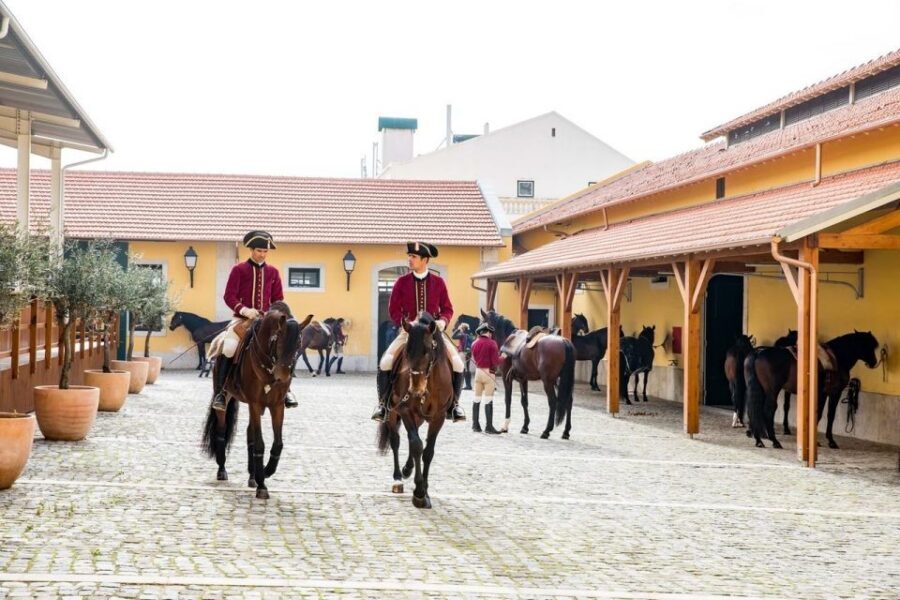
- Henrique Calado Riding Ring access: you see the stable reality, not just the final show look
- Lusitano training routines: rhythm, health, and physical needs are part of the lesson
- Period music and court scenes: it’s staged, but the work behind it is real
- Alter Real Stud Farm focus: you’re watching daily training tied to the horses’ home base
- Audio guide matters: it explains the stables and introduces the horses so you don’t miss what’s going on
A 3-Hour Window Into Portuguese School Discipline
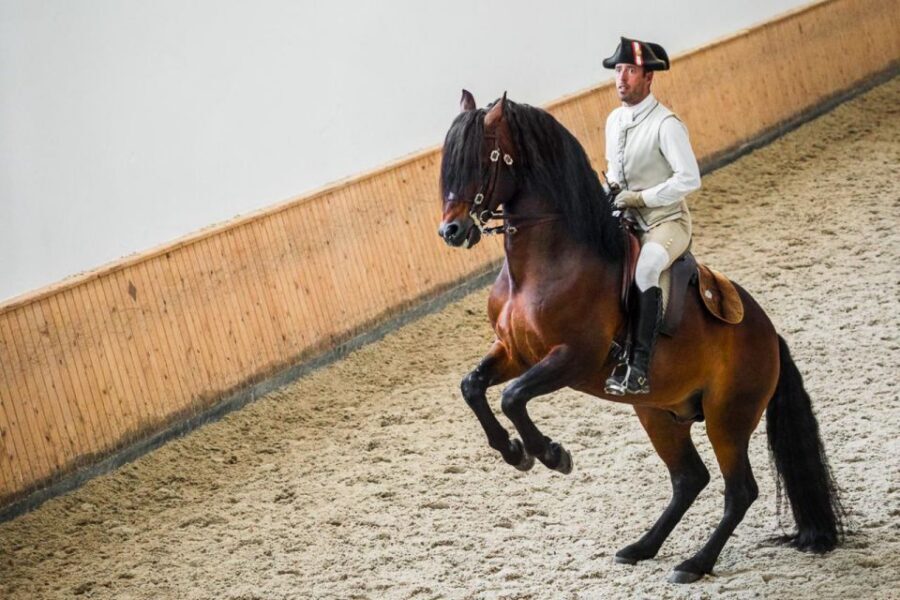
This is one of those tours that rewards patience. Instead of rushing past the action, you spend your time watching what horses and riders do before anything looks polished on stage. The core value is simple: you’re seeing training and rehearsal, not just performance.
The timing helps, too. The activity runs 10am–1pm, and the best window is 11am–12:30pm, when you’ll catch more of the training flow and the rehearsals that follow.
Expect a calm, structured morning where the pace is set by the horses. That means you’ll notice details like how movements stay controlled, how routines respect the horse’s condition, and how everyone on site is watching for readiness rather than speed.
You can also read our reviews of more tours and experiences in Lisbon


Henrique Calado Riding Ring: Where You Really See the Work
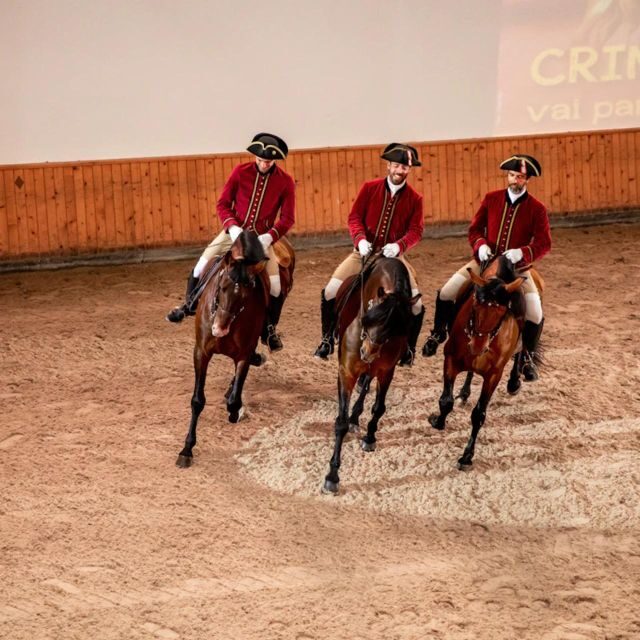
Your morning centers on Henrique Calado Riding Ring, and that location matters. This is where you can watch handlers care for the horses and where training happens in a way that feels grounded, not staged for tourists.
You’ll also be able to observe how the handlers support the horses as the program moves through warm-ups and exercises. That behind-the-scenes view is a big reason this is worth your time in Lisbon. It’s easy to think of equestrian art as only “rider talent.” Here, you see the other half: the constant care around the horse.
And because the Lusitano horses are central to the experience, you can stay focused. You’re not bouncing between random attractions. You’re learning one system, one method, one daily rhythm—then seeing it presented in a court-like setting.
Period-Costume Warm-Ups: Rhythm and Resourcefulness on the Ground
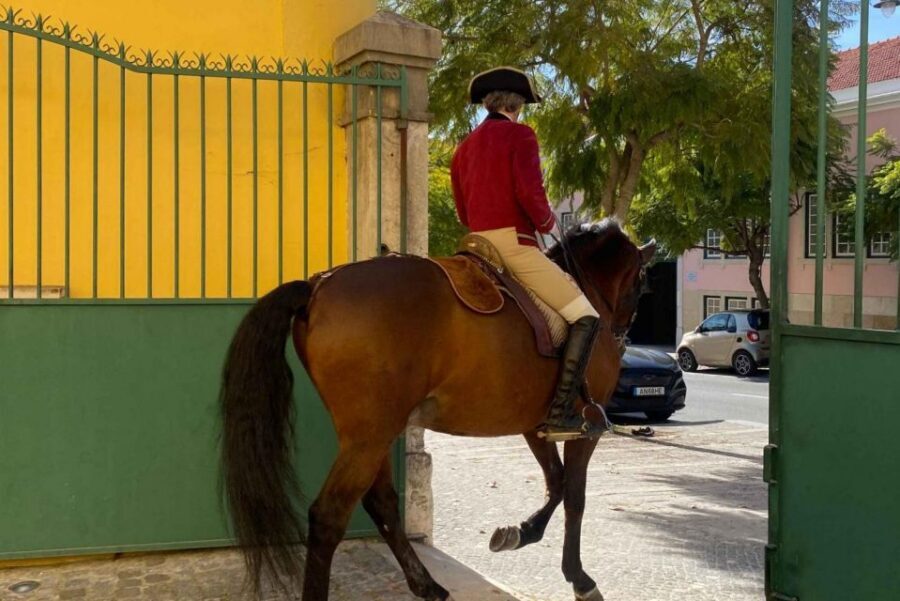
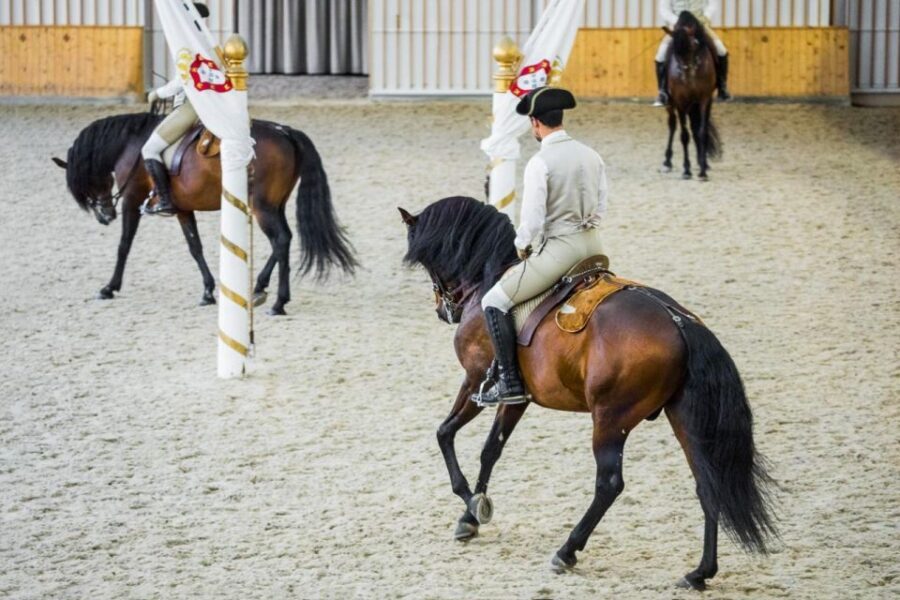
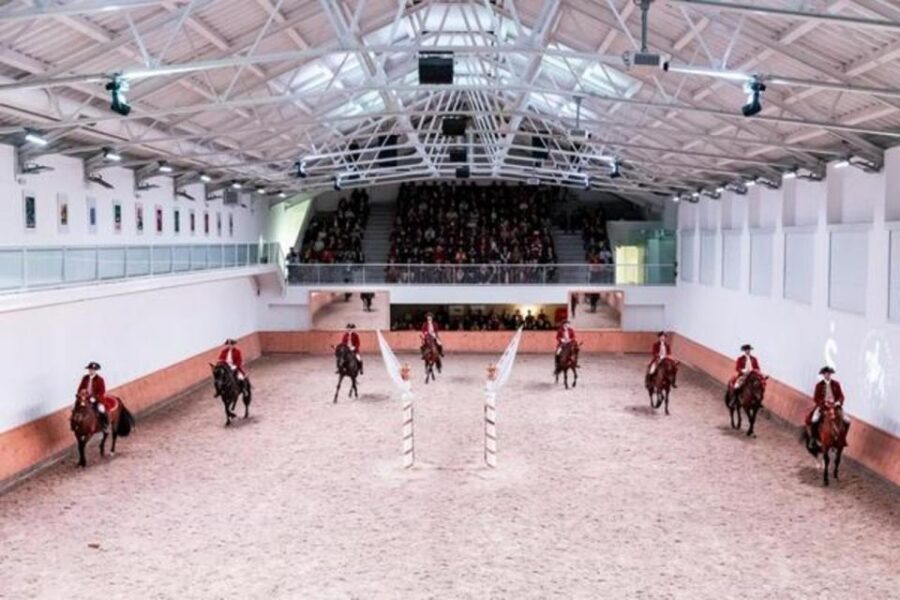
One of my favorite parts of this kind of experience is that it starts early—before any choreographies. You’ll watch riders dressed in period costume doing warm-up and resourcefulness exercises with Lusitano horses. That costume element isn’t just decoration; it signals the style this training is meant to support.
The training is described as respecting the rhythm and the health and physical needs of each horse. You don’t have to be an expert to notice what that means. Look for controlled transitions, steady pacing, and routines that don’t force the horse. The “art” comes from consistency.
As the morning progresses, the warm-up sets you up to understand the later rehearsals. If you pay attention here—how the riders prepare and how the horses respond—you’ll spot the connection between groundwork discipline and more complex Equestrian Art moves later in the day.
Handlers and the Alter Real Stud Farm Connection
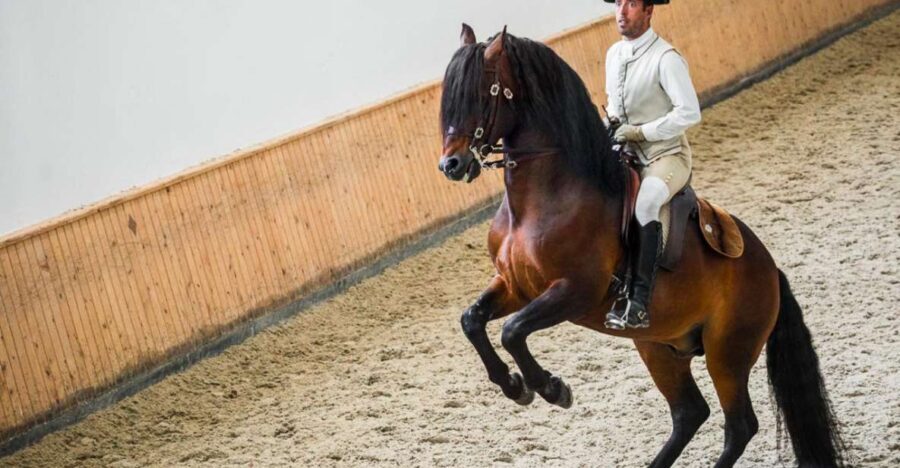
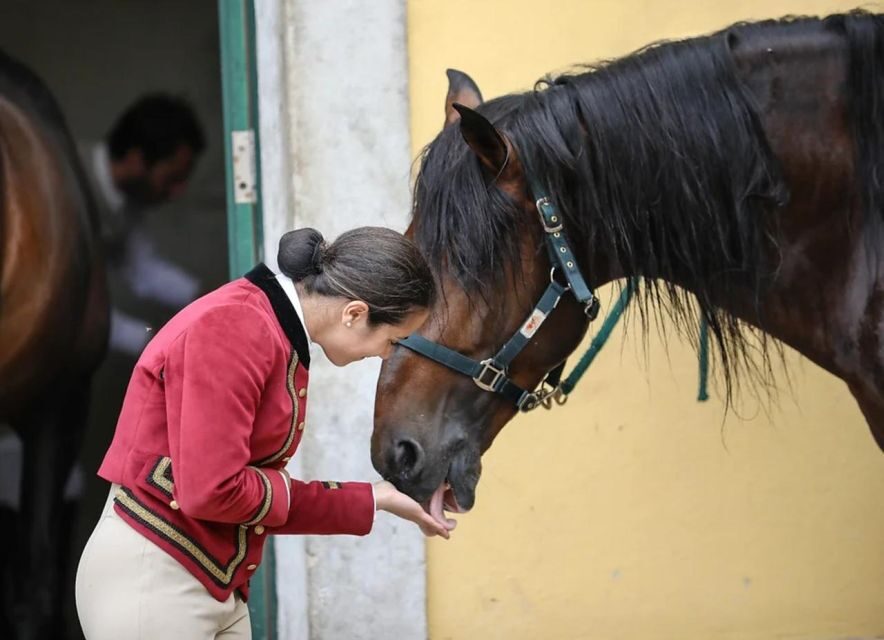
This isn’t just a rider show. You’re also watching the horses being cared for by handlers. That care piece is one of the most practical takeaways you can get from a horse-focused outing: the training depends on daily physical management, not only on what happens in the ring.
The experience is tied to horses from the Alter Real Stud Farm. In real terms, that means what you’re seeing isn’t random. You’re watching daily training connected to a broader equestrian tradition and the horses’ background.
What I like about this connection is that it keeps the morning grounded. You’re not just marveling at movement. You’re watching the systems that support it, from care routines to how training is timed to the horses’ needs.
Equestrian Art Rehearsals: From Training Into Court Choreography
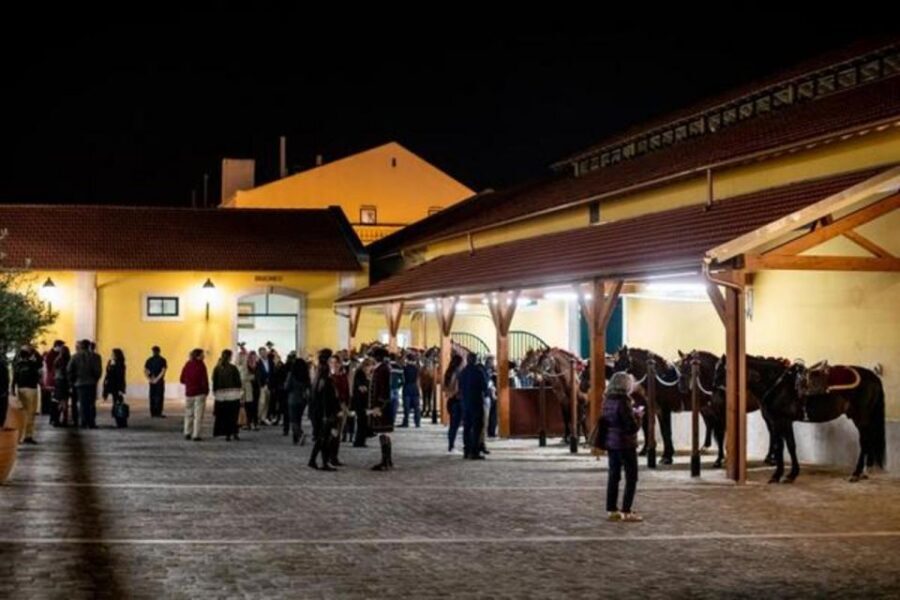
After the warm-ups, the morning shifts into training and rehearsals of complex Equestrian Art exercises. You’ll see choreographies designed to recreate the charm of an 18th-century court, and you’ll experience the atmosphere in two spaces: the Nora Patio and at Henrique Calado Riding Ring.
This part is where the experience starts to feel theatrical—but not hollow. The big difference is that you’ve already seen the foundational work. So when you watch rehearsals, you understand what you’re seeing as the result of discipline, not magic.
Sound matters here. You’ll hear engaging period music during the rehearsal atmosphere, and that helps you track the flow of routines. It also makes the court setting more immersive without you needing a “backstory lesson” to follow along.
If you like movement-based performances—dance, music timing, theatrical staging—this will click quickly. The exercises are complex, but the structure of the morning makes them easier to follow because you’re not dropped into the middle of the final show moment.



Audio Guide: Your Best Friend in Stable-Mode
An audio guide is included, and it’s available in English, Portuguese, and French. This is important because stable areas can be visually busy, and you’ll likely want a way to connect what you’re seeing with what it means.
The guide is described as very well made: it explains the stables clearly and introduces the different horses. That’s exactly what you want on a short itinerary. In a program like this, the difference between a 4 and a 5 is often context—why a specific exercise matters and what you’re meant to notice.
Practical tip: bring a charged smartphone and make sure you can access what you need. There’s also a headphone mention in the instructions. Even if you don’t technically need them the whole time, having them ready will keep you comfortable during periods of music and activity.
Timing Tips: When to Arrive for the Best Balance
The event runs 10am–1pm, but the best time to visit is 11am–12:30pm. I’d aim to be there earlier rather than just at the last second. In horse training, the best moments aren’t always announced—they happen as routines line up.
If you’re the type who enjoys watching the build-up, arrive around the start of the “best window.” That way you catch more warm-up and more of the rehearsal sequence that follows.
Also, wear comfortable shoes. You’ll be standing and moving with the flow of the group, and stable environments are not ideal for sore feet.
Photography, Etiquette, and What to Bring
This is one of those experiences with clear on-site rules. You can’t use flash photography, and smoking is not allowed. Alcohol and drugs are also off-limits.
So plan your phone use accordingly:
- Turn off flash
- Use natural light with a steady hand (and accept that some moments will be harder to shoot than you’d like)
For what to bring, keep it simple:
- Comfortable shoes
- Headphones
- A charged smartphone
- Internet access
That last one matters because you’ll receive instructions after booking to access and download your ticket and audio guide. Check your email spam folder too, since that’s where “important stuff” sometimes goes when you’re not watching for it.
Price and Value for a Lisbon Horse Morning
At around $17 per person for a 1-day experience, the value comes from how much you actually get for that price: entry to the Portuguese School of Equestrian Art, watching daily training of Lusitano horses, and an audio guide included.
If you’ve ever paid for a “show ticket” and felt like you only saw the final version of the craft, this offers a different trade. You’re paying for time in and around the training process. Even if you’re not a hardcore equestrian fan, watching how horses are prepared—then seeing rehearsals shaped into court-like choreography—gives you a fuller sense of what the performance takes.
There is one caveat that affects perceived value: the overall window is only about three hours. One guest specifically wished there was a bit more time in the stables. So if your priority is maximum stable watching, you might want to go with realistic expectations.
Still, for the combination of stable access, training observation, period atmosphere, and included audio context, it’s priced like a smart morning outing rather than a tourist shortcut.
Who Should Book This (and Who Might Skip It)
This experience is ideal if you:
- Love horses and want to see training rather than only a staged ride
- Enjoy performances but also care about the preparation behind them
- Want a short, structured Lisbon morning that stays focused on one theme
You might skip it if:
- You’re expecting a long, guided tour with constant live narration
- You want a full day and feel short itineraries stress you out
One practical note from real-world experience: some people found the live guide presence less noticeable. That’s not a dealbreaker when the audio guide is strong, but it’s worth knowing so you set your expectations correctly.
Book It or Skip It: My Practical Recommendation
If you’re in Lisbon with a morning to spare and you enjoy horses, I’d book this. The big win is the time split between stable-level observation and rehearsal-level artistry. You come away with a better understanding of how rhythm, health, and training routines connect to the polished feel of Equestrian Art.
Just go in with one mindset: you’re there to watch careful work. If that sounds like your kind of travel, this is a solid, good-value choice.
FAQ
How long is the experience?
It runs from 10am to 1pm, so you’ll have a morning slot. The best time to visit is 11am to 12:30pm.
What’s included in the ticket?
You get entry to The Portuguese School of Equestrian Art, watching the daily training of Lusitano Horses from the Alter Real Stud Farm, and an audio guide.
Do I need headphones?
Headphones aren’t listed as included. You should bring headphones if you want to listen comfortably to the audio guide.
What languages is the audio guide available in?
The audio guide is available in English, Portuguese, and French.
Can I take photos or use flash?
Flash photography is not allowed.
Is it wheelchair accessible?
Yes, the activity is wheelchair accessible.