REVIEW · LISBON
Lisbon: Morning of Equestrian Art with Lusitano Horses
Book on GetYourGuide →Operated by Book N Tour · Bookable on GetYourGuide
A morning with Lusitano horses in period costume can feel like time travel. What makes this one special is the focus on training—you see the warm-up, rider exercises, and the careful rhythm behind the big, polished movements you may associate with the Portuguese School of Equestrian Art.
I like two things a lot: you get an included audio guide in English, French, and Portuguese, and you’re not just looking at horses from a distance—you catch the behind-the-scenes side of care and preparation at the Henrique Calado Riding Ring. One possible drawback: if you expect a long, nonstop show, this is more rehearsal-focused and can feel repetitive if that’s not your style.
In This Review
- Key takeaways before you go
- Morning Lusitano Training: why this Lisbon experience feels different
- The 11am–1pm rhythm: Nora Patio rehearsal vs Henrique Calado Ring
- Nora Patio: the court-atmosphere view
- Henrique Calado Riding Ring: where the fine control happens
- Behind the scenes with Pure Blood Lusitano horses and handlers
- Period music, period costume, and using the audio guide effectively
- Photography rules and what to bring so your morning runs smoothly
- Photography and flash
- What to bring
- A simple timing strategy
- Price and value: what the $17 ticket really covers
- Who should book this equestrian morning (and who might not love it)
- Booking and check-in: how to avoid ticket confusion
- Should you book this Lusitano morning in Lisbon?
- FAQ
- What time does the activity run?
- Is the audio guide included, and in what languages?
- Do I need to bring headphones?
- Can I take photos and videos?
- What ticket do I show at check-in?
- Is it wheelchair accessible?
Key takeaways before you go
- Pure Blood Lusitano training you can watch in real time, not just final performances
- Two viewing areas: Nora Patio (period atmosphere and photo-friendly) and Henrique Calado Riding Ring (more rules)
- Behind-the-scenes horse handling—how handlers support comfort and routine
- Audio guide included (English, French, Portuguese) to make the movements make sense
- Short, tight window (11am–1pm; best 11am–12:30pm) so plan your morning accordingly
Morning Lusitano Training: why this Lisbon experience feels different
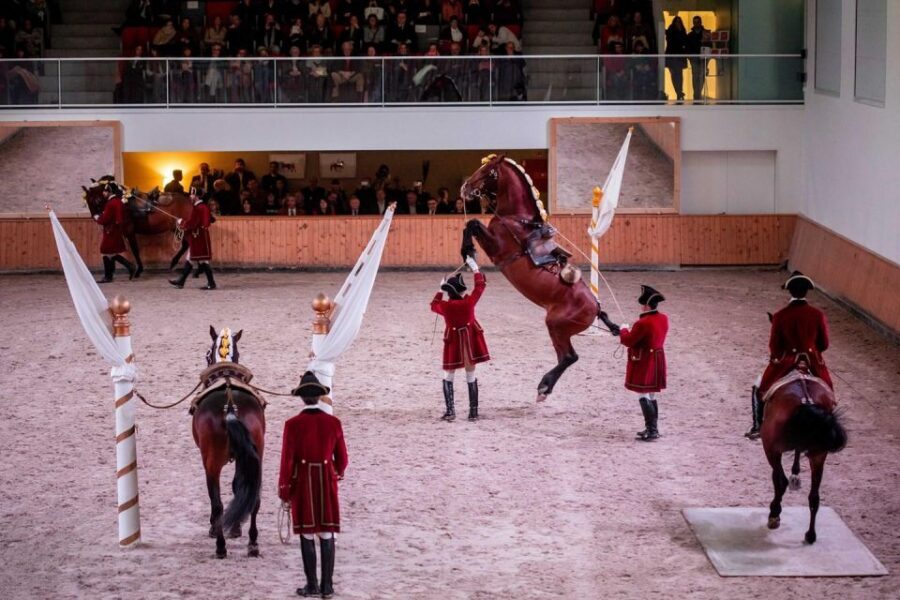
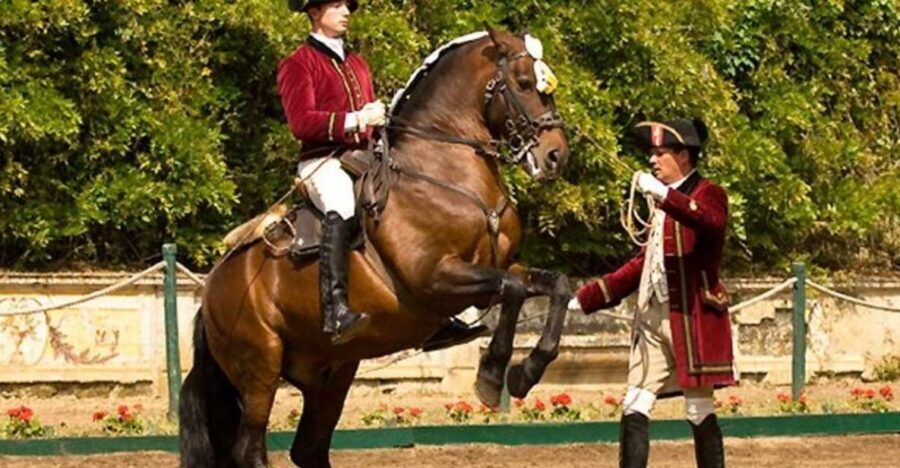
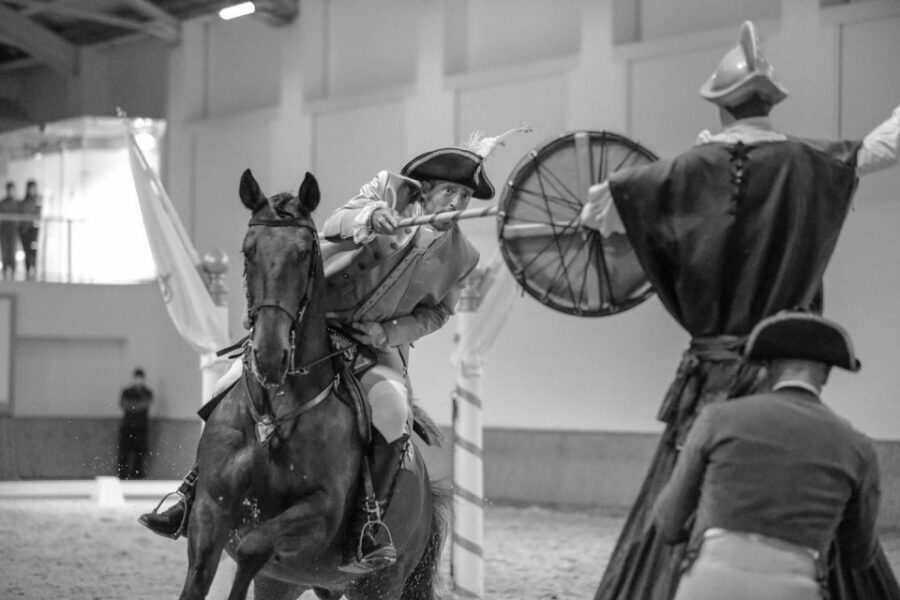
If your idea of an equestrian visit is “watch a show and move on,” this morning will reset your expectations. The heart of the experience is watching how riders prepare, warm up, and practice the complex choreography that recreates an 18th-century court mood—complete with engaging period music and costuming.
You’re also watching a very specific horse tradition. The Lusitano horse is Pure Blood Portuguese, and the training here is tied to the Portuguese School of Equestrian Art. That matters, because you’re not just admiring athleticism. You’re seeing the mindset behind it: respect for the horse’s rhythm, health, and physical needs.
One more reason this feels worthwhile in Lisbon: it’s one of the rare experiences where the “performance” is built in front of you. You get to watch the steps that lead to the polished display—like resourcefulness exercises and structured warm-ups—so the whole thing clicks faster.
You can also read our reviews of more tours and experiences in Lisbon



The 11am–1pm rhythm: Nora Patio rehearsal vs Henrique Calado Ring
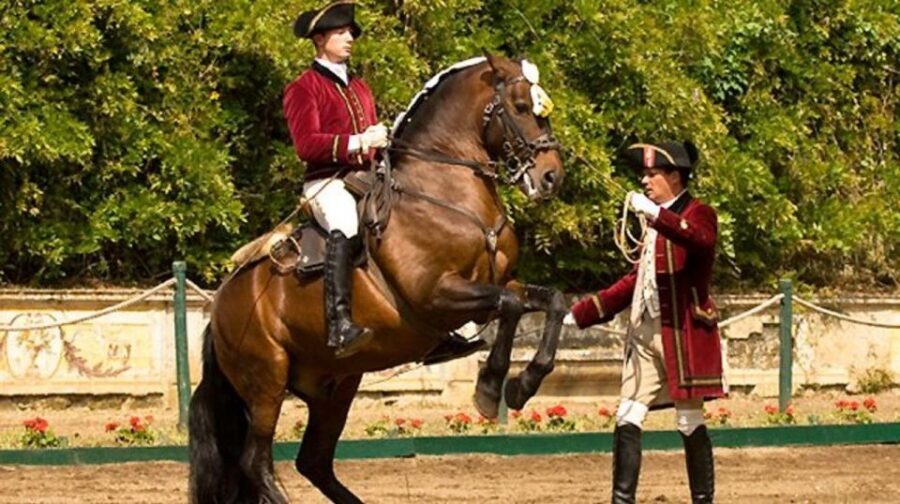
The experience takes place from 11am to 1pm, but the best time window is 11am to 12:30pm. That timing helps you catch the core training and rehearsals without feeling like you’re arriving at the end of the most active part.
You’ll spend time in two key spaces, and they feel different:
Nora Patio: the court-atmosphere view
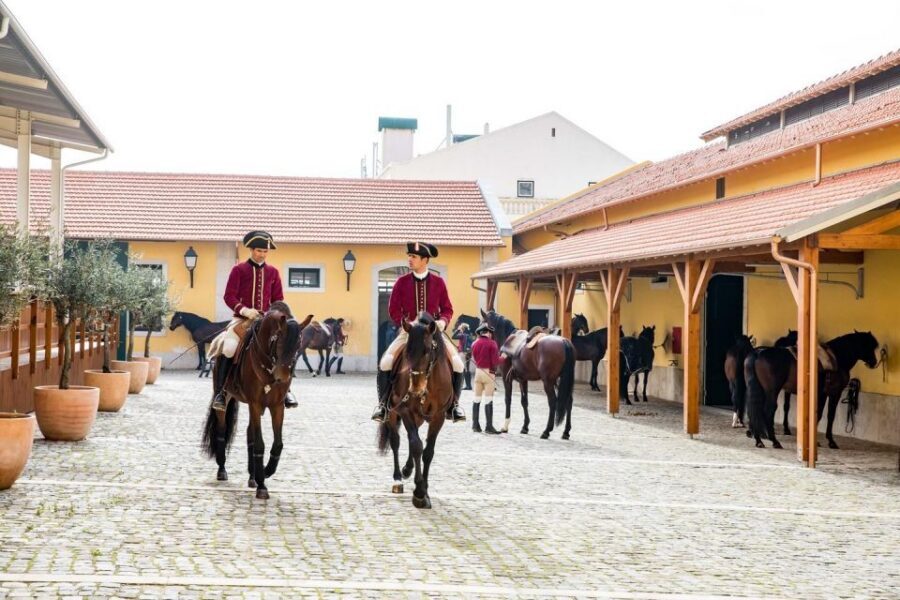
In the Nora Patio, you get the more “courtly” setup where rehearsals and choreography recreate that charming 18th-century feeling. It’s also the area where photographs and videos are allowed without flash. That small detail is big for visitors—flash bans can make people stop trying to capture anything. Here, you can actually document what you’re seeing.
Henrique Calado Riding Ring: where the fine control happens
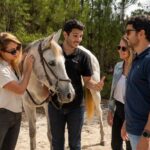
The Henrique Calado Riding Ring is where the training gets more hands-on and precise. You’ll watch warm-up and exercises there too, and you’ll see how handlers care for the horses as part of the daily routine.
But be aware: photography and videos are not allowed inside the riding ring. If you’re the type who wants to film everything, this is the one rule that might annoy you. I’d suggest treating the Nora Patio as your “capture” zone and letting the ring be your focused, present moment.
Behind the scenes with Pure Blood Lusitano horses and handlers
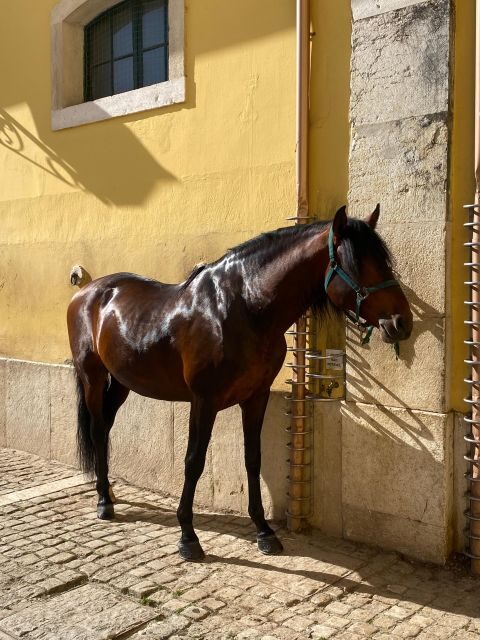
What I appreciate most about this morning is the care angle. The experience isn’t only about riders doing exercises. It’s also about how the training environment respects each horse as an individual—especially around pacing, physical needs, and recovery.
As you watch, look for the patterns: warm-ups aren’t random, and rider work isn’t forced. The whole setup is meant to ensure appropriate training for the high-level gala show of the Portuguese School of Equestrian Art. Even if you don’t speak the language, you can often “read” the intent through what’s repeated, what’s slowed down, and what’s treated with caution.
You’ll also see that the horses come from a serious source line connected to the Alter Real Stud Farm. The included portion of the experience is described as watching the daily training of Lusitano horses from that stud farm. For horse lovers, that adds context: you’re not just seeing any performance barn. You’re watching a specific Portuguese bloodline and tradition in motion.
You can also read our reviews of more tours and experiences in Lisbon




Period music, period costume, and using the audio guide effectively
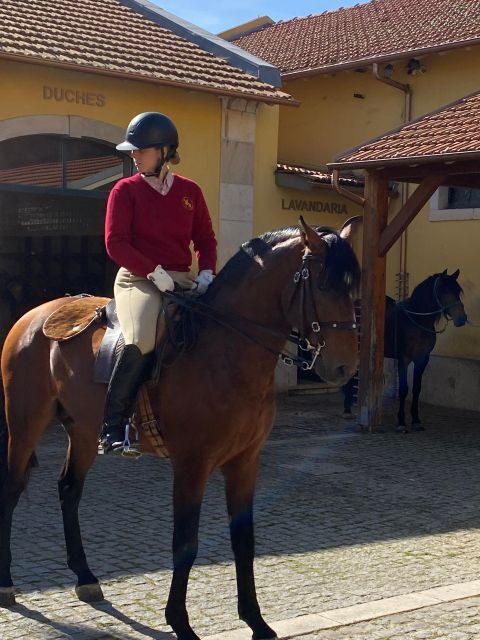
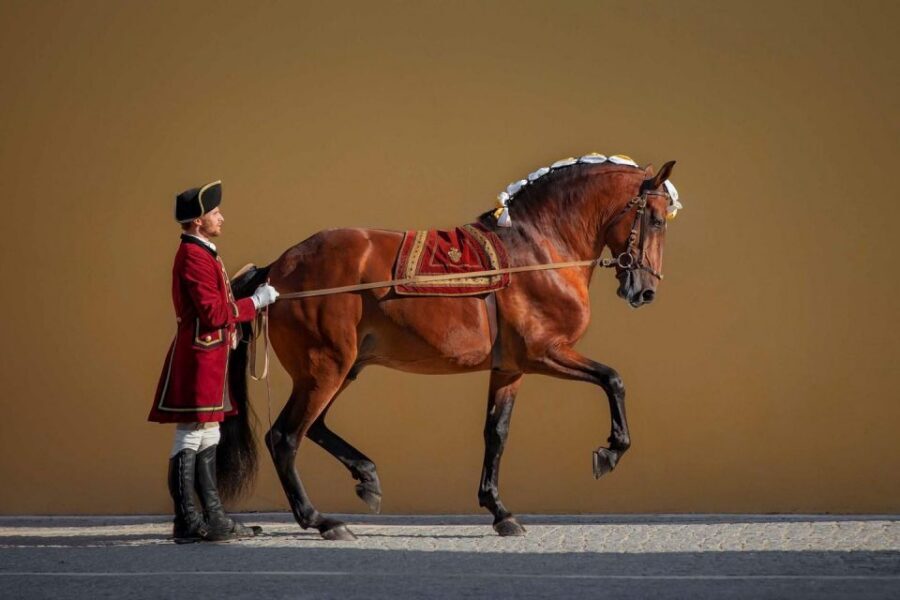
The experience is staged with period music and riders dressed in period costume, so it’s not just a “practical” training watch. It’s also an atmosphere builder. When you’re hearing the music while you see warm-ups and rehearsals, the movements feel more connected to the 18th-century court style the Portuguese School recreates.
That’s where the audio guide helps. It’s included, and it’s available in English, French, and Portuguese. Even if you’re comfortable with a general equestrian show, the audio guide is what turns a sequence of movements into something you can follow. You’ll better understand what you’re looking for—why certain exercises are done, and what “resourcefulness” means in training terms.
Practical tip: bring your headphones. The activity description says headphone isn’t included, even though the audio guide is. Also make sure your smartphone is charged and you have internet access, since the voucher/ticket and audio guide details come to you by email and need a working phone.
Photography rules and what to bring so your morning runs smoothly
This is the kind of activity where small planning details save you stress.
Photography and flash
- Nora Patio: photos and videos allowed, but no flash
- Henrique Calado Riding Ring: no photography or videos
If you’re walking in expecting to film in both places, you’ll want to adjust your plan fast. Think of the Nora Patio as your documentation space, and the riding ring as your “no distractions” space.
What to bring
You’ll get the best experience if you come ready:
- Comfortable shoes (it’s a morning activity and you’ll be standing and moving)
- Headphones (audio guide is included, but headphones aren’t)
- A charged smartphone
- Internet access
Also, keep your expectations realistic about food. Food and drinks are not included, so plan to eat before or after.
A simple timing strategy
Aim to be there close to the start. Since 11am–1pm is the stated window and 11am–12:30pm is the best time, your goal should be arriving early enough to catch the most active rehearsals and warm-up flow.
Price and value: what the $17 ticket really covers
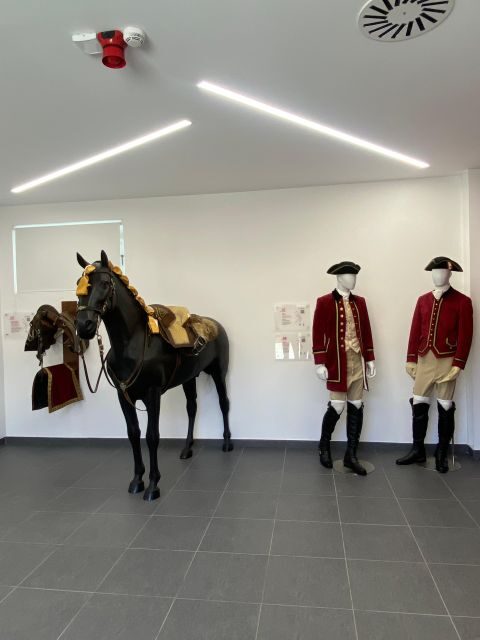
At about $17 per person, this is priced like an easy add-on to a Lisbon day—especially because the ticket includes real, concrete value.
Here’s what your entry includes:
- Entry ticket to The Portuguese School of Equestrian Art
- Watching the daily training of Lusitano horses associated with Alter Real Stud Farm
- Audio guide included
What’s not included:
- Transport
- Headphone
- Food and drinks
So where does the value land? For me, the best part is that you’re paying for an experience with built-in context. You’re not relying on guesswork to understand what you’re seeing, because the audio guide is part of the package. And you’re not only watching the final polish—you’re watching the preparation that makes the performance possible.
If you’re the kind of visitor who just wants to see a single grand presentation with minimal explanation, you might feel the “rehearsal morning” vibe more than you expected. But if you like structure, training, and the craft behind the spectacle, this ticket is a solid deal.
Who should book this equestrian morning (and who might not love it)
This experience suits best:
- Horse lovers who want to understand training, not just view results
- People who like cultural performances with context—especially those interested in Portuguese equestrian tradition
- Visitors who enjoy watching in an atmosphere that feels like costume-and-music court history
It may not suit you as much if:
- You’re expecting a long, nonstop show lasting most of the two hours
- You get bored when exercises repeat and refine rather than escalate into a single big climax
- You strongly prefer filming everywhere (because of the riding ring photography rule)
A small note from how the experience is described: the focus is on warm-up and resourcefulness exercises, plus rehearsals/choreographies in both locations. That’s excellent for understanding the craft, but it can feel more “workshop morning” than “theatre night.”
Booking and check-in: how to avoid ticket confusion
A key practical point: the GetYourGuide voucher is not your ticket. On arrival, you need to show your Book N Tour Ticket (not a GYG QR code or voucher) to reception staff so they can assist you.
After you book, you should receive a separate email with instructions for how to access and download your ticket and your audioguide. Since emails can land in spam folders, check there too.
You’ll also want to have contact info ready. The provider asks for a WhatsApp number or email so they can reach you if needed.
Should you book this Lusitano morning in Lisbon?
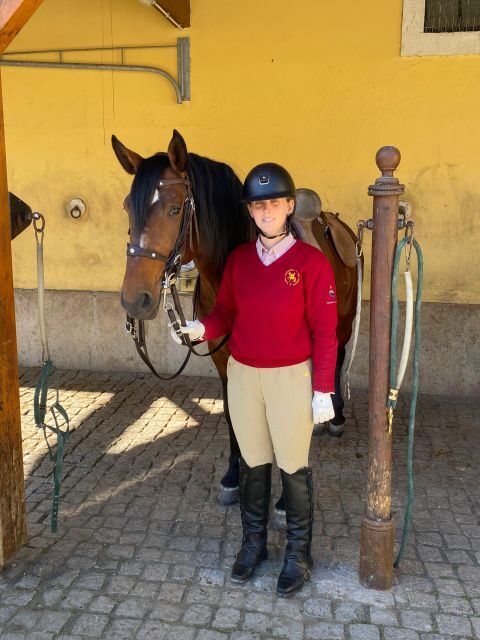
I’d book it if you want an early-day experience that’s small in scope but deep in craft. For €-and-$ style value, it’s hard to beat: entry to the Portuguese School setting plus an audio guide plus real training observation. The Lusitano part is the draw, but the true payoff is seeing how the work is structured—how riders and handlers treat the horse with care and rhythm rather than just chasing spectacle.
Skip it if you only want a showy performance loop with lots of filming, or if you’re short on patience for repeated warm-ups and rehearsals. This is about watching how the magic gets built.
If your trip has room for a calm morning and you like getting close to skills and routines, this is one of the more memorable ways to experience Lisbon beyond streets and viewpoints.
FAQ
What time does the activity run?
The activity runs from 11am to 1pm. The best time to visit is 11am to 12:30pm.
Is the audio guide included, and in what languages?
Yes. The audio guide is included and available in English, French, and Portuguese.
Do I need to bring headphones?
Yes. Headphones are not included, so bring your own if you want to use the audio guide.
Can I take photos and videos?
In the Nora Patio, photography and videos are allowed without flash. In the Henrique Calado Riding Ring, photography and videos are not allowed.
What ticket do I show at check-in?
Show your Book N Tour Ticket to reception staff. The GetYourGuide voucher (including a GYG QR code/voucher) is not your ticket.
Is it wheelchair accessible?
Yes, the activity is wheelchair accessible.