REVIEW · LISBON
Lisbon Awakens: A Culinary Crossroads, Reborn.
Book on Viator →Operated by Culinary Backstreets Walks · Bookable on Viator
Lisbon wakes up fast when you eat your way through it. This 5.5-hour walk connects Portuguese culinary traditions to the city’s streets, churches, and markets, with guides who tell the stories behind what you taste. Expect a day that feels personal, not packaged, especially with small-group size (max 7).
I especially like the way you end up with a proper meal worth of bites. You sample enough sweet and savory stops to feel satisfied, while still moving through neighborhood scenes that most big-tour crowds skip. One practical note: the tour is food-forward, so plan to arrive hungry. Multiple guides’ advice in the reviews lines up with this—eat lightly or skip breakfast so the first tastings land.
If you’re hoping for a slow stroll with zero food surprises, this may not be your vibe. It is a guided tasting experience, and some stops will be focused on classics like custard tarts and spice-forward flavors, so you’ll want to be ready for lots of sampling and walking.
In This Review
- Key highlights you’ll feel on day one
- Where the day begins: Basilica da Estrela and the Lisbon food origin story
- Mercado de Campo de Ourique: the neighborhood market with real personality
- Jardim da Parada: custard tarts, 19th-century tiles, and a calmer kind of magic
- Igreja do Santo Condestável: a new gothic church in an artists and writers neighborhood
- What you actually eat: why the bites add up to a real meal
- The small-group advantage: you get stories, not a script
- Timing, walking, and how to show up prepared
- Price and value: what $150 buys in Lisbon
- Who should book this tour, and who might want to skip
- Should you book Lisbon Awakens: A Culinary Crossroads, Reborn?
- FAQ
- Is this tour in English?
- How big is the group?
- Are there admission fees at the stops?
- Can you accommodate allergies or dietary restrictions?
- What if the weather is bad?
- Can I cancel for free?
Key highlights you’ll feel on day one

- Max 7 people keeps the walk conversational and lets your guide answer follow-up questions
- Sweet-to-savory tasting flow starts with pastry-style flavors and builds toward more substantial neighborhood bites
- Off the main tourist track with stops in local food shops and a calmer market area
- Basilica da Estrela area history where pastries, spices, convent life, and churches connect in one thread
- Jardim da Parada tiles + custard tarts for that classic Lisbon look-and-taste combo
- Igreja do Santo Condestável adds a fresh-gothic, arts-writers neighborhood stop to round out the picture
Where the day begins: Basilica da Estrela and the Lisbon food origin story
You start at Jardim da Estrela, right by Praça da Estrela. From the first stop, the guide frames Lisbon food as something tied to places of faith, trade, and everyday life. At Basilica da Estrela, you’ll get the sense that pastries and spices are not random snacks. They connect to convent and church spaces and to how flavors traveled over time—especially Portugal’s long history of reaching outward through exploration and trade.
What I like about this opening is the mental setup. Before you take your first bite, your guide gives you a lens for noticing details: why certain ingredients matter, why specific desserts show up in Lisbon, and how religious and community traditions influenced what ended up in everyday pastry cases. It’s a small historical lesson, told through taste instead of lecture.
You’ll also get a clear sense of pacing. The first stop is about an hour, which is long enough to actually look around and still keep the day rolling. And the admission here is listed as free, so you’re not paying extra at each site—your money stays focused on the guided experience and the food.
You can also read our reviews of more tours and experiences in Lisbon.



Mercado de Campo de Ourique: the neighborhood market with real personality
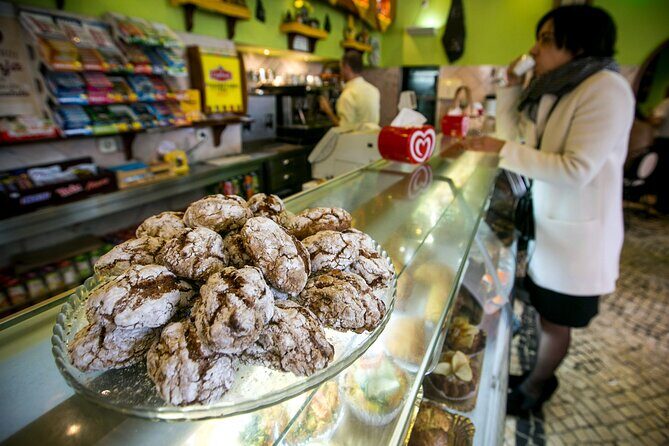
Next, you head to Mercado de Campo de Ourique. This is the kind of place that works as a bridge between Lisbon’s tourist postcard and Lisbon’s everyday eating habits. The broader Campo de Ourique neighborhood is known for traditional food shops, and the market offers a smaller, more manageable slice of that world.
Here’s why this stop matters: markets teach you how Portuguese eating feels in motion. You’re not just looking at displays—you’re seeing what locals buy, how stalls offer samples, and how everyday Portuguese flavor preferences show up in practice. It’s a great change of pace after the church-and-pastry storytelling.
A standout detail from the reviews: guests have talked about meeting friendly stall people—one person named Fred is mentioned as someone who shares samples and helps you understand what to try. You can’t count on meeting the exact same person every time, but the takeaway is consistent: this market stop isn’t just a quick photo break. It’s meant to be social and tasty.
There’s a practical timing element too: this portion is about 45 minutes. That’s enough time to try several things without turning the day into a sprint. And because it’s described as free entry, you stay in the “what you taste” lane rather than “where do we pay next” lane.
Jardim da Parada: custard tarts, 19th-century tiles, and a calmer kind of magic
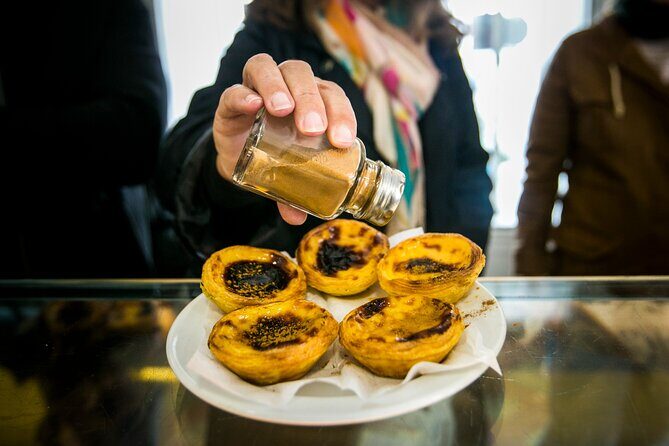
Then you shift to Jardim da Parada—another roughly 45-minute stop. This is where the tour leans into classic Lisbon flavor and visual charm. The star here is custard tarts, described as among the best in the city, plus a setting filled with 19th-century tilework and trees.
If you’ve only seen Lisbon from viewpoints, this is your correction. Gardens change how you experience a city. You slow down naturally. You notice details in the tile patterns. And since this stop is still part of the tasting chain, you get to connect taste with place instead of eating on the move.
From a value perspective, this is a smart placement in the route. By now you’ve got context from Basilica da Estrela and market energy from Campo de Ourique. The custard tart moment lands like a payoff: a familiar classic, but tied to why Lisbon does it so well.
One small consideration: this stop is in a garden setting, which can be affected by the weather. The overall experience notes that it requires good weather, so if your trip has an iffy forecast, plan to pack a light rain layer and keep your schedule flexible.
Igreja do Santo Condestável: a new gothic church in an artists and writers neighborhood
Your final taste-and-story stop is Igreja do Santo Condestável, scheduled for about 25 minutes. It’s described as a new gothic church in a neighborhood connected with artists and writers.
This short stop works as a palate and perspective reset. After tasting and browsing, you get a quick architectural and cultural perspective that feels slightly different from the convent/church opening. The tour uses this as an extra layer: Lisbon’s food traditions don’t live in a vacuum. They show up in neighborhood identity, in who lives around you, and in how creative culture keeps shaping what people make and share.
Since it’s also listed as free admission, it keeps the day efficient. You get something meaningful without turning the tour into a ticket-collecting exercise.
What you actually eat: why the bites add up to a real meal
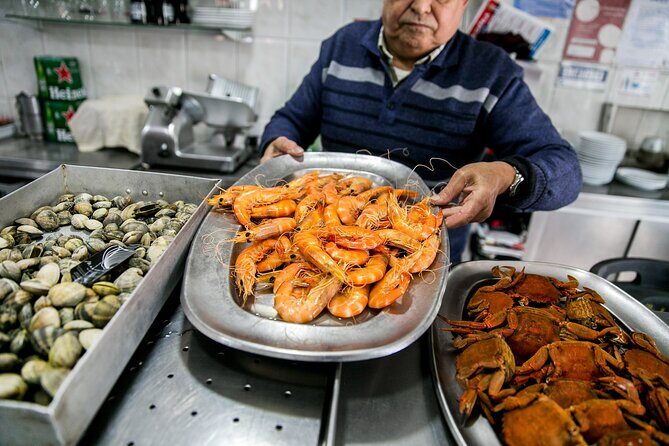
The tour is built around the idea that you’ll try enough bites and samples to add up to a generous meal. That line matters for your planning because many food tours leave you hungry after the last tasting. This one is structured so you don’t have to treat it like a snack route.
From the tour description and the way guides talk about the tastings in the reviews, expect a mix that usually includes:
- pastries and spice-forward flavors early on
- coffee and sweeter bites near the start in some groups
- market samples that range across stalls
- custard tarts in the garden stop
- savory options later that round out the meal feel
A consistent tip appears in multiple reviews: don’t eat too much beforehand. People repeatedly advise arriving with an empty stomach or at least skipping a heavy breakfast. I agree with that logic. When a tour is doing multiple stops like this, your goal isn’t tasting food you could have grabbed anywhere. It’s tasting Lisbon in order—so each stop hits.
Also, the format helps if you’re curious but indecisive. Your guide’s job is to steer you through what to try and how it connects to the broader culinary story of Portugal.

The small-group advantage: you get stories, not a script

This is a maximum of 7 travelers tour, and that small size shows up in how the day feels. With fewer people, you can ask questions and get real back-and-forth rather than hearing only what the guide says while you’re holding a cup.
The guides seem to be a big reason people rate this tour so highly. Names that come up in reviews include:
- Kika, described as a former teacher who connects Portuguese food and history in a way that stays engaging
- Inês, praised for history and culture framing alongside tastings
- Gisela/Gisele, noted for warm, inclusive explanations and lively pacing
- Laura, praised for storytelling and connecting Portuguese history to today’s food and drinks
- Celia, mentioned as a standout storyteller
- Martim, mentioned as going above and beyond to make the experience feel neighborly and personal
I like that the tour doesn’t just list foods. It explains how Portugal’s food identity formed, including outside influences that shaped what ends up in modern Lisbon. If you like learning through conversation and examples, a small group turns that into something you can actually participate in.
Timing, walking, and how to show up prepared
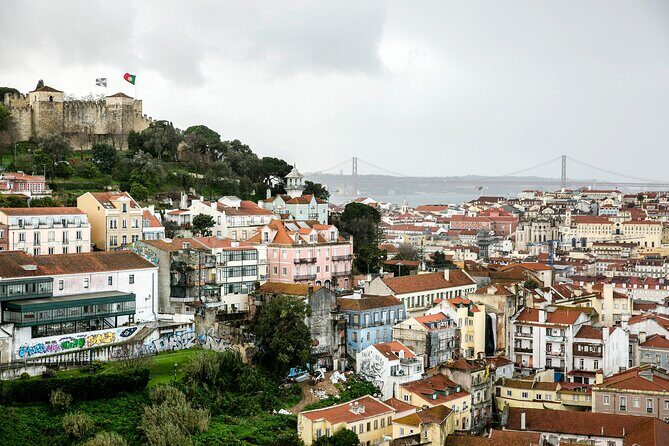
This experience runs about 5 hours 30 minutes and ends back at the meeting point near Jardim da Estrela. It’s offered in English, uses a mobile ticket, and is noted as near public transportation.
Walking duration matters here because your day is built around moving between four distinct areas. The good news is that the pacing is described as easy by at least one guest who said the walk was manageable even with bad knees. Still, you should expect a walking tour through neighborhood streets and church areas. Wear comfortable shoes and plan for a bit of standing while you sample.
My best practical advice is simple: eat light before the tour. Multiple reviews emphasize this directly. If you arrive already full, you’ll miss the best part—the arc of flavors from early pastry-style tastings through later market and tart stops.
Also, if you have allergies or dietary restrictions, the tour asks you to send them ahead of time. That’s the difference between hoping and being prepared.
Price and value: what $150 buys in Lisbon
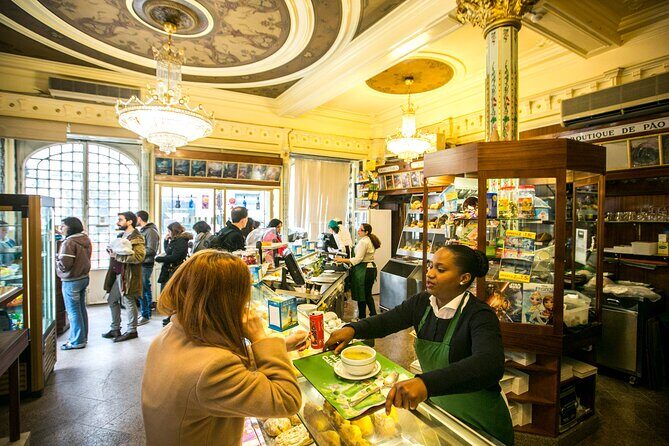
At $150 per person, the price can look steep until you break down what’s included. This isn’t just a walking route with a snack at the end. It’s a guided, small-group tasting experience with multiple food stops and drink components, built around the idea that you’ll get a generous meal out of samples.
A few things support the value:
- four distinct stops in real Lisbon areas
- small-group format (max 7), which reduces the “crowd factor”
- free admission for each listed stop, so you’re not paying site-by-site
- a guide who connects what you taste to Portugal’s food traditions and historical influences
- time spent in neighborhoods you’d likely miss if you only follow the main sights
In practical terms, I think this price makes sense if you’re the type of traveler who wants to understand Lisbon through food and not just collect photos. If you prefer to freestyle and buy a few things on your own, a DIY market visit might cost less—but you lose the guided context that helps you choose, taste, and connect the dots.
Who should book this tour, and who might want to skip
This tour is a strong fit if you:
- want a Lisbon food tour with explanation, not just sampling
- prefer smaller groups where you can ask questions
- like Portugal’s pastry culture, markets, and classic desserts like custard tarts
- want to experience neighborhood Lisbon rather than only major attractions
It may not be the best fit if you:
- hate walking and standing for long stretches
- need strict zero surprises in your tasting (this is a guided food sampling day)
- are planning a big breakfast or brunch and don’t want to adjust your schedule
If you’re in Lisbon for the first time, it’s the kind of tour that helps you set your bearings fast. Guides often say doing it early helps you use what you learn for the rest of your trip.
Should you book Lisbon Awakens: A Culinary Crossroads, Reborn?
I’d book it if you want a day that feels like Lisbon lived-in culture, not a checklist. The small group size, the repeated advice about arriving hungry, and the way guides connect pastries, markets, and custard tarts to Portugal’s bigger story all point to a tour that’s built for real taste and real context.
If your schedule is flexible and you’re open to eating your way through churches, gardens, and neighborhood markets, this is one of the most efficient ways to understand Lisbon’s culinary identity—especially on your first or second day.
FAQ
Is this tour in English?
Yes. The experience is offered in English, and you’ll get a mobile ticket.
How big is the group?
It’s a maximum of 7 travelers, which keeps the day personal and makes it easier to ask questions.
Are there admission fees at the stops?
Each listed stop notes free admission, so you’re not paying separate entry prices at the sites included in the walk.
Can you accommodate allergies or dietary restrictions?
The tour asks you to send your allergies or dietary restrictions in advance. Do that when you book so the guide can plan for you.
What if the weather is bad?
The experience requires good weather. If it’s canceled due to poor weather, you’ll be offered a different date or a full refund.
Can I cancel for free?
Yes. You can cancel for a full refund up to 24 hours before the experience’s start time.