REVIEW · LISBON
Full day Small Group Tour of Historical Lisbon
Book on Viator →Operated by My Lisbon Tours · Bookable on Viator
Lisbon’s shortcuts come with a story. This full-day small-group walk ties together Alfama, Bairro Alto, and Baixa-Chiado with viewpoints, churches, and street corners where Lisbon’s sound (especially Fado) feels close enough to hear. I like that the pace is handled by a guide who knows how to zigzag the uphill-downhill walking so it feels manageable, and I also love how often you get stops with clear meaning, from Baroque art to earthquake reminders. The main drawback is simple: this is an 8-hour day of stairs and cobblestones, so it’s not a great fit if you have walking limitations or stamina issues.
One more thing I really like is the people factor. Reviews call out guides such as Andriy and Rui Fernandes for being flexible and answering questions, so you’re not stuck with a one-way script. If you want a route that helps you read Lisbon fast and still leave you free to roam on your own afterward, this is a smart way to start.
In This Review
- Key Things I’d Pin to Your Day
- Why This Lisbon Route Works (Even When Your Feet Don’t)
- Starting at Church of Saint Roch: Setting the Tone in the Center
- Igreja de São Roque: Baroque Art as a Fast Orientation Lesson
- Bairro Alto: Walking the Eccentric Side Streets
- Trindade: A Quick Stop with Unexpected Connections
- Largo do Carmo and Earthquake Scars You Can Still See
- Elevador de Santa Justa: The View That Explains Lisbon’s Steepness
- Chiado and Praca Dom Pedro IV: Classic Baixa-Chiado Energy
- The Late 19th-Century Neo-Manueline Station Stop
- Largo de São Domingos, Igreja de São Domingos, and Praça da Figueira
- Rua Augusta-Type Pedestrian Stroll: City Center at Walking Pace
- Miradouro da Graça: A View with Big Names and Bigger Angles
- Church of Our Lady of Grace: Old Convents and Surviving Faith
- Alfama’s Flowers, Terraces, and Street-Trade Stories
- Igreja de São Vicente de Fora: Patron Saint and Lisbon’s Identity
- Feira da Ladra: Flea Market Atmosphere on Tuesdays and Saturdays
- National Pantheon Exterior: Mausoleum Scale Without a Ticket Upgrade
- Miradouro de Santo Estevão and Alfama’s Best Angles
- Alfama and Fado: Exterior Stops That Point You Toward the Sound
- Igreja de São Miguel: A Church That Survived the 1755 Earthquake
- Lisbon Cathedral Interior: Admission Not Included, but the Meaning Is
- The Former Political Prison Story: Salazar-Era Persecution Remembered
- Igreja de Santa Luzia and Miradouro das Portas do Sol: Two Viewpoints, One Big Payoff
- The Spiked House and the Prize-Winning Weirdness of Lisbon
- Praca do Comercio: Ending at Lisbon’s Grand Central Stage
- Price, Included Costs, and When $39 Feels Like a Deal
- Who Should Book This Tour (And Who Might Prefer Something Else)
- Should You Book This Historical Lisbon Small-Group Tour?
- FAQ
- What is the duration of the Full Day Small Group Tour of Historical Lisbon?
- How much does the tour cost?
- How many people are in the small group?
- Where do I meet the tour, and where does it end?
- What time does the tour start?
- What’s included in the price?
- What isn’t included?
- Are tickets provided digitally?
- Is the tour suitable for people with mobility issues?
- What is the cancellation policy?
Key Things I’d Pin to Your Day
- Max 8 travelers means more questions and fewer awkward gaps in the group
- Churches with big art start the day and set the tone in central Lisbon
- Multiple miradouros (viewpoints) keep the walking rewarding, not just strenuous
- Fado without a ticket: you’re guided to neighborhoods and Fado-related places to explore by ear
- Earthquake + reconquista + Jewish history show up across the route, not just in a museum
- End at Praça do Comércio so you finish where Lisbon’s center opens up again
Why This Lisbon Route Works (Even When Your Feet Don’t)
This tour is built like a living map of the city center. You’re not only seeing famous sights; you’re walking through the neighborhoods that created Lisbon’s layout—steep streets, sudden squares, and viewpoints that feel like natural stages.
The value is in how the day is stitched together: you start in central churches, move through Bairro Alto and Baixa-Chiado, then spend real time in Alfama, Lisbon’s oldest-feeling district. You’ll come away with clearer mental connections between places—why certain squares exist, why certain buildings survived, and how religion and politics shaped what you see.
Do plan for physical effort. The route is heavy on walking and includes stairs and old pavements, and the operator flags it as not recommended for travelers with walking disabilities. If you’re up for moderate fitness, you’ll likely find the route surprisingly doable—especially with a guide who knows how to route you.
You can also read our reviews of more historical tours in Lisbon
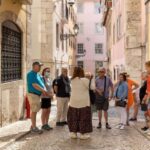


Starting at Church of Saint Roch: Setting the Tone in the Center
The day begins at the Church of Saint Roch in central Lisbon. It’s a good start point because you’re already in the part of town where you can connect to other sights after the tour ends.
From there, the tour moves into one of Lisbon’s art-forward stops right away: Igreja de São Roque. That early rhythm matters. You get context early, so later viewpoints and neighborhoods feel less like a checklist.
Igreja de São Roque: Baroque Art as a Fast Orientation Lesson
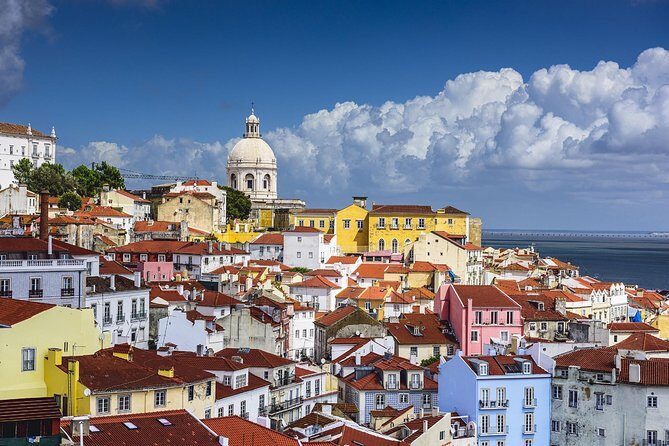
Your first guided stop is Igreja de São Roque, one of Lisbon’s finest churches. Even if you don’t go deep on religious art, the point here is practical: this is where you learn to notice style, materials, and Portuguese artistic skill in a way that makes later churches easier to understand.
The stop is short (about 15 minutes), and that’s intentional. It gives you enough to appreciate the building without turning your day into an art marathon. Admission is listed as free here, which is a nice bonus when you’re trying to keep costs predictable.
Bairro Alto: Walking the Eccentric Side Streets
Next comes Bairro Alto, one of Lisbon’s older and more eccentric neighborhoods. This part of the tour is about street-level orientation—how the roads bend, where the neighborhood feels lived-in, and how the city’s layout shapes daily life.
Expect a guided walk (about 25 minutes). The value isn’t just what you see; it’s how your guide helps you connect what’s around you to what Lisbon became over time. You’ll also be thinking ahead, because Bairro Alto is one of the neighborhoods that leads naturally into Lisbon’s Fado atmosphere later.
Trindade: A Quick Stop with Unexpected Connections
There’s a brief stop at Trindade, tied to a peculiar local story involving catholic worship, beer, and freemasonry. The tour keeps this to around 5 minutes, so treat it like a clue, not a lecture.
That’s one of the tour’s strengths: small stops that change your understanding of Lisbon. After hearing a surprising connection like this, the city stops feeling like separated monuments and starts feeling like a web of culture.
You can also read our reviews of more tours and experiences in Lisbon




Largo do Carmo and Earthquake Scars You Can Still See
At Largo do Carmo, you’ll visit one of the most idyllic squares in historical Lisbon. Here, you see the Gothic ruins of the Carmelite Convent, a reminder of the earthquake of 1755.
This is one of those stops that makes history physical. Instead of only hearing about the earthquake in broad terms, you’re standing in a place where the damage (and the survival) shaped Lisbon’s look. The stop is about 10 minutes, but it gives you a strong “Lisbon is layered” feeling.
Elevador de Santa Justa: The View That Explains Lisbon’s Steepness
Then you get a key photo-and-perspective moment at Elevador de Santa Justa. You’ll have the chance to visit and see Lisbon from above, including views across the city and toward the River Tagus.
This is about more than a viewpoint. Watching how the city climbs and drops helps you understand why Alfama feels like a world of its own below. It’s also a good chance to catch your breath, especially if your day includes a lot of stairs.
Chiado and Praca Dom Pedro IV: Classic Baixa-Chiado Energy
From the elevator, the tour moves into Chiado and then toward Praca Dom Pedro IV. Chiado is known for a concentration of traditional stores and businesses, and the stop runs about 30 minutes—enough time to get oriented without rushing.
At Praca Dom Pedro IV, the focus shifts to Baixa Pombalina’s big central-square feel. You’ll pass major landmarks in the area, including the Queen Mary National Theater and the opera house, plus local businesses nearby.
This stretch is useful if you’re the kind of traveler who likes to understand how Lisbon’s commercial center developed. It also gives your feet a little variety: squares and flatter segments compared to Alfama’s steep lanes.
The Late 19th-Century Neo-Manueline Station Stop
There’s also a stop at a late 19th-century train station with Neo-Manueline architecture in the city center. The design alone is worth a glance because it shows how Portuguese style can be both decorative and functional.
Even without extra time inside, you’ll likely come away with a sharper sense of how Lisbon’s public architecture carries identity. The tour uses it as a visual anchor before moving into older squares and stair-step streets again.
Largo de São Domingos, Igreja de São Domingos, and Praça da Figueira
Next you’re at Largo de São Domingos, where the tour connects the square to the Jewish massacre of 1506 and a memorial for victims of religious persecution. This is a heavy topic, but the tour keeps it brief and focused on what’s there.
Then you visit Igreja de São Domingos and get a close look at the interior (about 5 minutes). After that, Praça da Figueira appears (about 5 minutes), another historical square with plenty of old-business surroundings.
These stops work best if you like history that’s not trapped behind glass. Here, the past is literally built into the streets you’re standing on.
Rua Augusta-Type Pedestrian Stroll: City Center at Walking Pace
You’ll also walk along one of Lisbon’s main pedestrian streets downtown, lined with coffee shops and historical businesses. It’s a “breathing” segment in the sense that you’re back in a mainstream flow of the city.
This is also a good time to mentally reset. You’re about to head toward Alfama’s viewpoints, and those tend to make you slow down because you want to look and re-look.
Miradouro da Graça: A View with Big Names and Bigger Angles
Miradouro da Graça (Sophia de Mello Breyner Andresen) is a viewpoint stop where you look over Lisbon’s downtown with the Castle of Saint George, Mouraria, and the Tagus river in the background. It’s about 10 minutes, so you’ll likely spend part of that time simply getting your bearings.
This viewpoint is valuable because it helps connect neighborhoods you see later. You’re not just staring at the river—you’re placing districts in your mental map.
Church of Our Lady of Grace: Old Convents and Surviving Faith
Then comes Church of Our Lady of Grace, tied to some of Lisbon’s oldest churches and convents. The tour notes that Augustinian monks lived there until 1834.
This stop gives you another layer of context for Alfama and surrounding areas: Lisbon’s religious institutions shaped where people lived, how communities functioned, and how space was used long after major political shifts.
Alfama’s Flowers, Terraces, and Street-Trade Stories
As you continue, you’ll see charming little streets lined with houses with large terraces decorated with flowers like buganvilia. There’s also a segment focused on the history of trade union activism in Lisbon.
These stops are “Lisbon as everyday life” moments. They’re brief, but they’re important because Alfama isn’t just monuments. It’s a neighborhood where people live with steep stairs, neighbors close by, and a street-scene that has long shaped the soundscape of the city.
Igreja de São Vicente de Fora: Patron Saint and Lisbon’s Identity
Next is Igreja de São Vicente de Fora, where you learn about its dedication to Lisbon’s patron saint. The stop runs about 10 minutes.
This is another place where you’re learning Lisbon’s identity through religious landmarks, but in a way that supports the bigger picture. You begin to notice how the city’s patronage, politics, and community stories overlap.
Feira da Ladra: Flea Market Atmosphere on Tuesdays and Saturdays
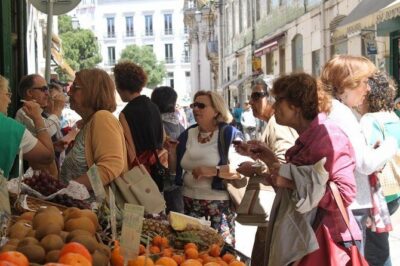
The tour includes Feira da Ladra, one of Lisbon’s oldest flea markets. It’s set up as an atmospheric stop (about 10 minutes), and the tour points out that it runs Tuesdays and Saturdays.
So here’s the practical angle: if your tour day lines up with those days, you’ll likely get extra energy from the market vibe. If it doesn’t, you’ll still benefit from the context of one of Lisbon’s long-running street traditions.
National Pantheon Exterior: Mausoleum Scale Without a Ticket Upgrade
There’s an exterior visit to Portugal’s National Pantheon. The tour frames it as a monumental mausoleum to some of Portugal’s great men and women.
It’s brief (about 5 minutes), and that’s fine. Think of it as a visual note. You get the sense of national scope without spending your whole day trapped in entry lines or museum timing.
Miradouro de Santo Estevão and Alfama’s Best Angles
Back in Alfama, the tour highlights Miradouro de Santo Estevão. This is described as Alfama’s best viewpoint, paired with its picturesque tiny streets and the neighborhood’s classic feel.
You’ll spend about 10 minutes here. For me, viewpoints are where you learn the logic of a hilly city. When you can see the slope and street pattern, it becomes easier to appreciate why certain lanes feel so tight and why Lisbon’s neighborhoods feel like separate towns.
Alfama and Fado: Exterior Stops That Point You Toward the Sound
There’s also an exterior visit connected to Alfama’s relationship to Fado music. You’re not just learning in theory—you’re being pointed toward places to notice later on your own.
This is one reason the tour works even if you don’t attend a formal Fado show that day. You’re building a sense of where the music belongs in the street fabric.
Igreja de São Miguel: A Church That Survived the 1755 Earthquake
Another exterior stop is Igreja de São Miguel, described as a church that survived the 1755 earthquake. The time here is short (about 5 minutes), but the detail matters.
This is exactly the kind of fact that changes how you read the city. Instead of seeing buildings as static objects, you’re reminded that Lisbon has been reshaped—and parts of it have endured.
Lisbon Cathedral Interior: Admission Not Included, but the Meaning Is
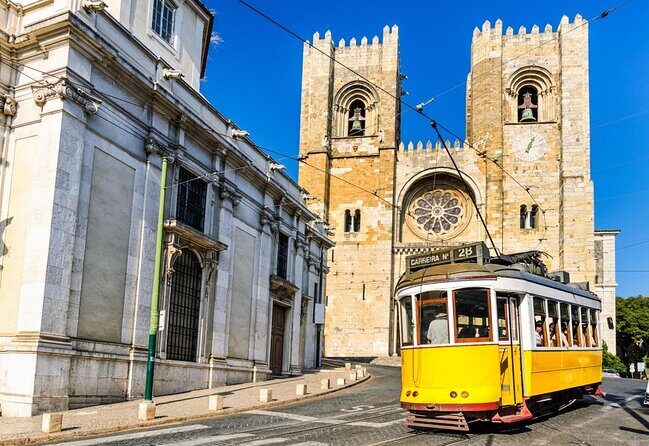
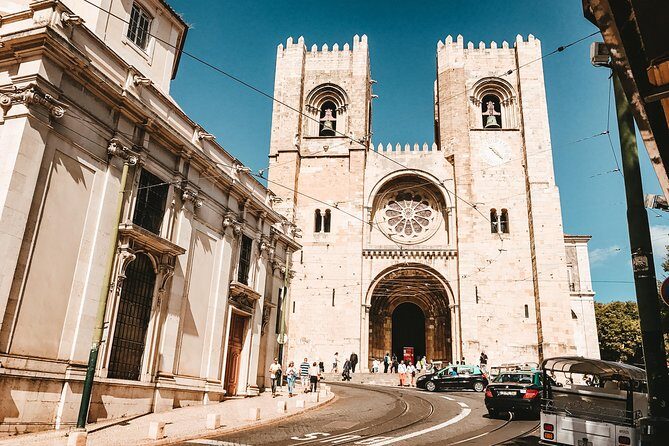
Then you reach Lisbon Cathedral for a visit and detailed interior tour. The interior portion is where you’ll likely spend about 10 minutes, and the tour notes that admission is not included in the price.
This stop is a key payoff in the route because it adds depth beyond exterior architecture. If you care about churches as living history, this is the one place where spending more time here would make sense—just note the extra ticket cost.
The Former Political Prison Story: Salazar-Era Persecution Remembered
Right after the cathedral segment, the tour includes a story about a former political prison that was converted into a museum for the memory of people persecuted under the Salazar regime.
Even without extra time specified, this is a reminder that Lisbon’s history isn’t only about earthquakes and reconquista battles. It’s also about more recent political repression—and how spaces get reused to keep memory alive.
Igreja de Santa Luzia and Miradouro das Portas do Sol: Two Viewpoints, One Big Payoff
You’ll then enjoy Igreja de Santa Luzia for a unique viewpoint over Alfama and the Tagus river, with about 10 minutes there. After that, you move to Miradouro das Portas do Sol for a breathtaking view (about 10 minutes).
These stops are where your whole day clicks. From here, Alfama’s tiny streets make sense in a way you can’t fully grasp from street level. Also, you get more than one angle—because Lisbon’s hills create different “frames” for the same scene.
The Spiked House and the Prize-Winning Weirdness of Lisbon
Another short stop includes the famous Spiked House, described as a rare example of 16th-century palatial architecture. It’s a quick look, but it’s memorable because Lisbon has a gift for architectural surprises.
This is also a good reminder that Lisbon isn’t only medieval and grand. It can be playful, odd, and decorative in ways you’ll remember later when you’re walking past something that looks ordinary.
Praca do Comercio: Ending at Lisbon’s Grand Central Stage
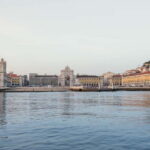
Your tour ends at Praça do Comércio, also called Terreiro do Paço. Here, you learn about its connection with Portuguese historical figures like the Marquis of Pombal and the regicide of 1908.
This ending makes practical sense. After hours in narrow streets, you arrive at a wide-open public space where you can regroup, take a break, and choose what to do next. It’s also a powerful finish because you get the river-adjacent openness that contrasts with Alfama’s tight lanes.
Price, Included Costs, and When $39 Feels Like a Deal
At $39 for about 8 hours with a professional guide and local taxes included, this is strong value—especially because many of the major stops are listed as free admissions. You’re paying mainly for guided context and the routing across neighborhoods, not for building entry fees.
Food and drinks are not included, so you’ll want to plan a lunch strategy yourself. Also, Lisbon Cathedral’s interior admission is not included, so budget a little extra if you want to see it without skipping. If you’re comfortable paying a small add-on for the one-ticket stop, the overall price feels reasonable.
Where this feels like a best-buy is if you want orientation fast. The day covers multiple neighborhoods—Alfama, Bairro Alto, Baixa-Chiado—plus viewpoints that make navigation easier afterward. If you already know Lisbon well, you might feel this is more walking than you need. If you’re new, it’s a smart way to get your bearings.
Who Should Book This Tour (And Who Might Prefer Something Else)
I’d suggest this tour if you:
- Want a guided walk through Alfama, Bairro Alto, and Baixa-Chiado without switching companies or piecing together multiple tickets
- Like history that appears on street corners, not only in museums
- Enjoy viewpoints and can handle stairs and cobblestones
- Want a small group, because that size makes Q&A feel natural
I’d skip or consider a lighter option if you:
- Have trouble with long walking days or stair-heavy routes
- Need fully accessible paths
- Prefer a slower pace with long museum time rather than a moving neighborhood route
Should You Book This Historical Lisbon Small-Group Tour?
If your goal is to understand Lisbon fast—its architecture, its layers, and why Alfama feels the way it does—this is a good book. The routing makes practical sense, the group size stays intimate, and the mix of churches, squares, viewpoints, and culture spots like Fado-related streets gives you plenty to work with even after the tour ends.
Book it when you want a day that helps you feel the city. Skip it when you need a low-walking day or you want lots of indoor time.
FAQ
What is the duration of the Full Day Small Group Tour of Historical Lisbon?
The tour is listed at about 8 hours.
How much does the tour cost?
The price is $39.
How many people are in the small group?
The tour has a maximum of 8 travelers.
Where do I meet the tour, and where does it end?
You start at Church of Saint Roch, Largo Trindade Coelho, 1200-470 Lisboa, Portugal and end at Praça do Comércio, 1100-148, Portugal.
What time does the tour start?
The start time is 10:00 am.
What’s included in the price?
Included are local taxes and a professional guide. It also uses a mobile ticket.
What isn’t included?
Food and drinks are not included. Admission to the Lisbon Cathedral interior is also not included.
Are tickets provided digitally?
Yes, you receive a mobile ticket.
Is the tour suitable for people with mobility issues?
It is not recommended for travelers with walking disabilities, and it requires moderate physical fitness due to walking and steps.
What is the cancellation policy?
You can cancel for a full refund up to 24 hours in advance of the experience start time. If you cancel less than 24 hours before, the amount paid will not be refunded.