Lisbon rewards your feet on this walk. You start at Praça Dom Pedro IV, then glide through the story-rich corners around Rossio and into Bairro Alto, ending at a classic viewpoint spot.
I especially like how this route mixes architecture with human stories: the Neo-Manueline drama of Estação do Rossio and the poetic Lisbon of Luís de Camões. I also like that the guide ties it all to real city change, including how the earthquake reshaped parts of what you’re seeing now.
One consideration: it’s about 2.5 hours and includes some hilly walking in and around Bairro Alto, so wear good shoes and keep a moderate pace.
In This Review
- Key Highlights You Should Not Miss
- Where Bairro Alto Stories Start: Praça Dom Pedro IV and Rossio
- Estação do Rossio’s Neo-Manueline Face Worth Slowing Down For
- Camões Square: The Poem That Tied Portugal to the Sea Route
- Inside Bairro Alto’s Layers: Wall Lines, Plague Pain, and Saint Roque
- Largo do Carmo: The Carmelite Church Built From a Vow
- Earthquake Changes and Why You’ll Notice It More After This Tour
- Ending at Miradouro de Santa Catarina: Views With a Purpose
- Price and Value: What $3.61 Buys in a 2.5-Hour Walk
- Small Group Pace: Who This Tour Suits Best
- Should You Book This Bairro Alto Viewpoint Walk?
- FAQ
- How long is the tour?
- Where does the tour start and end?
- Is the tour offered in English?
- Do I need to pay admission at the stops?
- Is there a group size limit?
- Do I get a mobile ticket?
- What is the cancellation window for a full refund?
Key Highlights You Should Not Miss
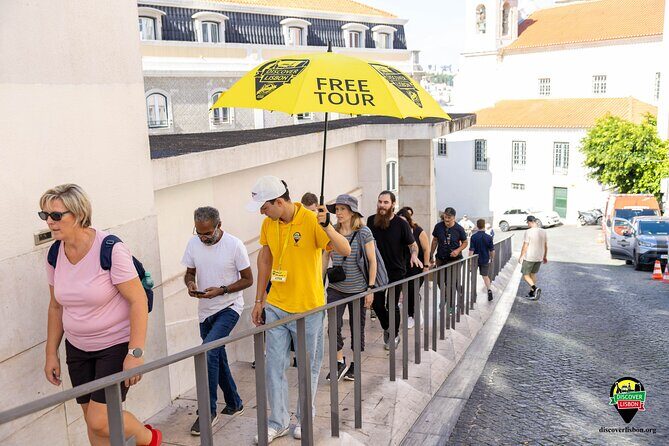
- Neo-Manueline Rossio Station: two intertwined horseshoe portals and a façade that looks more like a temple than a station
- Luís de Camões in Praça Luis de Camões: learn how Os Lusíadas ties Portuguese identity to the sea route to India
- Bairro Alto’s layers in one circuit: city gates, plague-era burials, and the relic story of Saint Roque
- Largo do Carmo’s Carmelite church: built after Nuno Álvares Pereira vowed to construct it if Portugal won at Aljubarrota
- A viewpoint finish at Miradouro de Santa Catarina: a natural end point for photos and a breather
Where Bairro Alto Stories Start: Praça Dom Pedro IV and Rossio
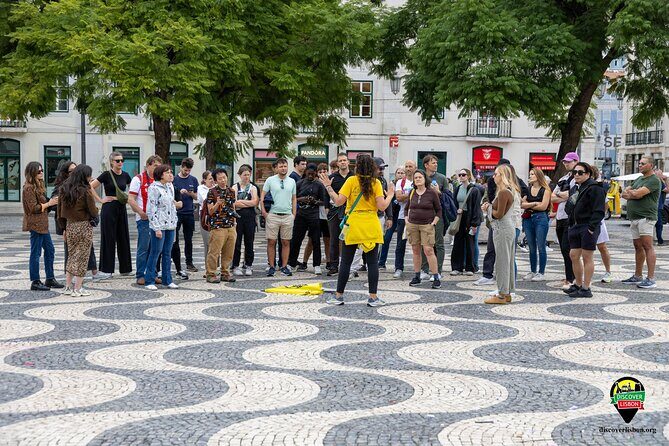
Your tour kicks off at Praça Dom Pedro IV, the lively hub where you can quickly understand Lisbon’s layout. From here, the route naturally funnels you toward Rossio, which helps you get oriented without feeling like you’re just following a dot on a map.
In the first stretch, you’re not just passing places—you’re building context. The guide frames Lisbon as a city that keeps remaking itself: expanding, rebuilding, and redirecting daily life after major shocks like disasters. Even if you’ve been to Lisbon before, that kind of framing changes how you read the streets, from street corners to major squares.
A good part of why this start works is timing. You’re getting your bearings early, before Bairro Alto’s lanes tighten and the walk becomes more about turning corners and spotting viewpoints. If you like understanding the “why” behind a neighborhood, this opening sets you up to actually notice details you’d otherwise rush past.
You can also read our reviews of more tours and experiences in Lisbon.



Estação do Rossio’s Neo-Manueline Face Worth Slowing Down For
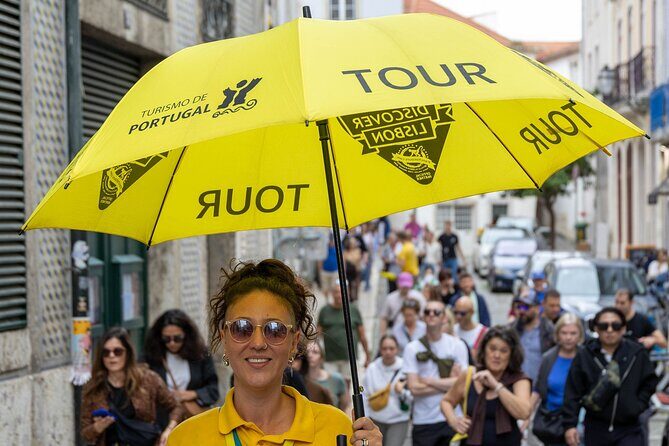
Estação do Rossio is the first big architectural headliner, and it’s worth the stop. This station was commissioned by the Portuguese Royal Railway Company and designed between 1886 and 1887 by architect José Luís Monteiro. It connects to the idea of Lisbon as a gateway—specifically to the region of Sintra—which makes the station more than just a transportation building.
What you’ll remember most is the look: the façade is Neo-Manueline, a Romantic recreation of Manueline style associated with early 16th-century Portugal. The entrance features two intertwined horseshoe portals, and even the station signage at the entrance gives you that classic “this is a landmark” feeling.
Here’s the practical value: when you see a station like this, you stop treating Lisbon’s transit spaces as background. You start noticing how Portuguese architecture borrows symbols and drama from older eras. I love how the guide points out that the outside façade can feel closer to a temple than to a typical station—so you’re doing double duty: catching transit history and spotting design storytelling in one go.
Camões Square: The Poem That Tied Portugal to the Sea Route
Next comes Praça Luis de Camões, and the name alone is a clue that you’re walking through a cultural landmark. Luís de Camões wrote the epic poem Os Lusíadas, which describes the sea route to India. That’s not just literature trivia—it’s identity. Portuguese is sometimes called the language of Camões, which tells you how central his work became to how people understand the nation.
The guide also shares the human side: it’s said Camões lost one eye in a battle in Ceuta. That detail matters because it pulls him out of the statue-and-syllabus box. You start to see how public memory works in Lisbon: people don’t only honor poets for their words—they connect them to battles, voyages, and risk.
If you’re the type who likes stopping for a few minutes and then actually processing what you’re looking at, this part is a sweet spot. You’re not asked to climb anything. You can stand, read the cues around the square, and let the story land before you head into Bairro Alto’s tighter streets.
Inside Bairro Alto’s Layers: Wall Lines, Plague Pain, and Saint Roque
Now you’re in Bairro Alto, and the guide treats it like a timeline you can walk through. The story begins with how Lisbon changed in the late 15th century, when the city grew after the discovery era created new pressure on space. The area around what’s now Camões square used to function as an entrance point into the city.
You’ll hear about older boundaries too, including references to the Fernandoine wall and the door of Santa Catarina. Then the earthquake comes into the conversation. After it, the layout shifted, and the area you see today is linked to the presence of two churches: Encarnação and Loreto.
Here’s one of the most memorable parts: on the upper hill there was a cemetery for plague victims. That’s heavy, but it’s also the kind of detail that makes Bairro Alto feel real. It’s not just a nightlife name; it’s a neighborhood built on layers of survival.
Then there’s the Saint Roque thread, which is a classic Lisbon-style blend of religion, policy, and public health. In 1506, King Manuel I requested a relic of Saint Roque from Venice and placed it in a hermitage near the cemetery. As the black plague hit and population pressure rose, the less fortunate and the sick moved toward the church area, and an urban plan developed to receive them.
Why this is valuable: the guide gives you a “map in your head.” When you look at streets in Bairro Alto, you start asking what kind of movement happened here—who lived nearby, what people needed, and how the city physically responded.
Largo do Carmo: The Carmelite Church Built From a Vow
Your next major stop is Largo do Carmo, home to the Carmelite church and convent. This is where Lisbon’s mix of politics, faith, and power becomes very physical. The church and convent were built in 1389 after Nuno Álvares Pereira, a general who helped King John repel Castilian troops, made a vow.
The key detail: he promised to build the world’s most beautiful church if Portugal won at the battle of Aljubarrota in 1385. The Portuguese victory followed, and the general kept his word by funding the construction of the Carmelite church and convent. After it was completed in 1423, he joined the Carmelite order and spent the rest of his life in the convent.
This stop works because it doesn’t feel like a lecture. You get a sense of why places like this exist: they’re not only spiritual sites, they’re historical bookmarks. Even if you’re not a church person, you’ll likely appreciate how the story explains the building’s importance in Lisbon’s broader narrative.
A practical note: this is shorter on time than some stops, so take a quick moment to look for details while the guide is describing them. If you wait until the end, you’ll be out of the “story window” and the building may blur into general sightseeing.




Earthquake Changes and Why You’ll Notice It More After This Tour
Lisbon is famous for the earthquake era, and this tour helps you connect that topic to what you actually see. Rather than treating the earthquake as a big abstract event, you hear how it affected building footprints and what replaced earlier spaces.
One clear example that comes up during the Bairro Alto portion is the way the area associated with older doorways and walls connects to today’s churches after the earthquake. That’s the kind of detail that turns “a disaster happened” into “the city shifted right where I’m standing.”
I like this approach because it trains your eyes. Once you understand that today’s streets reflect older decisions, you start noticing patterns. Even a simple turn in the road can become a clue: was this once a boundary, an entrance, or a refuge area? Why would something be placed here instead of there?
If you’re traveling with limited time, this is also efficient. In about 2.5 hours, you get a chain of cause-and-effect stories—from royal influence and relic legends to public health pressure and urban planning. You leave with a better mental model of Lisbon, not just a list of stops.
Ending at Miradouro de Santa Catarina: Views With a Purpose
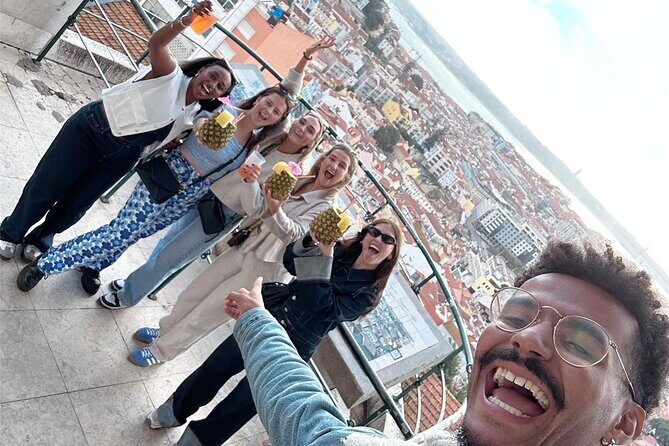
The tour wraps at Miradouro de Santa Catarina, which is a smart ending point. You get a viewpoint moment right after you’ve been learning about Bairro Alto’s hill and the city’s movement across levels.
This matters because Bairro Alto’s history is tied to elevation—walls, entrances, and places where people gathered or were buried. Ending where you can look out makes those details feel less theoretical. You can translate the stories into spatial understanding: the hill, the approach, and why certain neighborhoods became magnets during certain periods.
For timing, expect the viewpoint stop to feel like your decompression break. Even if you’re not trying to “do” the view like a checklist, you’ll still benefit from sitting or standing for a few minutes. It’s the moment when you can re-check what you just learned and connect it to the city you can see.
If you like taking photos, this is the time to slow down. Your best shots are usually the ones where you also notice street alignments and the way rooftops stack on the slope—not just the far skyline.
Price and Value: What $3.61 Buys in a 2.5-Hour Walk
At $3.61 per person for about 2 hours 30 minutes, you’re paying mostly for the guide’s time and city-reading skills. The itinerary includes several stops where admission is free, and you’re not expected to add separate attraction fees as part of the core experience.
That said, the tour does mention an optional guide contribution of 10–20€, which is standard for many walking experiences. If you feel the guide truly helped you see the city in layers—architecture plus story plus practical context—that’s a reasonable place to reflect gratitude.
Another value point: the experience includes insights on Portuguese culture and history, plus discussion of the earthquake and destructions tied to what you see today. It also includes fun facts connected to famous monuments, and the provider offers discounts for booking other experiences for the rest of the day and night in Lisbon. That can be useful if you’re planning multiple activities and want to bundle.
Group size is also a quiet quality factor. With a maximum of 50 travelers, the walk is large enough to feel lively but not so big that you lose track of the guide’s attention.
Small Group Pace: Who This Tour Suits Best
This is one of those Lisbon walks that works well if you like being outside, moving at a comfortable pace, and hearing stories that connect directly to what’s around you. The tour specifically asks for moderate physical fitness, and Bairro Alto is a hillier area. If you can handle gentle inclines and a couple of steady walking stretches, you’re good.
It’s offered in English and includes a local expert & dedicated guide. You also get a mobile ticket, and you’ll receive confirmation at booking. The tour notes service animals allowed, and it’s near public transportation, which helps if you want to hop on and off the route easily.
Who I think will love it most:
- First-time visitors who want a fast way to understand the city’s layers
- People who care about Portuguese culture, not just postcard sights
- Anyone who likes architecture stories, especially Neo-Manueline design
If you’re the type who hates walking or prefers to drive between stops, this might feel like too much time on your feet. The upside is that you’re not walking through random streets—you’re walking through explanations, with a clear sequence from square to square.
Should You Book This Bairro Alto Viewpoint Walk?
Yes, if you want Lisbon with context. This tour is built for understanding: Rossio Station’s architecture, Camões’ role in Portuguese identity, Bairro Alto’s evolution through plague-era realities, and Largo do Carmo as the physical outcome of a vow tied to Aljubarrota.
If you’re price-sensitive, it’s also hard to ignore the value. When multiple stops have free admission and the main cost is expert guidance, you’re getting a lot of interpretation for a small ticket.
If you’d rather only do major museums or avoid hills, you might pass. But if you’re curious and want a walking route that teaches you how Lisbon became Lisbon, this is a strong pick—especially because the finish at Miradouro de Santa Catarina turns all that story into a view you can actually hold onto.
You might also consider booking soon. The experience notes an average of being booked about 5 days in advance, which suggests it’s popular enough to plan for rather than guessing last-minute.
FAQ
How long is the tour?
It lasts about 2 hours 30 minutes.
Where does the tour start and end?
It starts at Praça Dom Pedro IV, 1100-581 Lisboa, Portugal and ends at Miradouro de Santa Catarina, 1200-262 Lisboa, Portugal.
Is the tour offered in English?
Yes, it’s offered in English.
Do I need to pay admission at the stops?
The listed stops have free admission. Entry to the Santa Justa elevator is specifically not included.
Is there a group size limit?
Yes. The tour has a maximum of 50 travelers.
Do I get a mobile ticket?
Yes. The experience provides a mobile ticket.
What is the cancellation window for a full refund?
You can cancel for a full refund up to 24 hours before the experience’s start time.