REVIEW · LISBON
2 Hours Sailing Tour in Lisbon
Book on Viator →Operated by Bloo Boat Charter · Bookable on Viator
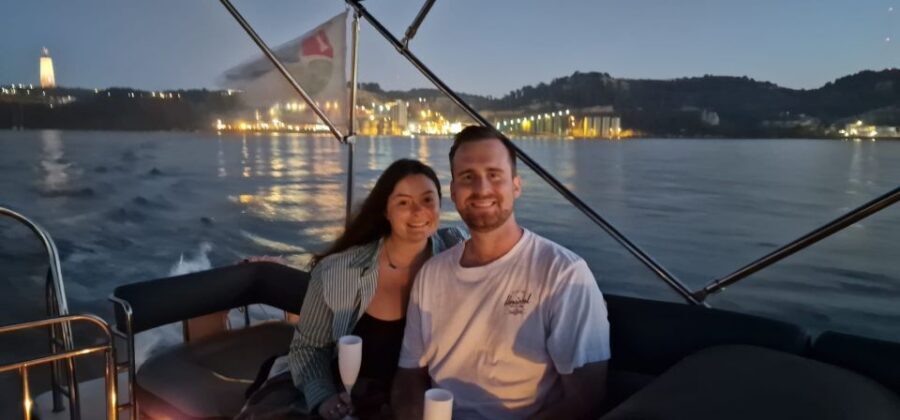
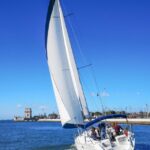
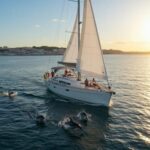
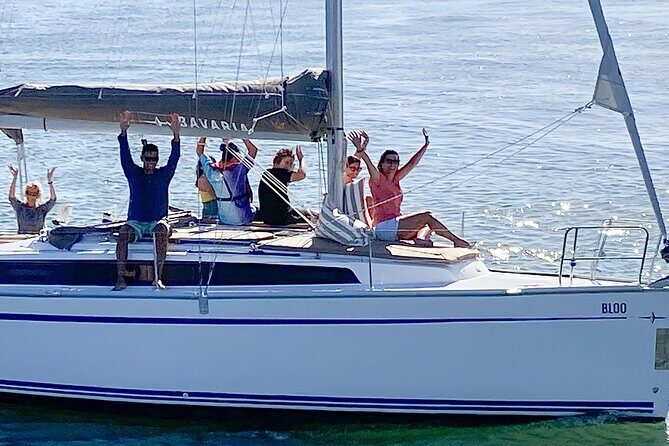
Lisbon looks different when it floats. This 2-hour sail gives you a front-row view of the Tagus River sights without the hill-hiking and crowd shuffle. You’ll depart from Belém, cruise past major landmarks, and get time for photos with the 25 de Abril Bridge in the background.
I like the small-group feel, because the boat time feels less like a bus tour and more like a relaxed river outing. I also love the guided storytelling—locals such as Gabriel and João, Paolo and Lorenzo, and Pedro and Paulo bring history in a way that actually sticks.
One thing to consider: this is a weather-sailing experience. If it gets too rough or cold for comfort, you may be offered a new date or a refund, so plan with some flexibility.
In This Review
- Key things you’ll like on this Lisbon sailing tour
- Why a 2-hour Tagus sail makes Lisbon click
- Meeting at Belém: Doca do Bom Sucesso and how the ride flows
- Belém’s Discovery-era monument: Infante Dom Henrique and 32 figures
- The memorial outcrop near Belém: where ships and design meet
- Central Tejo and MAAT: industrial Lisbon plus contemporary art
- Jerónimos Monastery: a UNESCO World Heritage stop by sightline
- The 25 de Abril Bridge: the photo moment you’ll remember
- From the river to downtown: Praça do Comércio and the Sé Cathedral
- Alfama’s river approach and Cristo Rei’s Sacred Heart
- Price and logistics: does $36.04 make sense for 2 hours?
- Onboard comfort: snacks, drinks, blankets, and a real restroom
- Practical tips for getting great views and better photos
- Who should book this 2-hour Lisbon sailing tour?
- Should you book this Belém-to-Tagus sailing tour?
- FAQ
- How long is the 2 Hours Sailing Tour in Lisbon?
- What does this tour cost?
- Where do we meet for the sail?
- What language is the tour offered in?
- What’s included in the price?
- Are meals included?
- How big is the group?
- Is the tour good for families?
- What happens if the weather is poor?
- What is the cancellation policy?
Key things you’ll like on this Lisbon sailing tour
- Belém departure: you start close to transit and the sights that most people want first
- Small group size: max 12, often feeling more personal than you expect
- Big photo moments: the bridge views and Cristo Rei sightlines from the water
- Landmarks with context: discovery-era monuments, industrial buildings, and World Heritage sites
- Comfort perks: snacks, drinks, and practical onboard space (including a toilet)
Why a 2-hour Tagus sail makes Lisbon click

Lisbon has a way of looking charming from the street and then suddenly becoming jaw-dropping from the water. That is exactly what you get here: a short, efficient cruise where the Tagus acts like your guided “move it along” button. In two hours, you can switch from Belém’s riverfront world to central Lisbon views without worrying about getting back up the next steep hill.
The best part is the mix of old and new. You’re not just seeing monuments for the sake of monuments—you’re seeing how Lisbon grew by water, then how the city reinvented itself with modern architecture. One stop is tied to the Age of Discoveries. Another is an industrial power-plant building turned museum. Then you roll right into views that postcard-makers fight over.
Also, the crew’s tone matters. From the way guides like Gabriel and João or Paolo and Lorenzo explain what you’re looking at, you get clear, friendly commentary that doesn’t feel like a lecture. And you usually get time to enjoy the view, not just stare at your guide’s back as they talk.
You can also read our reviews of more boat tours in Lisbon

Meeting at Belém: Doca do Bom Sucesso and how the ride flows
You meet at Bloo Boat Charter at Doca do Bom Sucesso, gate 3. It’s a straightforward starting point in the Belém area, and it’s near public transportation, which helps if you’re building this into a day that already includes trains, trams, or walking.
Since the tour ends back at the same meeting place, you don’t have to solve the “how do we get home?” puzzle afterward. That seems small, but it’s a big part of the real value. Two hours can disappear quickly when logistics eat your time.
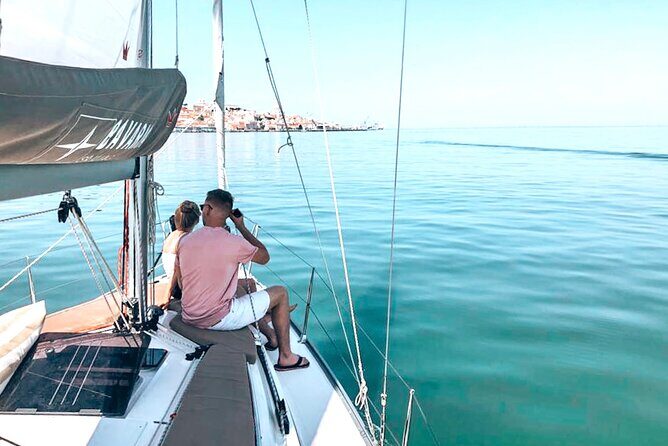
Once you’re on board, the timing feels built for sightseeing. You get a full loop of viewpoints along the river—enough time to take photos at key angles, and enough time for the crew to point out details as you pass them. If the day has a decent breeze, you may also get some proper sail time when conditions allow.
Belém’s Discovery-era monument: Infante Dom Henrique and 32 figures
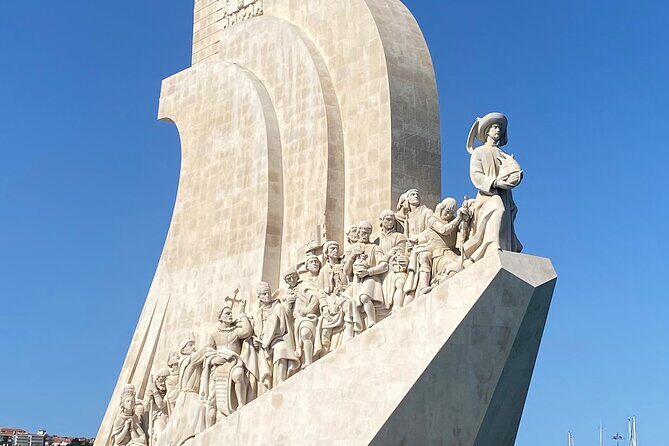
Your river path starts with Portugal’s seafaring mythology. One of the first big “look up” moments is the National Monument tied to Infante Dom Henrique, the Navigator. The sculptural program includes the main statue holding a model of a caravel, with additional figures—32 in total—spread across the ramps. The monument’s architectural design is by Cottinelli Telmo, while the sculptures are by Leopoldo de Almeida.
Why this works from a boat: from land, it can be easy to see the monument as a single focal point. From the water, you get the scale. You also get better context for how these riverside works connect to ships, fleets, and departures—Lisbon’s waterfront wasn’t just scenery. It was infrastructure and ambition.
Practical note for photos: this is one of those spots where being on the water helps you avoid railings and crowd angles. If you want crisp shots, bring your phone or camera ready early, because once the boat starts sliding past, you’ll have only a short window before the angle changes.
The memorial outcrop near Belém: where ships and design meet
Next, you pass another maritime-linked structure set on a rocky outcrop opposite the old Belém beach. This installation was meant to replace an older artillery ship anchored in that stretch, from which fleets departed toward the Indies.
Here’s the detail that makes it interesting: the works were handled by Diogo Boitaca, who was also overseeing advanced construction at the nearby Jerónimos Monastery. That connection matters because it ties river engineering to the broader building effort in the Belém area.
From the boat, it’s easier to understand why the location mattered. The river isn’t just a background. It’s part of the story.
Central Tejo and MAAT: industrial Lisbon plus contemporary art
Now you get a very Lisbon contrast: old industrial power meets modern design. Central Tejo was built between 1908 and 1951 as a thermoelectric power station that supplied electricity to Lisbon. It’s often praised for its industrial architecture, and it’s one of those buildings you can’t fully appreciate until you see it across the water.
Then the cruise continues alongside MAAT, the museum of contemporary art. MAAT’s building is organized into two parts: the old Central Tejo and the new building. That means you’re literally seeing a city redeploying old infrastructure into a new cultural purpose.
Why I’d pick this tour over doing it by foot: you can stand somewhere in Belém and try to take everything in, but you’ll miss how these structures relate to the river edge. On the sail, you’re moving, so the riverfront architecture reveals itself in layers—first shape, then detail, then how the whole composition fits together.
If you’re the type who loves modern museum design, you’ll be glad this is included, not as a quick passing glance, but as a real highlight.
You can also read our reviews of more sailing experiences in Lisbon



Jerónimos Monastery: a UNESCO World Heritage stop by sightline
You also pass the area linked to Jerónimos Monastery, built at the end of the 15th century by King Manuel I. This is one of Portugal’s heavy hitters: it’s been a National Monument since 1907, and in 1983 it was designated a World Heritage Site by UNESCO alongside the Belém Tower.
There’s also a local pride marker: in 2007, Jerónimos Monastery and the Belém Tower were elected among the seven wonders of Portugal.
From the water, the monastery doesn’t just look impressive. It looks strategic—like it grew out of wealth tied to the sea and maritime power. You see it in the larger river context, which makes it feel less like a standalone landmark and more like a piece of a larger city plan.
One caution: UNESCO sites can tempt you into expecting museum-style explanations. This sail is scenic and story-focused, so you’ll get strong context, but it’s still a boat ride, not a full on-site walk-through.
The 25 de Abril Bridge: the photo moment you’ll remember
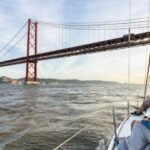
If you do only one photo setup during the sail, do it around the 25 de Abril Bridge. It’s a road-rail suspension bridge over the Tagus River connecting Lisbon’s north bank to Almada on the south bank.
What I love about this stop is how much story is built into the structure’s name. Until 1974 it was called Ponte Salazar. Then it was renamed 25 de Abril, tied to the revolution on April 25, 1974. The bridge works began on 5 November 1962 and it opened on 6 August 1966.
From the boat, the bridge turns into a moving frame. You don’t have to stand in one place and fight for sightlines—you get a sequence of angles as the boat slides along the river. That makes it easier to get photos that feel cinematic rather than snapshotty.
If you’re traveling with a family, this is often where kids suddenly decide the tour is cool. It’s big, iconic, and visible from far enough away that you don’t have to search for it.
From the river to downtown: Praça do Comércio and the Sé Cathedral

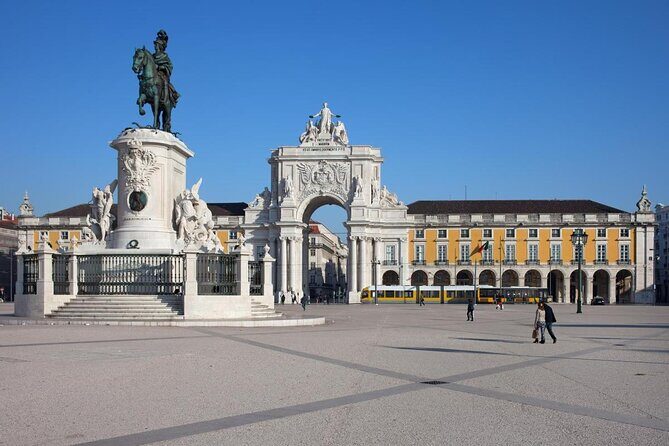
As you continue, you reach Lisbon’s grand central space: Praça do Comércio, also known historically as Terreiro do Paço. This square served as the noble entrance to Lisbon for about two centuries and is one of the biggest squares in Europe.
In the center, you’ll notice the equestrian statue of D. José, erected in 1775 by Joaquim Machado de Castro. On the north side is the Arco Triunfal da Rua Augusta, the entrance into downtown.
Why this matters from the river: the square is huge on foot, but from the Tagus you understand how it functions like a reception desk for the city. It feels like you’re seeing the coastline’s old role as a gateway.
Later, you pass Lisbon’s Cathedral, also called Church of Santa Maria Maior. Construction began in the second half of the 12th century after Lisbon was conquered from the Moors by D. Afonso Henriques. Today it shows a mix of architectural styles and has been a National Monument since 1910.
Boat-view tip: cathedrals and domes can get blocked by street-level angles. From the water, you get a cleaner “whole building” impression. It helps you map what you’ll want to explore later on foot.
Alfama’s river approach and Cristo Rei’s Sacred Heart
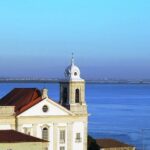
Lisbon’s oldest neighborhood, Alfama, is part of what you’ll see from the water’s path. Its name comes from Arabic al-hamma, meaning source of warm waters, good waters. Alfama is known for restaurants and fado houses, and it’s especially tied to Santos Populares festivities, with the Santo António celebrations on June 12 to 13.
Even though this sail doesn’t drop you into the alleys, the river angle helps you understand why Alfama feels like Lisbon’s living core. It sits close enough to the water to feel connected, not isolated on a hill.
Then you get a striking contrast in faith and scale with Cristo Rei, the National Sanctuary of Cristo Rei. It’s dedicated to the Sacred Heart of Jesus, located at an altitude of 133 meters above the Tagus. The portico was designed by architect António Lino and rises 75 meters. At the top is the statue of the Holy Redeemer with open arms facing Lisbon, standing 28 meters tall, sculpted by Francisco Franco de Sousa.
From the river, Cristo Rei reads like a landmark you can orient yourself by. It’s also a fun “what direction is the city?” point because it faces Lisbon from across the water.
Price and logistics: does $36.04 make sense for 2 hours?
At $36.04 per person for about 2 hours, this is priced like a mid-range highlight that saves you time. The value isn’t only the sights. It’s the fact that you’re paying for transportation, insurance, fuel, a crew, and the onboard perks that keep you comfortable for the full ride.
On board, you get a welcome drink and light snacks like peanuts, cashews, and fried corn. Meals aren’t included, so think of this as a snack-and-sip break, not lunch.
The group size helps justify the cost too. With a maximum of 12 travelers, and often a smaller practical feel (many people join as families), you’re not crammed into a giant crowd. That matters when you’re trying to hear commentary and take photos without nonstop shoulder checks.
I’d call it good value if:
- you want a scenic first-day activity in Lisbon
- you care about photos but hate long museum lines
- you’re visiting with kids and want a calmer plan than walking all day
Onboard comfort: snacks, drinks, blankets, and a real restroom
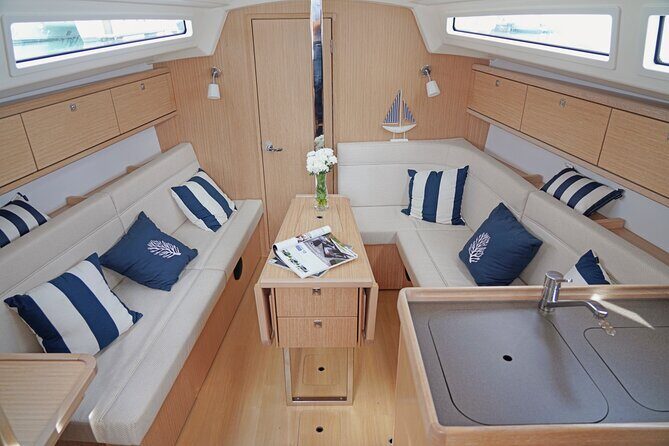
A big part of why people rate this so high is how comfortable the sail feels in practice. You’ll typically have a toilet onboard, plenty of room below deck for bags, and a relaxed pace where you’re not constantly being shooed along.
Cold day? Don’t panic. There are blankets on board for chill weather. That’s the kind of detail that turns a potentially miserable river sail into a doable one.
Food and drink are simple but helpful. You get a welcome drink plus light snacks. Many sails also include iced tea and wine options, and some groups play music by connecting devices via Bluetooth.
One small note: because the tour is weather-driven, dress for the river wind, even if Lisbon’s streets feel warm.
Practical tips for getting great views and better photos
1) Bring a jacket that blocks wind. The Tagus can feel colder than the city streets. Blankets help, but you’ll be happier if your body isn’t fighting the breeze.
2) Charge your phone and clear photo storage before you start. The bridge and Cristo Rei moments happen fast, and the boat moves while you shoot.
3) Ask questions when the crew slows near a landmark. The crew members like Paolo, Lorenzo, Gabriel, João, and Pedro aren’t just reciting facts. They’ll tailor explanations to what you ask.
4) Plan for a mostly scenic experience. You’ll see major sights from the water, but this tour isn’t a replacement for walking tours of Alfama or a deep museum day.
5) Consider timing based on your photo priorities. A sunset sail can look magical from the river, and it’s the kind of light that flatters stone, bridges, and statues.
Who should book this 2-hour Lisbon sailing tour?
This is a great fit if you:
- want a quick, high-impact introduction to Lisbon’s most famous river landmarks
- are traveling with a family who needs a calmer activity
- prefer guided context but still want breathing space to enjoy views
- like boats, simple onboard comforts, and photo-friendly moments
It’s less ideal if you want a full day of land exploring, or if you dislike weather uncertainty. But as short Lisbon experiences go, it’s one of the easiest to build into a tight schedule.
Should you book this Belém-to-Tagus sailing tour?
Yes—if you want a smart, scenic Lisbon win in two hours, book it. The river view is the point, and the landmarks chosen hit the major “okay, this is Lisbon” notes: discovery-era monuments, Jerónimos Monastery in the UNESCO orbit, the industrial-to-art transformation of Central Tejo and MAAT, the iconic 25 de Abril Bridge, and the Cristo Rei sightline.
Before you click confirm, do two quick checks:
- Pick a day when you expect decent weather, since this is a good-weather experience.
- If you’re traveling as a group and budget matters, remember you’re paying for comfort, small-group access, and the guided storytelling—not a low-cost sightseeing bus.
FAQ
How long is the 2 Hours Sailing Tour in Lisbon?
The tour lasts about 2 hours.
What does this tour cost?
It costs $36.04 per person.
Where do we meet for the sail?
You meet at Bloo Boat Charter, Doca do Bom Sucesso, gate 3, 1400-038 Lisboa, Portugal.
What language is the tour offered in?
The experience is offered in English. The crew also speaks Portuguese, English, French, and Spanish.
What’s included in the price?
The tour includes all fees and taxes, insurance, crew, fuel, a welcome drink, light snacks (peanuts, cashews, fried corn), and the included services listed for the boat.
Are meals included?
No. Meals are not included.
How big is the group?
There is a maximum of 12 travelers, and it can be family-friendly with space for up to 8 people in some situations.
Is the tour good for families?
Yes, it’s described as great for families.
What happens if the weather is poor?
This experience requires good weather. If it’s canceled due to poor weather, you’ll be offered a different date or a full refund.
What is the cancellation policy?
You can cancel for a full refund up to 24 hours in advance of the experience’s start time. If you cancel less than 24 hours before, the amount paid will not be refunded.