REVIEW · LISBON
Pasteis de Nata Experience
Book on Viator →Operated by Cooking Lisbon · Bookable on Viator
Egg yolks turn into Lisbon magic. This hands-on pastéis de nata class is a great way to spend a Lisbon morning: you learn how these famous custard tarts came to be, then you make (and eat) your own. The story starts with Portuguese monastery life and ends in a warm, flaky pastry tin you can hold in your hands.
What I love most is the small group feel. The class caps at 12 people, and you’re not just watching from the sidelines—you get chances to participate. I also like that the teaching is led by the local host named Felipe, who explains the process clearly and keeps things moving in a kitchen sized for a group this size.
One thing to consider: plan to confirm you’re at the right place and be early. There has been at least one complaint about a no-show or late opening, and the operator’s response said they had no record of that booking—still, arriving a few minutes early helps you avoid stress.
In This Review
- Key highlights at a glance
- Pastéis de Nata Origins: From Convent Egg Whites to Lisbon’s Favorite
- The Kitchen Setup Near Anjos Metro: Why Location Helps Your Morning
- What You Actually Do: Hands-On Steps to Make Pastéis de Nata
- Tasting and Drinks: Turning Baking Work Into a Real Brunch Moment
- Value Check: Is $72.08 Worth It for 1.5 Hours?
- Tips for Getting the Most Out of Your Class
- What Makes This Class Feel Personal (Even With a Small Group)
- Souvenirs and Extras: Tins You Can Buy On-Site
- Who Should Book This Pastéis de Nata Class?
- Should You Book? My Straight Answer
- FAQ
- How long is the Pastéis de Nata cooking experience?
- What time does the class start in Lisbon?
- Where do I meet for the class?
- Is the class offered in English?
- What does the ticketing look like?
- What’s included with the class?
- Are recipes included, and will I get them after the class?
- How many people are in the class?
- Can I cancel for a refund?
Key highlights at a glance

- Origin story you can taste: you learn how pastéis de nata trace back to egg yolks used in Lisbon convent kitchens.
- Small-group class (max 12): less waiting, more hands-on time.
- Host-led cooking in a real kitchen: you follow instructions, assemble, bake, and then eat what you made.
- Included drinks: coffee, milk, tea, and juice to round out your tasting.
- Take-home recipes: you receive PDF files by email for recreating the tarts later.
Pastéis de Nata Origins: From Convent Egg Whites to Lisbon’s Favorite
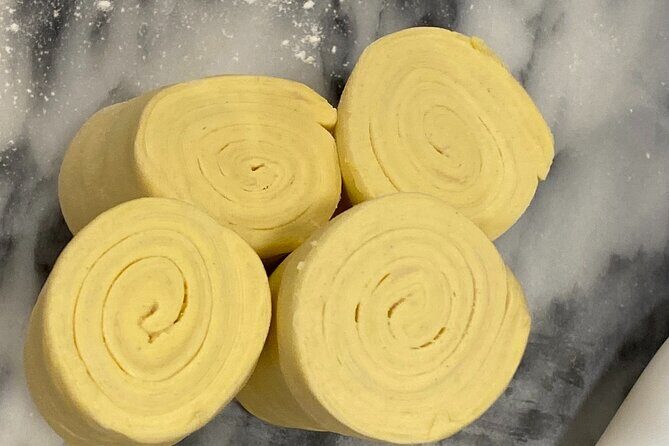
Pastéis de nata weren’t born in a fancy bakery window. They trace back to 18th-century Lisbon, linked to the Jerónimos Monastery. At the time, monasteries and convents used large quantities of egg whites for starching clothes—like the stiff habits worn by nuns.
That left a lot of egg yolks needing a purpose. The yolks were turned into pastries and cakes, and over time the sweet recipes multiplied. That’s the key idea I like about learning this in a class: you’re not just cooking dessert. You’re connecting ingredients to a real Lisbon reason they existed.
And yes, that context matters when you’re actually in the kitchen. Egg yolks, custard, pastry—everything clicks when you understand why these flavors made sense in that setting. It’s not just trivia; it’s a story that makes your finished tart feel more meaningful.
You can also read our reviews of more tours and experiences in Lisbon.



The Kitchen Setup Near Anjos Metro: Why Location Helps Your Morning

The meeting point is R. Bernardim Ribeiro 9, 1150-068 Lisboa, close to public transit. Specifically, it’s about 50 meters from Anjos Metro Station, so you don’t have to plan your morning around long transfers.
You start at 9:30 am, and the class runs about 1 hour 30 minutes. That timing is ideal if you want to be productive early—before Lisbon’s day gets busy and before you melt into sightseeing mode.
The format also makes the location work for you. You start and end at the meeting point, so you don’t need to figure out how to get back. If you’re planning a classic Lisbon day—viewpoints, neighborhoods, and pastries as you go—this is a strong first stop.
What You Actually Do: Hands-On Steps to Make Pastéis de Nata
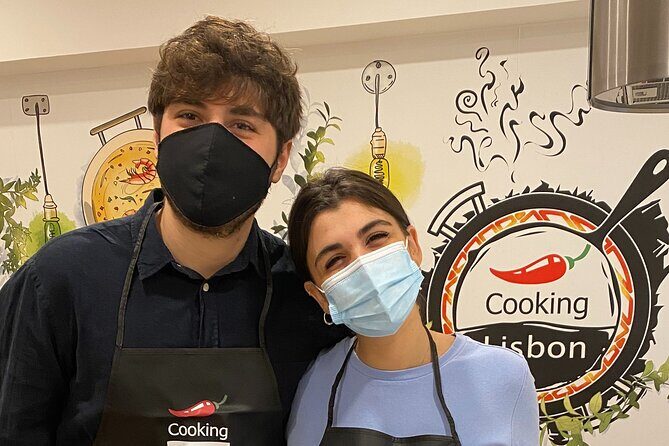
This experience is built around one goal: you learn to make pastéis de nata with your group, then you taste what you produced. The learning isn’t passive. The class is designed so you can participate, not just watch.
Because the group size maxes out at 12, the host can keep an eye on what everyone is doing. That matters in a baking class. When there are too many people, you spend your time waiting your turn. Here, you’re more likely to get real practice during the short timeframe.
Here’s the flow you should expect:
- You’ll get instructions from the host on the process of making pastéis de nata.
- You’ll work as part of the group to assemble and bake your tarts.
- Once they’re ready, you sit down for a tasting and enjoy the fruits of your work.
The class also includes recipes as PDF files by email. That’s a practical win. You can refer back later when you try again at home, instead of relying on memory or guesswork.
Tasting and Drinks: Turning Baking Work Into a Real Brunch Moment
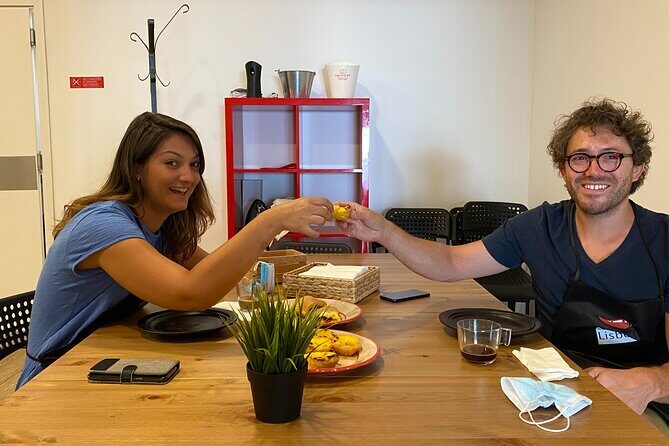
At the end, you get to eat your pastéis de nata on the spot. The sample menu is simple and honest: the dessert is the main event. That’s exactly how it should be—this is a single-focus class, so your attention stays on the pastry you made.
You’re also included with drinks: coffee, milk, tea, and juice. For a morning activity, that’s a nice touch. Baking can leave you a little lightheaded or out of breath, depending on how actively you’ve been participating. A hot drink or a glass of juice helps you reset.
The experience is also pitched as a way to enjoy a bit of brunch energy without dragging it out. You start at 9:30 am and finish relatively quickly, so you’re still free to explore Lisbon afterward.
Value Check: Is $72.08 Worth It for 1.5 Hours?
At $72.08 per person for about 1 hour 30 minutes, you’re paying for more than dessert. You’re paying for:
- Hands-on teaching in a small group (max 12)
- Use of the kitchen setup and process guidance
- The chance to make and then eat your own pastéis
- Included drinks
- PDF recipes emailed after the class
- Activity insurance
- Wi‑Fi in the experience
If all you wanted was a pastry, you could buy a pastéis de nata in Lisbon and move on. This class is better if you want the why and the how. It’s also good value because it’s structured like a real workshop: you get enough time to do the work, not just taste.
Private classes can sometimes feel overpriced. Here, the “private” angle comes from the controlled group size and the chance to personalize your experience. When the kitchen can handle your group without rushing you, the price feels more reasonable.
Also, this experience is often booked about 12 days in advance on average. That tells me it’s popular enough that a little planning helps, especially if you’re picking a specific morning.

Tips for Getting the Most Out of Your Class
These aren’t fancy hacks. They’re just small moves that make the experience smoother.
Arrive a few minutes early. The meeting point is easy to reach near Anjos Metro, but you’ll still want time to find the exact address and settle in.
Come hungry, but don’t overdo breakfast. You’ll be making pastries and then eating them. If you arrive starving, you’ll enjoy the tasting more. If you arrive too full, the end can feel like it’s mostly for show.
Treat the recipes as your souvenir. The PDF files are emailed after the class. Download them when you can, so you can actually use them when you cook again later.
Ask questions while you’re working. Baking classes move fast. If something doesn’t click—timing, texture, steps—raise it right away instead of waiting until the tasting.
What Makes This Class Feel Personal (Even With a Small Group)
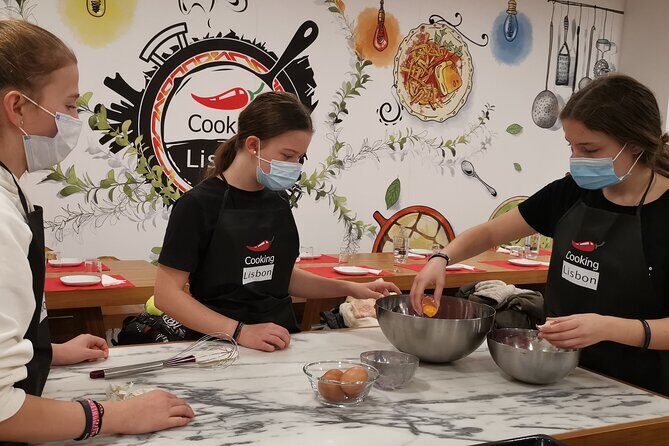
Even though it’s group-based, the “personal” feeling comes from two details: the group cap and the host attention.
In the class, you’re not stuck behind glass. You’ll be doing the process, and you’ll have turns. One detail I especially like from the teaching style is that the host named Felipe is described as explaining how the class works clearly and making sure people can participate.
That’s a big deal in a short, 1.5-hour activity. When you understand what to do, you can focus on the pastry instead of the logistics.
Also, this is an English-offered class. If you’re traveling with limited Portuguese, you’ll likely feel comfortable.
Souvenirs and Extras: Tins You Can Buy On-Site
Pastel de nata tins are available to purchase. That’s useful if you already know you’ll want to make these again. Many people try, and then discover they don’t have the right mold size for the classic shape.
Gifts aren’t included, so if you want something to take home beyond the emailed recipes, you’ll likely be looking at the tins or anything the shop has available for purchase.
Who Should Book This Pastéis de Nata Class?
Book this class if:
- You want a hands-on Lisbon food experience, not just a tasting stop
- You like small-group activities where you can actually participate
- You want English instruction and a clear take-home recipe guide
- You’re in Lisbon during the morning and want a plan that ends quickly
It’s also a good option for couples, friends, and mixed ages, since the format is built for participation and a kitchen sized to fit about a dozen people.
If you’re only interested in buying pastries and moving on, this might be more than you need. But if you want the process—and the chance to say I made these—this fits very well.
Should You Book? My Straight Answer
I’d book it if you want a Lisbon morning that mixes story, cooking, and eating without dragging into an all-day schedule. The small group cap (12) and the hands-on participation are the strongest reasons to choose this over a quick pastry-only stop. Add in the included drinks and the emailed PDF recipes, and the price starts to look fair for what you get.
Do it with one extra precaution: arrive early and double-check the address so you’re not relying on memory. Pastéis de nata are forgiving, but class logistics aren’t.
If you’re ready to trade a little time on your schedule for real culinary practice, this is a smart bet in Lisbon.
FAQ
How long is the Pastéis de Nata cooking experience?
It runs for about 1 hour 30 minutes.
What time does the class start in Lisbon?
The start time listed is 9:30 am.
Where do I meet for the class?
You meet at R. Bernardim Ribeiro 9, 1150-068 Lisboa, Portugal.
Is the class offered in English?
Yes, the experience is offered in English.
What does the ticketing look like?
The tour uses a mobile ticket.
What’s included with the class?
You get drinks (coffee, milk, tea, juice), activity insurance, Wi‑Fi, and recipe PDF files sent by email.
Are recipes included, and will I get them after the class?
Yes. You receive recipes as PDF files by email.
How many people are in the class?
The maximum group size is 12 travelers.
Can I cancel for a refund?
Yes. You can cancel for a full refund up to 24 hours before the experience start time, with free cancellation available.