REVIEW · LISBON
Lisbon’s Post-Colonial Feast
Book on Viator →Operated by Culinary Backstreets Walks · Bookable on Viator
Food can be a history lesson. This Lisbon tour ties post-colonial influences directly to what you eat, with guided stops that connect Portuguese cuisine to places shaped by Portugal’s colonial reach. I like that you get hands-on tastings like chocolate and chorizo stew, not just theories. And I love the max-7 group setup, which makes the walking and talking feel personal instead of rushed.
One heads-up: the theme gets post-colonial and grim at times, including Portugal’s history of slavery and exploitation. Also, the experience depends on good weather, so have a little flexibility in your schedule.
In This Review
- Key Things You’ll Love Here
- Lisbon’s Post-Colonial Feast: Why Food Here Means More
- What You Get for $150 (and Why It’s Not Just a Snack Tour)
- The Small-Group Advantage: Maximum Seven, Real Conversation
- A 5-Hour Route That Builds Sense, Not Chaos
- Stop 1: Paço da Rainha and the First Flavor of Context
- Stop 2: Campo dos Mártires da Pátria, Where Culture Shows Up in Food
- Stop 3: Avenida da Fonte Luminosa, Setting the Theme Before the Tastes
- Stop 4: Jardim do Torel and the Next Best Bite
- Stop 5: Largo de São Domingos, Where You Finish Strong
- The History Part: Learning Without Losing the Plot
- Menu Reality Check: If a Place Closes, You’ll Still Eat
- Weather, Timing, and How to Plan Your Day
- Who This Tour Is Best For (and Who Might Not Love It)
- Should You Book Lisbon’s Post-Colonial Feast?
- FAQ
- How long is Lisbon’s Post-Colonial Feast?
- What does it cost?
- What language is the tour offered in?
- How large is the group?
- Where do we meet for the tour?
- Does the tour run in all weather?
Key Things You’ll Love Here
- Post-colonial food story, with real context on slavery, repression, and exploitation, not vague “influences.”
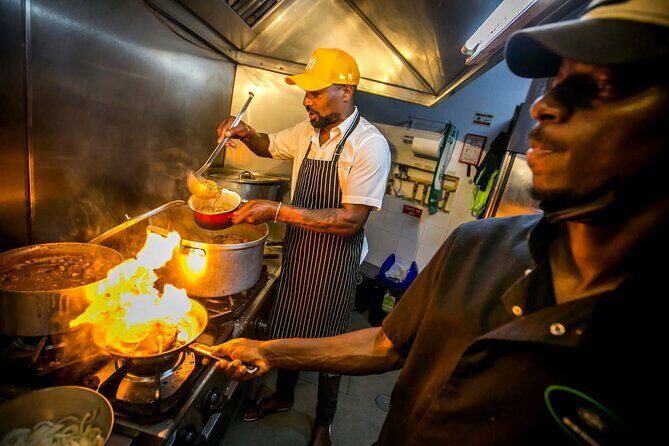
- Multiple tasting moments built around chocolate, chorizo stew, and other regional specialties.
- A small max-7 group that makes it easy to ask questions and meet like-minded people.
- Neighborhood-first route through Lisbon’s squares and viewpoints, not just a single restaurant circuit.
- Guides that can explain the why, with one review calling out Celia as especially lovely and well-prepared.
Lisbon’s Post-Colonial Feast: Why Food Here Means More
Portuguese food is never just food. In Lisbon, it’s also trade routes, migrations, forced movement, and cultural mixing that didn’t happen on equal terms. This tour treats that history as part of the meal, not a side note.
What makes the concept work is the balance. You’re not stuck reading facts off a wall. Instead, you’re walking through specific parts of the city while a guide frames what you’re tasting and why it ended up on Portuguese tables. That is a smart way to make hard history digestible.
I also like the tone. The food comes first in your experience, with the “why it matters” built in as you go. That keeps the talk from feeling like a lecture, even when the subject turns serious.
You can also read our reviews of more tours and experiences in Lisbon.



What You Get for $150 (and Why It’s Not Just a Snack Tour)
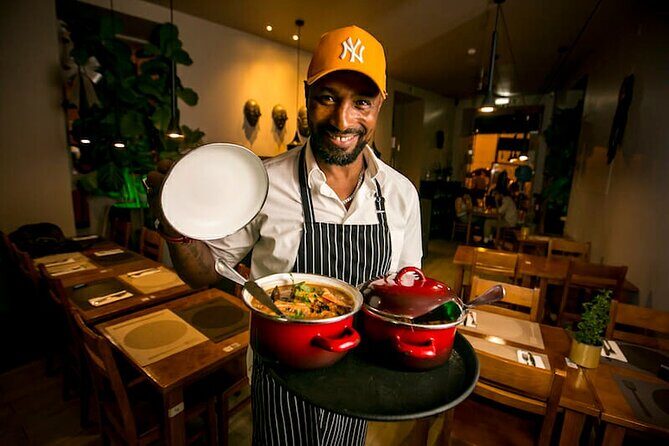
At $150 per person, this is not a bargain bite-and-butterfly kind of tour. But it also isn’t priced like a generic city walk with one stop for dessert. You’re paying for several things that add up fast in Lisbon.
First, you’re paying for time and structure. The tour runs about 5 hours, with multiple timed stops (around 45 minutes each, plus about 1 hour at the final square). That pacing matters because you’re not just grabbing food; you’re connecting it to places and stories as you walk.
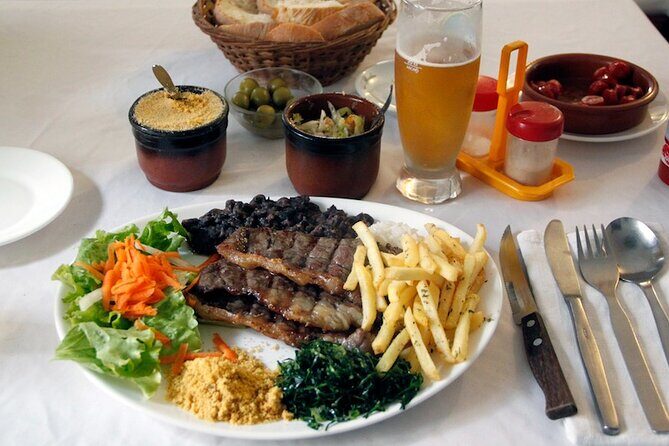
Second, you’re paying for tastings across different influences. The highlights call out chocolate and chorizo stew, plus a “wealth of regional delicacies.” One review specifically pointed out surprises from former Portuguese-colony cuisines, including Brazilian and Goan flavors being part of what people don’t usually expect in Portugal.
Third, you’re paying for a small-group format (maximum seven). In my view, small groups are the difference between “I ate something” and “I understood what I ate.” With fewer people, you’re more likely to get clearer answers when questions come up.
The Small-Group Advantage: Maximum Seven, Real Conversation
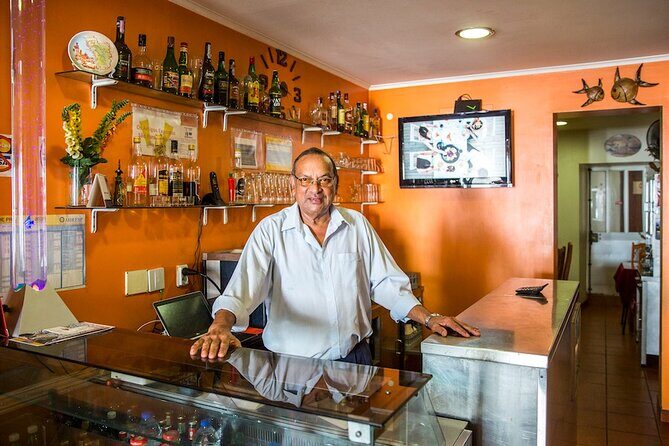
A group of up to seven sounds like a marketing line until you experience it in your head. Smaller groups reduce that pushy, stand-here, move-along energy. You can actually listen while walking, and your guide can adjust if the group has questions.
This matters even more on a tour with a heavy theme. When the guide brings up Portugal’s grim history of slavery, repression, and exploitation, you want space to understand, not just to follow along. A tight group is usually where that kind of talk lands better.
The review feedback also hints at this. People highlighted how easy it was to connect with like-minded folks and how the guide’s explanations helped tie food influences back to real historical interactions.
A 5-Hour Route That Builds Sense, Not Chaos
The tour starts at 11:00 am at Praça do Chile 2, 1170 Lisboa. It ends back at the same meeting point. That loop is practical: you’re not stuck figuring out transport after you’re done eating and thinking.
It’s also near public transportation, which helps if you’re arriving from another part of the city. And since it’s in English, it’s a good fit if you want the story clearly explained without relying on translation apps.
Plan for walking. Even though each segment is timed, you’re still moving from Paço da Rainha to Campo dos Mártires da Pátria, then on to Avenida da Fonte Luminosa, Jardim do Torel, and finally Largo de São Domingos. Bring comfortable shoes and expect some standing during tastings.
Stop 1: Paço da Rainha and the First Flavor of Context
Your day begins at Paço da Rainha, a starting point that’s meant to get you oriented fast. This is where you take in the sites while the guide sets the tone for the theme.
This stop is important because it turns the tour from “food tasting” into “understanding Lisbon.” The guide uses the first part to position the city historically, so the later tastings don’t feel random.
Practical note: since this segment is about 45 minutes, you’ll likely get a focused walk-and-story pace rather than a long museum-style stop. That’s ideal if you want momentum.

Stop 2: Campo dos Mártires da Pátria, Where Culture Shows Up in Food
Next is Campo dos Mártires da Pátria, another 45-minute chapter of the route. Here, the guide brings in the history and culture of the city, which is the groundwork for what you’ll eat later.
What I like about this kind of stop is that it connects food to the way a city absorbs outside forces. Portuguese cuisine didn’t form in a vacuum. The tour’s framing helps you see how colonial relationships influenced what ingredients, cooking ideas, and flavors traveled back into Portugal.
Also, this is a city-knowledge stop. You’ll leave with a better sense of how Lisbon organizes itself—squares, routes, and neighborhoods—so the rest of the day feels easier to navigate on your own.
Stop 3: Avenida da Fonte Luminosa, Setting the Theme Before the Tastes
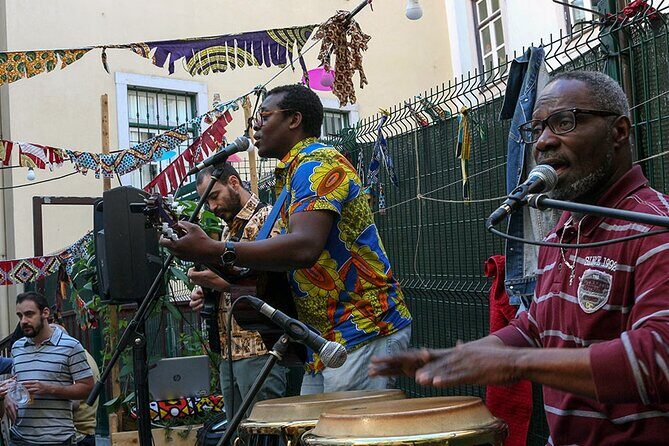
At Avenida da Fonte Luminosa, you’ll get a structured “here’s what today is about” moment. The itinerary lists 45 minutes here, and the description is clear: the guide discusses the theme of the day and takes in the sites.
This stop is a smart rhythm choice. It’s not too early to be abstract, and it’s not too late to matter. After two stops, you have enough context to follow. Before the final tastings and square stop, you’re ready to connect dots.
If you like tours where you understand the logic behind the menu, this is the point where it starts to feel cohesive. You’re not just collecting bites; you’re building meaning.
Stop 4: Jardim do Torel and the Next Best Bite
Then comes Jardim do Torel—a 45-minute stop where the vibe shifts toward a calmer, outdoor pace. The guide uses this setting to find the next best bite, which helps break up the day nicely.
Garden stops can be great on food tours because they give your brain a breather. You’re still learning, but you’re not trapped indoors with constant noise. That matters when the history topic is heavy.
This is also where a tour like this starts to feel like more than “stops and snacks.” Lisbon’s viewpoints and greenery help you process what you’ve been told. You can look around, take in the city, and let the story land.
Stop 5: Largo de São Domingos, Where You Finish Strong
The final stop is Largo de São Domingos, and this is the longest listed segment at about 1 hour. In the square, the tour focuses on specialties—this is where the food moment peaks.
One of the highlights is the inclusion of chocolate and chorizo stew as key items. Even without a detailed menu list here, that combination alone tells you you’ll get both comfort and indulgence, not just one style of tasting.
This final hour also has a built-in advantage: by the time you reach the square, you’ve already been oriented through multiple locations and talks. So the last tastings don’t feel like random samples. They feel earned.
If you’re the kind of person who likes to end a tour with a “best of” feeling, this structure works. You get one last walk-and-talk stretch, then a food finish.
The History Part: Learning Without Losing the Plot
A big promise of this tour is learning about Portugal’s grim history of slavery, repression, and exploitation, and how that shaped interactions with former colonies. That’s not an easy topic.
What helps is that the tour anchors those ideas to everyday life: what people cooked, what people ate, and how culinary habits traveled through power imbalances. Food becomes evidence.
The review feedback reinforces that this is not just a “culture facts” tour. One review stressed that the tour delivered on understanding how colonization affected food both in the regions and in Portugal. Another pointed out that the guide linked mixed local cultures directly to what was on the table.
And yes, you should come prepared for weight. If you only want light entertainment, you might find the theme intense. But if you want a better understanding of Lisbon through its food, this is exactly the kind of tour that turns “tasty” into “meaningful.”
Menu Reality Check: If a Place Closes, You’ll Still Eat
Food tours depend on restaurants being open. One review mentioned that an Angolan restaurant had recently closed unexpectedly, and the group still had enough food to feel satisfied. The important takeaway for you is this: don’t assume every specific restaurant will be operating at all times.
The tour’s structure and multiple stops likely help it absorb changes. You’re not betting everything on one single meal. Still, if you’re the type who wants one specific cuisine at a specific place, keep your expectations flexible.
Weather, Timing, and How to Plan Your Day
This experience requires good weather. That means you should have a backup mindset if your Lisbon days include rainy forecasts. If the tour is canceled due to poor weather, you’ll be offered a different date or a full refund.
Timing wise, 11:00 am is a strong slot. You’ll get a late morning start that helps you avoid the crowds that hit mid-day. It also means you can still plan a separate dinner after, without needing to spend the rest of the evening figuring out what you’re going to eat.
One more practical note: since you’ll be walking between set stops, treat this as your main planned activity that half of the day. Keep your other plans lighter.
Who This Tour Is Best For (and Who Might Not Love It)
This tour fits you if you want Lisbon through its post-colonial connections and you like the idea of learning through tastings. It’s also a strong match if you’re curious about why Portuguese food includes flavors tied to places like Brazil or Goa, and how those influences arrived under colonial systems.
It can also be great for people who like small-group conversations. With a maximum of seven, it’s easier to talk, ask follow-ups, and learn at a human pace.
You might reconsider if you want a purely casual food crawl with no heavier context. The tour addresses slavery and exploitation, so this isn’t just history trivia disguised as dinner.
Should You Book Lisbon’s Post-Colonial Feast?
I think you should book this if you care about two things: good food and good explanations. The price can feel steep until you factor in the full 5-hour format, the multiple tasting moments, the small group size, and the fact that you’re learning the “why” behind Portuguese cuisine.
I’d also book it if you enjoy tours that connect neighborhoods and landmarks to what’s happening in your plate. Walking from Paço da Rainha to Largo de São Domingos isn’t just scenic; it’s how the story is built.
Only skip it if you strongly prefer light, upbeat food sightseeing with no heavy history. Otherwise, this is one of those Lisbon experiences where you leave with better food memories and sharper context for the city.
FAQ
How long is Lisbon’s Post-Colonial Feast?
The tour runs for about 5 hours.
What does it cost?
The price is $150.00 per person.
What language is the tour offered in?
It’s offered in English.
How large is the group?
The group is limited to a maximum of 7 travelers.
Where do we meet for the tour?
You’ll meet at Praça do Chile 2, 1170 Lisboa, Portugal.
Does the tour run in all weather?
It requires good weather. If it’s canceled due to poor weather, you’ll be offered a different date or a full refund.