REVIEW · LISBON
Sight Sailing in Lisbon
Book on Viator →Operated by Lisbon Sight Sailing · Bookable on Viator
Lisbon looks different from the water.
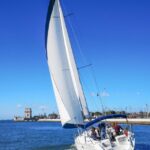
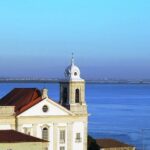
On this private sailing trip along the Tagus River, you’re treated to close-up views of major sights like Belém Tower, the Discoveries Monument, Praça do Comércio, and (across the river) Christ-King in Almada, all from a relaxed onboard setting.
Two things I especially like: the mix of guided storytelling and the food-and-drink flow. You get a welcome drink after boarding, plus wine tasting and the chance to taste Portuguese gastronomy—so the cruise feels like a complete experience, not just sightseeing from a deck.
One consideration: since this is a sightseeing cruise with many “look-not-enter” moments, you should be okay with seeing places from the water rather than going inside monuments.
In This Review
- Key Things You’ll Appreciate on This Tagus Cruise
- What You’re Really Buying: Comfort Plus Storytelling
- Welcome Drink, Wine Tasting, and Portuguese Food On Deck
- Starting at Belém Tower: A Fortress You Can Still Feel
- The Discoveries Monument: Portuguese Global Reach, Made Visible
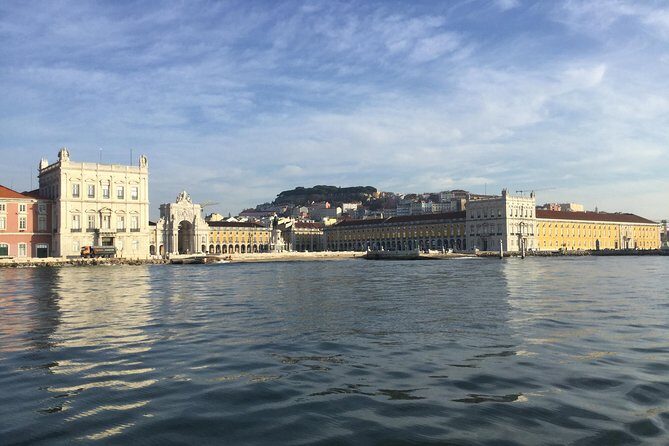
- Praça do Comércio and the 1755 Earthquake: Lisbon Rebuilt in Front of You
- Passing Under the April 25 Bridge: The Golden Gate Comparison
- Alfama From Sea Level: Old Streets, Fado, and Big Views
- São Jorge Castle and the Lisbon Skyline You Can See at Once
- Jerónimos Monastery and the Maritime Trail Along the Tagus
- Central Tejo and MAAT: Industrial Past Meets Modern Design
- Art Collections You Pass By: National Ancient Art Museum and Folk Art Museum
- The River Is Not Just Scenic: Traffic, Research, and “Hidden Lisbon”
- Cais do Sodré, Santa Apolónia, and the Old-Port Feeling
- Alfama’s Religious Landmarks: Lisbon Cathedral and the National Pantheon
- Almada’s Christ-King: A Monument With a WWII Vow Behind It
- Ajuda Palace and Other Riverside Sights: What to Watch For
- How Long You’ll Be on the Water, and When the Views Feel Best
- Price and Value: Why $226.41 Can Actually Make Sense
- Who This Sail Fits Best
- Should You Book Lisbon Sight Sailing?
- FAQ
- Where does the tour start and end?
- How long is the sailing experience?
- Is this a private tour?
- What’s included in the price?
- Do I need hotel pickup?
- Will I receive a mobile ticket?
- What river is the cruise on?
- What if I want confirmation before going?
Key Things You’ll Appreciate on This Tagus Cruise
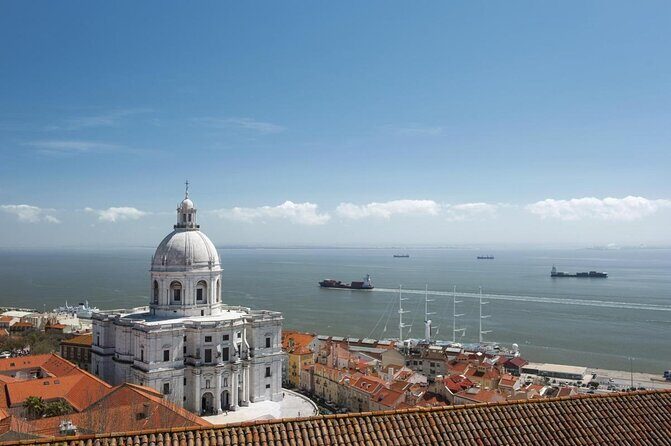
- Private, local-guided experience on the Tagus, so you’re not squeezed into a crowded boat
- Welcome drink + wine tasting + Portuguese bites, which makes the time feel properly planned
- Big landmark views with context, including Belém Tower and the Discoveries Monument
- Lisbon’s major history in sightlines, from the 1755 earthquake to Praça do Comércio
- Fado and old-Lisbon energy from the river, especially around Alfama
- Almada’s Christ-King and the 25 April Bridge show up clearly across the water
What You’re Really Buying: Comfort Plus Storytelling
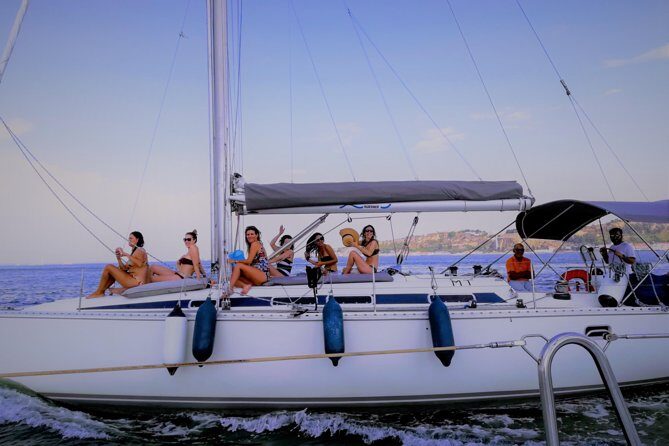
This tour is built for people who want both sides of Lisbon: the postcard views and the meaning behind them. From the moment you board, the vibe is calmer than typical walking tours—less huffing uphill, more looking out over the Tagus and absorbing the city as it unfolds.
I like that the experience stays personal. It’s private, so your guide can shape explanations around what your group cares about, whether that’s Portuguese maritime history or simply getting the best angles for photos.
You can also read our reviews of more boat tours in Lisbon

Welcome Drink, Wine Tasting, and Portuguese Food On Deck
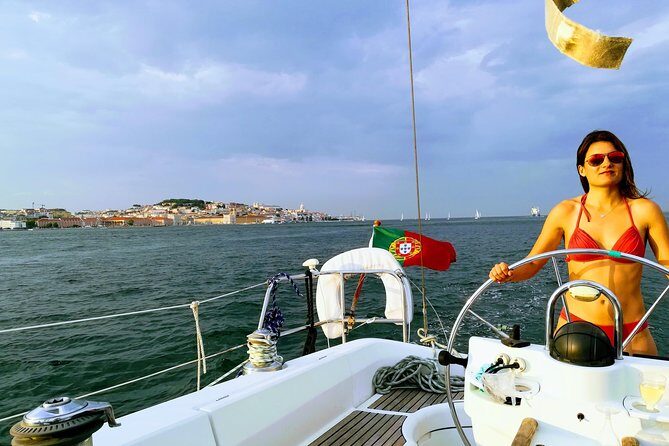
Let’s talk about the onboard part, because this is where you feel the value. You receive a welcome drink upon boarding, and the inclusions continue with wine tasting plus bottled water and alcoholic beverages.
The tour also highlights an opportunity to taste Portuguese gastronomy. Even if you’ve already eaten well in Lisbon, this matters—because you’re eating in the same setting that’s showing you Lisbon’s landmarks. It turns the sailing into a memory you can taste, not just something you watched.
Practical tip: plan your outfit for being outside. Even when the boat is comfortable, you’ll spend real time looking across open water and sipping something local.
Starting at Belém Tower: A Fortress You Can Still Feel
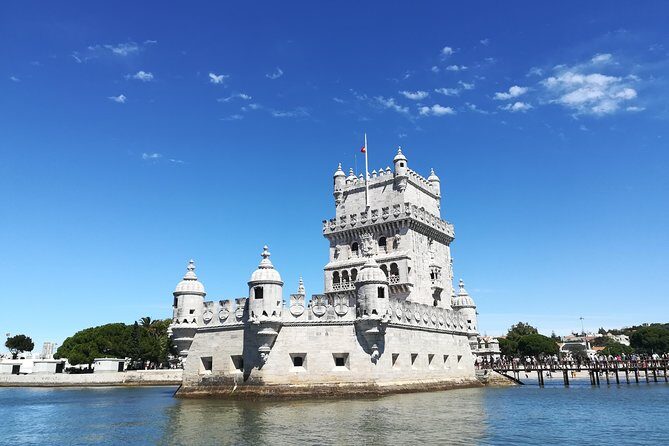
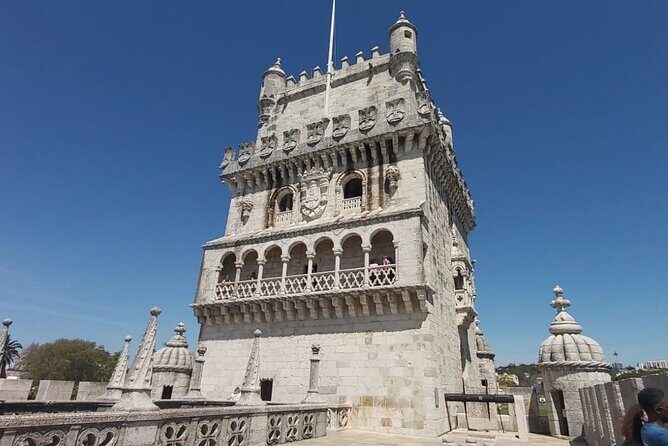
The tour’s early spotlight is Belém Tower, positioned at the narrowest point of the Tagus estuary. The key idea here is defensive design: it was built to protect Lisbon, once surrounded by water rather than joined to land by a pedestrian bridge.
Seeing Belém Tower from the river gives you a better sense of why that placement mattered. Up close, you’re not just looking at a monument—you’re looking at the relationship between city, river, and protection.
Two facts I love for setting context: it’s a UNESCO World Heritage Site since 1983, and today the pedestrian bridge keeps a symbolic link to its original watery setting.
The Discoveries Monument: Portuguese Global Reach, Made Visible
Next comes the Monument of the Discoveries (often called the Discoveries Monument), built with a ship shape theme. It rises about 50 meters high, with two ramps meeting at the prow, topped by the figure of Henry the Navigator.
From a boat viewpoint, the sculpted figures become part of the “read.” You’ll see the monument’s 32 stone figures that represent key personalities tied to the Age of Discoveries, including Fernão de Magalhães, Luís de Camões, Pedro Álvares Cabral, and Vasco da Gama.
If you like Lisbon beyond modern attractions, this stop is a strong reminder that Portugal’s story is deeply maritime. One small historical detail I find useful: the original monument was built for the Portuguese World Exhibition in 1940, using perishable materials and dismantled in 1943.
Praça do Comércio and the 1755 Earthquake: Lisbon Rebuilt in Front of You
The cruise route also brings you past the story of the 1755 Lisbon earthquake, which began around 9:30 a.m. on November 1. The historical details are heavy—thousands of buildings collapsed, including major downtown structures and hillside areas toward Chiado.
But the sightseeing angle matters. The square formed during reconstruction led to Terreiro do Paço, a grand open area facing the Tagus estuary. It’s today’s reminder that catastrophe reshaped the city’s layout in a big, visible way.
From the water, it’s easier to understand why “open to the river” was important. It’s one reason the Tagus still feels central to Lisbon’s identity—past and present.
You can also read our reviews of more sailing experiences in Lisbon


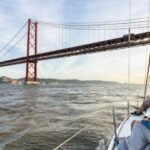

Passing Under the April 25 Bridge: The Golden Gate Comparison
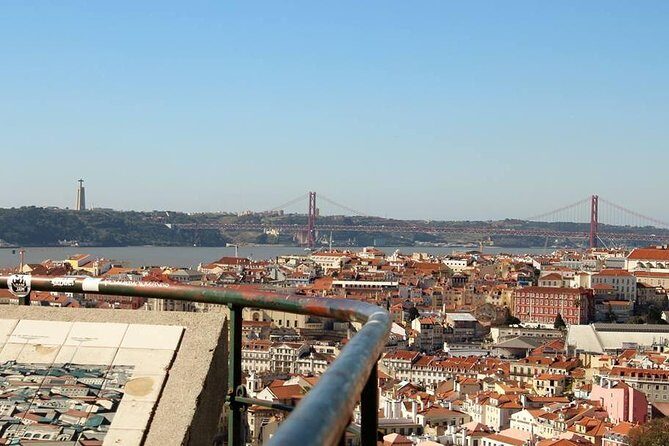
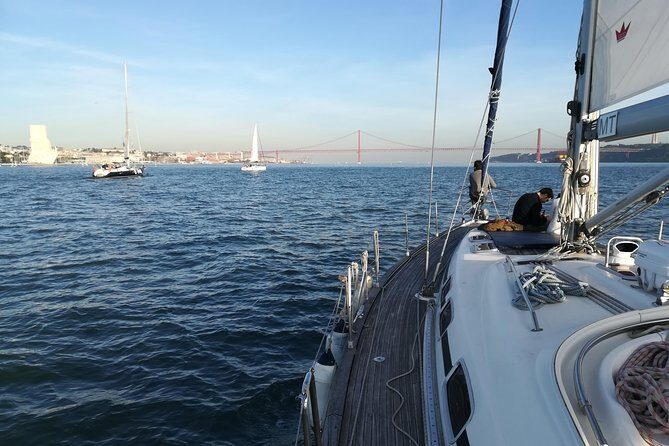
You’ll also go by the April 25th Bridge, nicknamed the Portuguese Golden Gate Bridge because of its similarity to San Francisco’s suspension bridge. The story includes the same North American company after decades of ideas and projects, plus the fact that construction was completed fast and cost less than anticipated.
From the Tagus, bridges are never just infrastructure. They’re scale. You feel how wide the river is and how Lisbon stretches across it, which helps you understand the city’s “two-bank” reality.
Alfama From Sea Level: Old Streets, Fado, and Big Views
One of the best parts of sailing Lisbon is getting Alfama in your line of sight. This is Portugal’s oldest neighborhood, set on a hill near São Jorge Castle, with the Tagus as one boundary. From water level, you get that contrast: tight, old streets above, and sweeping river views below.
Alfama is also where Fado culture lives. The idea on this cruise isn’t that you’ll attend a performance (the boat stays afloat), but you’ll get the context for why so many visitors associate Alfama with music, family taverns, and late-night sound.
A bonus here: you don’t have to climb every hill just to feel Alfama’s character. The river gives you a “zoomed out” perspective of the neighborhood’s shape.
São Jorge Castle and the Lisbon Skyline You Can See at Once
Lisbon’s historic center is dominated by São Jorge Castle, perched high above the city and the Tagus estuary. The castle has deep roots, dating back to the 10th and 11th centuries when Lisbon was a Muslim port city, and then shifting after 1147 when King Afonso Henriques conquered it.
From the water, you understand why a fortress belonged up there. It’s not just views—it’s control. Sailing past makes the castle feel like part of the city’s defensive logic, not just a photo stop.
Jerónimos Monastery and the Maritime Trail Along the Tagus
Along the Tagus corridor, the cruise highlights Jerónimos Monastery, a 16th-century architectural masterpiece and a national monument. It’s located in a monumental riverside zone where you can also find Empire Square, linked to the departures of Portuguese navigators.
What’s useful is how the tour ties maritime exploration to the physical surroundings. You’ll also hear about major figures connected with the discoveries era, including Vasco da Gama and Luís de Camões.
Even if you’ve seen images of Jerónimos, seeing it from the river changes your sense of scale and placement. It feels less like a standalone attraction and more like part of the city’s working coastline.
Central Tejo and MAAT: Industrial Past Meets Modern Design
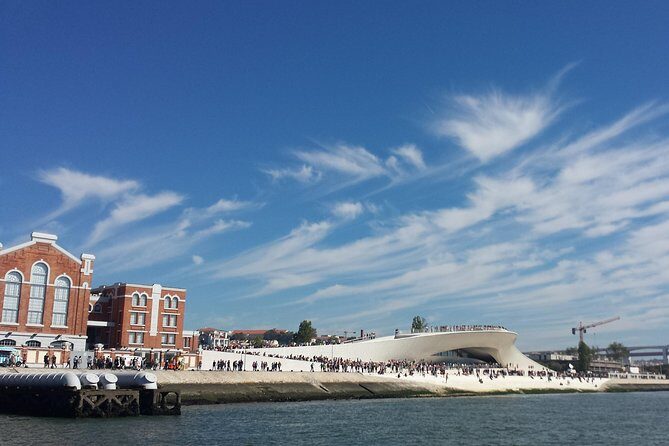
Lisbon doesn’t move in a straight line from old to new. The cruise also goes past Central Tejo, once a thermoelectric plant supplying electricity to the region. It was built in 1908, operated from 1909 to 1972, and later reopened as the Electricity Museum—first in 1990 and then again after restoration in 2006.
Then comes MAAT (Museum of Art, Architecture and Technology), opened in 2016. It’s designed by British architect Amanda Levete and focuses on rotating exhibitions plus events and educational programs.
Why this matters for your trip: sailing lets you watch Lisbon evolve in the same frame. One minute you’re looking at the marks of power and engineering; the next you’re seeing contemporary architecture made for art and ideas.
Art Collections You Pass By: National Ancient Art Museum and Folk Art Museum
The route includes the National Ancient Art Museum, founded in 1884 in the former Palácio dos Condes de Alvor. The museum spans more than five centuries of art history, including sculpture, painting, goldsmithing, and decorative arts from Europe, Africa, and the Orient.
You’ll also see the Lisbon Folk Art Museum (FAM). Its origin traces back to the Portuguese World Exhibition pavilion in 1940, later transformed into a museum that opened in 1948.
From the river, these stops become part of a bigger pattern: Lisbon preserves art and identity while continuing to shape what visitors see and feel.
The River Is Not Just Scenic: Traffic, Research, and “Hidden Lisbon”
If you like Lisbon because it has brains as well as beauty, pay attention as you pass the working parts of the port.
You’ll go by the Maritime Traffic Control Centre (VTS Tower), which manages navigation in the Tagus estuary, giving information and advice to ships approaching the port area up to about 16.5 nautical miles. It’s also where the Dolphin observatory is hosted.
And you’ll also see the Champalimaud Foundation, dedicated to advanced biomedical research and interdisciplinary clinical care, created by António Champalimaud.
None of this is meant to turn your cruise into a lecture, but it does explain why the river feels alive—not just pretty.
Cais do Sodré, Santa Apolónia, and the Old-Port Feeling
Lisbon’s transport history shows up along the route too.
You’ll pass Cais do Sodré, historically the Port of Vessels in the 17th century and later a lively area of bars and entertainment in the 19th century. Nearby, you’ll also encounter Santa Apolónia Station, inaugurated in 1865 in a former convent building and serving as a key connection point for travelers. Since 2007, part of the station is tied to metro access and the Editory Riverside Santa Apolónia hotel occupies a portion.
From a passenger’s point of view, these are the places where visitors flow in and out. From the deck, you see how the city mixes leisure, transit, and river life in a single scene.
Alfama’s Religious Landmarks: Lisbon Cathedral and the National Pantheon
The cruise includes views connected to major religious and cultural sites in Alfama.
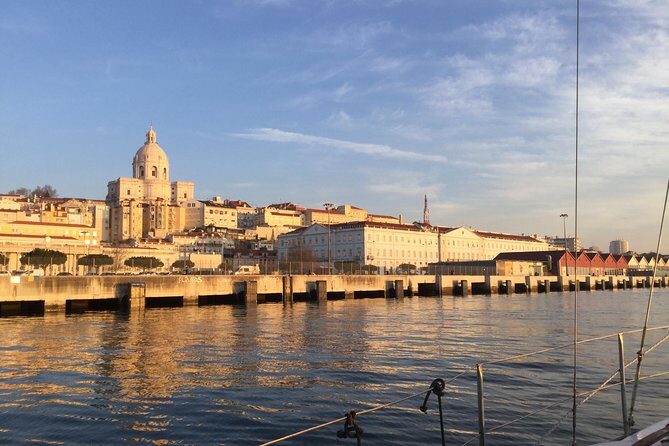
You’ll pass Lisbon Cathedral, whose construction began in the second half of the 12th century after Lisbon’s conquest from the Moors. It’s described as the oldest church in Lisbon and one of Portugal’s important religious buildings, with a treasury spread across multiple halls.
You’ll also get the National Pantheon (Church of Santa Engrácia), known for its imposing appearance and panoramic views, and set in the Alfama district.
Even if you don’t go inside, seeing these structures along the same river corridor helps you understand Alfama as both a neighborhood and a spiritual anchor.
Almada’s Christ-King: A Monument With a WWII Vow Behind It
Across the water, the cruise highlights Christ-King in Almada. It features a 75-metre-high portico topped by the statue of the Most Holy Redeemer facing Lisbon, with an overall pedestal height reaching 82 meters.
The tour context adds real depth: it was built in fulfillment of a vow by the Portuguese episcopate in 1940 asking God to free Portugal from participating in World War II. Portugal stayed neutral, and that political backdrop is part of the meaning.
When you see Christ-King from the Tagus, it doesn’t feel like a random landmark. It feels like a message Lisbon wanted to send to the world—and now you’re seeing that message from right across the river.
Ajuda Palace and Other Riverside Sights: What to Watch For
The route also includes Ajuda Palace, a 19th-century residence for the Portuguese royal family now functioning as a national museum. It’s known for its location and views over the Tagus and Lisbon.
And you may also catch the South and Southeast River Station area in Commerce Square, where you can catch boats to the south bank of the Tagus. That’s a good “systems” stop, because it reminds you Lisbon’s river network is still an everyday transportation option, not just a sightseeing stage.
How Long You’ll Be on the Water, and When the Views Feel Best
This cruise runs about 2 hours 30 minutes. That’s long enough for the route to feel complete, but short enough that you won’t leave exhausted.
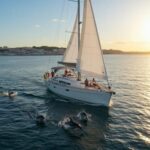
Timing can change the mood. Some onboard moments—especially sunset—can be the highlight of the whole Lisbon trip. I also like that people often mention wildlife, and on the Tagus you might be lucky enough to spot dolphins around the late-day sail window.
Price and Value: Why $226.41 Can Actually Make Sense
At about $226.41 per person for a roughly 2.5-hour private experience, the price sounds steep until you break down what you get.
You’re paying for:
- a private tour (so the guide and space are yours, not shared with strangers)
- local guidance and constant context while the city glides past
- food-and-drink value: welcome drink, wine tasting, bottled water, plus Portuguese gastronomy and alcoholic beverages
- all the entry-style inclusions covered as part of the package (fees and taxes are included)
If your alternative is a mix of tickets, a separate meal, and a generic sightseeing cruise with less attention, this is easier to justify. The onboard inclusions also mean you can slow down and enjoy Lisbon instead of constantly budgeting time for food.
Who This Sail Fits Best
This is a great match if you:
- want a low-effort way to see a lot of Lisbon highlights in one go
- care about stories behind the landmarks, not just postcard angles
- prefer private-group pacing—perfect for couples, families, and groups who want conversation time
- like the idea of pairing wine and Portuguese flavors with views of the Tagus
If you’re the type who likes to run from one museum door to another, you might find the “views-only” style too relaxed. This cruise is about perspective, not checklists.
Should You Book Lisbon Sight Sailing?
Yes, if you want a Lisbon highlight that feels personal and planned. The combination of a private format, welcome drink + wine tasting + Portuguese gastronomy, and guided landmarks along the Tagus makes it a strong value for people who want more than a basic boat ride.
If you’re chasing a tour that includes lots of walking on land or museum entry, you may prefer a land-based day. But if you want Lisbon to unfold from the water with context and comfort, this is the kind of booking you’ll remember when you’re back home.
FAQ
Where does the tour start and end?
It starts at Av. Brasília 5, 1350-353 Lisboa, Portugal and ends back at the same meeting point.
How long is the sailing experience?
The duration is about 2 hours 30 minutes (approx.).
Is this a private tour?
Yes. It’s a private tour/activity, meaning only your group participates.
What’s included in the price?
Included are all fees and taxes, private tour, local guide, wine tasting, Portuguese gastronomy opportunity, bottled water, and alcoholic beverages.
Do I need hotel pickup?
No. Hotel pickup and drop-off are not included.
Will I receive a mobile ticket?
Yes. The tour includes a mobile ticket.
What river is the cruise on?
The sailing experience is on the Tagus River with sightseeing along Lisbon and toward Almada landmarks.
What if I want confirmation before going?
You’ll receive confirmation at the time of booking, and the meeting point is near public transportation.