REVIEW · SINTRA
Mystery of Sintra For History With Legends and Secret Societies
Book on Viator →Operated by Walking Tours - RagnarokTour.com · Bookable on Viator
Sintra has a secret pulse; this walk follows it. You get a tight, story-driven route through town landmarks, with a guide who connects symbol meanings to legends tied to secret societies. It is built for people who like their sightseeing with a question mark.
I especially liked two things. First, the guide, Slava, is thorough and focused on what Sintra’s stories say about Freemasonry and the other historical threads you hear about, like the question Who were templars? Second, the mix of stops keeps you moving: you go from civic symbols, to palace grounds, to tile-and-water moments, and end right near Quinta da Regaleira.
One thing to consider: not every stop’s admission is included. Sintra National Palace and Quinta da Regaleira require you to handle admission separately if you want to go inside, and the whole walk is only about 1 hour 40 minutes to 2 hours.
In This Review
- Key things I’d circle on your map
- A secret-society themed walk through Sintra’s best-known corners
- Price and pace for a 1 hour 40 minute to 2 hour route
- Pelourinho de Sintra: symbols, the early kingdom, and templar questions
- Volta Do Duche: valley views and the mystery of local parliament
- Sintra National Palace: 13th-century setting and myth-laced questions
- Fonte da Pipa and Cascata de Pisoes: tile portraits, old water, and folklore
- Quinta da Regaleira: freemasonry initiation and where to go next
- Who this tour is best for (and who should pick something else)
- Should you book Mystery of Sintra With Legends and Secret Societies?
- FAQ
- How long is the Mystery of Sintra tour?
- Is the tour private, and what language is it in?
- Are entrance tickets included for every stop?
- Do I get a ticket on my phone?
- Where does the tour start and end?
- What’s the cancellation policy?
Key things I’d circle on your map
- A focused 2-hour walking route with six meaningful stops and short story chapters
- Ending near Quinta da Regaleira so you can decide what to add after the guided part
- Pelourinho de Sintra symbolism explained, including early Portugal and templar questions
- Fonte da Pipa tile panel scrutiny, with guided prompts about who and why
- Cascata de Pisoes folklore, turning a quick waterfall stop into an actual story beat
- Private group with an English guide, plus a mobile ticket for easy entry
A secret-society themed walk through Sintra’s best-known corners
This is not the usual Sintra tour where everything is a caption on a postcard. You’ll be walking short distances between famous stops, but the real point is the narrative thread: legends, symbolism, and secret-society curiosity, explained in plain language as you look at what’s in front of you.
The tour runs in English and works well as a first taste of Sintra’s “why does this feel mysterious” energy. And since it’s private, you’re not sharing the guide’s attention with strangers who might not care about the Freemason angle.
I also like that the pacing feels realistic. The stops are short enough to keep momentum, but they’re long enough for a guide to point out the details you’d otherwise skip—like the meaning behind civic symbols or the figures on old tiles.
You can also read our reviews of more historical tours in Sintra



Price and pace for a 1 hour 40 minute to 2 hour route
The price is listed at $35.49 per person, and for a walking tour that lands on major Sintra touchpoints, it can feel like good value—especially if you enjoy stories tied to places. You’re paying for interpretation and direction, not for long, museum-style wandering.
Time matters here. You should expect roughly 1 hour 40 minutes to 2 hours, with most stops timed around quick “look, listen, understand” moments. That means you’ll get a guided framework fast, but you might want to plan a little extra time on your own afterward if you fall in love with one site.
Tickets are mixed. Several stops are marked as free admission, while Sintra National Palace and Quinta da Regaleira are not included. So factor in a bit of extra spending if your plan is to go beyond the exterior views and truly enter those two.
Pelourinho de Sintra: symbols, the early kingdom, and templar questions
You start at Pelourinho de Sintra, where the building is used as a starting point for meaning. This is the “read the stone” part of the tour: you’ll learn about symbols and how they connect to the start of the Portuguese kingdom.
It’s a smart choice for a first stop because it sets the pattern for everything that follows. Instead of just naming things, the guide pushes you to ask why certain images and civic markers exist, and how people in different eras used symbols to signal identity and power.
There’s also a specific historical curiosity that comes up: Who were templars? You’re not just hearing a trivia line. You’ll be guided to connect the templar question to the broader theme of hidden knowledge and coded meaning—exactly the lens that makes Sintra feel like more than a scenic day trip.
If you’re the type who enjoys “how to see” tips while walking, this opening will click. It helps you train your eyes so later stops make more sense.
Volta Do Duche: valley views and the mystery of local parliament
Next is Volta Do Duche, on the way toward São Martinho. This stop is shorter, but it has a purpose: you’ll enjoy views over the sintrense valley while also discovering the mystery of the local parliament.
Even if you don’t know the area, you’ll feel how the guide uses viewpoint moments to switch from architectural symbolism to human institutions. That parliament mystery piece matters because it shows how legends and secret-society talk can sit inside real civic spaces—not only castles and cloisters.
In practice, Volta Do Duche is a “reset” stop. It breaks up the day so you’re not staring at buildings the whole time, and it gives your brain a visual breath before the palace portion.
If you’re sensitive to steep or uneven walking, keep your pace steady here. The tour is short at each stop, but Sintra’s streets can be a bit irregular.
Sintra National Palace: 13th-century setting and myth-laced questions
Then you move to Sintra National Palace, built around the 13th century. You’ll explore the surroundings for about 30 minutes, with a focus on what important events happened here and how certain inhabitants fed the palace’s mystical curiosities.
This is where the tour shifts from “symbol decoding” to “story setting.” You’re not just learning what the palace is; you’re learning how people later described it, interpreted it, and turned it into a place that carries legend along with it.
One practical note: admission is not included for Sintra National Palace. That can be a downside if you expected the guided tour to cover everything entrance-wise. Still, the time outside (and the context you get) can make your later visit feel less random.
I like this approach if you’re planning to keep exploring Sintra the same day. You’ll leave with enough context to notice details on your own, without needing the guide for every single room.




Fonte da Pipa and Cascata de Pisoes: tile portraits, old water, and folklore
After the palace chapter, you get two classic Sintra-style stops that work well for legend lovers.
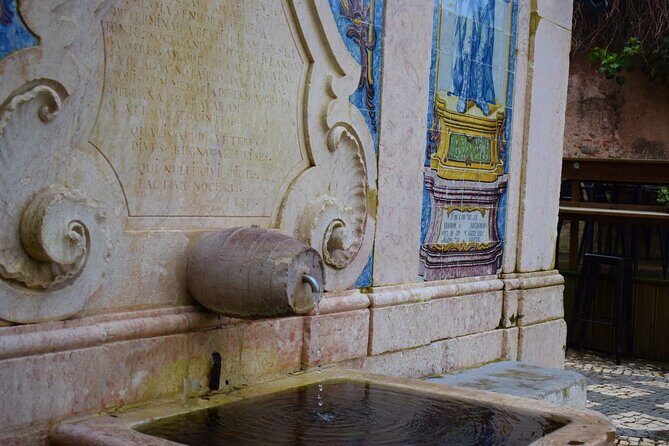
First is Fonte da Pipa, one of the oldest local fountains. Here, you’ll look at a beautiful tile panel and hear guided prompts about who and why are depicted. That matters because fountains are not just practical objects in Portugal; they often act like public storytelling walls.
This stop is also a great reminder of a travel truth: you get more from a place when you slow down for the “small art.” A tiled panel can look like decoration until somebody shows you how to read it.
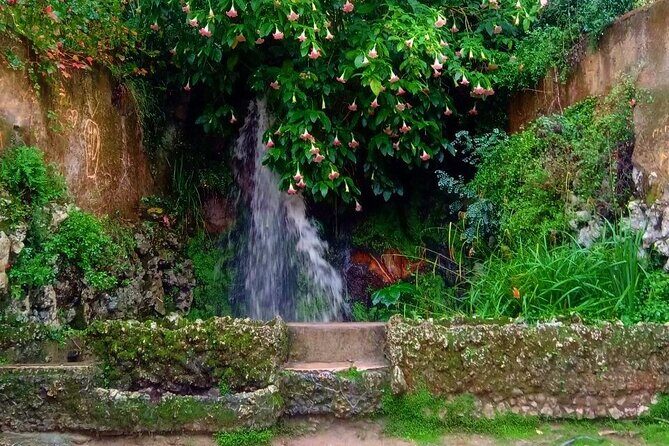
Then comes Cascata de Pisoes, an enchanting waterfall stop. It’s only around 10 minutes, but the highlight is that you’ll learn one of the most interesting local folklore stories tied to the waterfall.
I like short story stops like this because they give your day rhythm. You don’t leave the palace and immediately jump to another huge site. You get a small, memorable narrative beat that sticks.
Quinta da Regaleira: freemasonry initiation and where to go next
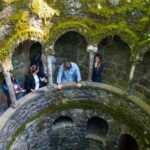
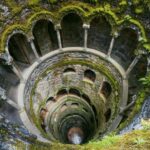
The tour ends near the entrance of Quinta da Regaleira. By the time you reach this area, the guide’s goal is practical: you’ll have enough knowledge and energy to decide which attraction to explore next—most likely this one.
This final stop is the big thematic payoff. The tour frames Quinta da Regaleira as an initiation place for freemasonry, which sets expectations for what you should look for when you’re there on your own. Even if you’re not a deep expert on Freemasonry, the tour gives you a lens for interpreting the site’s meaning as you approach it.
Admission is not included at Quinta da Regaleira, and that’s important. The guided part is about getting you oriented and informed, not about handling entry for you. Still, the ending location is convenient because you’re finishing close to the entrance, not far away.
Where you’ll finish: the end point is Av. Almeida Garrett 435, close to the entrance of Quinta da Regaleira (near the exit from their territory). That makes it easier to transition into self-guided time rather than searching for your next bus stop.
If you want to get the most value from this tour, I’d plan a little extra time after the guided portion. The guide helps you understand what you’re seeing, but the site itself deserves unhurried walking if it grabs you.
Who this tour is best for (and who should pick something else)
This tour fits you if you like history with a legend layer. You’ll get questions and connections—templars, coded symbolism, and a direct Freemasonry angle—built into a route that hits major Sintra landmarks.
It’s also a good choice if you prefer direction over wandering. The stops are timed, the route is compact, and the guide’s job is to help you read what you’re seeing instead of collecting random facts.
If you want long palace interiors and slow museum-style time, this may feel short. The pacing is designed for a 1 hour 40 minute to 2 hour window, so you’ll likely want to follow up independently at the places that interest you most.
Finally, if you appreciate guides who know their material, this has a standout strength. Based on the praise for Slava, the tour’s biggest asset is his thorough, history-forward approach to Sintra and Freemasonry—exactly the kind of guiding that makes a themed walk feel grounded.
Should you book Mystery of Sintra With Legends and Secret Societies?
Yes, if you want a guided Sintra primer with a mystery angle and you like interpreting symbols, tile art, and architecture. The $35.49 price can make sense because you’re buying story structure and orientation across multiple key stops in under two hours.
I’d book it especially if Quinta da Regaleira is on your list. You’ll finish near the entrance with enough context to decide what to do next without starting from zero.
Skip it only if you’re expecting admission to be fully included and you plan to spend most of your time inside major venues. With Sintra National Palace and Quinta da Regaleira admissions not included, you’ll want to budget for those separately to avoid disappointment.
FAQ
How long is the Mystery of Sintra tour?
The tour runs about 1 hour 40 minutes to 2 hours.
Is the tour private, and what language is it in?
Yes, it’s a private tour/activity, and it’s offered in English.
Are entrance tickets included for every stop?
No. Sintra National Palace and Quinta da Regaleira are listed as admission not included. The other stops are marked free admission.
Do I get a ticket on my phone?
Yes, a mobile ticket is included.
Where does the tour start and end?
It starts at Homenagem de Sintra aos seus Combatentes da Grande Guerra, Av. Barão Almeida Santos 1, 2710-426 Sintra. It ends at Av. Almeida Garrett 435, 2710-567 Sintra, close to the entrance of Quinta da Regaleira.
What’s the cancellation policy?
You can cancel for free up to 24 hours in advance of the experience for a full refund.