REVIEW · SINTRA
3 Tours Private / Tour SINTRA Second Day Tour FÁTIMA Third day Tour LISBON
Book on Viator →Operated by Fantastic Ride · Bookable on Viator
Three days, three big moods.
This Sintra–Fátima–Lisbon private tour strings together UNESCO drama, pilgrimage calm, and city views, all on a door-to-door schedule that starts at 09:00 and ends back at your Lisbon accommodation. I like that the driver can flex the time in each place based on what you want to see and how you’re doing, instead of racing you through on a rigid script.
Two practical things I really like are comfort and onboard basics. You ride in an air-conditioned vehicle with WiFi plus bottled water, which makes long sightseeing days feel less like survival mode. The downside to factor in is that tickets and meals aren’t included, so you’ll want to budget extra for palace and monument entry fees and plan your own lunch/snacks.
In This Review
- Key highlights you’ll feel fast
- A private 3-day route that starts and ends in Lisbon at 09:00
- Day 1 in Sintra: Moorish Castle, Pena Palace, and the main royal palaces
- Moorish Castle: the view-and-stone story
- Pena Park and National Palace: 19th-century romance with a mountaintop payoff
- Centro Histórico and Sintra National Palace: royal medieval Portugal in a compact area
- Quinta da Regaleira: symbolism and staged imagination
- Monserrate: park fantasy, not just a viewpoint
- When Sintra gets weird in the best way: Regaleira and Monserrate pacing tips
- Day 2 in Fátima: the Valinhos route, holy sites, and calm between stops
- Valinhos Sanctuary and the Via-Sacra route
- Basilica of the Holy Trinity: modern scale, ancient purpose
- Capela das Aparições: the heart of the story
- Basilica of Our Lady of the Rosary: the larger sanctuary center
- Day 3 in Lisbon: Jerónimos, Belém Tower, and viewpoints that frame the city
- Jerónimos Monastery: Manueline architecture on the Tagus
- Torre de Belém: a jewel-like fortification
- Pastéis de Belém: the pastry story built into the neighborhood
- Padrão dos Descobrimentos: big memorial, 20th-century context
- Parque Eduardo VII and Rossio Square: green pause and earthquake-era rebuilding
- Sé Cathedral and two viewpoint breaks: Santa Luzia and Senhora do Monte
- Price and value: what $581.78 buys you on this 3-day private plan
- Guide-driven service that adapts to your group
- Who should book this Sintra–Fátima–Lisbon tour?
- Should you book this private 3-day tour?
- FAQ
- What time does the tour start and where does it end?
- Is this a private tour?
- Are tickets for palaces and monuments included?
- What’s included in the price besides the tour?
- Do you stop for food during the days?
- Can you adjust time at stops during the day?
- What are the major stops on Day 2 in Fátima?
- What is the cancellation policy?
Key highlights you’ll feel fast
- Flexible timing in each stop, guided by your driver’s day plan
- Comfort perks: air conditioning, WiFi, bottled water on board
- Sintra’s top hits: Moorish Castle, Pena Palace area, National Palace, Regaleira, Monserrate
- Fátima’s core sites: Valinhos route, Chapel of the Apparitions, Holy Trinity church, Rosary Basilica
- Lisbon classics in one day: Jerónimos, Belém Tower, Rossio, Sé Cathedral, and major viewpoints
- Private format: only your group participates, ideal for pacing and focus
A private 3-day route that starts and ends in Lisbon at 09:00
If you want your first Portugal trip to feel organized without feeling boxed in, this format works. Each day runs from the Lisbon launch point at 09:00, and the plan brings you back to your Lisbon accommodation at the end of the tour. That matters: you’re not dealing with transfers between towns on your own, and you’re not splitting time between different operators.
Because it’s private, you also get real control over the pace. The tour offers a plan you can follow, but it can be adjusted “as you wish” with the driver. That can mean staying longer for a second look at a palace façade, or shortening a stop if your legs want a break.
And the small on-board comforts are worth their weight in gold when you’re hopping between landmarks. You get air-conditioning, WiFi, and bottled water, and the vehicle setup includes private transportation with pickup offered. No surprise “public transport adventure” required unless you want it.
You can also read our reviews of more private tours in Sintra
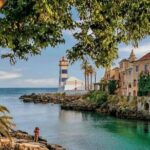
Day 1 in Sintra: Moorish Castle, Pena Palace, and the main royal palaces
Sintra is one of those places where every corner looks like it should be in a movie. This day gives you the big picture and the dramatic highlights—without pretending it’s all flat, quick, and easy.
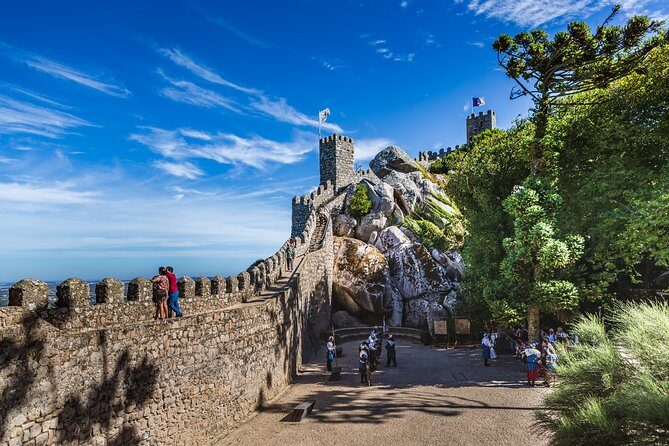
Moorish Castle: the view-and-stone story
You start with Moorish Castle, a structure tied to early Moorish occupation of the peninsula, with dates reaching back to the 8th century. After that era, it’s connected to early Portuguese rule—Dom Afonso Henriques taking it in 1147—and the site later gets a Christian chapel association with St. Peter of Penaferrim.
What I like here is that it isn’t just a “pretty ruins” stop. It’s a lesson in layers: the romantic era restoration under Dom Fernando II in 1860, the wooded surrounding areas, the Moorish cistern inside, and the so-called Royal Tower. It’s also about 3.5 km from Sintra’s historic center, so you’re starting your Sintra day with a sense of getting out into the landscape.
Pena Park and National Palace: 19th-century romance with a mountaintop payoff
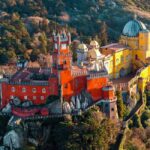
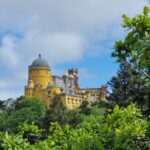
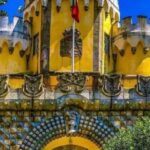
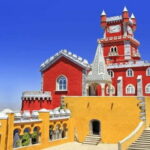
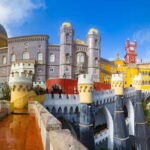
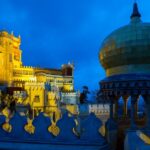
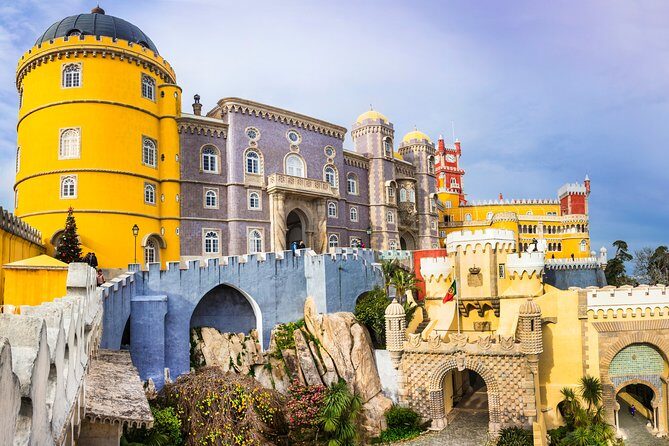
Next comes Park and National Palace of Pena, a centerpiece of 19th-century Romanticism in Portugal. The palace sits atop Monte da Pena, built on the site of an older monastery. It was made possible through the choices of D. Fernando de Saxe Coburg-Gotha, who married Queen Dona Maria II in 1836, then bought the convent and lands after falling for Sintra.
Plan for about 2 hours here, and know tickets are not included, so time your entry. One practical detail: there’s a restaurant in one wing with a terrace view over the Sintra Mountains and the coast. Even if you’re not eating, it’s the kind of stop where a quick pause to look around pays off.
Centro Histórico and Sintra National Palace: royal medieval Portugal in a compact area
Then you shift into the Centro Histórico de Sintra, a UNESCO World Heritage part of the town where buildings from different periods and cultural movements remain. This stop is about 1 hour, and it’s a helpful breather between palace visits.
After that, you get Sintra National Palace, often described as unique among Portugal’s royal medieval palaces. It’s tied to early dynasties of Portuguese kings and queens, but the palace you see is mainly shaped by Dom João I and enriched by Dom Manuel I with a new wing. The big win here is interior decoration: you’re looking at a mix of artistic styles, which makes the palace feel less like a single “era museum” and more like a timeline in rooms.
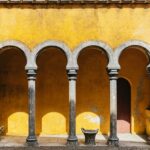
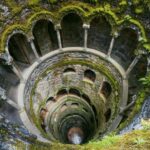
Quinta da Regaleira: symbolism and staged imagination
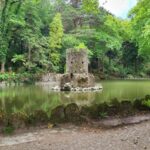
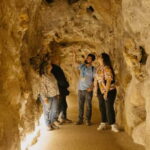
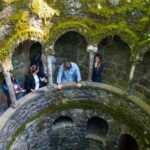
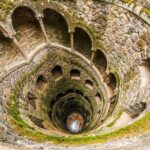
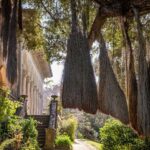
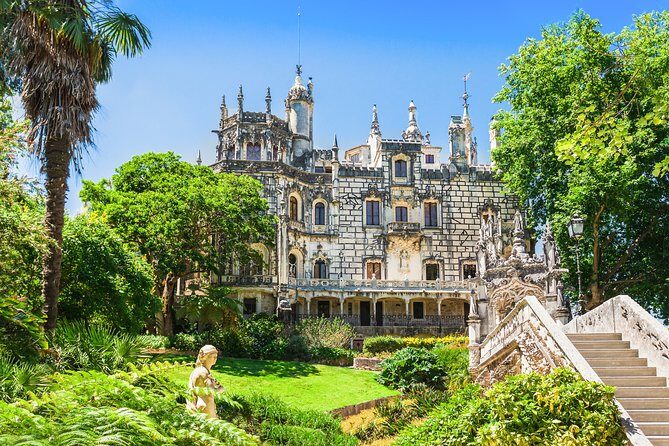
Quinta da Regaleira is one of those places that feels strange in a good way. Built in the early 20th century by millionaire Antonio Augusto Carvalho Monteiro, it’s credited to scenographic architect Luigi Manini. The palace uses a romantic revivalist style, borrowing from Gothic, Manueline, and Renaissance forms while mixing in esoteric symbolism.
Plan roughly 1 hour 30 minutes and remember tickets are not included. If you enjoy architecture that tries to tell a story—sometimes literally—you’ll probably like this stop more than the palaces where you’re just admiring decoration.
Monserrate: park fantasy, not just a viewpoint
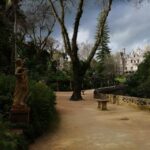
Finally, the day includes Park and Palace of Monserrate, a romantic park created by William Beckford, who fell for Sintra’s mountains. This stop helps balance the day. After palace interiors and formal royal spaces, Monserrate is about walking through atmosphere—gardens and design made for lingering.
When Sintra gets weird in the best way: Regaleira and Monserrate pacing tips
Sintra can feel like a parade of wow. The trick is pacing so you don’t blur everything together.
I’d treat Day 1 like this: use Pena as your anchor stop, then let Quinta da Regaleira be your “imagination” stop, and treat Monserrate as your decompression. The Regaleira estate is described as enigmatic, with mythical and esoteric symbolism. Monserrate, in contrast, is romantic park design tied to William Beckford’s personal fascination with the mountains.
Also, because time can be flexed by the driver, you can adjust. If Pena’s interiors take longer for you, you might shorten your historical center walk a bit. If Regaleira hits your interests harder, you can linger there and keep the earlier stops tight.
And since you’re on a private schedule, you’re not forced into the same tour-group flow that can make photography and “one more look” difficult.
Day 2 in Fátima: the Valinhos route, holy sites, and calm between stops
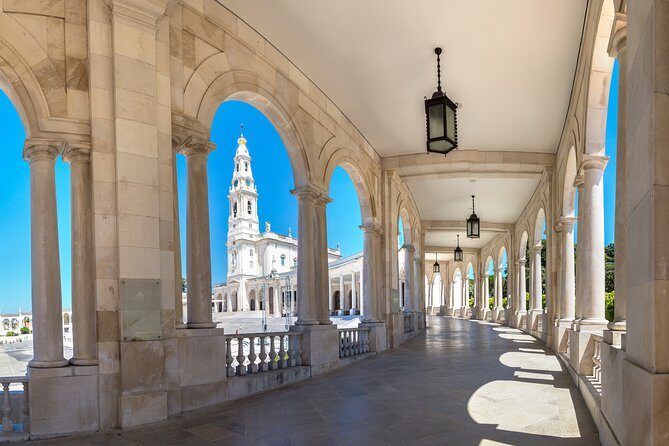
Day 2 is a different Portugal. Less castle drama, more pilgrimage rhythm. The tour focuses on key parts of the sanctuary area, with time for both reflection and sights.
Valinhos Sanctuary and the Via-Sacra route
You start in Valinhos Sanctuary, visited by thousands of pilgrims using the Via-Sacra route to the Hungarian Calvary. The plan includes stops like the Chapel of St. Stephen of Hungary and the House of Lucy plus the House of Francis and Jacinta Marto in Aljustrel.
This stop is about 1 hour, and admission is free. What makes it meaningful is that it’s not just a single church. It’s a route with stations and specific points tied to the story of Fátima. The route includes sculptures like the Angel of Portugal, and the Via-Sacra stations are attributed to Maria Amélia Carvalheira da Silva.
Basilica of the Holy Trinity: modern scale, ancient purpose
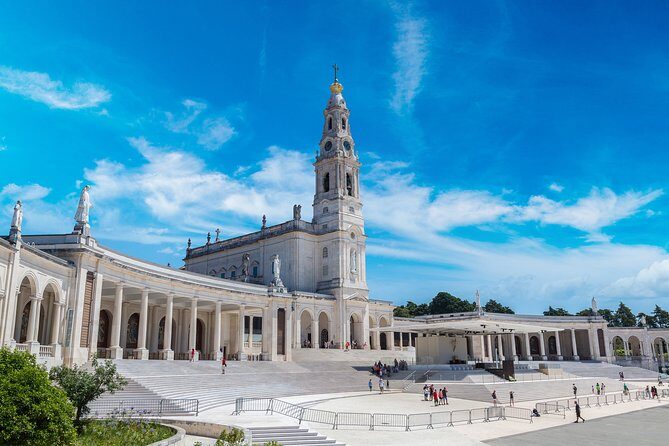
Then you go to the Basilica of the Holy Trinity. This is a modern, round, white building within the Sanctuary of Fátima enclosure, built in local stone known as “white of the sea.” It’s described as having 125 m diameter, built without intermediate support.
It’s also anchored by timing: it was inaugurated in 2007, but planned since 1973 because the older Basilica wasn’t large enough for average service turnout. The stop is about 30 minutes, admission free.
Capela das Aparições: the heart of the story
Next is Capela das Aparições, built in 1919 by local people in response to Our Lady’s request during one of the apparitions. The first mass here was in 1921. It’s described as modest in size, with a rough design like a simple hermitage.
Admission is free and the stop is about 30 minutes. The chapel marks the holm-oak tree spot where the apparitions were said to have occurred, and the story notes the tree disappeared over time as believers took bits away twig by twig. Whether you’re deeply religious or just curious, this stop tends to land emotionally because it’s so tied to a specific moment.
Basilica of Our Lady of the Rosary: the larger sanctuary center
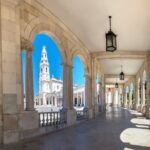
Finally, you visit the Basilica of Nossa Senhora do Rosário de Fátima, commonly called the Basilica of the Rosary, at Cova da Iria in Fátima. The stop is about 30 minutes with free admission.
This closing church stop helps you see the structure of the sanctuary: you move from route and story (Valinhos and Aparições) to the bigger service space for the public.
Day 3 in Lisbon: Jerónimos, Belém Tower, and viewpoints that frame the city
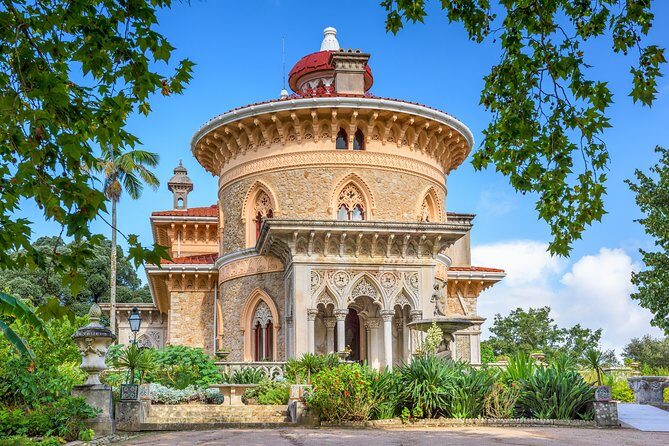
Day 3 is a strong highlights day in Lisbon. It leans heavily toward Belém and then works back through downtown squares, cathedral, and viewpoints.
Jerónimos Monastery: Manueline architecture on the Tagus
You start at Mosteiro dos Jerónimos. The location is on the banks of the Tagus near old Belém beach. It ties into Manueline architecture and the Discoveries era. The site began as a small hermitage dedicated to Santa Maria in 1452, built by Infante D. Henrique. In the early 1500s, King Manuel I planned a large monastery with approval from the Holy See, donated to the Order of the Friars of St. Jerome.
Plan about 1 hour. Tickets are not included.
Torre de Belém: a jewel-like fortification
Next is Torre de Belém, ordered by King Manuel I (1495–1521) and built between 1514 and 1521 by Francisco de Arruda. It’s described as a delicate ornamental jewel and also as a formidable defensive bastion.
You’ll likely appreciate the details like how it was built on a basalt island near the right bank of the Tagus, but later the river course changed and the tower ended up swallowed by the bank. UNESCO classification came in 1983. Plan about 1 hour, tickets not included.
Pastéis de Belém: the pastry story built into the neighborhood
Then there’s Pastéis de Belém. This is quick—about 30 minutes—and admission is free. The story goes back to the early 19th century, when a sugar cane refinery and shop next to the monastery sold pastries after the 1834 suppression of convents shut down religious operations. A former monastery staff member supposedly sold sweet pastries to survive, and the treats became known as Pastéis de Belém.
Even if you’re not a huge pastry person, this stop works as a short cultural break.
Padrão dos Descobrimentos: big memorial, 20th-century context
You then visit Padrão dos Descobrimentos, Monument to the Discoveries. The monument marks an exposition idea promoted by the Salazar government for Portugal’s centenaries (1140 and 1640), but it wasn’t built until 1960 for the 500-year commemoration since Prince Henry the Navigator’s death.
Plan about 1 hour, tickets not included.
Parque Eduardo VII and Rossio Square: green pause and earthquake-era rebuilding
Next is Parque Eduardo VII, with panoramic views over Lisbon. It was originally known as Parque da Liberdade and renamed in 1903 after King Edward VII’s visit. Admission is free; plan about 30 minutes.
Then you head to Rossio Square, famous for rebuilding after the 1755 earthquake. The square is dominated by the neo-classical harmony of the D. Maria II Theatre.
Sé Cathedral and two viewpoint breaks: Santa Luzia and Senhora do Monte
You finish with Lisbon Cathedral (Sé Catedral de Lisboa), dedicated to the Mother of God since 1147. Construction began after Dom Afonso Henriques reconquered the city from the Moors. The cathedral is built on earlier religious layers, including a Muslim mosque and, as archaeological finds confirm, an even older Visigothic Christian temple. Plan about 30 minutes; tickets not included.
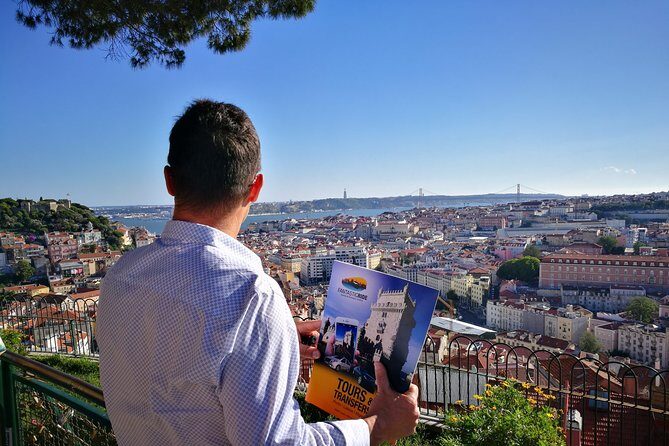
You also get a viewpoint stop at Miradouro de Santa Luzia, framed toward Alfama and the Tagus River. The details described include landmarks you can spot like the dome of Santa Engrácia and churches around the angle of the view.
Then comes Mirador de Senhora do Monte, in São Vicente (Graça), with views south toward the Tagus and the Castle of São Jorge, west toward Bairro Alto and Monsanto, and north toward Avenida Almirante Reis. This stop includes the Chapel of Our Lady of the Mount and is about 1 hour, admission free.
That viewpoint pairing is smart. You see Lisbon at street level and then from above, with different neighborhoods layered into the panorama.
Price and value: what $581.78 buys you on this 3-day private plan
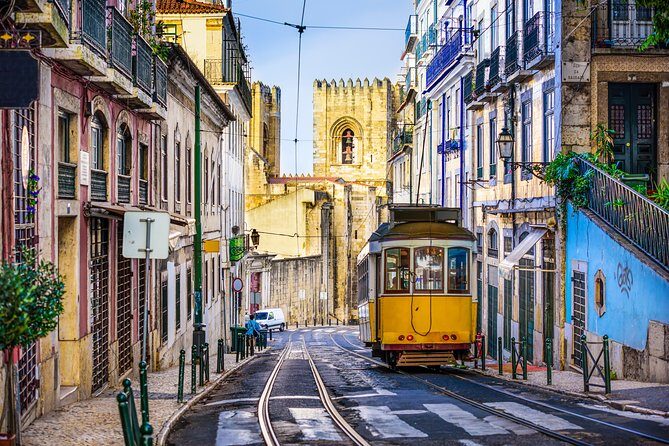
At $581.78 per person, this tour isn’t the cheapest way to do Portugal. But value isn’t just cost—it’s what you remove.
You’re paying for:
- A private setup where you’re not stuck with other groups’ timing
- Transportation across three major bases (Sintra, Fátima, Lisbon sights) with an air-conditioned vehicle
- On-board comfort: WiFi and bottled water
- A plan that covers high-demand sites like Pena, National Palace, the Fátima sanctuary core, Jerónimos, and Belém Tower
The big “watch-out” on value is what’s not included. Tickets aren’t included, and food and drinks aren’t included either. Also, the vehicle does not include a restroom. So you’ll need to carry some cash/card for entry fees and plan lunch/snacks yourself.
If you’re the type who hates coordinating buses, trains, and museum lines, this private structure often feels fair. If you’re comfortable DIY touring and you’re traveling on a tight budget, you might find cheaper options—just expect more planning work and more friction.
Guide-driven service that adapts to your group
What elevates this kind of tour isn’t the list of stops. It’s how the tour handles real life.
In past experiences, guides like Margarida have been praised for adjusting the tour to help a small group with two people who had walking issues, while still covering the intended sights. That’s the sort of detail you care about when your group isn’t identical in energy levels.
Another guide, Filipe, has been noted for professional, proud city knowledge and being able to work with a list of desired places—like Fatima, Sintra, Lisbon, plus other areas such as Cascais, Nazare, and Óbidos—which hints at how flexible the service can be within the broader Portugal theme.
Even if your interests match the standard route, having a driver who can help you manage time and pacing is a real quality signal.
Who should book this Sintra–Fátima–Lisbon tour?
This is a good match if you want:
- A one-operator, private itinerary that hits the big Portuguese anchors
- Comfortable touring between far-apart areas without DIY transit stress
- A mix of palaces, sacred sites, and city viewpoints rather than only one theme
- A plan that can be flexed at each stop, not just followed like a checklist
It’s especially fitting for couples or small groups who share a love for architecture, religious landmarks, and classic Lisbon sights. It can also work well for multi-interest groups because the days cover three distinct regions with their own mood.
If you love free roaming with no schedule at all, you may find this tour a bit structured. But if you want structure that stays human, this setup is designed for that.
Should you book this private 3-day tour?
I’d book it if you want maximum sightseeing with minimum planning pain, and you value a private vehicle plus WiFi and water. The Sintra-heavy Day 1, the Fátima sanctuary day, and the Lisbon classics + viewpoints day make a strong “first timer” arc from UNESCO palaces to modern pilgrimage to iconic city views.
Skip booking only if you already know you’ll want long DIY lunches, free time with no schedule tweaks, or you’d rather pay only for individual tickets and handle transit yourself. Also, confirm your mindset for extra costs: tickets and meals are on you, so factor that into the full budget.
If you want a Portugal trip that feels organized, comfortable, and still adjustable in the moment, this is a solid way to do it.
FAQ
What time does the tour start and where does it end?
The tour starts at 09:00 and ends back at the same place: your accommodation in Lisbon.
Is this a private tour?
Yes. This is a private tour/activity and only your group participates.
Are tickets for palaces and monuments included?
No. Tickets are not included. Food and drinks also aren’t included.
What’s included in the price besides the tour?
Included items are bottled water, an air-conditioned vehicle, private transportation, and WiFi on board.
Do you stop for food during the days?
The itinerary includes time near attractions and a pastry stop, but food and drinks are not included, so you’ll handle lunches/snacks yourself.
Can you adjust time at stops during the day?
Yes. The schedule can be flexed in each location as you wish, using the driver’s day plan.
What are the major stops on Day 2 in Fátima?
Day 2 includes Valinhos Sanctuary (Via-Sacra route), the Basilica of the Holy Trinity, Capela das Aparições, and the Basilica of Our Lady of the Rosary.
What is the cancellation policy?
You can cancel for a full refund up to 24 hours before the experience’s start time.