Lisbon clicks fast on this walk. This 90-minute starter tour mixes real neighborhood atmosphere with Fado origin stories, smart street-art spotting, and two quick viewpoint breaks that help you understand Lisbon fast. My two favorite parts are the Fado background in Mouraria and Alfama and the custard tart tasting that comes with the walk. The only real catch: Lisbon streets can be steep, so bring comfortable shoes and expect a bit of hill walking.
What makes it especially useful is the pace and size. You’re in a small group (up to 15), it’s in English, and you finish right in Alfama near the Fado museum—so you can turn the tour into the rest of your day.
In This Review
- Key highlights at a glance
- Kickstart Tour Basics: price, timing, and what you get for $24
- Start at Farmácia Mouraria: the neighborhood that connects to Fado
- Moorish Quarter to Miradouro Chão do Loureiro: short walk, big view payoff
- Church of St. Anthony and the custard tart-making moment
- Miradouro de Santa Luzia and Alfama: viewpoints plus Fado soul
- Finishing with ginjinha in Alfama: what to do since alcohol isn’t included
- Price and value: why this tour is worth your first day
- Who should book this Lisbon Kickstart Tour, and who should skip it
- Should you book this Kickstart Tour with a Local?
- FAQ
- How much does the Lisbon Kickstart Tour with a Local cost?
- How long is the tour?
- What language is the tour offered in?
- Where does the tour start and where does it end?
- What food is included in the price?
- Is ginjinha included?
- What conditions should I expect for this tour?
Key highlights at a glance
- Fado stories where it started in Mouraria and then the heart of Alfama
- Viewpoint stops at Miradouro Chão do Loureiro and Miradouro de Santa Luzia
- Custard tart moment tied to the Church of St. Anthony
- Street-level culture including street art and small side streets
- Optional ginjinha at a long-running tavern to wrap up the experience
Kickstart Tour Basics: price, timing, and what you get for $24
At about $24.02 per person for roughly 1 hour 30 minutes, this isn’t a “see everything” tour. It’s more like a well-aimed orientation walk. That’s good value because you’re paying for two things most solo travelers need: context and direction.
You get a simple, story-driven route through Lisbon’s older quarters. You also get one included food stop: Portuguese custard tart (pasteis de nata style), which is one of the fastest ways to understand why Lisbon has its own food identity. Plus, you’ll hear about the neighborhoods in a way that makes later wandering easier, especially around Alfama.
Timing-wise, you’re not stuck in long museum sessions. Most stops are short, which means you spend more time moving through the real streets and less time standing still. One practical note: Lisbon hills are real. If you’ve got moderate physical fitness, you should be fine—but plan on slow steps and short pauses when your guide points things out.
Start at Farmácia Mouraria: the neighborhood that connects to Fado
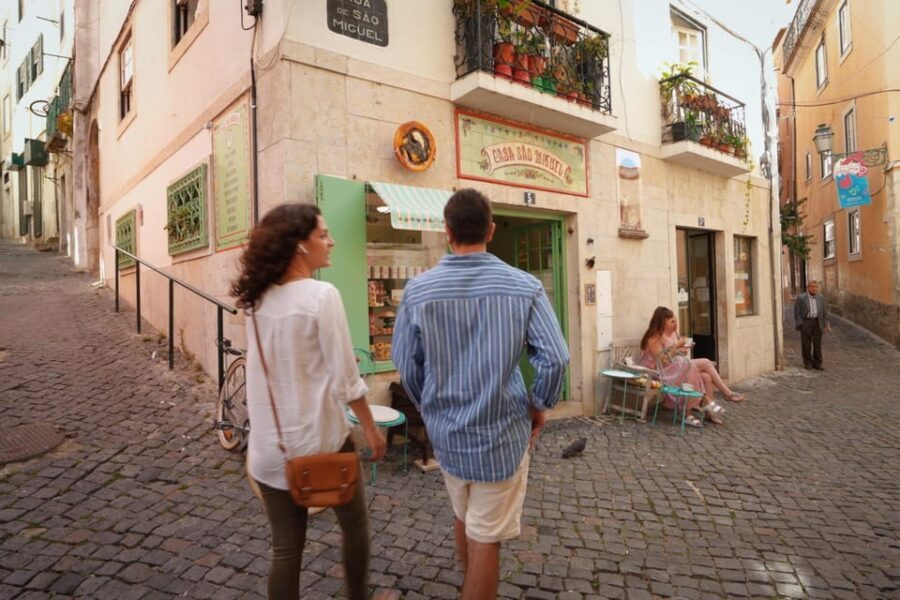
The tour begins at Farmácia Mouraria on R. da Mouraria, and that’s a big part of why this walk works. Mouraria is the kind of neighborhood where Lisbon’s layers show up on the street—culture, music, and history in the everyday details. You’ll spend about 30 minutes in the Moorish Quarter, focused on the atmosphere of Mouraria and the cultural roots tied to Fado.
This stop matters because it’s not just a quick photo stop. You’re learning how Mouraria’s identity connects to the music tradition people associate with Alfama. It’s also where the “local vibe” part actually comes alive: you’re moving through lanes that feel lived-in, and your guide helps you read what you’re seeing instead of just passing it.
A nice bonus is the way guides bring the streets to life. In past groups, guides such as Igor and Katia have shared Lisbon through storytelling and included pointers for spotting street art. That makes a big difference if you’re the kind of traveler who wants more than landmarks.
Moorish Quarter to Miradouro Chão do Loureiro: short walk, big view payoff
After Mouraria, you’ll head to Miradouro Chão do Loureiro. The stop is brief—around 5 minutes—but it’s exactly the kind of break that helps you reset your bearings. Lisbon is built on slopes, and early in your trip it can be hard to understand where everything sits. A viewpoint stop fixes that problem fast.
Here’s what you should pay attention to: look past the immediate houses and notice how the streets stack and curve. That helps later when you’re trying to plan your own walking route back down or around the hill. You’ll also get a sense of how Alfama lines up, since the tour later returns to that area from another angle.
Drawback to consider: if it’s busy or windy at the viewpoint, your photo time may feel tighter. It’s short by design, so be ready to glance, take a couple photos, and move on rather than expecting a long sit-and-stare moment.
Church of St. Anthony and the custard tart-making moment
One of the best parts of this tour is the stop at the Church of St. Anthony, where you’ll spend about 10 minutes with a tastier side of Lisbon. You’ll get a custard tart experience tied to this famous pastry tradition.
This is where the tour becomes more than scenery. Food stops on walking tours are often just a sample and a stamp of approval. Here, it’s built into the storytelling of place. You get a snack that you can anchor in your memory—pasteis de nata style custard tart—then you connect it to the neighborhood and the culture you’ve been walking through.
You should come with a realistic expectation. The tour includes snacks, not a full meal. If you’re visiting during a long day, I’d eat a proper breakfast or plan a lunch after, so this tart doesn’t become your main fuel for hours.
Also, this is a great place to use your senses. Smell, texture, and even how quickly the pastry disappears from a shared plate will tell you why custard tarts are such a Lisbon obsession. For many people, this is the moment that makes the tour feel worth it.
Miradouro de Santa Luzia and Alfama: viewpoints plus Fado soul
Next comes Miradouro de Santa Luzia, another quick 5-minute viewpoint stop. You’ll look over Alfama, and that repetition is smart. First you get one view to build your mental map, then you get another from a different angle to confirm it.
Then you move into Alfama, with about 30 minutes in the neighborhood. Alfama is one of Europe’s oldest neighborhoods, and this part of the walk centers on its connection to Fado. You’ll also hear about Moorish and Jewish roots alongside traditional Portuguese culture. It’s not just music talk. It’s about why these neighborhoods feel the way they do—stone streets, close corners, and the sense that the past is still present in daily life.
This is also where you’ll feel the difference between a tour that just checks boxes and a tour that gives you a framework. Your guide’s job is to help you understand the patterns. When you hear how Mouraria ties into Alfama, you start noticing the overlap: the streets feel different, but the cultural thread is the same.
Possible drawback: Alfama can be crowded, especially near viewpoints and popular street corners. That can make photos trickier and slow your pace a little. If that stresses you out, plan to be flexible and go for a few good photos instead of trying to capture everything.
Finishing with ginjinha in Alfama: what to do since alcohol isn’t included
The tour ends with Ginja de Alfama, a historic tavern where you can find ginjinha. The time at this stop is about 10 minutes, and it’s a good finale because it’s a taste of Lisbon’s night-life culture—just in a daytime-friendly way.
Here’s the key detail: alcoholic beverages are not included. That means your tour price covers the experience of getting there and the included snack earlier, but the ginjinha itself is something you buy. The good news is you can still enjoy the stop without committing—watch how it’s served, soak up the old tavern vibe, then decide.
The tavern is described as being in business for more than 40 years with the same owner. That kind of continuity matters. It’s not a trendy pop-up; it’s a place that has lived through Lisbon changes. Even if you skip alcohol, you’ll get a sense of the tradition behind the drink.
A practical tip: if you do order ginjinha, pace yourself. Lisbon walking can already be slow on the way down, and alcohol is not always friendly with uneven streets.
Price and value: why this tour is worth your first day
For $24.02, you’re not paying for transport or big-ticket entry fees. You’re paying for:
- A route that connects neighborhood identity to stories
- Short viewpoint breaks that improve your self-guided navigation later
- An included custard tart snack
- A guide who helps you read what you’re seeing at street level
In other words, you’re buying time-saving context. If you arrive in Lisbon and feel overwhelmed by hills, neighborhoods, and Fado lore, this tour gives you a mental map and a cultural starting point. That’s the best kind of value: it makes the rest of your trip easier and more enjoyable.
Also, the group size cap of 15 keeps it from feeling like a cattle walk. You can ask questions and actually hear the answers. Past experiences have highlighted guides being flexible and fun, with lots of smiles and back-and-forth in conversation. That matters because Lisbon rewards attention.
Who should book this Lisbon Kickstart Tour, and who should skip it
This tour is ideal if you:
- Want an intro walk to Lisbon’s older districts without committing to a full-day itinerary
- Care about Fado but don’t want a lecture—this is tied to streets and place
- Like street art and small cultural details, not only big monuments
- Want a comfortable first plan with an easy finish near the Fado museum
You might consider skipping or adding a different tour if:
- You hate walking on hills and steep streets
- You’re looking for a long, deep museum-style experience
- You want a route that includes major sites beyond the old neighborhoods (this one is focused)
It’s also a good fit for first-timers because it ends where you can keep going. When a tour finishes near something you already care about, you don’t lose momentum.
Should you book this Kickstart Tour with a Local?
Yes, I’d book it if it’s your first time in Lisbon. It’s short, organized, and designed to help you understand Mouraria and Alfama quickly—plus you’ll leave with a full sensory memory from the custard tart stop. The viewpoint sequence helps you move around the city with less guessing, and the final ginjinha option gives you a local-style wrap-up even though alcohol isn’t included.
If you’re on a tight schedule, this is exactly the kind of tour that buys you confidence. I think you’ll get the most out of it when you treat it as orientation plus street storytelling, not as a checklist of every landmark in Lisbon.
FAQ
How much does the Lisbon Kickstart Tour with a Local cost?
It costs $24.02 per person.
How long is the tour?
The tour runs for about 1 hour 30 minutes.
What language is the tour offered in?
The tour is offered in English.
Where does the tour start and where does it end?
It starts at Farmácia Mouraria, R. da Mouraria 8, 1100-364 Lisboa, Portugal and ends at Largo do Chafariz de Dentro, 1100-139 Lisboa, finishing in Alfama in front of the Fado museum.
What food is included in the price?
The tour includes snacks Portuguese custard tart.
Is ginjinha included?
No. Alcoholic beverages are not included, so ginjinha would be something you’d pay for yourself.
What conditions should I expect for this tour?
The tour requires good weather and the walking is best if you have a moderate physical fitness level. Service animals are allowed, and it’s near public transportation.