REVIEW · LISBON
Lisbon: Pastel de Nata Masterclass at a Real Bakery
Book on GetYourGuide →Operated by Nat'elier · Bookable on GetYourGuide
Turning custard into craft.
This Lisbon masterclass is interesting because it happens in a real bakery kitchen, not a demo room. You start with a quick look at Pastel de Nata history, then roll up your sleeves and bake like the pros: lamination, custard filling, and that final oven push. I love the hands-on pace, and I also love that you leave with both a participation certificate and enough tarts to taste your own work while it is warm. One possible drawback to factor in: the kitchen setup is not designed for mobility impairments, and part of the class involves teamwork in close quarters.
What really makes it special is how they teach the method, not just the result. You will learn how to make puff pastry from zero and then shape and fill at least three tarts by hand. I also like that you can choose a barista-made hot or cold drink to go with the tasting. The other consideration is language comfort: the class is taught in English and Portuguese, so if you only speak one language, you might need a little extra focus during group instructions.
If you want the Portuguese egg tart experience in Lisbon with actual process, this is one of the most direct ways to get it. You will work with a professional pastry chef—often João Batalha or other in-house chefs like Silvia Sousa or Adriano Cardoso—inside a working bakery. Just go in ready to get a little flour on your hands and accept that there’s a small, professional setup behind the scenes.
In This Review
- Key highlights I’d circle on your Lisbon plan
- Inside Nat’elier’s real bakery kitchen near Baixa-Chiado
- The 2-hour masterclass flow: history, dough, fill, bake, taste
- Making puff pastry from scratch (without turning it into a stress test)
- Custard filling: the method that makes it feel Portuguese
- Baking in the pro oven: that last step you can’t fake
- Your chef may be João Batalha, or another in-house pro
- What you actually get for your money: value in the real details
- Who this masterclass suits best in Lisbon
- Quick planning tips so you enjoy the class more
- Should you book the Pastel de Nata Masterclass at Nat’elier?
- FAQ
- How long is the Pastel de Nata masterclass in Lisbon?
- Where do I meet for the class?
- What do I make during the workshop?
- What is included in the ticket price?
- Do I need any cooking experience?
- What languages are the instructors?
- Is it suitable for kids or for people with mobility impairments?
Key highlights I’d circle on your Lisbon plan
- Inside a real bakery kitchen at Nat’elier, not just a tasting session
- Pastel de Nata from scratch: puff pastry lamination and custard filling
- Hands-on for everyone: you make at least 3 tarts by hand
- Max 12 participants, so you’re not lost in a huge class
- Warm tasting + barista drink after the bake
- Certificate and recipe email to recreate it later
Inside Nat’elier’s real bakery kitchen near Baixa-Chiado
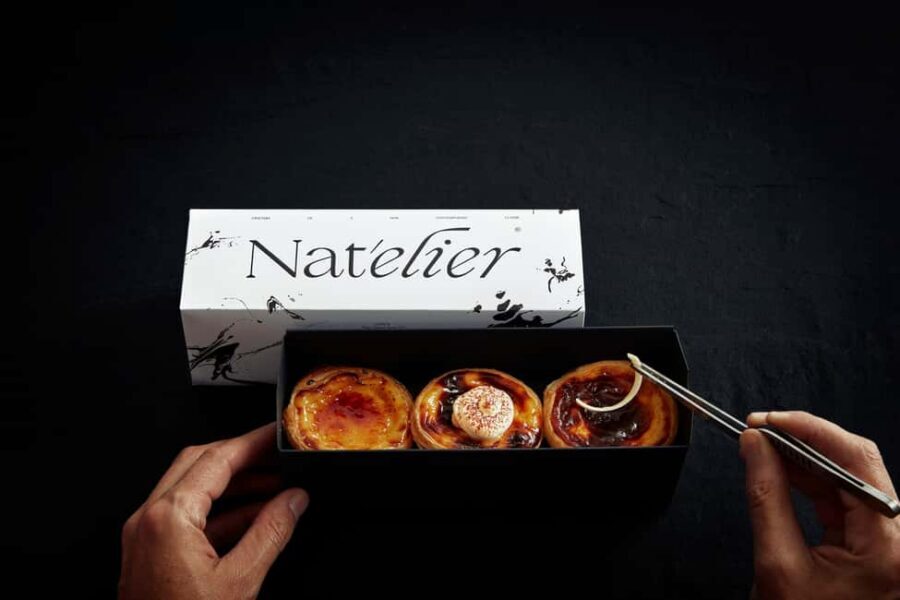
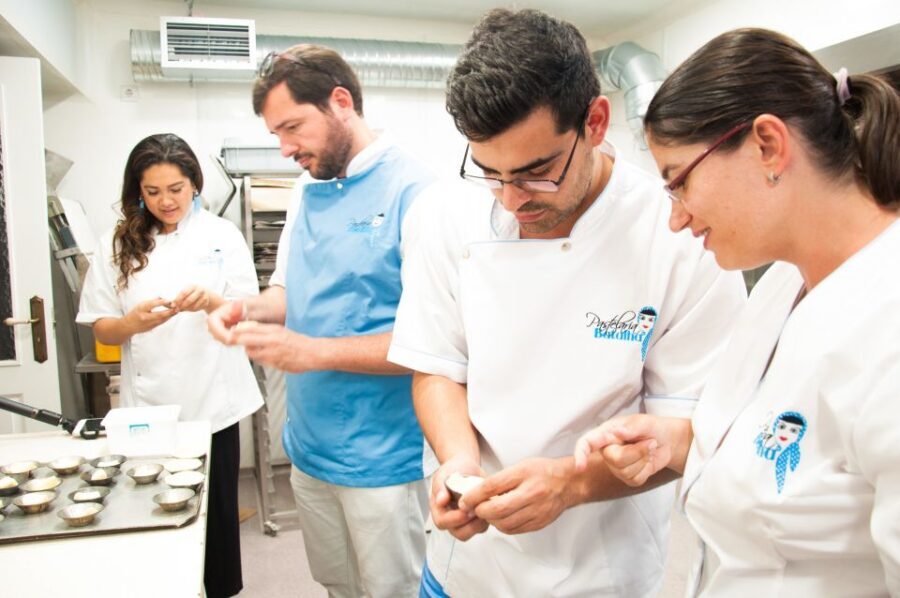
The meeting point is at pastry store Nat’elier, outside the Baixa-Chiado metro station on Lisbon’s blue line. This matters because you’re not just showing up to learn a recipe—you’re walking into the environment where these tarts are made with serious equipment and real workflow. Expect aprons and hair nets, and expect a practical kitchen layout where the instructors can supervise closely.
What I like here is the “kitchen logic.” Pastel de Nata is a pastry that depends on timing and technique, and learning it in an actual bakery makes the steps feel connected. The method isn’t floating in the air; it’s tied to dough prep, filling consistency, and the oven routine. When you learn that way, you stand a better chance of recreating it back home.
And Nat’elier is in a very workable part of town. Baixa-Chiado is central, so you can fit the masterclass between sightseeing blocks without feeling like you’re commuting across Lisbon for a single activity.
You can also read our reviews of more tours and experiences in Lisbon.



The 2-hour masterclass flow: history, dough, fill, bake, taste
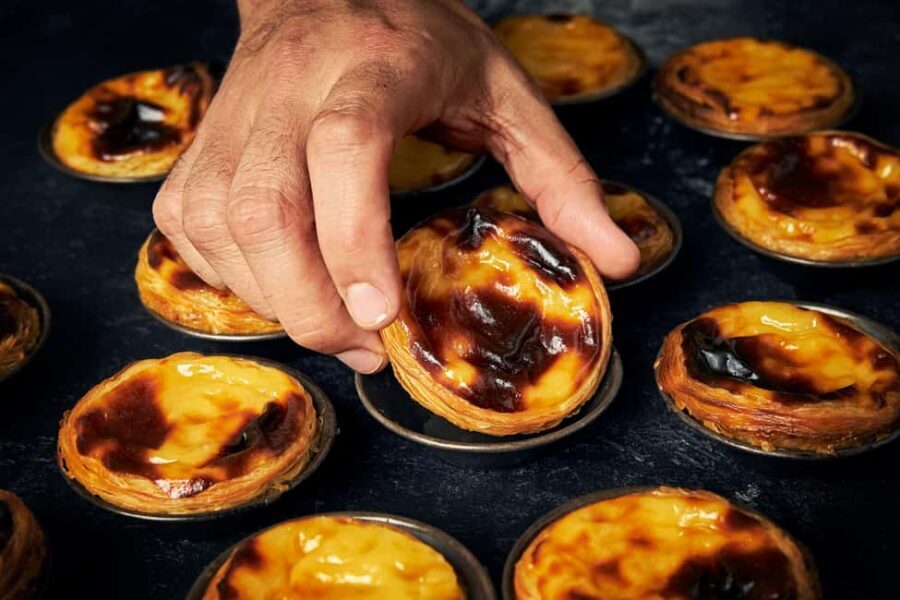
This experience runs about 2 hours, with start times that vary by availability. The class begins with a short introduction to the history of Pastel de Nata, which is not just trivia. It helps you understand why the tart’s texture and process matter—especially the pastry layering and the signature custard set.
Then you gear up. You’ll go into the pro kitchen and work step-by-step. From there, your time breaks down into four phases:
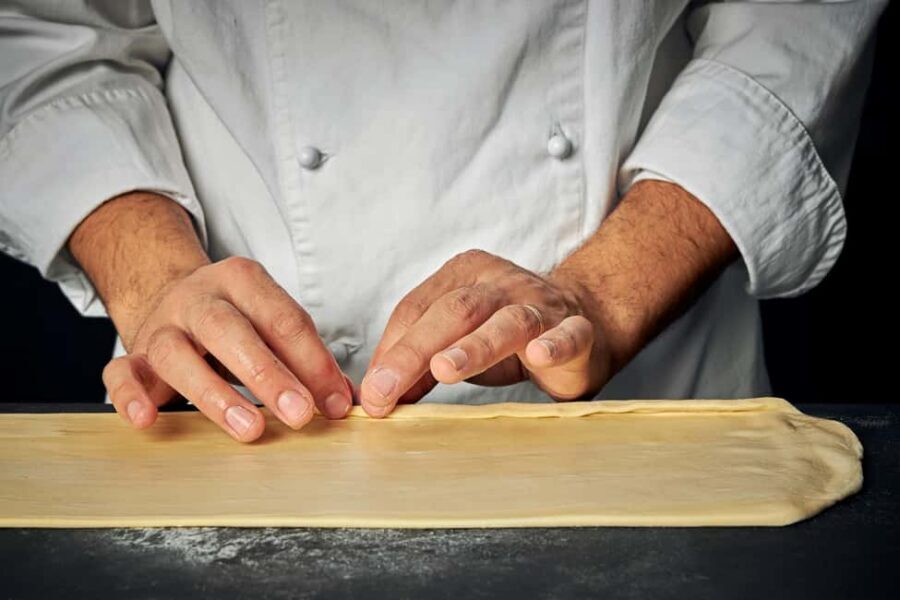
1) Prep and puff pastry lamination
You learn how to handle the dough and work it into layered pastry. Even if you’ve never baked, the class is designed for you to follow along and practice the key moves.
2) Pastel de Nata technique for shaping and spreading
This is where the form starts to matter. You’ll work with a specific technique for spreading and portioning before filling.
3) Custard making and filling
You will make the custard mixture and fill your tarts. In pastries like this, the difference between good and great is often how the custard is handled—texture, pouring confidence, and even how you fill so it bakes evenly.
4) Professional oven bake + tasting
Everything gets baked in the bakery’s pro oven. Afterward, you taste your warm pastries with a barista-crafted drink of your choice (hot or cold). Alcohol, milkshakes, and hot chocolate are excluded, but espresso-type pairings and other barista drinks are part of the plan.
A key point for expectations: the class is designed as teamwork. You’ll be making tarts, but you may rotate roles or move between stations as dough and filling move through the process.
Making puff pastry from scratch (without turning it into a stress test)
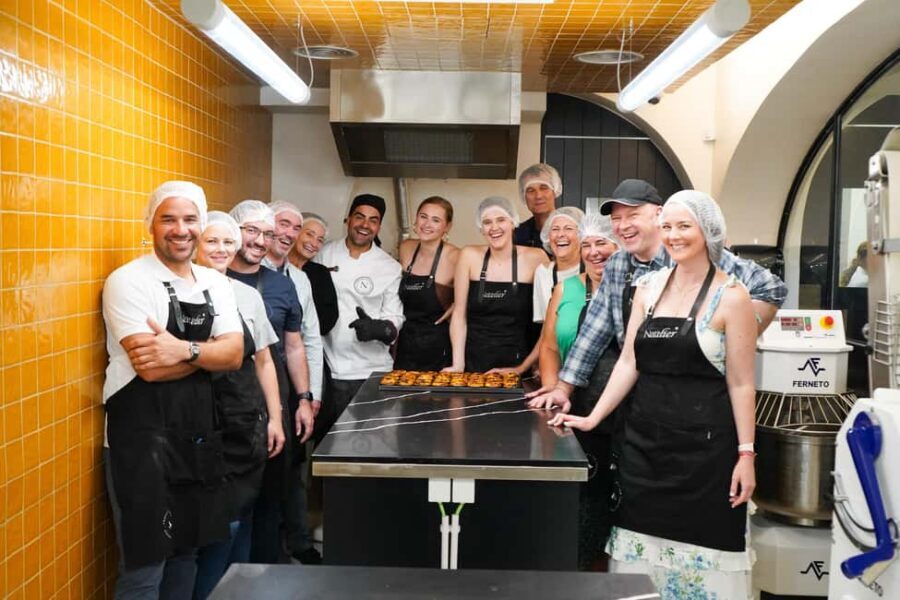
Many “cooking classes” promise hands-on time but quietly limit you. Here, the goal is the opposite: you learn to make the puff pastry from zero and do it in a way that beginners can manage. The instructors focus on the technique drivers—how to laminate the dough so it bakes with layers, and how to keep your work moving at the right pace.
I like how the class treats puff pastry as teachable steps rather than a mysterious craft. You’re not expected to “already know dough.” You’re guided through what to do and why it matters.
Practical tip: wear clothes you don’t mind if you get a bit messy. This is pastry work. Aprons and hair nets help, but flour can still find its way.
Also keep an eye on timing. Puff pastry isn’t hard because it’s advanced—it’s hard when it’s rushed or mishandled. In a kitchen class like this, you get the benefit of instructors watching for the small issues that would throw off your results.
Custard filling: the method that makes it feel Portuguese
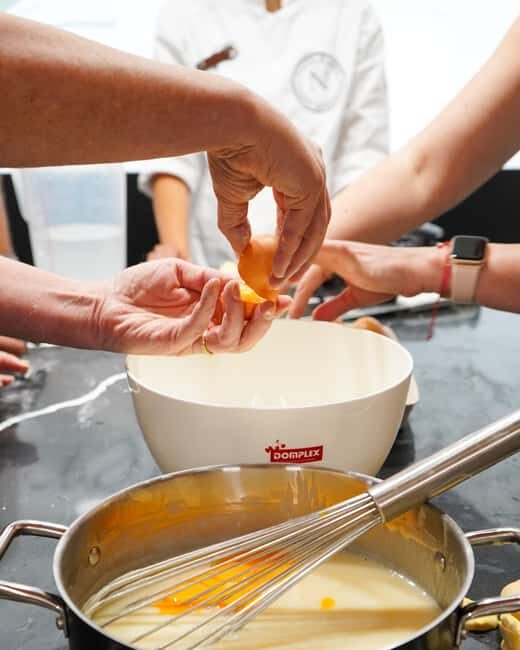
Pastel de Nata is famous for its contrast: crisp, caramelized pastry edges and a custard interior that sets into a smooth, creamy texture. The masterclass teaches you to make that custard and fill the tarts while staying consistent enough for proper baking.
Because everyone works in a shared kitchen, you learn “bake-ready” habits: how to mix, how to handle the filling, and how to fill in a way that supports even baking. You’ll spread and fill using the technique they teach, not just copy a picture.
And since the class is capped at a maximum of 12 participants, you generally get enough attention to correct your technique before it becomes a lost batch. That size is a big part of why the experience tends to feel fun instead of chaotic.
Baking in the pro oven: that last step you can’t fake
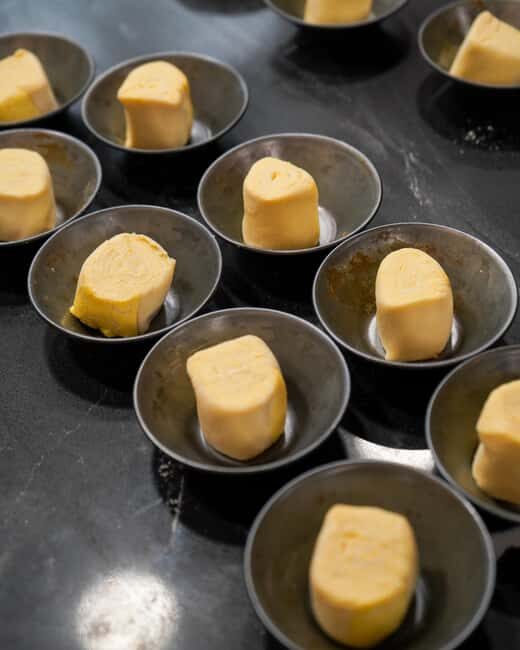
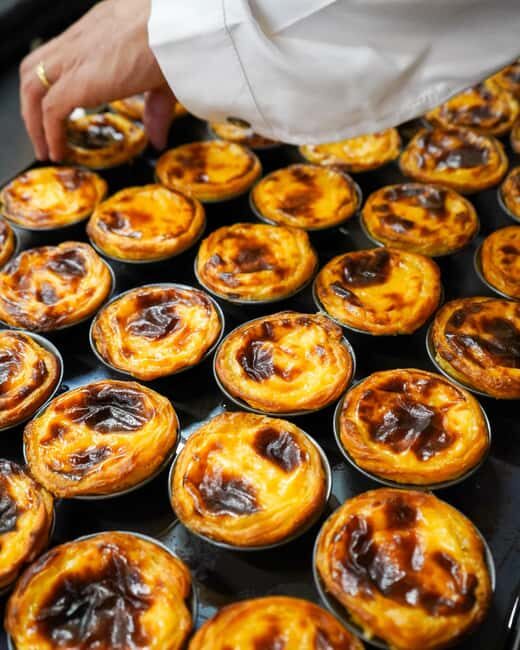
The bake is the payoff. You put your tarts into a professional oven, not a small home setup, and the result shows. The heat does what it’s supposed to do: crisp up the pastry layers and drive the custard to its signature set.
This is also where patience pays off. It is tempting to rush the steps before the oven, but the class structure keeps you moving at the right tempo so the tarts are ready for baking when you should be.
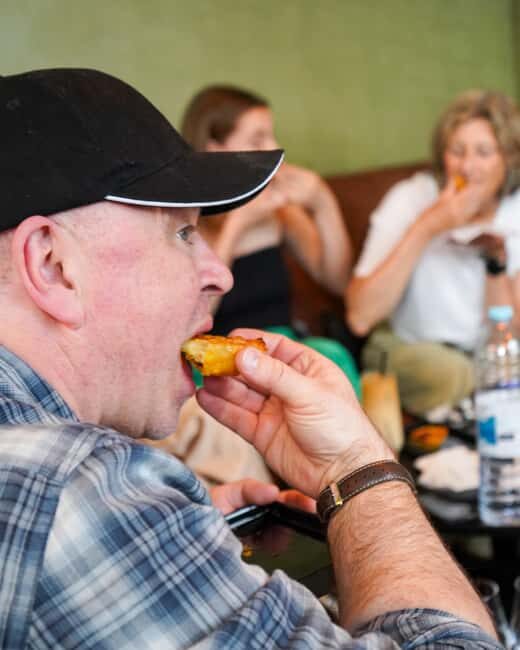
Then comes the tasting: warm Pastéis de Nata with a barista-crafted hot or cold drink. Even if you’re not the type to love sweets, you’ll usually appreciate the contrast—especially if you taste right after baking, when the pastry is at its best.
One sweet bonus: you leave the class with enough pastry pride to bring a couple more tarts into your day’s plans. (It’s included that you’ll take part in making tarts, and you get 3 Pastéis de Nata with the included items.)

Your chef may be João Batalha, or another in-house pro
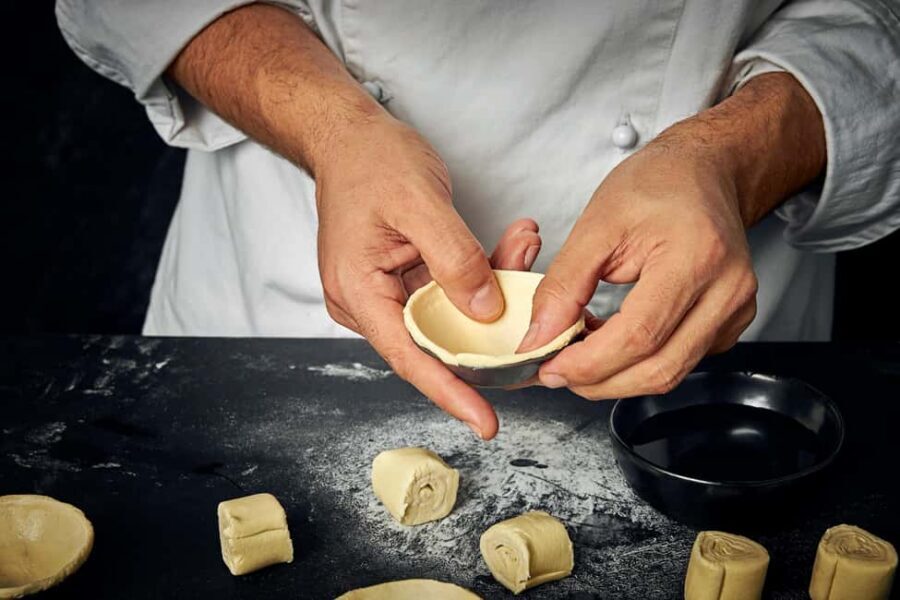
A huge draw is the chef lineup. The class can be hosted by award-winning chef João Batalha, co-founder of Nat’elier’s Pastel de Nata concept store Nat’elier, or other experienced in-house chefs such as Silvia Sousa or Adriano Cardoso. On different days, you might get other instructors too, and that changes the style slightly.
What stays consistent is the teaching method: clear direction, lots of practice, and patient coaching on pastry moves that would be hard to master from a cookbook alone. Many people come in nervous because they think Pastel de Nata is too technical. The class is built to prove it’s learnable.
One thing to consider: group work means some tasks may be done in pairs or small teams rather than every step alone. That’s not a dealbreaker, but it’s worth knowing if you want a fully solo workflow.
What you actually get for your money: value in the real details
At $74 per person for about 2 hours, this isn’t the cheapest thing you can do in Lisbon. But you are paying for three expensive ingredients: professional kitchen access, a pastry chef’s time, and the hands-on training that beginners can follow.
Here’s what the price includes:
- 3 Pastéis de Nata
- A barista-crafted beverage (hot or cold; no alcohol, milkshakes, or hot chocolate)
- Certificate of Participation
- Ingredients for the class
- All baking equipment
- Aprons and hair nets
- Water
Not included: additional food or beverages.
Is it good value? For me, yes—because you’re not just tasting Lisbon, you’re learning a specific Portuguese craft. You also leave with tools for later: the class provides a participation certificate and, based on what people report after the session, you often receive the recipe by email so you can attempt the method again.
If you like activities that create a skill you can repeat, you’ll feel the value more than if you just want a quick snack stop.
Who this masterclass suits best in Lisbon
This is a strong pick if you want an authentic Lisbon food experience that’s active, not passive. You’ll also enjoy it if you like meeting people without the pressure of a nightlife setting. The class is small (up to 12), so the atmosphere stays friendly and guided.
Adults will love the technique. Couples often enjoy it because you can work side-by-side and share the learning curve. Solo travelers can also fit in well here because the class naturally creates conversation around the same shared task.
Kids are welcome from age 8+. If you’re traveling with younger children, the experience says to book a private option instead. That makes sense because a real bakery kitchen is not the place for tiny attention spans unless the class is tailored.
Accessibility note: it is not suitable for people with mobility impairments, likely due to the kitchen environment and the way participants move and work.
Quick planning tips so you enjoy the class more
Here are the practical things that help before your timer starts:
- Go in with a mindset of practice, not perfection. Pastel de Nata is tricky because it’s technical, not because you lack talent.
- Plan to eat what you bake while it’s warm. That’s when the pastry texture and custard set are at their best.
- If you’re booking in French or Spanish, you’ll need to message before reserving. The class languages listed are English and Portuguese.
- Wear comfortable shoes. You’ll be in a working kitchen setting for the full 2 hours.
Should you book the Pastel de Nata Masterclass at Nat’elier?
Book it if you want the most hands-on way to understand Lisbon’s favorite egg tart. The value is in the real bakery setting, the full method (puff pastry from scratch plus custard filling), and the fact you make multiple tarts yourself. I also think it’s a great “Portugese food skill” souvenir: the certificate is nice, but the bigger win is that recipe knowledge and technique you can use again.
Skip it (or consider a different style of activity) if you need a fully accessible space, or if you hate group work and close-quarter kitchens. Also, if you struggle with instructions in a second language, you might want to pay extra attention to the class language support and ask questions when you book.
If you love learning by doing, this one belongs on your Lisbon list.
FAQ
How long is the Pastel de Nata masterclass in Lisbon?
It lasts about 2 hours. Starting times vary, so you’ll want to check availability for the schedule.
Where do I meet for the class?
Meet at pastry store Nat’elier, located outside the Baixa-Chiado metro station on the blue line.
What do I make during the workshop?
You’ll learn to make Portuguese Pastel de Nata from scratch and you’ll bake your own tarts. You will make at least 3 tarts by hand.
What is included in the ticket price?
Included items are 3 Pastéis de Nata, a barista-crafted hot or cold beverage (no alcohol, milkshakes, or hot chocolate), participation certificate, ingredients, baking equipment, aprons and hair nets, and water.
Do I need any cooking experience?
No previous cooking experience is required.
What languages are the instructors?
The class is taught in English and Portuguese.
Is it suitable for kids or for people with mobility impairments?
Kids age 8+ are welcome. It is not suitable for people with mobility impairments. If you have younger kids, private experiences are available.