Sintra’s old streets hit fast. This on-foot tour gives you an efficient loop through some of the town’s most story-heavy spots, with a guide to connect the dots between buildings, legends, and the way the neighborhood actually feels. You’re not racing between big-ticket attractions; you’re learning how Sintra’s historic core earned its reputation.
I love the small group setup. With a maximum of 8 people, the walk stays human-sized, and you can ask questions instead of shouting over the crowd. I also like how the route mixes formal landmarks with oddball details—like sculpture displays, tile work, and viewpoint moments—so you leave with more than just names.
One thing to consider: it’s a walking tour with a moderate fitness level, and it runs about 2 hours. Also, some entrances are optional or paid on your own time (notably Quinta da Regaleira), so plan your budget if you want to go inside.
In This Review
- Key things I’d highlight before you go
- Why the historic-center walk works so well in Sintra
- Camara Municipal de Sintra: a town hall that sets the tone
- Volta do Duche: legends, sculptures, and the old-street feeling
- Sintra National Palace gardens: what you see now, even if weather shifts
- Cascata de Pisoes: quick waterfall photo, if the water is there
- Valverde Palácio de Seteais: viewpoints toward Pena and the Atlantic
- Quinta da Regaleira: optional entry, but the mystery starts right away
- Church of São Martinho: the 1755 earthquake recovery angle
- Centro Histórico de Sintra: one of the oldest hotels and a 19th-century tea house
- Fonte da Pipa: tiles, beauty, and a quick photo win
- Price and value: what $18.14 buys you (and what doesn’t)
- The small-group feel and the guide difference
- Timing, shoes, and how to make the most of the route
- Should you book this historic center walk?
- FAQ
- How long is the Sintra historic center walking tour?
- What is the price and what’s included?
- Does the tour include mobile tickets and English?
- Where is the tour meeting point, and where does it end?
- Is Quinta da Regaleira entrance included?
- What should I expect if the weather is bad at Sintra National Palace?
Key things I’d highlight before you go
- Tight 2-hour loop that helps you get bearings in Sintra’s historic core without a full day commitment
- Small-group feel (max 8), which makes the stories land instead of getting lost in the noise
- Legend-led stops like Volta do Duche and Seteais, where the guide turns scenery into context
- National Palace gardens first, with the possibility of palace entry only when weather calls for it
- Photo moments built in, including Cascata de Pisoes and the view angles toward Pena and the Atlantic Ocean
- Optional deeper time at Quinta da Regaleira, so you can match your curiosity to your schedule
Why the historic-center walk works so well in Sintra
Sintra can overwhelm you fast—pretty hills, big palaces, and tour groups multiplying like rabbits. This walk is a smarter entry point because it stays grounded in town. You’re seeing the historic core as something you can actually walk through, not just a postcard you sprint past.
You’ll start near Av. Dr. Miguel Bombarda 5 at 11:00 am. The meeting point is practical, and the tour is designed for an easy, continuous flow. It’s also offered in English, and you’ll get a mobile ticket, so you’re not fumbling with printouts.
The group size matters more here than you might think. On a small tour, the guide can slow down when you want time for photos or when a street corner suddenly makes sense. That’s what makes legend-heavy towns easier to enjoy.
If you want an intro before you commit to bigger sites later, this fits the bill. If you’re traveling with older family members or teens who don’t want an all-day palace marathon, the pace is more forgiving than the typical Sintra cram.
You can also read our reviews of more historical tours in Sintra



Camara Municipal de Sintra: a town hall that sets the tone
The walk kicks off at Camara Municipal de Sintra (Sintra Town Hall). Even if you never expected to get excited about an administrative building, this stop is useful because it tells you what to look for as you move.
You’ll admire the town hall’s presence and learn about its history for context. That matters because Sintra’s story isn’t only about famous palaces—it’s also about the town’s role and how it developed. Once you understand that, the streets around you feel less random.
This stop is short, but it’s like turning on a light in the middle of the maze. You start to notice details in the architecture and the street layout instead of just looking at pretty walls.
Volta do Duche: legends, sculptures, and the old-street feeling

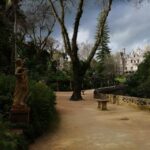
Next comes Volta do Duche, and this is where the tour starts leaning into Sintra’s playful side—history, legends, and the kind of backstory that makes you look twice.
You’ll learn the history of Volta do Duche and enjoy an exhibition of various sculptures, which gives you a visual reset while you’re walking. Then you’ll pass by 19th-century buildings and hear legend and haunted-story style anecdotes tied to the area.
What I like about this stop is how it balances mood and material. It’s not just spooky talk. The sculptures and streetfronts help ground the tales so your memory sticks.
Practical tip: bring your camera. The lighting in those older streets can be great, and Volta do Duche is a natural place to grab photos without feeling like you’re stopping every 20 seconds.
Sintra National Palace gardens: what you see now, even if weather shifts

From the town center vibe, you head into Sintra National Palace territory. Here’s a smart detail: the tour focuses on the gardens, and it explains the palace’s history.
The arrangement is designed for real-world weather. The paid palace entrance happens only on days when weather conditions are adverse. In other words, you’re not stuck doing nothing if clouds roll in—you’re guided toward the right spaces first, then adjust if conditions make it more comfortable.
If you like your Sintra experience with a bit less ticket-line stress, this stop is a good compromise. Gardens give you atmosphere and scale, and the guide’s history talk helps you understand what the palace was built to represent.
One small consideration: this is not a full palace interior visit. If you want indoor rooms and long photo sessions inside, you’ll still need to plan a separate visit later.
Cascata de Pisoes: quick waterfall photo, if the water is there
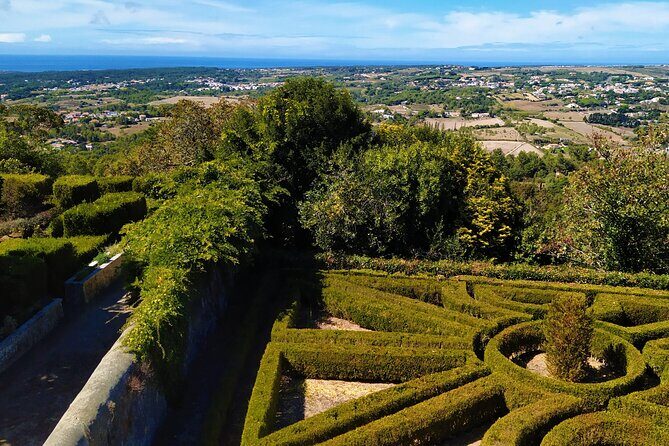
Then you get Cascata de Pisoes, with a simple mission: take pictures next to the waterfall, if there are waterfalls.
This is one of those stops you appreciate for what it is—fast, scenic, and forgiving. Some days you’ll see more water. Other days you’ll mostly see the setting. Either way, it’s a chance to break up the walking with a vertical visual moment.
Don’t over-plan around this one. It’s short by design, so even if you don’t get a dramatic waterfall shot, you still keep momentum.





Valverde Palácio de Seteais: viewpoints toward Pena and the Atlantic
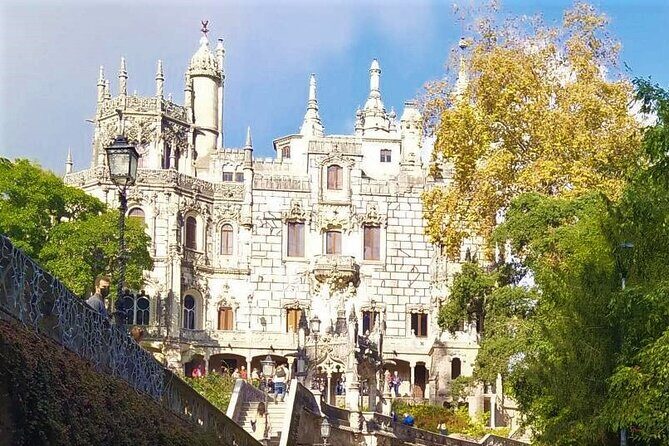
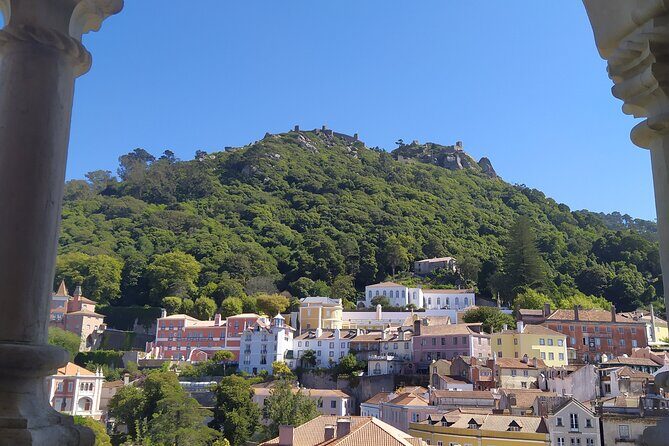
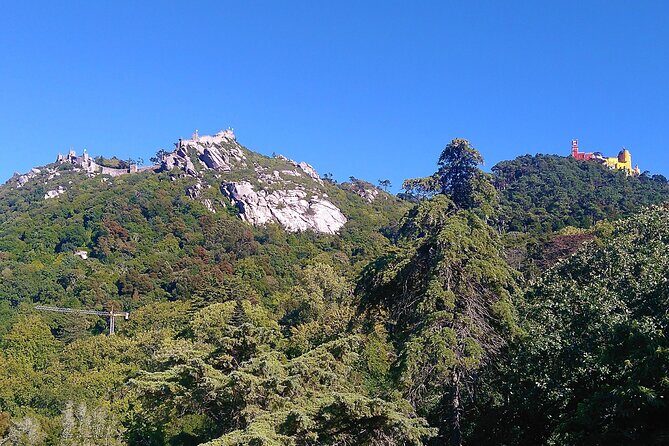
Valverde Palácio de Seteais is the moment in this tour when the scenery starts doing the talking. You’ll hear the legend of Seteais, then take in the landscape views, gardens, and—most importantly—what you can see toward Pena Palace and the Atlantic Ocean.
This stop feels like the tour’s reward. After streets and details, you get wider sightlines. It’s also a good place to slow down and breathe, because Sintra uphill views can hit you in the lungs quickly.
If you’re the type who likes photos that actually show place, this is where you’ll use them later to remember what direction things are. A lot of visitors struggle to place the palaces in their mental map. This helps.
Quinta da Regaleira: optional entry, but the mystery starts right away
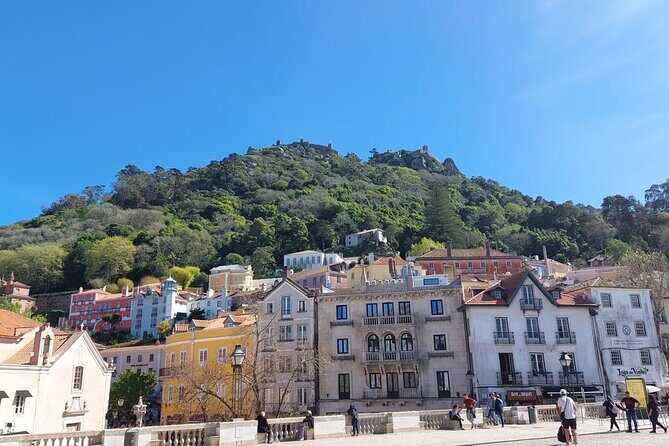
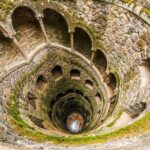
Next is Quinta da Regaleira, one of Sintra’s most mysterious estates. Your guided time here is shorter, and entrance is optional.
A big practical note: the tour is designed so that if you want to go in, you can do that—often at the end and optionally without the guide. The guide’s job in this window is to point you to what makes the place feel strange and memorable.
This is your chance to match your interests. If you only want the outside atmosphere and quick guided interpretation, you can keep it moving. If you want to go deeper into the grounds, you’ll need to plan extra time and budgeting for entry.
Church of São Martinho: the 1755 earthquake recovery angle
You’ll then visit Igreja de Sao Martinho, a key church in Sintra that was recovered after the 1755 earthquake.
This is one of those stops that adds weight to the lighter, legend-rich parts of the tour. Sintra isn’t only fairytale architecture. It’s also a town shaped by disasters and rebuilding—so you start seeing the layers, not just the prettiest surfaces.
The stop is brief, but the earthquake-recovery angle makes the architecture feel less like decoration and more like survival.
Centro Histórico de Sintra: one of the oldest hotels and a 19th-century tea house
As you move through the Centro Historico de Sintra, you’ll stop at one of the oldest hotels in town. The highlight isn’t only the building—it’s the tea house that still retains original 19th-century characteristics.
This kind of stop is great for travelers who want a taste of day-to-day Sintra life. You’re not just sightseeing. You’re seeing where people once slowed down, chatted, and drank tea while the town did its slow-motion magic.
One practical heads-up from real-world experience: lunch can be tricky to handle on the go in the historic center. I’d plan your food timing so you’re not stuck deciding on the spot and ending up with a sit-down situation you didn’t expect.
If you want a smoother day, consider a simple snack or early meal strategy before the walk starts, then keep lunch flexible afterward.
Fonte da Pipa: tiles, beauty, and a quick photo win
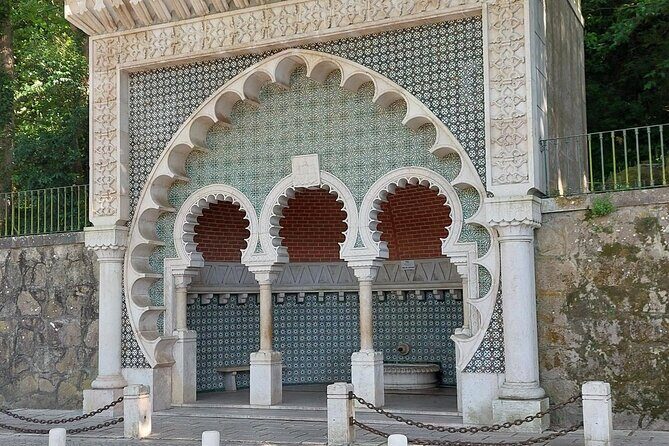
The tour ends with one more standout detail: Fonte da Pipa, known for its decorated tiled fountain.
This is the kind of stop that doesn’t require a ticket or a long time commitment. You get a clear visual payoff, and the tiles make it easy to frame a great shot even if you’re tired.
It also gives you a satisfying last beat after the heavier landmarks. Think of it as the tour’s final little flourish.
Price and value: what $18.14 buys you (and what doesn’t)
At $18.14 per person for about 2 hours, this is good value if you want a guide to connect the historic-center dots. You’re paying for interpretation, route efficiency, and a guided pace that helps you understand what you’re looking at.
You should know what’s not included:
- Lunch is not included.
- Quinta da Regaleira entrance is €12.00 per person (optional).
That optional entry is the main variable. If you’re someone who loves exploring grounds and gardens inside estates, your total spend will rise a bit. If you’re happy with outside viewing plus guided context, you can keep it close to the listed price.
The small-group feel and the guide difference
This tour caps at 8 travelers, which is the sweet spot for a story-focused walking day. You don’t feel like you’re in a conveyor belt, and you get a better chance to ask follow-up questions.
Real-life guide praise shows up for two different names: Alexandra and Martina. Both are singled out for being engaging—one praised for an intimate feel and adding a surprise stop, the other for involving everyone from young to older visitors. That’s the kind of energy that matters on a legend-driven route. Otherwise, Sintra stories can float past you.
If your priority is not just to see places but to understand why people talk about them, a good guide is half the value.
Timing, shoes, and how to make the most of the route
This walk is designed to run smoothly in a short window. The overall duration is about 2 hours, and the route covers several distinct stops, mostly on foot.
To enjoy it:
- Wear comfortable shoes. Sintra’s historic streets can be uneven, and you’ll be on them for the full loop.
- Bring a light layer. Even in good season, conditions can shift, and gardens plus shade can feel cooler.
- Have a snack plan. Lunch isn’t included, and it can be harder to grab something simple during your walking window.
Also, keep your mindset simple: this is a get-your-bearings walk. You’re learning Sintra’s layout and picking up story context that makes later palace visits easier.
Should you book this historic center walk?
I’d book it if you want:
- A short, guided introduction to Sintra’s historic core
- A small group experience that’s easier to enjoy than crowded palace days
- Legend, architecture, and details, not just checkboxes
I’d think twice if you:
- Want a full palace interior tour and long time inside multiple major attractions in one go
- Plan to treat Quinta da Regaleira as a quick stop—entrance is optional but paid, and you’ll need extra time if you go in
If you’re trying to do Sintra well without spending the whole day trapped in queues, this is a strong fit. It’s focused, guided, and it teaches you how to look at the town like it has a story.
FAQ
How long is the Sintra historic center walking tour?
It lasts about 2 hours.
What is the price and what’s included?
The tour costs $18.14 per person and includes a local guide. Lunch and some entrances are not included.
Does the tour include mobile tickets and English?
Yes. You get a mobile ticket, and the tour is offered in English.
Where is the tour meeting point, and where does it end?
It starts at Av. Dr. Miguel Bombarda 5, 2710-579 Sintra, Portugal, and ends at Quinta da Regaleira, 2710-567 Sintra, Portugal.
Is Quinta da Regaleira entrance included?
Entrance to Quinta da Regaleira is not included. It costs €12.00 per person, and it’s optional.
What should I expect if the weather is bad at Sintra National Palace?
The tour focuses on the National Palace gardens. Paid entrance to the palace will only happen on days when weather conditions are adverse.