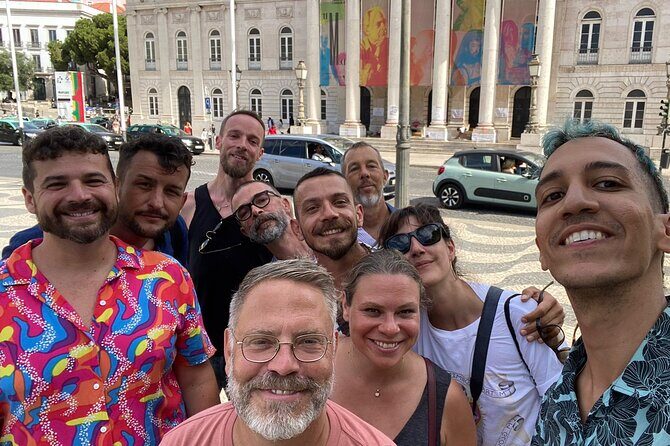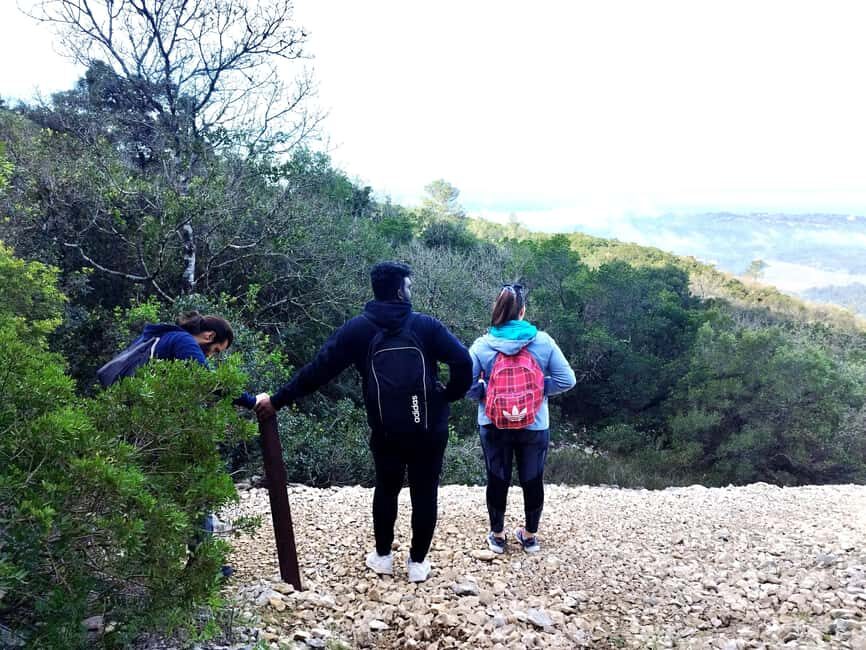
Lisbon in one day can actually feel right. This small-group tour strings together the city’s best views and biggest historic beats in about 7 hours, with hotel pickup and real stops (not just drive-bys). I love the max 8 traveler size, which keeps things relaxed and questions easy, and I also like that you get a built-in Pastéis de Belém tasting rather than hoping you’ll find the right place at the right time.
One caution: this is Lisbon walking and climbing, plus lots of tight streets. If you’re sensitive to motion sickness or you dislike steep, uneven cobbles, plan ahead because the vehicle has to move through narrow, hilly lanes and the pace includes short walks at multiple stops.
In This Review
- Key moments that make this tour worth your time
- From pickup to panoramic views: the pacing that helps you cope with Lisbon
- Portas do Sol: starting with the view that makes everything click
- Senhora do Monte: another viewpoint, plus the city’s 1147 story
- Lisbon Cathedral: stained glass, reconstruction, and a second life for the church
- Alfama: crooked cobblestones and the neighborhood feel you can’t fake
- Jerónimos Monastery and the tombs you’ll actually care about
- Pastéis de Belém: the food stop that’s worth planning for
- Torre de Belem: defense at the river’s edge
- Padrão dos Descobrimentos: walking on history you can see in the ground
- Chiado finish: earthquake reconstruction and dinner-ready timing
- Price and value: what $84.66 buys you in Lisbon
- The guide makes the difference: what to expect from the people on this tour
- Driving, carsickness, and slippery shoes: your practical prep list
- Who this tour fits best (and who should think twice)
- Should you book Lisbon in One Day with this small-group format?
- FAQ
- How long is the Lisbon in One Day Historic Small-Group Tour?
- What does the tour cost?
- How many people are in the group?
- Is hotel pickup included?
- Is the tour in English?
- Is lunch included?
- What food is included?
- Where does the tour start?
- Can I get a refund if I cancel?
Key moments that make this tour worth your time
- Miradouro start at Portas do Sol for an instant sense of how Old Lisbon sits on the hills
- Christian Reconquest context at Senhora do Monte and the cathedral area, right after 1147
- Alfama on foot for the crooked-street feel you can’t get from a bus window
- Jerónimos Monastery + Church tombs in Belem, tied to Portuguese icons
- Belem Tower and the Discoveries monument to connect defense, empire, and trade
- Chiado finish so you end near an easy dinner zone after the earthquake story
From pickup to panoramic views: the pacing that helps you cope with Lisbon
The biggest challenge with Lisbon is simple: it’s a hill town. And it’s not just “some hills.” You’ll feel the slope multiple times as you hop between neighborhoods and lookouts. The payoff is the view, but the trick is pacing it so you don’t burn out halfway through the day.
That’s where this small-group format really helps. With up to 8 travelers, you spend less time waiting around and more time actually seeing. A bunch of the day happens by a minivan with air-conditioning, so you’re not power-walking the whole route. Then you get short walking sections at each key spot, which makes the day feel structured instead of chaotic.
You’ll also get hotel pickup when possible, though the tour notes that sometimes you’ll meet at a nearby location if your exact address is hard to reach by vehicle. That’s common in Lisbon. The best mindset is to plan to arrive early at the pickup point your guide gives you.
Portas do Sol: starting with the view that makes everything click
Morning begins at Miradouro das Portas do Sol, one of those lookouts where Lisbon instantly makes sense. From here you can see how the older parts of the city stack along the hillsides, and you get a fast orientation before you start moving around on foot.
What I like about this first stop is the context. You’re not just staring at rooftops and taking pictures. Your guide talks about who first inhabited the region even before Portugal took shape. That short historical framing makes later stops feel connected, not like random monuments dropped onto the map.
This is a quick stop too, which is smart. You get the best payoff for minimal effort, and then you’re ready to climb again.
Senhora do Monte: another viewpoint, plus the city’s 1147 story
Next is Miradouro da Senhora do Monte. It’s another “look out and you get the whole picture” moment, but with a different angle on the city. The tour also ties this viewpoint to the era when the city was being reclaimed and consolidated under Christian rule, connecting it to Afonso Henriques in 1147.
If you’re the type who usually tunes out history after a few minutes, this stop is a good test. The guide is mixing the why of the terrain with the why of the dates. You end up understanding what you’re seeing: a city shaped by power, control, and later reconstruction.
Time here is short, about 15 minutes. So don’t expect a long lecture. Expect short, clear pointers you can use later when you’re back on your own.
Lisbon Cathedral: stained glass, reconstruction, and a second life for the church
At Lisbon Cathedral, the tour zeroes in on one specific feature: the church’s rose window and the fact it was reconstructed using fragments from the original. That matters because it gives you a sense of continuity. Lisbon buildings often carry “before” and “after,” especially after the major destruction events in the city’s long timeline.
This stop is also built around a key time marker—Christians took Lisbon in 1147, and the cathedral was built right after. Then you get that “last century” reconstruction angle, which helps explain why parts of what you see today look older in character but are newer in structure.
At roughly 20 minutes, it’s enough time to look closely and read the vibe, but not so much time that you feel trapped. If you like architecture and religious art, you’ll find things to focus on.
Alfama: crooked cobblestones and the neighborhood feel you can’t fake
Then you’re walking into Alfama. This is the part you’ll remember even if you forget some details of the dates. Alfama has that maze-like street quality—crooked, narrow, and lined with small cafes. The tour has you zigzag through the neighborhood so you experience the texture of the oldest area of Lisbon rather than just glancing at it.
I like this approach because it’s not trying to rush you through like a checklist. The guide gives you time to get a feel for the streets, then you keep moving. You’re also in the zone where Lisbon’s hills feel physical. So yes, it’s uneven. But that’s also the point.
Expect around 15 minutes here. That means it’s not the longest walk of the day, but it’s long enough to swap “tourist Lisbon” for “you’re in Lisbon.”
Tip: wear shoes with grip. Alfama’s cobbles are beautiful. They’re also honest about what happens when you have slick soles.
Jerónimos Monastery and the tombs you’ll actually care about
Belem is where Lisbon stretches outward, toward the Tagus River and toward Portugal’s era of exploration. The tour hits Jerónimos Monastery first, treating it like the major architectural stop it is.
Inside the Church, you get a meaningful detail that goes beyond postcard views: the tombs of Vasco da Gama and Luís de Camões, plus the presence of royalty-related burials among kings and queens and their family. It’s one of those moments where you can connect names from school with the actual stones and the actual building.
Your time here is about 15 minutes. That’s not enough to study every carving, but it is enough to understand why people call this place a national architectural treasure. You’ll see the “big idea,” which is what most one-day tours should do.
And because the day already built a bit of the historical context, the exploration era won’t feel like a sudden jump to something random. It will feel like the next chapter.
Pastéis de Belém: the food stop that’s worth planning for
After Jerónimos, you move into Belem for lunch time and a dedicated tasting of Pastéis de Belém—the custard tart that’s practically synonymous with the neighborhood.
This is the only food explicitly included, and it’s a smart inclusion. Custard tarts are tasty, sure, but they’re also a way to slow down without losing momentum. You get about 1 hour 30 minutes in Belem, which is long enough to eat, plus extra free time to browse shops or visit museums if you want.
One practical note: lunch itself is not included, so you’ll decide what to buy during that free time. But the included pastel tasting means you’re not starting your meal planning from zero.
If you’re picky about where you eat, this helps. You’ll taste the tart associated with the area’s origin story, then you can decide what you want for the rest.
Torre de Belem: defense at the river’s edge
From Belem Tower, the tour frames what you see with a practical idea: this stone fortress guarded the entrance from the sea. That’s a helpful lens. Too often, travelers see towers as pure symbolism. Here, the guide adds the functional purpose.
There’s also a photo moment with about 10 minutes allotted. The important thing is to use it actively: take your shot, then step back and look again from where your guide positions you. Towers can look different from different spots, especially when you’re dealing with wind off the river.
If you’re short on photos, this is where you can get them quickly without feeling like you missed the “must see” river shot.
Padrão dos Descobrimentos: walking on history you can see in the ground
Next comes the Monument to the Age of Discoveries—Padrão dos Descobrimentos. This stop is only about 10 minutes, and it’s not about long museum time. It’s about understanding the idea of Portugal’s discoveries period and what the monument is trying to communicate.
The ground-facing engraving is a detail worth pausing for. The tour includes time to look at it while your guide talks you through the “how” of the discoveries process. Even without extended reading, you start to grasp what Portugal was celebrating and why.
Admissions are not listed as included for this stop, so if you’re expecting to go inside something, you might find the visit is mainly exterior.
Chiado finish: earthquake reconstruction and dinner-ready timing
The day ends in Chiado, near an area that’s often easy to walk around and find dinner. Finishing here is a nice move because you’re not dropping people back in some remote edge of the city after spending a full day climbing.
Your guide also connects the Chiado area to Lisbon’s reconstruction after the devastating earthquake of 1755. That story matters because it explains why parts of central Lisbon feel more planned and “re-built” compared to the older, more tangled quarters.
Then you’re done. The tour returns you back to the meeting point, which keeps the logistics simple.
Price and value: what $84.66 buys you in Lisbon
At about $84.66 per person for roughly 7 hours, the real question is what you’re buying besides a list of stops.
Here’s what’s actually valuable:
- Guided interpretation: you get explanations tied to exact places, including 1147 and the later reconstruction story. This turns sightseeing into understanding.
- Transportation: Lisbon’s streets are steep and narrow. A minivan saves you from doing everything on foot.
- Small group size: max 8 means less waiting and more flexibility.
- A real food moment: Pastéis de Belém are included as a tasting, not just “look for one if you have time.”
- Practical extras: bottled water and WiFi on board are helpful for a long day.
Is it “cheap” compared to doing things solo? Not really. But it’s also not priced like an all-inclusive luxury excursion. For a one-day sampler, the cost can be fair because you’re compressing a lot of far-flung neighborhoods into one connected route.
The guide makes the difference: what to expect from the people on this tour
This route depends heavily on your guide, because they’re translating steep streets, medieval dates, and art details into something you can carry with you later.
In the names people have been matched with, you’ll see guides such as Paulo, Oriana, Nuno, Joao, Philip, Oceana, and Gil. The recurring theme in their approach is clear: they make the day feel smooth while sharing stories in a way that doesn’t turn the whole trip into a lecture.
You’ll also benefit from the kind of problem-solving guides are used to on Lisbon’s streets. Some stops require flexibility for parking or routing around crowded lanes, and the tour’s structure is designed so the group can keep moving rather than getting stuck.
That said, one outlier concern shows up in feedback: driving style. One rider described very aggressive driving through narrow lanes and mentioned a carsickness incident early in the day. I can’t predict how your driver will drive, but I can help you plan.
Driving, carsickness, and slippery shoes: your practical prep list
Lisbon streets are narrow, and the minivan has to do real work. If you’re worried about motion sickness, bring your go-to solution. Also consider sitting where you feel most stable (often closer to the front) and keep your focus forward rather than on your phone during winding segments.
For walking parts, treat shoes like a big decision. Alfama’s cobbles and the general uneven surfaces can be a rough match with soft sneakers or worn soles. If rain shows up, it can get slippery fast.
Finally, if you’re the type who likes to keep power for later, this tour’s pacing helps: you’re not doing nonstop walking. But you are getting a full day’s worth of movement, so plan an easy evening afterward.
Who this tour fits best (and who should think twice)
This is a great fit if you want a structured “Lisbon highlights” day with historic context, and you prefer a small group over large bus chaos. It’s also a good option when you only have a short time in town and you’d rather not build an itinerary across multiple neighborhoods by yourself.
It’s less ideal if you have very limited mobility or you can’t handle uneven walking and hills. The tour does work to manage walking time, but it’s still Lisbon.
Also think twice if driving worries you a lot. One feedback point flagged “very scary driving,” even though other outings praised skilled navigation. If that kind of stress would ruin your day, consider a different option with less road winding, or at least be ready with carsickness tools and a calm mindset.
Should you book Lisbon in One Day with this small-group format?
I’d book it if you want one guided day that hits Lisbon’s most important zones—Old Lisbon viewpoints, Alfama on foot, Jerónimos and Belem’s big icons—plus the Pastéis de Belém experience. The small group size and included food tasting are the strongest value pieces.
I’d skip or choose carefully if motion sickness, steep walking, or driving stress are deal-breakers for you. The day is packed, and Lisbon doesn’t slow down just because it’s a tour day.
If you book, do yourself a favor: pick shoes with grip, bring a motion-sickness plan if you need one, and treat this as a “get your bearings fast” day. You’ll leave with a map in your head, not just photos on your camera roll.
FAQ
How long is the Lisbon in One Day Historic Small-Group Tour?
It’s about 7 hours long.
What does the tour cost?
The price is $84.66 per person.
How many people are in the group?
This tour has a maximum of 8 travelers.
Is hotel pickup included?
Yes. Pickup is offered from your hotel or apartment, and sometimes the port or airport, though you might meet at a nearby location if your exact address can’t be reached.
Is the tour in English?
Yes, it’s offered in English.
Is lunch included?
Lunch is not included, but you’ll have free time in Belém to get lunch on your own.
What food is included?
The tour includes a food tasting, including a traditional Pastel de Belém custard tart.
Where does the tour start?
The start meeting point is Palácio Foz, Praça dos Restauradores 13, 1250-187 Lisboa, Portugal.
Can I get a refund if I cancel?
Yes, you can cancel for free up to 24 hours in advance of the experience start time for a full refund.