REVIEW · ERICEIRA
Ribeira d’ilhas , surf lessons at Ericeira WSReserve
Book on GetYourGuide →Operated by Ericeira Waves · Bookable on GetYourGuide
Surfing is simple here.
This Ribeira d’ilhas surf lesson in Ericeira is a well-run, safety-first way to get on waves without turning your day into chaos. I like the small-group setup (max 5–6 per coach) because it keeps your attention focused, and I also like the clear land-to-water coaching flow: pop-up practice first, then straight into the ocean. One thing to consider: if you’re already surfing with confidence, you may need to ask for extra coaching focus so the instructor can tailor feedback beyond the basics.
The vibe is relaxed but serious about safety. You get a land session (about 30 minutes) to sharpen pop-up techniques, then you head into the sea for wave riding with instruction on paddling, positioning, and basic wave reading. Even if you’re meeting new people, the goal stays the same: you go home tired, salty, and feeling like you learned something real.
Before you go, plan to bring the basics: towel, sunscreen, and water. Also note it’s not for kids under 6, and the lesson is for beginners through intermediates, depending on the session.
In This Review
- Key things that make this surf lesson work
- Ribeira d’ilhas surf lessons: a smart 2-hour plan
- Where you start (and why the meeting point matters)
- Small group coaching (5–6): what you gain besides attention
- A realistic safety-first approach
- What happens on land: pop-ups, then pop-ups again
- Why the land session pays off
- Into the ocean: paddling, positioning, and wave riding
- If you’re a beginner
- If you can already surf a bit
- English, Portuguese, or Spanish: choose what you’re comfortable with
- What’s included (and what that means for value)
- Price: $64 for 2 hours of coaching
- Environmental mindset: protecting the ocean you’re using
- How to plan your day without turning it into a mess
- Age and level fit
- What you’ll take home (beyond just standing up once)
- Should you book this Ribeira d’ilhas surf lesson?
- FAQ
- How long is the surf lesson?
- Is it a private lesson or a group lesson?
- What training happens before you get into the water?
- Will I learn safety skills as part of the lesson?
- Does the lesson include time for actually surfing?
- What’s included in the price?
- What languages do the instructors speak?
- What should I bring with me?
- What ages is the lesson suitable for?
- Can I cancel and get a refund?
Key things that make this surf lesson work
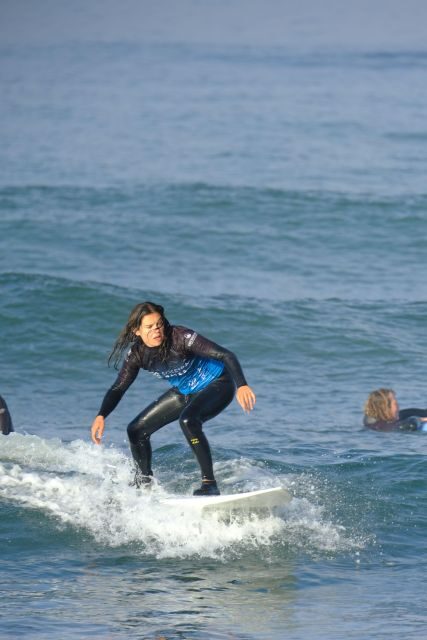
- Max 5–6 per coach means you spend less time waiting and more time trying
- 30-minute land training focuses on pop-up mechanics before you hit the water
- Ocean safety and awareness are taught right alongside surfing skills
- Basic wave reading helps you understand what the ocean is doing
- Certified instructors + insurance included lowers the stress factor
- Environmental respect is part of the day’s mindset: the ocean is your shared home
Ribeira d’ilhas surf lessons: a smart 2-hour plan
If you’re short on time, this is the kind of surf session that makes sense. It’s a one-day activity with a 2-hour lesson block, not a half-day that stretches into hours of wandering. You get enough time to learn, practice, and actually ride, instead of just doing paperwork and watching from shore.
Ribeira d’ilhas is also a practical place to learn because the day is structured. You’re not thrown into the ocean with a single vague instruction like good luck out there. Instead, the coaching is staged. First comes the foundation on land. Then comes the real challenge: applying it on a moving, unpredictable surface.
You can also read our reviews of more tours and experiences in Ericeira
Where you start (and why the meeting point matters)
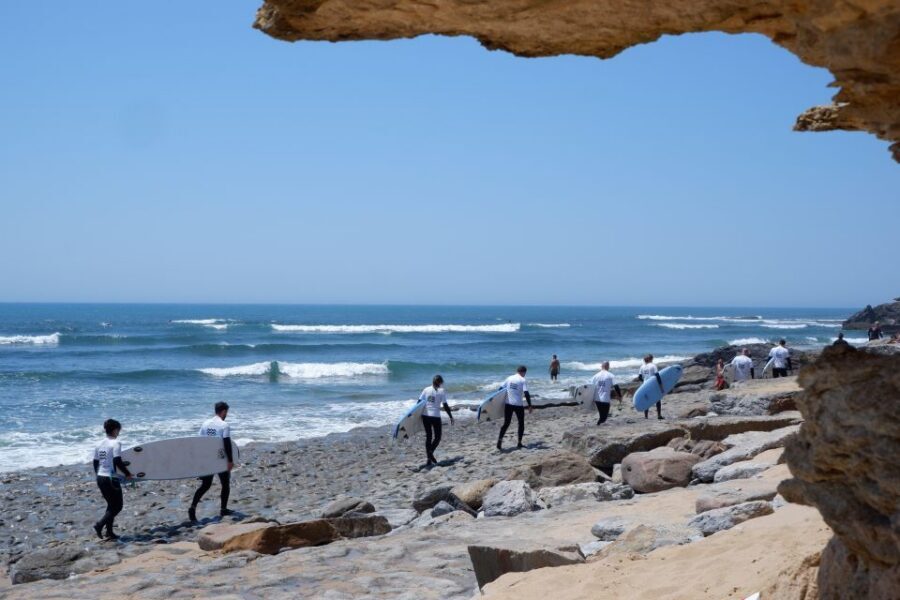
You meet at the parking lot where the crew arrives with a van and two trailers. That matters more than it sounds. Surf days fail when you can’t find the equipment, or you spend too long figuring out logistics. Here, it’s straightforward: you show up, you find the right setup, and your instructor gets you moving.
Small group coaching (5–6): what you gain besides attention
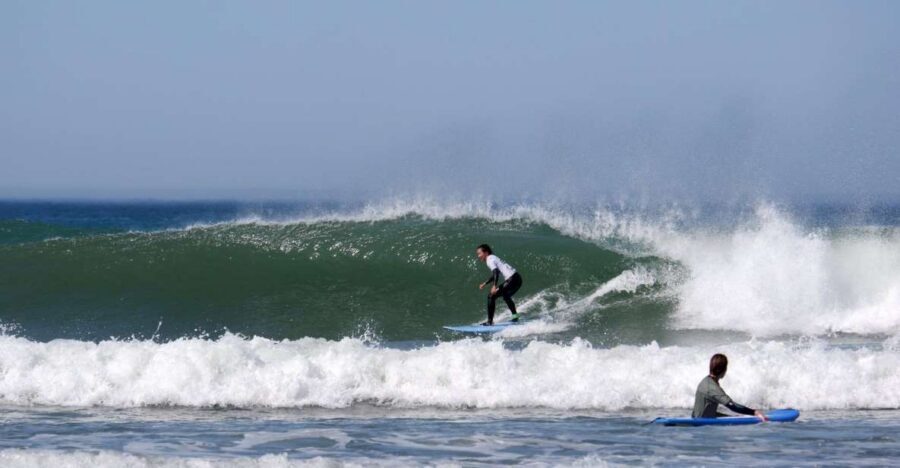
The headline is the coach-to-student ratio: up to 5–6 students per surf coach. That’s a big deal for beginners, because you need repeated corrections. It’s also a big deal for intermediates, because small adjustments can change your takeoff and balance fast.
With a small group, you’re not stuck in a long queue for a turn. You also get more chances to get positioned correctly in the water. Surfing is already coordination-heavy. Anything that reduces downtime makes your practice time more valuable.
A realistic safety-first approach
The experience is built around a goal of a non-risk experience. You’ll still be in the ocean, so there are real conditions to respect, but the training includes what matters: water safety, ocean awareness, and safe paddling and positioning on the board.
This is the part that keeps the day from feeling like a gamble. If you’ve ever started a surf lesson where people act casual around the sea, you know how stressful that gets. Here, safety is treated as part of the learning, not an afterthought.
What happens on land: pop-ups, then pop-ups again
The format is simple and effective. You get about 30 minutes of land training focused on pop-up techniques. If you take only one thing from that part, take this: pop-up work is not glamorous, but it’s the difference between standing once and standing repeatedly.
On land, you’ll practice different pop-up techniques you need before you catch waves. You’ll also learn basic wave reading—how to consider the factors that influence what’s coming next. It’s not a long theory lecture. It’s short, practical training aimed at decision-making.

Why the land session pays off
Pop-up timing is hard when you’re already balancing on a board in real water. Doing the mechanics on shore first helps your body remember the sequence. Then, when you’re in the ocean, your focus shifts from thinking about your hands and feet to choosing when to paddle and when to stand.
If you’re new, this reduces panic. If you’re intermediate, it helps you tighten technique so you spend less time resetting.
Into the ocean: paddling, positioning, and wave riding
After the land portion, you move to the sea for the rest of the 2 hours. This is where your lesson turns from practice to actual surfing.
You’ll work on:
- Water safety and ocean awareness, plus how to handle basic risks responsibly
- Basic ocean safety paddling and positioning
- Wave riding with your instructor coaching in the moment
The instruction is designed to move you from knowing what to do to doing it. That’s why this lesson has two clear phases. You learn how to pop up and how to read waves in theory, then you apply it right away while the conditions are happening.
If you’re a beginner
As a beginner, you’ll benefit most from the safety and positioning coaching. Paddling and board placement sound basic, but they determine whether you’re in the right area to catch anything. You’ll also learn how to think about the wave you’re approaching—basic wave reading is part of the package.
If you can already surf a bit
If you’re already comfortable on a board, you might still get value—especially from the instructor’s attention to technique and decision-making. One practical tip for you: during the session, ask for targeted feedback on what you want to improve. This helps the coach adjust attention so you don’t end up repeating the same basics for the full 2 hours.
English, Portuguese, or Spanish: choose what you’re comfortable with
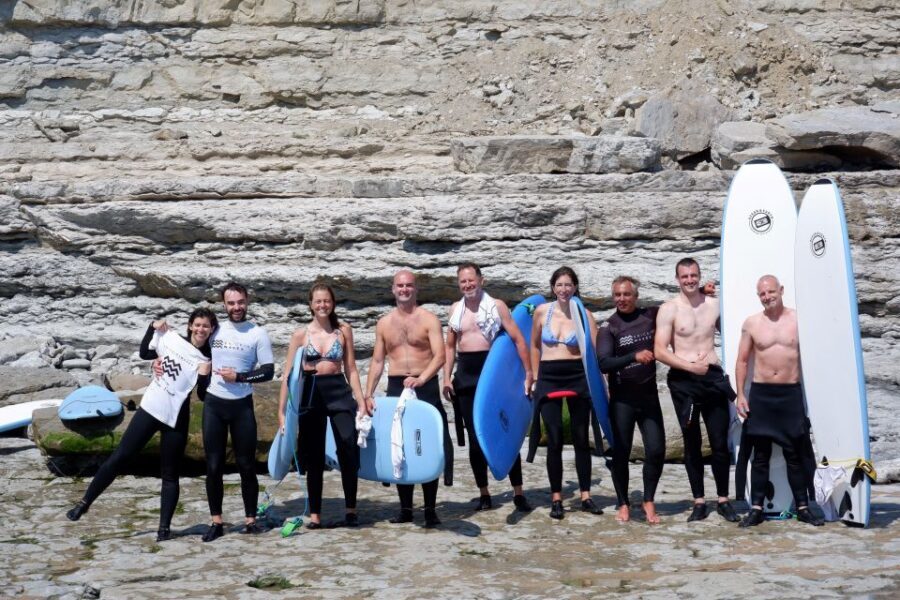
The instructor speaks English, Portuguese, and Spanish. That’s useful because surf terms can be confusing fast. When you’re learning pop-ups and ocean awareness, clarity matters.
So if you feel more confident in one of those languages, stick with it. You’ll likely absorb the safety advice faster, and you’ll progress quicker when the coaching clicks.
What’s included (and what that means for value)
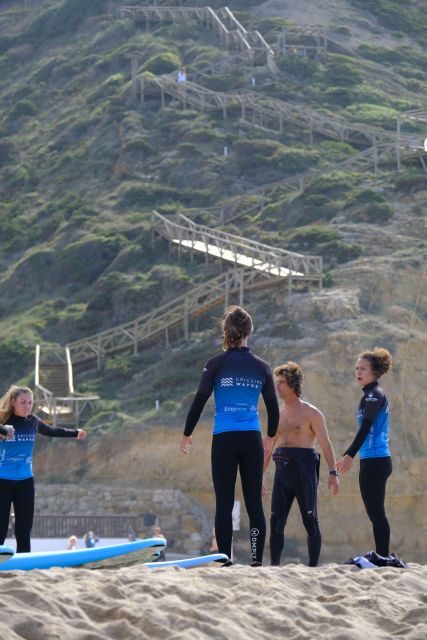
This lesson includes the stuff that usually makes surf days expensive or annoying:
- All equipment during the session
- Certified instructors
- Insurance
That “equipment included” part is more important than it sounds. If you have to rent a board and wetsuit separately, the day gets pricier and more complicated. Here, your main cost is the lesson price, and the equipment is handled as part of the session.
Price: $64 for 2 hours of coaching
At $64 per person for a 1-day activity (with a 2-hour lesson), the value is in the structure: small group coaching, equipment included, and insurance included. This is not a “show up and figure it out” situation. You’re paying for instruction time plus the added protection of insurance.
If you compare it to booking private coaching, small-group lessons like this are typically the sweet spot for a first real surf experience—especially when you’re trying to avoid wasting the day.
Environmental mindset: protecting the ocean you’re using
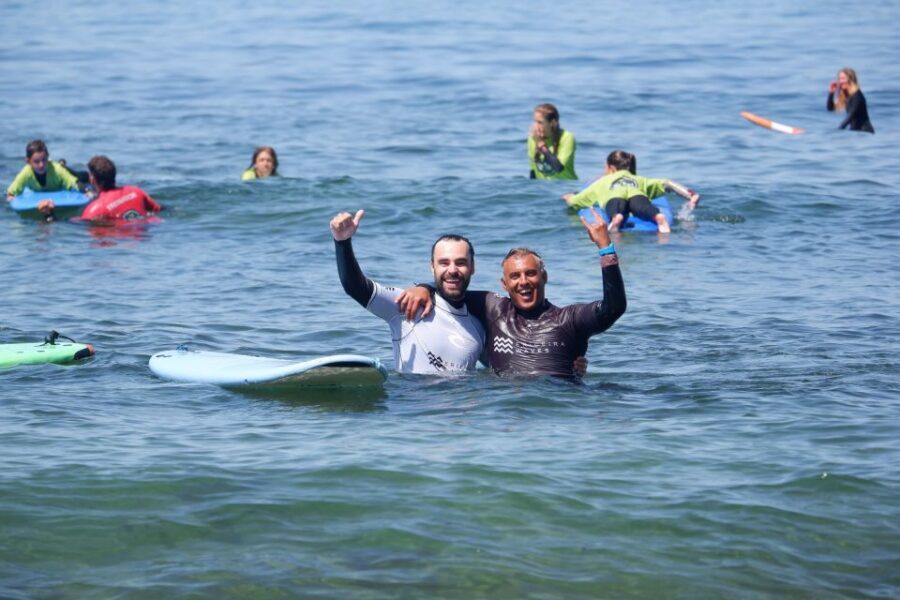
One highlight in the experience is environmental consciousness. The ocean is described as your home, and protecting it is treated as a mission.
You won’t likely get a full lecture about sustainability during a 2-hour surf lesson, but the message matters. It’s a reminder that you’re borrowing the sea for a short time—so use it with care and respect.
How to plan your day without turning it into a mess
This is built to be straightforward, but you still want to show up ready.
Bring:
- a towel
- sunscreen
- water
You’ll be in the sun, you’ll be moving, and you’ll want to hydrate. Surf conditions can also trick you into thinking you’re not sweating as much as you are, so water is smart.
Age and level fit
- Not suitable for children under 6
- Sessions run for beginners to intermediates
If you’re totally brand new, start there. If you’ve surfed before, be ready to work on technique and safety basics too. Even intermediate surfers benefit from tighter positioning and better wave reading.
What you’ll take home (beyond just standing up once)
A good lesson isn’t only about one successful wave. This one is structured so you learn repeatable fundamentals:
- Pop-up mechanics from the land portion
- Safety routines for paddling and positioning
- Basic wave reading so you’re not guessing
- Real coaching time for wave riding
That’s why the session feels productive. You don’t leave with only a memory of saltwater. You leave with a clearer idea of how surfing works in stages—and what to focus on next time you get out there.
Should you book this Ribeira d’ilhas surf lesson?
Book it if:
- you want a small-group lesson with more attention per person
- you’d rather learn safely with insurance and certified instructors included
- you want a clear 2-hour structure that covers pop-ups and actual riding
Maybe skip or choose another option if:
- you’re already surfing at a level where you want highly specialized, ongoing technique work for the full session
- you hate basic coaching and prefer only advanced drilling (because this lesson is built to serve beginners through intermediates)
If you fit in the middle—new to surfing or ready to tighten your basics—this is a solid, practical way to spend a day in Ericeira. You’ll get coached, geared up, and sent into the water with a plan.
FAQ
How long is the surf lesson?
The lesson is 2 hours total.
Is it a private lesson or a group lesson?
It’s a group lesson with a maximum of 5 to 6 participants per surf coach.
What training happens before you get into the water?
You get about 30 minutes of land training, focused on pop-up techniques and preparation.
Will I learn safety skills as part of the lesson?
Yes. You’ll cover water safety, ocean awareness, and basic safety paddling and positioning.
Does the lesson include time for actually surfing?
Yes. After land training, you spend the rest of the session in the ocean for wave riding with your instructor.
What’s included in the price?
All equipment during the session, certified instructors, and insurance are included.
What languages do the instructors speak?
Instructors speak English, Portuguese, and Spanish.
What should I bring with me?
Bring a towel, sunscreen, and water.
What ages is the lesson suitable for?
It’s not suitable for children under 6 years old.
Can I cancel and get a refund?
Yes. You can cancel up to 24 hours in advance for a full refund.