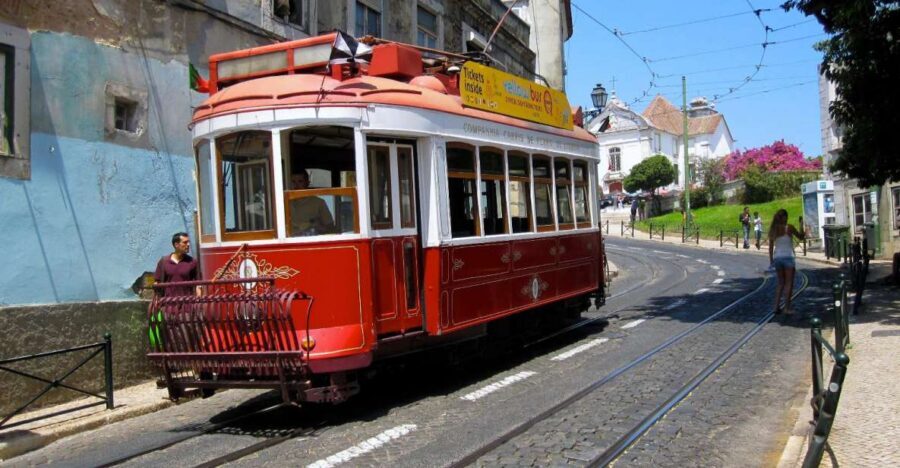
Lisbon moves fast when you’re on a tuk-tuk. This private, electric guided ride is built for squeezing in big sights without the usual Lisbon bottleneck headaches. I like the private pacing, and I love the guide-led context that turns quick stops into real understanding.
The one thing to keep in mind is the schedule rhythm. Most stops are timed for viewing and photos (often 10–20 minutes), so if you want long museum time, you’ll want to choose the longer end of the 2–8 hour range.
In This Review
- Key things I’d focus on before you go
- Why an electric tuk-tuk in Lisbon is such good value
- Start at Avenida da Liberdade, then let your guide set the tone
- Avenida da Liberdade: from grand boulevard to Portuguese independence
- Rossio and Rua dos Sapateiros: learning the city’s “why” fast
- Church of St. Anthony (Santo António de Lisboa): tradition you can actually stand in
- Lisbon Cathedral (Sé): a mix of eras that survived earthquakes
- Roman Theater Museum: small time, big context
- Miradouro Santa Luzia and Portas do Sol: the Alfama view hits differently
- Miradouro de Santa Luzia
- Miradouro das Portas do Sol
- Graça Convent: highest hill, old walls, river views
- Alfama: oldest neighborhood, fado energy, and a must-know church
- Belém: a monuments district stop that won’t eat your whole day
- How the guides make or break this tour
- Price and value: is $119.48 a good deal for Lisbon?
- Who should book this Lisbon private tuk-tuk tour
- Should you book this private tuk-tuk experience?
- FAQ
- How long is the Private Tour Through Lisbon Half Day Experience by Tuk tuk?
- Is hotel pickup and drop-off included?
- Is the tour private?
- What language is the tour offered in?
- Are entrance fees included?
- Where does the tour start and end?
- Is cancellation free?
Key things I’d focus on before you go
- Electric tuk-tuk convenience: it helps you cover more ground than walking, including downhill/uphill stretches you can’t do comfortably on foot.
- Hilltop viewpoint time: Miradouro de Santa Luzia and Miradouro das Portas do Sol give you classic Alfama-and-Tagus angles.
- A route you can customize: you’re not locked into a one-size script; you can steer the stops toward churches, neighborhoods, or viewpoints.
- Most key sights are free to enter: several stops list free admission, which makes the overall value easier to justify.
- Guides like Antonio and Nuno Bessa come up for a reason: people highlight fun delivery, real history, and personal tailoring.
- Mind your head: the tuk-tuk setup can mean low clearances, so it helps to be alert while you ride.
Why an electric tuk-tuk in Lisbon is such good value
Lisbon is gorgeous, but it can also be tiring. Hills, cobblestones, and traffic can turn a “half day” into a long slog. This tour is designed to keep you moving while still letting you get out where the views and sights actually matter.
You’re also paying for more than transportation. You get a Portuguese native driver/guide, hotel pickup/drop-off, and private electric tuk-tuk time built around a human pace, not a bus-group rhythm.
And a big plus: many stops on this route have free admission tickets listed, so you’re less likely to feel like you’re constantly paying extra after you book.
Start at Avenida da Liberdade, then let your guide set the tone
The meeting point is the Hard Rock Cafe on Av. da Liberdade (Lisbon). From there, you’ll be in the hands of a guide who can shape the ride based on your interests, as long as you keep the route within your chosen time window.
Before you start rolling, I recommend you ask two simple questions:
1) What are the two sights you most want to see with your limited time?
2) Where would you like extra walking, if any?
This matters because the tour is private. That means you can spend time on churches and viewpoints, or trade some of the city-center stops for more time in neighborhoods like Alfama. If you like photos, you’ll want the driver to protect viewpoint time.
Avenida da Liberdade: from grand boulevard to Portuguese independence
Your first official stop is Avenida da Liberdade, with a short pickup and orientation. This wide boulevard sets the tone: Lisbon can feel elegant and modern at this end, before the city folds into older quarters.
From there, the tour connects to the story behind one of the city’s most symbolic squares. You’ll see the obelisk tied to the Portuguese Restoration of 1640, when Portugal regained independence after 60 years under Spanish domination. The names and dates of battles from the Portuguese Restoration War are carried on that monument, which is a lot more meaningful when someone explains it on the spot.
Even if you don’t read every plaque, the guide framing helps you notice what you’re looking at. It turns a monument from scenery into a timeline.
Rossio and Rua dos Sapateiros: learning the city’s “why” fast
Next comes Rossio (King Pedro IV Square), a main square in Lisbon’s Pombaline downtown. It’s been a stage for major moments—celebrations, revolts, and even executions—so it’s the kind of place where history sits in the open.
You’ll also pass by Rua dos Sapateiros, which the route ties directly to Lisbon’s rebuilding after the 1755 earthquake. The street’s spatial layout links to the Pombaline reconstruction’s rectilinear, orthogonal grid, and the name itself is tied to an ordinance issued in 1760.
Why this is worth a quick stop: these are the places that tell you how Lisbon became Lisbon. If you only see “pretty squares,” you miss the logic of the city’s design.
Church of St. Anthony (Santo António de Lisboa): tradition you can actually stand in
The Church of Saint Anthony of Lisbon is dedicated to Saint Anthony of Lisbon, also known in the broader Christian world as Saint Anthony of Padua. According to tradition, the church was built on the site where the saint was born in 1195, which makes this one of those stops where you’re standing at a story, not just looking at architecture.
It’s listed as free admission and time is short, so treat it like a moment of focus. Look at the facade, take your photos, and let the guide connect the saint’s identity to Lisbon’s own civic pride.
A quick note: short time here means you’ll mostly get the exterior feel. If you want a deeper interior experience, that’s where choosing more hours (closer to 8) can help.
Lisbon Cathedral (Sé): a mix of eras that survived earthquakes
Lisbon Cathedral—Santa Maria Maior de Lisboa, often called the Sé—is the oldest church in the city. It became the seat of the Patriarchate of Lisbon, and it was built in 1147. It also survived many earthquakes and has been modified and restored over time, which is why you’ll see a mix of architectural styles today.
This stop is timed at about 20 minutes and also lists free admission. That’s enough time to understand why it’s called “the Sé” without feeling rushed.
The biggest takeaway for me: Lisbon’s oldest church isn’t a single style frozen in time. It’s an evolving structure that reflects survival, rebuilding, and the city’s ability to keep going after disaster.
Roman Theater Museum: small time, big context
The Museu de Lisboa – Teatro Romano is a museum space connected to a Roman theater built during Augustus’s reign (27 BC to 14 AD). The theater was abandoned in the 4th century, then stayed buried until ruins were discovered in 1798 after the 1755 earthquake.
Time here is about 10 minutes, and admission is listed as not included. That matters for your planning: you’ll likely pay to go inside if you want more than a quick look around.
Still, this is a smart stop because it gives Lisbon depth beyond the medieval-and-coastal story you often hear. Even brief archaeological context helps you connect the city’s layers instead of treating each era like a separate tourist brochure.
Miradouro Santa Luzia and Portas do Sol: the Alfama view hits differently
The tour includes two major viewpoints, and this is where you’ll feel the “more sights than on foot” advantage immediately.
Miradouro de Santa Luzia
Santa Luzia Viewpoint offers a wide view over Alfama and the Tagus River. It’s listed as free admission and about 20 minutes. If you’re only going to pick one kind of photo spot, pick places like this: they help your brain map Lisbon’s hills and angles.
Miradouro das Portas do Sol
Portas do Sol is also about 20 minutes and free. From here, you can observe the Church of São Vicente de Fora and see Alfama’s streets running down toward the Tagus.
One practical tip: don’t just photograph. Take 2–3 minutes to scan from high point to river level. Alfama’s narrow roads make more sense once you’ve seen the neighborhood from above.
Graça Convent: highest hill, old walls, river views
Next is Igreja & Convento da Graça (Graça Convent), on Lisbon’s highest hill. It’s listed as about 10 minutes, and admission is not included.
This one is worth it because it bridges the gap between viewpoint and neighborhood. The convent dates back far, and it’s connected to the Order of Saint Augustine Hermits, which makes the site feel like a real institution, not just a photo stop.
The tour also frames it with the city-and-river view, so even if you only do a quick look, you’ll come away with a stronger sense of where you are in Lisbon’s vertical geography.
Alfama: oldest neighborhood, fado energy, and a must-know church
Alfama is Lisbon’s oldest neighborhood, stretching on the slope between São Jorge Castle and the Tagus. This is where you get the feel of older Lisbon: narrow streets, small plazas, and the kind of everyday atmosphere that makes the city feel lived-in.
The tour gives you about 30 minutes in Alfama and lists free admission. You’ll be close to major attractions, including the baroque Church of Santa Engrácia, now converted into a National Pantheon for important Portuguese personalities. It’s the kind of detail worth asking your guide about so you know what you’re passing.
Fado is part of the Alfama story too, with lots of fado bars and places to eat. The tour time won’t turn this into a deep cultural dive, but it does help you land in the right neighborhood for later exploration if you want to come back.
From a practical angle, the tuk-tuk helps you access areas that would be painful on foot. That is a real advantage in Lisbon.
Belém: a monuments district stop that won’t eat your whole day
The final stop is Belém, a district known for museums and major monuments. The tour frames it as the home of big names like Belém Tower, Jerónimos Monastery, Padrão dos Descobrimentos, and Belém Palace, the official residence of the President of Portugal.
You get about 30 minutes here and it lists free admission. That means you won’t see every monument up close, but you’ll get enough context to understand which ones you’ll want to return to later.
Belém is ideal for a “first look” because many of the famous sights sit in a concentrated zone. A short guided visit helps you prioritize without committing your entire day to long lines and full-on museum time.
How the guides make or break this tour
This tour’s reputation really hangs on the driver/guide energy. Names like Antonio and Nuno Bessa show up with consistent praise, and the common thread is how they adjust the experience on the fly.
A few things that come through in the best versions of the tour:
- The guide explains what you’re seeing in plain language, not museum-speech.
- They tailor the route to your preferences—if you want more churches or more viewpoints, that direction matters.
- They’re willing to plan for real-life needs, like families traveling with special needs.
One guide also had a sense of humor about the ride itself, including a reminder to mind your head. That’s not just a joke; it’s good advice in a vehicle where clearance can be tight.
And if you’re the kind of person who likes to eat well while traveling, ask for restaurant suggestions. The best guides treat that as part of the job.
Price and value: is $119.48 a good deal for Lisbon?
At $119.48 per person, the ticket isn’t the cheapest way to “see Lisbon.” But it can be strong value if you compare what’s included.
You’re getting:
- a private electric tuk-tuk
- hotel pickup/drop-off
- a Portuguese native driver/guide
- insurance coverage for liability and personal injury
- the chance to customize your route
- free-entry time at several stops (based on the attraction list provided)
That’s a lot to bundle into one half-day-style outing. And because many stops have free admission listed, you’re less likely to get hit with surprise add-on costs everywhere you stop.
The trade-off is that museum entries that are marked as not included (like the Roman Theater Museum) may add expense if you choose to go in. Also, with set viewing times, you’re buying momentum and context, not a full museum marathon.
If your goal is to maximize sights while keeping energy for later, this price starts to look fair.
Who should book this Lisbon private tuk-tuk tour
I’d especially recommend it if you:
- want to see Lisbon’s big highlights without tiring out on hills
- enjoy history explanations that connect buildings to events
- like the idea of flexibility, not a rigid group bus tour
- are traveling as a couple, family, or small group that wants private control of timing
It’s also a good pick if you’re trying to orient yourself fast. The route threads through squares, churches, viewpoints, Alfama, and Belém, so you leave with a mental map you can use the rest of your trip.
If you’re the type who only cares about deep, timed-entry museum visits, you might feel the schedule is too short. In that case, consider using the longer end of the 2–8 hour range.
Should you book this private tuk-tuk experience?
Yes, if your priority is smart sightseeing with a native guide and you want a ride that makes Lisbon easier. The combination of viewpoint stops, historically meaningful squares, and the ability to customize your time is exactly what makes this tour feel worth it.
I’d say book it sooner rather than later if you’re aiming for a specific guide name, since the tour runs based on availability. And if you’re sensitive to short stops, choose the longer duration so you can linger where you care most.
FAQ
How long is the Private Tour Through Lisbon Half Day Experience by Tuk tuk?
The tour duration is listed as 2 to 8 hours, approximately, depending on your chosen schedule and route.
Is hotel pickup and drop-off included?
Yes. Hotel pickup/drop-off is included.
Is the tour private?
Yes. It’s a private tour/activity, and only your group will participate.
What language is the tour offered in?
The tour is offered in English.
Are entrance fees included?
Entrance fees are not included. Some stops list free admission, but others are marked not included.
Where does the tour start and end?
It starts at Hard Rock Cafe on Av. da Liberdade 2, and it ends back at the meeting point.
Is cancellation free?
Yes. Free cancellation is available, and you can cancel up to 24 hours in advance for a full refund.