Morning road-trip energy, but with meaning. This private ride links Portugal’s coast and central heritage in one long day, with quick stops that help you get your bearings fast and still feel like you tasted each place—not just passed through it. I like the luxury vehicle setup (Wi‑Fi, bottled water, refreshments) because it keeps the day comfortable even when the itinerary is packed.
Two things I really like: first, the timing. The 8 to 9 hours format gives you enough hours to move between major regions without feeling rushed every minute. Second, I love the real guide storytelling that comes through in the reviews—Carlos Sousa is repeatedly praised for making stops click, from history to practical dining tips, and Delfina gets similar credit for sharing customs and recipes along the way.
The one drawback to consider: many stops are short (about 15 minutes each), and several major sites do not include admission. You’ll likely want to pay for the parts you care about most, like Alcobaça, Tomar, or Coimbra.
In This Review
- Key highlights you’ll feel on this Lisbon to Porto route
- How this Lisbon-to-Porto private day tour really works
- Who this fits best
- Price and value: what you’re paying for (and what costs extra)
- Pickup, timing, and the comfort details that matter
- Stop 1: Peniche, the Atlantic fishing port in miniature time
- Stop 2: Nazaré beach, fishing tradition, and the Our Lady connection
- Stop 3: Alcobaça Monastery, UNESCO weight with paid entry
- Stop 4: Batalha Monastery, tied to a famous battle day
- Stop 5: Fatima Sanctuary, the pilgrimage stop you can feel immediately
- Stop 6: Tomar’s Convento de Cristo, Templars to Renaissance in one stop
- Stop 7: Coimbra and the University world, students plus royal graves
- Stop 8: Aveiro, canals and a fast intro to the Venice of Portugal
- Guides and flexibility: why Carlos and Delfina keep showing up in the reviews
- What you’ll want to pack for this kind of day
- Should you book this Lisbon to Porto private tour?
- FAQ
- How long is the Lisbon to Porto private tour?
- What’s included in the luxury vehicle?
- Are hotel pickup and drop-off included?
- Is the tour in English?
- Do I need to pay for entry tickets at the stops?
- What happens if the weather is bad?
Key highlights you’ll feel on this Lisbon to Porto route
- Private, English-speaking service with only your group, plus hotel pickup options in Lisbon and Porto
- Luxury ride details: Wi‑Fi, bottled water, and refreshments in an executive vehicle
- A tightly planned route of heavy hitters: Peniche, Nazaré, Alcobaça, Batalha, Fatima, Tomar, Coimbra, Aveiro
- Free admission where it counts at Peniche, Nazaré, and Aveiro (based on the tour info)
- Bring budget for paid entry at several iconic stops like Alcobaça Monastery and Convento de Cristo
- Guides known for flexibility: reports mention smart timing and added stops when road conditions allow
How this Lisbon-to-Porto private day tour really works
This is built as an all-in-one connection between Lisbon and Porto, not a casual sightseeing stroll. You start around 8:00 am (NH Collection Lisboa Liberdade is the listed start point), ride in a luxury vehicle, and spend roughly 15 minutes at each stop before heading to the next town.
That format is the core of why this tour can be such good value. If you’re traveling with limited days—and you still want more than just train or highway views—this gives you a guided “route sampler” across central Portugal. It’s also private, so the pace and stop choices should work better for your group than joining a big bus where you have to follow the crowd.
And because it’s a private activity, it’s not pretending you’ll do everything. Think of it as: you’ll see the key places, get context fast, and then decide if you want to return later for longer visits.
Who this fits best
This setup is a strong match if you:
- want to move from Lisbon to Porto without losing the day to logistics
- care about understanding why famous sites matter, not just taking photos
- prefer comfort on long road hours (Wi‑Fi, water, and refreshments help a lot)
It may feel like too much if you:
- hate time pressure or want long museum-style visits at each place
- dislike paying extra for entry tickets on the day
Price and value: what you’re paying for (and what costs extra)
The price is $450.59 per person for a private 8 to 9 hour day. That number sounds high until you break down what it covers: private luxury transport, guide service (in English), and built-in items like Wi‑Fi and bottled water/refreshed drinks. You also get personal accident and civil liability insurance, which is not something you notice—until you’re glad it’s there.
Where the economics get real is admission. The tour info shows several stops with tickets free (Peniche, Nazaré, Aveiro) and several stops where admission is not included. For example:
- Alcobaça Monastery: not included (listed ticket example €16.50 per person)
- Batalha Monastery: not included
- Fatima Sanctuary: not included
- Convent of Christ in Tomar: not included (listed example €16.00 per person)
- Coimbra University sites: not included (listed extra entry for Joanina Library/chapel/Paço Real €16.50 per person)
- Aveiro Moliceiro canal ride (45 minutes): not included (€15.00 per person)
So the value sweet spot is this: you pay for the guided route + comfort, then add ticketed experiences only where you personally want more depth.
There are also extra paid add-ons listed for Bairrada (wine-related visits and caves). Those are not part of the standard stop list here, but they show the company can layer in food and drink experiences if you want them.
Pickup, timing, and the comfort details that matter
You start at 8:00 am, and the listed pickup point in Lisbon is Hotel NH Collection Lisboa Liberdade. For the end, it’s InterContinental Porto – Palácio das Cardosas in Porto, and the tour info also says the drop-off can be at any hotel in Porto.
Why this matters: a morning start helps you hit the major sites while the day is still fresh. And in a private car, the benefit is less about speed and more about not spending hours managing buses, tickets, and transfers.
Inside the vehicle, you get:
- Wi‑Fi
- bottled water
- refreshments
- a relaxing atmosphere in a luxury executive vehicle
The practical payoff is simple. If your day includes multiple paid entries and quick walks, you don’t want to start feeling dehydrated or cranky.
Stop 1: Peniche, the Atlantic fishing port in miniature time
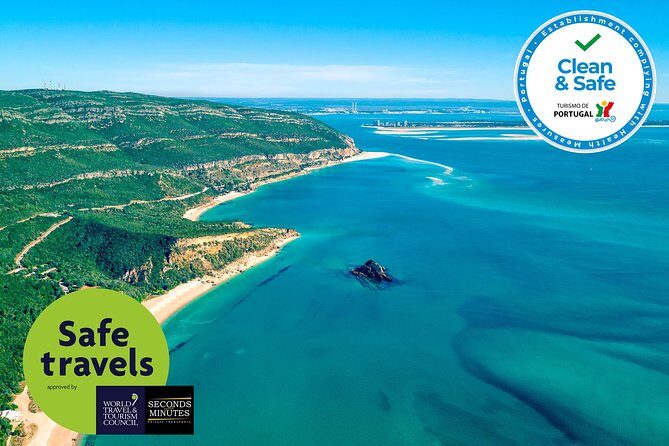
Peniche is one of those places where the coast explains the culture. It’s described as a major Portuguese traditional fishing port and a center tied to maritime activity and tourism. It sits on a peninsula, with about 10 km of perimeter, reaching as far west as Cabo Carvoeiro.
In about 15 minutes, you’re not trying to tour the whole town. You’re getting the big picture: this is a working coastline with real maritime roots, not just a postcard shoreline. Since the tour lists admission as free for this stop, you can focus on photos, a quick orientation, and asking your guide what to notice.
What I like about using Peniche as the first stop: it sets the tone. Before you jump into monasteries and sanctuaries, you see the Atlantic side of Portugal—salt in the air, fishing traditions, and a place built around the sea.
Stop 2: Nazaré beach, fishing tradition, and the Our Lady connection
Next is Nazaré, famous for its beach and its link to Portugal’s oldest fishing traditions and arts of fishing. The info also ties the settlement on the promontory of Sitio to religious feeling, connected to the miracle of Our Lady of Nazareth.
Again, the time is around 15 minutes and the tour lists admission free for this stop. That’s perfect for a short, meaningful break. You’ll get the setting—how the town faces the Atlantic and how the spiritual story overlaps with daily life.
Practical tip: wear something comfortable for walking and standing. Even with a short stop, coastal viewpoints can involve uneven ground, steps, or wind.
Stop 3: Alcobaça Monastery, UNESCO weight with paid entry
Alcobaça Monastery is one of Portugal’s big heritage names. It’s described as an imposing Cistercian monastery with more than 900 years of history, and it’s UNESCO Heritage since 1989.
Admission for this stop is not included in the tour price, with an example ticket listed at €16.50 per person. That means you’ll want to decide quickly: do you want the ticketed interior experience, or do you prefer an exterior/short orientation visit?
This is where the 15-minute structure becomes a real planning point. If the monastery is a top priority for you, you’ll likely want to pay for the full experience and keep your energy up so you can enjoy it, not just rush through.
Why it’s worth it: Cistercian architecture and a UNESCO site are not “quick photo only” places. You’ll get more if you’re ready to slow down inside for a bit, even on a packed day.
Stop 4: Batalha Monastery, tied to a famous battle day
Batalha is connected to major historical moments, including Roman presence and decisive struggles for independence. The key event referenced here is the Battle of Aljubarrota on 14 August 1385, which led to the construction of the Monastery of Santa Maria da Vitória—the centerpiece that shaped Batalha into the town it became.
Like Alcobaça, admission is not included. That doesn’t mean it’s optional. It means you’ll want to treat Batalha like a highlight you plan for, not a casual stop.
In 15 minutes, your guide can do a lot with context. The story of a battle transforming into architecture gives you a handle on what you’re seeing. Without that context, monasteries can feel like they all blur together.
Stop 5: Fatima Sanctuary, the pilgrimage stop you can feel immediately
Fatima’s Basilica de Nossa Senhora do Rosario de Fatima and its sanctuary area are described as one of the world’s greatest references for Marian worship, attracting pilgrims from everywhere.
The information also notes the Cova da Iria connection and how Fatima developed over time—until 1917 and then later being elevated from village to city. Even without the long version of the story, you’ll feel the significance when you arrive. This is a place built around faith, routine, and large-scale pilgrimages.
Admission is not included for this stop. So if you plan to spend time inside or in specific areas, factor that into your day. In a private itinerary with a driver and guide, you can usually adjust your pace slightly, but the overall route still moves.
If you’re sensitive to crowds: in a fast stop, you may still see busy areas depending on the time of day. That’s not “bad.” It’s just reality for a major pilgrimage site.
Stop 6: Tomar’s Convento de Cristo, Templars to Renaissance in one stop
Tomar’s star here is Convento de Cristo, described as the former seat of the Order of the Templars. It also highlights the Convent of Christ as one of Portugal’s most important works of the Renaissance.
Admission is not included with an example ticket listed at €16.00 per person. This one is often a favorite because the theme is so clear: the same walls tell two different chapters. Templars first, then Renaissance art and ideas later.
What to watch for (ask your guide): the way symbols and architectural styles reflect shifting eras. In short time, you want your guide to point out what matters so you’re not guessing.
Stop 7: Coimbra and the University world, students plus royal graves
Coimbra sits on the Mondego River and is known for its university, described as the oldest in Portugal and one of the oldest in Europe. The city earned the identity of the city of students as the university shaped its image over time.
This stop also includes another payoff: information says D. Afonso Henriques and D. Sancho I—the first kings of the Portuguese crown—are buried here.
Admission is not included. The tour info lists an added price for sites like Joanina Library, Chapel of São Miguel, and Paço Real at €16.50 per person.
This is a great stop if you like learning how education shaped a place. Even in a quick visit, your guide can connect the university to the city’s rhythm. If you want the library or interior spaces, you’ll likely want to choose the ticketed option so Coimbra doesn’t become a “from outside only” moment.
Stop 8: Aveiro, canals and a fast intro to the Venice of Portugal
Aveiro is described as “Venice of Portugal,” with canals running through the city where sailboats pass. It’s also labeled as the district capital.
For this route, admission is free for the stop itself, and the info separately lists the Moliceiro canal ride as an optional add-on: 45 minutes for €15.00 per person.
This is a smart final stop because it changes the mood. You finish with water, canals, and a different kind of Portugal than monasteries and sanctuaries. If you have the time and the weather behaves, I think the canal ride is a good match for the day’s theme: Portugal’s regions feel different when you see how people move through them.
Guides and flexibility: why Carlos and Delfina keep showing up in the reviews
The strongest repeat message in the reviews is the human element. Carlos Sousa is praised for being punctual, enthusiastic, engaging, and for sharing practical guidance—especially dining recommendations that help you eat well without blowing the day budget.
Delfina is also repeatedly mentioned for being kind, engaging, and for sharing facts that go beyond monuments—customs, architecture, recipes, and day-to-day context. Another review highlights that she allowed time for planned visits and suggested extra things to see, which is exactly what you want from a private route.
You should also expect real-world driving issues. One review notes a guide navigating road closures and still arriving on time, which is comforting when you’re planning a connection between two cities.
What you’ll want to pack for this kind of day
This is not a marathon hike, but it is a stop-and-go sightseeing day. For most people, these basics help:
- comfortable walking shoes (coast + historical sites often mean cobbles and uneven surfaces)
- a light layer for coastal wind
- water (you’ll get bottled water in the vehicle, which helps)
- a small buffer in your schedule in case you decide to add a ticketed visit at a stop
And one more reality check: the tour info says the experience requires good weather. So if the forecast looks rough, be ready for a reschedule or refund option.
Should you book this Lisbon to Porto private tour?
I’d book it if:
- you want a private, comfortable connection between Lisbon and Porto
- you’re excited by a “route sampler” of Peniche, Nazaré, UNESCO monasteries, Fatima, Tomar, Coimbra, and Aveiro
- you don’t mind paying extra for specific ticketed interiors at the sites you care about most
I would skip or swap to something else if:
- you want slow museum time at every stop
- you dislike admission add-ons or hate making quick decisions in the moment
- you only care about one or two of these major places (then a more focused tour might feel better)
If your goal is to turn a transit day into a guided tour of central Portugal, this does that job well.
FAQ
How long is the Lisbon to Porto private tour?
The tour is listed as about 8 to 9 hours.
What’s included in the luxury vehicle?
Transportation is provided in luxury vehicles with Wi‑Fi, bottled water, and refreshments. You’re also covered by personal accident and civil liability insurance.
Are hotel pickup and drop-off included?
Pickup is offered. The start point is NH Collection Lisboa Liberdade in Lisbon, and the end point is InterContinental Porto – Palácio das Cardosas in Porto, with the option of dropping off at any hotel in Porto.
Is the tour in English?
Yes, the tour is offered in English.
Do I need to pay for entry tickets at the stops?
Some stops list admission as free (Peniche, Nazaré, Aveiro). Several major sites are not included, including Alcobaça Monastery, Batalha Monastery, Fatima Sanctuary, Convento de Cristo in Tomar, and Coimbra University sites (with example prices listed in the tour info).
What happens if the weather is bad?
The tour requires good weather. If it’s canceled due to poor weather, you’re offered a different date or a full refund.