Lisbon on a tuk tuk is a fast route to the best angles. This 1 hour 30 minute Old Town tour is built for Lisbon’s tight streets and steep climbs, so you can hit classic stops without spending the day fighting traffic, stairs, and detours. You’ll bounce between hilltop miradouros and old churches, then get a few short walk-and-photo moments in Alfama.
I especially like two parts: first, the sequence of viewpoints that gives you changing views over the river and the maze of Alfama streets. Second, the guide-led stops that turn big sights into something you understand a bit better—plus the guides are known for being patient with photos, like Shovon, Belal, and Anik, and for navigating the streets confidently, like Al.
One thing to consider: you’ll be on cobblestones and narrow lanes, so expect some jostling and a ride that feels lively rather than smooth. If rain is in the forecast, the experience can still work, but you’ll want good shoes and a light rain layer.
In This Review
- Key things to know before you go
- Why Lisbon’s Old Town Fits a Tuk Tuk (Even If You Have Limited Time)
- Meeting at Time Out Market and How the Ride Actually Starts
- Lisbon Cathedral: A Roman-Gothic Survivor Worth a Quick Step Inside
- Alfama Viewpoint Circuit: Santa Luzia and Portas do Sol Photo Stops
- Senhora do Monte: Lisbon’s Big 180-Degree Moment (Plus a Group Photo)
- Sao Vicente de Fora: The Church Outside the City Wall Idea
- Santa Engracia / Panteão Nacional: When a Church Becomes a Pantheon
- Alfama on Foot: Narrow Streets, Fado Vibes, Street Art, and Food Stops
- The Oldest City Spring: A 13th-Century Photo Moment You’ll Want to See Up Close
- Praça do Comércio and the Tejo River Reset: Big Space After Tight Streets
- The Iconic Street Energy Near the Center: Where Lisbon Feels Like It’s in Motion
- Price and Value for $37.57: What You’re Really Paying For
- Who This Tuk Tuk Old Town Tour Is Best For
- Should You Book This Lisbon Old Town Tour by Tuk Tuk?
- FAQ
- How long is the Lisbon Old Town Tuk Tuk tour?
- What does the tour cost?
- Is this tour private?
- What language is the tour offered in?
- Where do I meet for the tour?
- Where does the tour end?
- Is it easy to get to the starting area using public transportation?
- Are entry fees involved at the stops?
- Can I bring a service animal?
- What if I need to cancel?
Key things to know before you go
- Designed for Lisbon’s hills so you can reach viewpoints that cars can’t handle easily
- Short, focused stops where you get photos and quick access, not long museum marathons
- Big-view miradouros in a row: Santa Luzia, Portas do Sol, and Senhora do Monte
- Church stops with context including Lisbon Cathedral and Santa Engracia/Panteão Nacional
- Alfama time for atmosphere with Fado street vibes and traditional streetscape moments
- Photo support is part of the deal including a group photo moment at the highest viewpoint
Why Lisbon’s Old Town Fits a Tuk Tuk (Even If You Have Limited Time)
Lisbon’s historic center is the kind of place where you start with one plan and end up with ten because every turn looks different. The problem? Distance and elevation. If you’re trying to do major sights in one afternoon, you need a plan that minimizes wasted time.
This tour uses the tuk tuk as a practical tool. You’re not just moving from place to place—you’re using the vehicle to access narrow routes and viewpoints that are awkward for cars and tough to reach efficiently on foot. That means you spend your energy where it matters: looking outward over the river, then stepping into old churches and street corners for short, memorable stops.
And because the tour is private (only your group), you don’t have to squeeze your pace around strangers. That’s especially useful in Lisbon, where a few extra minutes standing still at a viewpoint can make or break your photos.
Meeting at Time Out Market and How the Ride Actually Starts
You’ll meet at Time Out Market, Mercado da Ribeira at Av. 24 de Julho, 1200-479 Lisboa. It’s a very central starting point, which helps if you’re arriving from another part of town by public transportation.
From there, the tour typically moves quickly into the old streets. You’ll be dealing with narrow roads and uneven ground, so your best strategy is to go in relaxed. One review tip nails it: expect some jostling on cobblestones that are not smooth. If you’re prone to motion sickness, it’s worth keeping that in mind.
Also, the tour uses a mobile ticket, and confirmation happens at booking. That combination makes the start less stressful—you can show up without digging through printed paperwork.
Lisbon Cathedral: A Roman-Gothic Survivor Worth a Quick Step Inside
The tour starts strong with Lisbon Cathedral, often described as the oldest church in Lisbon. What makes it interesting is the mix of architectural styles—Roman and Gothic—and the fact that it’s among the few buildings that survived the major earthquakes that reshaped the city.
You’ll get a short visit inside for a few minutes, not a long guided lecture. That’s actually a good approach here. The cathedral isn’t just about being old; it’s about being solid—physically and historically. In a short tour window, that brief interior look helps you connect the exterior look with what’s still there today.
Practical note: if churches are your thing, you’ll likely enjoy this stop most when you take a minute to look up and around rather than rushing for photos.
Alfama Viewpoint Circuit: Santa Luzia and Portas do Sol Photo Stops
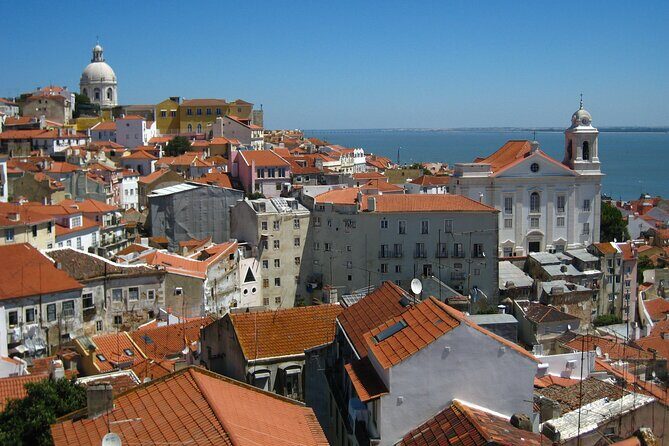
After the cathedral, the tour focuses on Alfama’s miradouros—the city’s classic viewpoint spots where Lisbon suddenly feels wide open. The first stop is Miradouro de Santa Luzia, known for views over the Alfama district and the river. It also has tile artwork, which matters in Lisbon because tiles are basically part of the city’s visual language. If you like taking pictures that feel Lisbon-specific, this is where you’ll get them.
Next is Miradouro das Portas do Sol in Largo Portas do Sol. This viewpoint is widely considered one of the best in the city, and it’s easy to see why: you get a privileged look over Lisbon from within the historic neighborhood of Alfama.
Both stops are short—around five minutes each—but they’re set up so you can grab the view, get a couple angles, and move on while the light is still working in your favor. If you want fewer crowds, consider an earlier departure time, since an early morning option is mentioned as especially peaceful.
Senhora do Monte: Lisbon’s Big 180-Degree Moment (Plus a Group Photo)
Then comes the highest and most dramatic stop: Miradouro da Senhora do Monte. This is described as a 180-degree panoramic viewpoint with a breathtaking sweep across Lisbon.
The tour doesn’t just point you at the view and send you off. There’s usually an explanation of what you’re seeing, with historical context tied to the panorama. And yes, there’s a practical photo moment—guides often encourage taking a group picture here because the viewpoint makes everyone look like they’re in the same postcard.
This stop is about ten minutes. That’s long enough to find your favorite angle without feeling rushed, but short enough to keep the tour flowing.
If you’re visiting in hot weather, this is also the stop to pace yourself. Take a few deep breaths before you start photographing everything. Lisbon can be steep, and you’ll want your energy for the next churches and street moments.
Sao Vicente de Fora: The Church Outside the City Wall Idea
From the height of Senhora do Monte, you’ll head to Igreja de São Vicente de Fora. It’s described as the largest church in the city and built with a monastery. The name matters: it was built outside the city wall, hence the idea of being outside-fora.
You’ll have a quick chance to go down for photos and enter for a short visit. This is the kind of stop that rewards you if you like architecture and context more than just scenery. Lisbon’s neighborhoods often make sense when you understand where people built things relative to walls, hills, and growth.
If you’re short on time but want at least one stop where the guide explains the why behind the what, this is one of those stops.
Santa Engracia / Panteão Nacional: When a Church Becomes a Pantheon
A highlight for architecture and history fans is Igreja de Santa Engracia, also known as the Panteão Nacional. The tour describes it as originally built as a church in the 17th century, then converted into a national pantheon in the 20th century.
It’s a strong pairing of old and new functions. Instead of just watching the city change, you’re seeing how a building’s role changed over time. The tour also notes it as the final resting place of some of Portugal’s famous figures, which gives the visit weight even if you only have a short stop to take pictures.
Expect this to feel more monumental and story-driven than a quick viewpoint. If you want your Lisbon day to include more than scenic photos, this is one of your best bets.
Alfama on Foot: Narrow Streets, Fado Vibes, Street Art, and Food Stops
One of the best parts of the tour is the time to discover the narrow streets of Alfama. This isn’t a long walking tour, but it’s a taste of the real neighborhood rhythm: heritage streets, the atmosphere around Fado music, and plenty of traditional Portuguese cuisine nearby.
There’s also mention of street art, which is important because Alfama isn’t only about old stone and tile. It’s also about what people paint and show today, right alongside the older walls.
Because the streets are narrow and the ground can be uneven, you’ll want to move slowly and look up. The views you’ll catch here are different from the miradouros: more human scale, more texture, more detail.
If you love wandering but hate getting lost, this is the sweet spot. You get a little freedom without losing the structure of the tour.
The Oldest City Spring: A 13th-Century Photo Moment You’ll Want to See Up Close
Next comes a classic Lisbon detail: the oldest city spring and the first public fountain in Lisbon. It’s described as built in the 13th century using waters from the Alfama slope.
This is one of those stops that feels small on the map but meaningful in person. It’s part of the city’s practical past—water systems and how communities relied on them. And the tour is explicit that you’ll learn the history and take photos.
If your sightseeing style is part scenery, part stories, this fountain stop is exactly your lane. It’s also a good energy reset between viewpoints and churches.
Praça do Comércio and the Tejo River Reset: Big Space After Tight Streets
After Alfama’s tight lanes, you’ll arrive at the Commercial Square (Praça do Comércio)—a large harbor-facing plaza in Lisbon. The tour gives specific scale: about 175 by 175 meters, and it faces the Tejo river.
This stop is valuable because it changes the whole feel of your day. Lisbon’s old town can feel compressed. Then you get this open, harbor-facing space where the river takes over the scene. It’s the kind of place where your phone camera suddenly behaves better because you can step back and frame wide shots.
You’re also able to enjoy the Tejo river site. Even if you skip extra wandering after the tour, this is a great final sight marker for your trip.
The Iconic Street Energy Near the Center: Where Lisbon Feels Like It’s in Motion
The tour wraps with an iconic street known for an energetic evening atmosphere, lined with trendy bars and clubs that attract both locals and tourists.
You won’t get a long hangout here, but you’ll feel the difference from the earlier stops. Early viewpoints are about Lisbon’s geography. Praça do Comércio is about openness. This street moment is about Lisbon as a nightlife and social city.
If you’re visiting in the evening, keep this in mind: you may want to linger after the tour ends because the area is built for that. If you’re visiting earlier in the day, it can still be interesting as a quick transition into what Lisbon looks like when the city’s people come out.
Price and Value for $37.57: What You’re Really Paying For
At $37.57 per person for about 1 hour 30 minutes, the value comes from efficiency and access. You’re paying for a route that covers multiple major sights in a short time, without the hassle of figuring out logistics across steep neighborhoods.
A few details also support the value:
- This tour is private, meaning you’re not sharing your time with strangers.
- Many stops listed as part of the experience are marked as free admission, including Lisbon Cathedral and the viewpoints (where it says admission is free).
- The tuk tuk removes the biggest friction in Lisbon: distance between viewpoints and the challenge of driving through narrow streets.
There’s also mention of group discounts, which can make the cost drop if you’re traveling with more than one person.
Booking-wise, the tour is booked on average about 12 days in advance, so if you want a specific time window, it’s smart to book before your plans get tight. One small practical thought: if you’re the type who wants to linger for long periods at viewpoints, you might feel slightly time-pressured because the stops are designed to keep momentum.
Who This Tuk Tuk Old Town Tour Is Best For
This is a strong fit if:
- You want major Lisbon sights fast without renting a car or planning complex routes
- You enjoy viewpoints and churches, but you do not want a full-day walking slog
- You like photo stops with guide support for pictures
- You appreciate explanations that connect what you see to the story of the city
It’s less ideal if:
- You want lots of free time at each stop
- You dislike getting jostled on cobblestones
- You’re looking for a deep museum experience rather than short, high-impact stops
If you’re traveling solo, couples, or a small group who wants the classic Lisbon hits in one structured afternoon, this is a practical way to do it.
Should You Book This Lisbon Old Town Tour by Tuk Tuk?
Yes, you should book it if you want a smart “greatest hits” loop with minimal stress. The combination of miradouros, major churches, an old fountain, and the big Tejo-facing square makes this tour feel like Lisbon in miniature.
I’d book it especially if you’re short on time or your legs get tired on steep hills. The tuk tuk route is the point, and the short stops keep you from wasting hours between viewpoints.
Skip it if you’re the kind of traveler who wants to wander freely for hours at a time without a set sequence. In that case, you could do Alfama at your own pace and add a viewpoint or two. But if you want a plan that gets you to the right places efficiently, this one does the job.
FAQ
How long is the Lisbon Old Town Tuk Tuk tour?
It runs for about 1 hour 30 minutes.
What does the tour cost?
The price listed is $37.57 per person.
Is this tour private?
Yes. It’s a private tour/activity, so only your group participates.
What language is the tour offered in?
It’s offered in English.
Where do I meet for the tour?
The meeting point is Time Out Market (Mercado da Ribeira), Av. 24 de Julho, 1200-479 Lisboa, Portugal.
Where does the tour end?
It ends back at the meeting point.
Is it easy to get to the starting area using public transportation?
The tour info says it’s near public transportation.
Are entry fees involved at the stops?
For the stops listed as free, admission is shown as free (including Lisbon Cathedral and the viewpoints). For other churches in the route, the info emphasizes short visits and photos, but it doesn’t list admission fees for every single site.
Can I bring a service animal?
Yes, service animals are allowed.
What if I need to cancel?
You can cancel up to 24 hours in advance for a full refund. If you cancel less than 24 hours before the start time, the amount paid is not refunded.