Lisbon feels bigger when you walk it with a plan. This full-day route strings together Belém, Baixa/Chiado, and Alfama so you get the big-name sights plus the lived-in street feel. I especially like the Discovery Age morning stories and the small-group pace (max 20) that keeps things moving without feeling rushed.
One thing to keep in mind: it’s a long day of walking (about 9 hours) with a moderate fitness level. If hills and steps tire you out, you may want to go slower, build in water breaks, and wear shoes you can trust.
In This Review
- Key highlights you’ll care about
- Why this full-day Lisbon walk makes sense
- Belém: Torre de Belém, the river, and the Discoveries story
- Jerónimos Monastery: Manueline architecture you can actually understand
- Pastéis de Belém: the included bite that keeps the day moving
- Time Out Market lunch: 90 minutes where you can choose freely
- Terreiro do Paço to Rua Augusta: seeing the city rebuild in real time
- Santa Luzia and the tile-window view over Alfama
- Lisbon Cathedral (Sé), Saint Anthony’s church, and Manueline survival
- Convento do Carmo and São Roque: Gothic scars and art you can’t ignore
- Alfama: steep streets, old houses, and the atmosphere that hits fast
- Casa dos Bicos and the diamond façade story
- Ending at São Pedro de Alcântara: the tile landmark and the big view
- Is the value fair for $110.06?
- Who should book this tour
- FAQ
- FAQ
- How long is the Lisbon tour?
- What does the tour cost?
- Is lunch included?
- What’s included with tickets?
- Is the Pastéis de Belém included?
- Where does the tour start and end?
Key highlights you’ll care about
- Belém monuments with real context so Torre de Belém and Jerónimos don’t feel like random photo stops
- Original Pastéis de Belém included as a planned break, not a scavenger hunt
- Big views without extra ticket hassles at miradouro stops like Santa Luzia and São Pedro de Alcântara
- Baixa rebuilt after 1755 explained through Praça do Comércio and Rua Augusta
- Manueline architecture sights you can compare at Jerónimos, Conceição Velha, and related stops
- A finish near São Pedro de Alcântara so you end with a classic Lisbon overlook
Why this full-day Lisbon walk makes sense
This tour works because it’s built around Lisbon’s “layers.” In the morning, you’re guided through Belém with the Portuguese Discoveries as the thread. After lunch, you shift into the historic center—where you can see how the city rebuilt itself after the 1755 earthquake—and then you taper into Alfama, with its tight streets and old-world atmosphere.
The day is also practical. It’s a walking tour with no private transportation, so you’re not bouncing around to remote parking lots. You start at Avenida Brasília and end near São Pedro de Alcântara viewpoint, which is handy because you finish in a scenic area rather than somewhere mid-street.
Most people will enjoy this most if they like structure. You get a guided story, timed photo breaks, and clear stops (including entrances where they’re listed as included). If you prefer total freedom with no set order, you might find the schedule a lot.
Belém: Torre de Belém, the river, and the Discoveries story
You kick off right in Belém with Torre de Belém. It’s one of Lisbon’s signature landmarks, and the best part of having it with a guide is the context: it’s not just a pretty tower by the Tagus. You’ll hear how Belém ties into the age when Portuguese ships sailed into the world beyond Europe.
From there, the tour keeps you oriented along the river. You’ll also stop near Belem for a short walk and quick grounding in the history of the Portuguese Discoveries. Then you’ll see the Padrão dos Descobrimentos (but you won’t go inside). Think of it as a visual anchor—Henry the Navigator and the giant carved ship-motif idea, even if you’re not entering the monument.
Next come two Belém extras that are easy to miss if you’re self-guiding:
- Rosa dos Ventos: the wind rose square with its wide map-and-compass design
- Jardim da Praca do Imperio: a garden tied to the 1940 Portuguese World Exhibition, including the fountain, sundial, and mosaic-culture details
What I like about these stops is that they slow the day down just enough. You’re not only chasing buildings; you’re learning how Lisbon “talks” with design—tiles, symbols, and public spaces built to celebrate Portuguese identity.
Jerónimos Monastery: Manueline architecture you can actually understand
Mosteiro dos Jerónimos is the big gear-change. This monastery is a centerpiece of Manueline style (often called Portuguese Gothic), and the tour frames it around why it was built: King Manuel I authorized it, it began in 1501, and it was finished later—celebrating Vasco da Gama’s return from the Indies.
You’ll be guided through what makes the structure special, including the idea that it sits on a former port-of-refuge area (Ermida do Restelo). The timing matters too: this is where Lisbon’s maritime wealth shows up in stone work.
The entrance is listed as included, and you’ll have time for the cloisters, which the experience describes as an unforgettable visit. Practical note: in some monuments, the guide isn’t allowed to provide information inside. In spots like this, you may get most of the story outdoors or at the entrance, then spend time absorbing the details yourself inside.
If you love architecture, this is one of your best chances in Lisbon to compare style. Even if you’re not an art person, you’ll leave with a mental picture of Manueline features—ornament, symbolism, and that unmistakable Portuguese feel.
Pastéis de Belém: the included bite that keeps the day moving
Then you get the sweet payoff: Pastéis de Belém. The tour includes the Original Pastel de Belém, and it’s timed so it doesn’t wreck your schedule.
Here’s why this stop feels more meaningful than just eating something:
- The story ties to a sugar refinery linked to the monastery environment
- Convents were closed in the 1830s, and the pastry production kept going
- The recipe tradition is described as secret and passed among master confectioners, made by hand in the Oficina do Segredo
You’re only there briefly, so treat this as a planned break. Grab your pastel, take a breath, and keep your water handy. If you linger too long, you’ll feel the walking later.
Time Out Market lunch: 90 minutes where you can choose freely
Lunch is handled in a very practical way at Time Out Market Lisboa. You get a 90-minute lunch break, and the meal cost isn’t included in the tour ticket.
This works well for mixed groups because you can pick what you want:
- The market is known for fish quality and lots of options
- You can eat inside or anywhere else
For value, I’d use those 90 minutes like this: pick your stall fast, eat calmly, then step outside to reset before the next stretch. After a day this packed, you don’t need a long, complicated sit-down meal. You need fuel and comfort.
Also, because you’re walking all afternoon, skip the food that slows you down. You’ll still have plenty of steps ahead.
Terreiro do Paço to Rua Augusta: seeing the city rebuild in real time
After lunch, you step into Lisbon’s iconic public spaces. Praca do Comercio (Terreiro do Paco) is your first big square moment. It’s huge—around 36,000 square meters—and marked by 79 arches. Before the 1755 earthquake, this area functioned as the royal palace and official residence for about 250 years. After the quake, it became part of a planned city built by Marquis of Pombal.
This is one of those stops where a guide helps you read the city. Without the story, it’s just a pretty square. With the story, you start seeing Lisbon’s survival strategy: rebuild with structure, widen spaces, and keep moving forward.
Then you head toward Rua Augusta, which the tour describes as the liveliest central street. It’s a pedestrian street, and it’s famous for its calçada pavement. You’ll also hear how it connects Praça do Comércio to Praça do Rossio, essentially acting like a key corridor for the city’s center.
Quick reality check: Rua Augusta is busy, so if you want calmer photos, aim to time your walking so you’re not stuck in the densest rush.
Santa Luzia and the tile-window view over Alfama
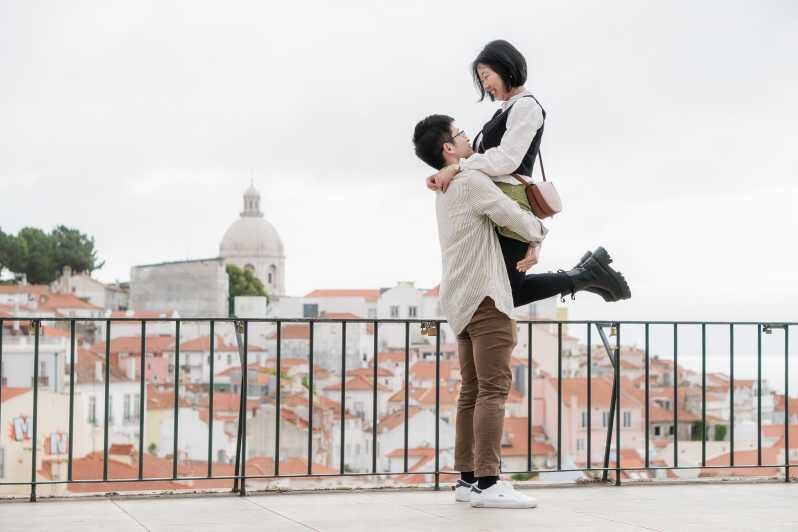
Next, you reach Miradouro de Santa Luzia, described as one of Lisbon’s most romantic viewpoints. The setting matters: you’re in front of that tile-lined window look, with views into the roofs of Alfama and the churches of Lisbon’s oldest district.
The tour also points out a couple of tile panels attached to churches nearby. You’ll use those as landmarks, almost like a set of visual breadcrumbs pointing you toward the city’s most famous silhouettes.
This is a great stop because it gives you a payoff without extra tickets. You’re also standing at the right angle to understand why Alfama feels like a maze. You can see the logic of the rooftops even if you later feel lost in the streets.
Lisbon Cathedral (Sé), Saint Anthony’s church, and Manueline survival
From the viewpoint, you move into the older heart of the city with Lisbon Cathedral (Santa Maria Maior / Sé). The tour frames it as the oldest church in Lisbon, built in the 12th century after the city was recaptured from the Moors by King Afonso Henriques.
The more interesting part is the layering:
- The cathedral was built under an earlier Muslim mosque
- Archaeology shows older Christian temple traces too
- Then it was altered after the 1755 earthquake
Admission for Sé is listed as not included, so you’ll likely get more exterior context, and if you choose to go inside, you may need your own ticket.
A short move later includes Church of Saint Anthony of Lisbon. This is the site tied to St. Anthony’s birthplace before his preaching and later death in Padua. After 1755, the current temple was built on the older chapel site. The tour notes the patron saint image spared by the earthquake, plus a crypt linked to the birthplace.
And for Manueline lovers, you get Igreja de Nossa Senhora da Conceição Velha. This one is described as having one of the best surviving Manueline façades, with angels, flowers, and religious symbols. The point here is comparison: after seeing Jerónimos, you’ll start recognizing how the same “Portuguese Gothic” language shows up elsewhere in the reconstruction story after 1755.
Convento do Carmo and São Roque: Gothic scars and art you can’t ignore
You’ll also visit Convento do Carmo, which is tied to the promise made to Our Lady of Carmo. It became the city’s largest Gothic monument, and the tour highlights a key event: the church ceiling disappeared in 1755. The convent structure remained, but later fire consumed much of the artistic heritage.
It’s one of those stops where the building itself teaches you Lisbon’s grief and grit. Even if you don’t go inside, you’ll understand why Lisbon has so many monuments shaped by the same historical rupture.
Then there’s Igreja de Sao Roque. This one is fun because it shows how Lisbon imported religious prestige and art. The tour explains the church history starting in 1506, with King Manuel I requesting a relic from Venice. It also notes the church’s Italian architect completion by Filipo Terzi, and that the façade is relatively simple while the interior chapels are described as among the most valuable on the planet.
Admission for this stop is listed as free, so it’s a good use of time if you like interior spaces.
Alfama: steep streets, old houses, and the atmosphere that hits fast
Now the day slows in feel. You reach Alfama, described as a typical neighborhood once cosmopolitan, between castle and river. The tour’s focus is the lived-in atmosphere: small shops, taverns, and a steep web of streets and alleys.
The big practical point: Alfama is worth your time because it still carries scars and survival details from 1755. The tour notes that typical houses withstood the earthquake and their façades remain intact. That means you’re walking through a district where the past isn’t just displayed; it’s embedded in the streets.
You’ll have time here before the final stretch. If you want a photo, do it early. Alfama’s lanes can get crowded, and walking uphill with a phone halfway out is a great way to trip over your own enthusiasm.
Casa dos Bicos and the diamond façade story
A short stop later brings Casa dos Bicos—famous for its diamond-shaped stone façade, the “bicos.” The tour notes it was built in 1523 for D. Brás de Albuquerque, influenced by a trip where he saw the Diamond Palace in Bologna.
This building also ties into modern Lisbon culture: it’s now the headquarters of the José Saramago Foundation. You might not spend hours there, but the façade detail is hard to miss, and it’s a nice contrast after walking through Alfama’s organic street maze.
Ending at São Pedro de Alcântara: the tile landmark and the big view
Finally, you finish near Miradouro São Pedro de Alcantara. The tour describes it as one of Lisbon’s most beautiful viewpoints, with tile art by Fred Kradolfer. That tile panel helps you identify key landmarks—like Graça Church, São Jorge Castle, and the Cathedral.
The stop also has a history twist: for centuries the area was considered cursed, then it became a public space sought by the bourgeoisie at the end of the 19th century. That kind of contrast is very Lisbon: dramatic reputation shifts tied to the same stones and streets.
This is a good place to close the loop. You end with wide city views and a calmer moment after the densest part of the walk.
Is the value fair for $110.06?
At about $110.06 per person for roughly a 9-hour guided walking day, this isn’t a budget “see everything” deal. But it also isn’t priced like a private driver-and-ticket extravaganza.
You’re paying for:
- A structured route through multiple historic zones (Belém, Baixa/Chiado, Alfama)
- A guide focused on turning Portugal’s maritime story into something you can follow
- Included entrances at several iconic sites (Torre de Belém, Jerónimos cloisters, Arco do Triunfo)
- The Original Pastel de Belém inclusion
- A lunch break that gives you choice at Time Out Market (meal not included)
Where the math may not work for you is if you’re the type who doesn’t care about guided interpretation and would rather wander solo. If that’s you, the cost might feel steep.
But if you want to leave Lisbon knowing what you just saw—why it was built, why it survived, why it changed—this is strong value for the time and entry fees included.
Who should book this tour
Book it if you:
- Want a full-day overview that connects Discoveries-era Lisbon to rebuilt Baixa to Alfama
- Like history explained in clear stories, not long museum lectures
- Enjoy viewpoints and architecture, and don’t mind a long walk
Skip or reconsider if you:
- Need lots of breaks and get uncomfortable with hills
- Prefer a shorter, less structured day
- Want lunch fully included (here, you get time and location, not the meal)
Also, this experience requires good weather. If Lisbon’s skies turn, you’ll be offered another date or a full refund, so it’s worth booking with flexibility.
FAQ
FAQ
How long is the Lisbon tour?
It runs about 9 hours.
What does the tour cost?
The price is $110.06 per person.
Is lunch included?
No. You get a 90-minute lunch break at Time Out Market Lisboa, but the value of the meal is not included.
What’s included with tickets?
You’ll get admission at iconic monuments listed as included, plus the Original Pastéis de Belém.
Is the Pastéis de Belém included?
Yes, you receive the Original Pastel de Belém as part of the experience.
Where does the tour start and end?
It starts at Avenida Brasília (Av. Brasília, 1400-038 Lisboa) and ends near R. de São Pedro de Alcântara 85 (1200-089 Lisboa), close to the São Pedro de Alcântara viewpoint.