Évora can feel worlds away fast. This private day links Lisbon’s big-city pace with Alentejo calm, then drops you into Évora’s UNESCO-listed lanes, churches, and oddball sights like the bone-chapel. You get a guide who can shift timings to match your pace, not a rigid bus schedule.
I especially like two things: the way the day starts with a practical cork factory visit before you switch gears into medieval and Roman Évora, and the focus on standout places you can actually understand on foot. Guides like Paula and Francisco, Catarina, and Maria Magdalena are mentioned for being friendly, attentive, and clearly invested in helping you make sense of what you’re seeing.
The only real drawback to plan around is that not every stop includes entry. Chapel of Bones and the Cathedral of Évora have tickets that aren’t included, and you’ll spend a meaningful chunk of the day driving (about 1 hour 20 minutes each way).
In This Review
- Key highlights you’ll feel on this day trip
- How the Lisbon-to-Évora drive turns into a mini-viewing tour
- Cork factory visit near Évora: a calm start before the main sights
- Wandering Évora like an open-air museum around Giraldo Square
- The Roman Temple (Diana’s Temple) is the anchor
- Add the in-between sights: gardens, Fake Ruins, and aqueduct views
- Igreja de São Francisco: Manueline-Gothic with Portugal’s maritime symbols
- Capela dos Ossos (Chapel of Bones): intense, historically specific, and short enough
- Sé de Évora cathedral: Romanesque-to-Gothic in just 25 minutes
- Back to Lisbon via Vasco da Gama: finish with a view, not fatigue
- Price and value: what you’re really paying for at $287.09 per person
- Who this tour suits best (and who should consider alternatives)
- Should you book this Évora Private Tour with Cork Factory Visit Included?
- FAQ
- How long is the Évora private tour?
- What does the tour cost?
- Is this a private tour?
- Is pickup included?
- Is mobile ticketing included?
- Are entrance tickets included for all stops?
- What are the available tour hours and when does it run?
- FAQ
- Is free cancellation available?
- Is it suitable for most people?
- Where does the tour take you within Lisbon and Évora?
Key highlights you’ll feel on this day trip
- Private touring with adjustable timing so you can linger in squares or move on faster.
- Cork factory stop near Évora gives you context for the region before the historic sites.
- UNESCO walled city walking around Giraldo Square and winding alleyways.
- São Francisco church with Manueline-Gothic details tied to Portugal’s Age of Discovery.
- Capela dos Ossos (Chapel of Bones): unforgettable, intense, and very different from typical church stops.
- Big Lisbon views via two major bridges on the way in and out.
How the Lisbon-to-Évora drive turns into a mini-viewing tour
The trip is built around comfort and flow. You’re picked up (pickup is offered), then you settle in for the drive that takes about 1 hour 20 minutes toward Évora. That matters because it reduces the hassle of renting a car or figuring out trains/buses with transfers and tight time windows.
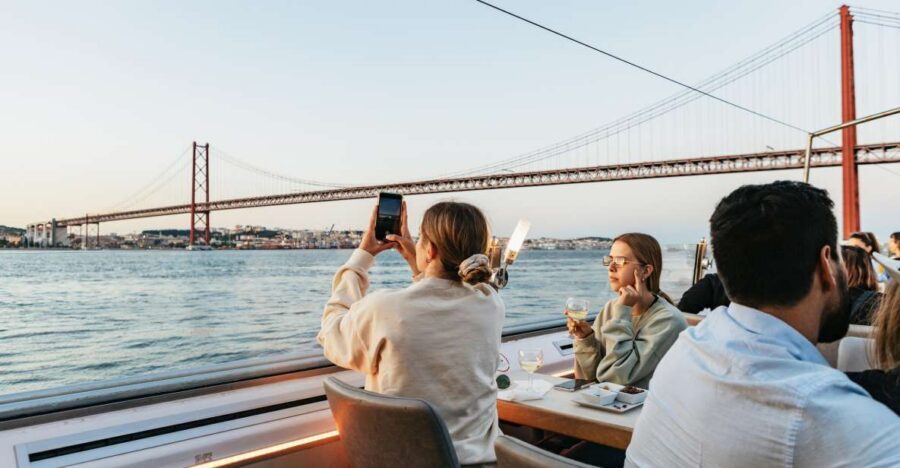
Along the route, you’ll get a couple of “wow, that’s big” bridge moments in Portugal’s capital area. One is the 25 de Abril Bridge, finished in 1966, often compared to the San Francisco–Oakland Bay Bridge concept. It’s one of those structures you’ve seen in photos, but from the road it feels even more dramatic.
Later in the day on the way back, you’ll pass the Vasco da Gama Bridge—opened to traffic in 1998, right before Expo 98, and described here as the longest bridge in Europe, spanning more than 12 kilometers across the Tagus estuary. If you time it well and the light cooperates, you’ll get strong photo angles without turning the day into a photo scavenger hunt.
Cork factory visit near Évora: a calm start before the main sights
Before you get hit with centuries of stone and symbolism, you start at a cork factory near Évora village. This is a simple but smart choice. Évora and the Alentejo region are tied to materials you can touch—cork is part of that local reality—so starting with production helps your brain shift from city sightseeing into “regional understanding.”
What you should expect here is the kind of guided factory visit that gives you a sense of how cork becomes products. Even if you don’t buy anything, it adds texture to the day. Instead of only consuming history as buildings, you’re also seeing a living part of the regional economy.
This stop also works as a pace-setter. It breaks up the drive and helps you feel less “rushed” once you step into Évora’s historic center, where you’ll be walking through tight streets and squares.
Wandering Évora like an open-air museum around Giraldo Square
Évora is often described as a city you can read with your feet—and that’s exactly what this day trip is set up for. You’ll spend time in the Évora district with a walk that includes Giraldo Square and the narrow alleys that connect the squares.
In your head, you can picture Évora in layers. The historic center functions like an open-air museum, and it’s wrapped in walls. That wall-surrounded feeling makes it easier to focus: you’re not constantly crossing modern streets to find the next sight.
The Roman Temple (Diana’s Temple) is the anchor
One highlight you’ll want to plan around is the Roman Temple, also known as Diana’s Temple. It’s described as about 2,000 years old, and it’s placed in a major public square area. If you like architecture that still holds its own across centuries, this is a great point to pause and look around beyond the obvious front view.
The temple is believed to date to around the first century A.D., connected with veneration of Augustus as a god during and after his rule. Even if you’re not a Roman-history nerd, it helps to hear the context so the stones stop feeling random and start feeling intentional.
Add the in-between sights: gardens, Fake Ruins, and aqueduct views
This is not only “big monument, quick photo, next stop.” You’ll also be guided through additional sights in the Évora area, including the public garden, the Fake Ruins, and D. Manuel Palace. These types of stops do something valuable: they give you breathing space and variety, so the day doesn’t become only churches and temples.
You’ll also follow the Água de Prata Aqueduct toward the city or out toward the fields. Seeing an aqueduct in context—the way it reaches through the landscape toward homes and institutions—helps you understand how cities worked before modern plumbing. It’s also a nice moment to get a view that isn’t only inside stone walls.
Igreja de São Francisco: Manueline-Gothic with Portugal’s maritime symbols
If you want one church stop that feels like it belongs to Portugal’s ocean story, make it Igreja De São Francisco.
This building uses Gothic-Manueline architecture—built between 1480 and 1510—and it’s decorated with royal painter work credited to Francisco Henriques, Jorge Afonso, and Garcia Fernandes. That might sound like alphabet soup, but here’s the useful part: the church carries symbols tied to the period when Portugal pushed into maritime expansion.
For example, you’ll see iconography linked to the Order of Christ, along with emblems connected to kings D. João II and D. Manuel I. These aren’t random decorations. They’re visual shorthand for the political and religious power behind Portugal’s voyages.
You’ll also hear a tradition tied to famous Portuguese literature: it’s said Gil Vicente was buried there in 1536. Even if you don’t care who was buried where, the tradition gives your visit a human hook.
Timing-wise, you’re in this stop for about 1 hour 30 minutes. That’s enough time to see it thoughtfully rather than just walking through the main nave and calling it done.
Capela dos Ossos (Chapel of Bones): intense, historically specific, and short enough
The Chapel of Bones is one of those stops that people either love instantly or need a moment to process. It was built in the 16th and 17th centuries and created in the place of a prior dormitory of friars. The idea was blunt and direct: push people to reflect on the brevity of human life.
The chapel is covered in thousands of human bones from graves connected to the convent church and other churches and cemeteries in the city. Around the entrance area, there’s a message described as: We bone that we are here, for your hope.
This isn’t meant to be a casual photo-op. It’s meant to make you slow down and look. Give yourself time to feel uncomfortable in a good way. The emotional effect is part of why this site is famous.
Practical note: admission isn’t included here. If you want to avoid surprises, plan extra for entry, and keep an eye on how much time you spend inside so you don’t feel rushed when your day is still climbing forward.
Sé de Évora cathedral: Romanesque-to-Gothic in just 25 minutes
The Cathedral of Évora (also called Sé de Évora) is listed as a major monument for the transition from Romanesque to Gothic. Construction began in 1186, was consecrated in 1204, and completed in 1250—so you can think of it as a building that grew into its own identity over generations.
What makes it especially visit-worthy here is the structure: it has three majestic ships (three main naves). When a cathedral has a clear plan like that, it’s easier to orient yourself even with limited time.
This stop is short—around 25 minutes—and since admission isn’t included, I’d treat this as a quick “must-see” moment rather than a deep architectural seminar.
Back to Lisbon via Vasco da Gama: finish with a view, not fatigue
After Évora, you’ll return to Lisbon with another 1 hour 20 minutes of driving. This is where that second bridge moment can help your brain switch back from historic city mode to modern-city reality.
The Vasco da Gama Bridge is the finishing highlight described here: opened in 1998, tied to Expo 98, and still presented as Europe’s longest bridge in the region described, crossing the estuary with more than 12 kilometers of span.
If you’re a camera person, you’ll probably want to grab a few shots from wherever the car can pause or from safe roadside angles during the drive. Even if you don’t stop, the structure gives you a clean visual punctuation mark to end the day.
Price and value: what you’re really paying for at $287.09 per person
At $287.09 per person, this day is priced like a true private outing, not a budget group bus. So the value depends on what you want from the day.
Here’s where the math gets friendlier:
- You’re not sharing time with strangers. This is a private tour, meaning only your group participates. That matters if you like asking questions without feeling like you’re interrupting a crowd.
- Pickup is offered, so you’re not spending your morning coordinating your own transport.
- Many of the key stop categories listed have admission ticket free in this plan (like the Évora district time, São Francisco, and the main driving segments). That helps you keep the day’s total cost from ballooning.
- Group discounts are mentioned, which can improve value if you’re traveling with friends or family.
The main “cost add-on” is that Chapel of Bones and Cathedral of Évora have admissions not included. If you’re watching your budget tightly, just keep those in mind when you price out the full day.
Also, your day is flexible. The tour is described as private with timings and stops that can be adapted to your preferences or needs. In practice, that’s valuable when you’re deciding whether you want extra time at Giraldo Square for wandering and photos, or more time along the Água de Prata Aqueduct for views.
Who this tour suits best (and who should consider alternatives)
This is a great fit if you want:
- A comfortable day trip with a guide doing the connecting for you between Roman, medieval, and early modern Évora
- Real walking time in the historic center, not just stopping at a few landmarks and leaving
- A mix that includes both famous sights and the unusual shock value of the bone chapel
It’s also good for first-timers who want Évora’s impact without turning the trip into a logistics project. The drive is long-ish, but the private format reduces stress.
I’d consider another approach if:
- You’re strictly budget-focused and don’t want to pay for any additional entries
- You dislike intense symbolism tied to death (Capela dos Ossos can be a lot)
- You want a very deep, slow museum-style day with long indoor stays (this plan is built more around guided stops than long free-form time)
Should you book this Évora Private Tour with Cork Factory Visit Included?
I’d book it if you like your day trips with shape: a region-start (cork), a city-center core (UNESCO Évora walking), then strong themed stops (São Francisco, Chapel of Bones, and Sé cathedral). The pacing works because you’re not racing from one point to the next without context.
I’d also like your odds if you care about guidance quality. Past guests specifically praised guides such as Paula and Francisco for friendliness, Catarina for being funny and attentive, and Maria Magdalena for sympathy and patience. That’s exactly the kind of person you want when you’re trying to understand why symbols, dates, and architecture matter.
Before you hit book, do two practical checks:
- Confirm you’re comfortable paying separate entry for Capela dos Ossos and Sé de Évora.
- Wear shoes for uneven cobbles and expect real walking in the old center.
If those fit, this is a solid way to see Évora in one full day—without the hassle, and with just enough variety to keep it interesting.
FAQ
How long is the Évora private tour?
The experience is listed as approximately 8 hours.
What does the tour cost?
It costs $287.09 per person.
Is this a private tour?
Yes. It’s a private tour/activity, and only your group participates.
Is pickup included?
Pickup is offered, and the meeting point is near public transportation.
Is mobile ticketing included?
Yes, the tour includes a mobile ticket.
Are entrance tickets included for all stops?
Some admissions are listed as free, while Chapel of Bones and Cathedral of Évora have tickets that are not included.
What are the available tour hours and when does it run?
The opening hours are listed as Monday to Sunday from 8:30 AM to 5:00 PM, for the range 03/23/2023 to 06/18/2026.
FAQ
Is free cancellation available?
Yes. Free cancellation is available up to 24 hours in advance for a full refund.
Is it suitable for most people?
The tour states that most travelers can participate.
Where does the tour take you within Lisbon and Évora?
It includes time in Lisbon and Évora, with stops for the cork factory near Évora, Évora’s historic sights, and churches and viewpoints connected to the area’s key landmarks.
(Note: You’ll see exact timings and ticket details reflected in the day’s included/free vs not-included items.)