A good road trip beats a rushed checklist. This private 2-day tour strings together Portugal’s classics from west-coast villages to Porto’s riverfront, with guided stops and comfortable transport between them. I especially like the way the itinerary mixes standout sights (Óbidos, Alcobaça, Nazaré) with a proper Porto walk, plus the private van with WiFi so you’re not stuck in long public transfers. One thing to plan around: hotel and meals are not included, so you’ll want to budget for lunches and dinner each day.
You’ll start early (7:00 am) and get pickup from your hotel in the Lisbon area. The ride is set up for comfort and timing, and the best part is that you’re traveling as your own group, with your guide steering the day.
In This Review
- Key highlights at a glance
- The Road-Trip Setup: Private Van, WiFi, and a 7:00 am Start
- Day 1 in West-Central Portugal: Óbidos Walls, Alcobaça Tombs, and Nazaré
- Óbidos: a walled town that feels like living set dressing
- Alcobaça: Gothic scale and the story of the two lovers
- Nazaré: waves today, pilgrimage roots underneath
- Ending Day 1 with the Porto Panorama from Vila Nova de Gaia
- Day 2 Walking Circuit: Porto Cathedral, São Bento, Rua das Flores, and Ribeira
- Catedral do Porto area: outside viewing that still matters
- São Bento Railway Station: tiles that turn into a storybook
- Rua das Flores: elegance and shopping streets with a local spine
- Cais da Ribeira: where Porto’s river identity clicks
- Clerigos, Carmo, and Livraria Lello: What Each Stop Really Gives You
- Livraria Lello: plan for exterior photos and optional interior time
- Torre dos Clerigos: a Baroque landmark with a lighthouse past
- Igreja do Carmo and the Hidden House: tiles, scale, and a quirky architectural detail
- A Panoramic Drive Before Fátima: Seeing Porto From the Van Window
- Fátima on the Return: Chapel of the Apparitions and the Two Basilicas
- Value and Cost: What $585.55 per Person Really Buys You
- How the Guide Style Changes the Feel of the Trip
- Who This Private Lisbon–Porto–Lisbon Tour Suits Best
- Should You Book This 2-Day Private Tour?
- FAQ
- What is the start time for this tour?
- Where do you get picked up?
- Is this a private tour?
- What’s included in the price?
- Are hotel and meals included?
- Are attraction tickets included?
- What language is the tour guide?
- What’s the cancellation approach if weather affects plans?
Key highlights at a glance
- Óbidos and Alcobaça first: old walls in Óbidos, then the tombs at Alcobaça’s UNESCO monument.
- Nazaré’s bigger-than-life waves: plus the town’s pilgrimage background before the seaside fame.
- Gaia viewpoints without the hassle: quick stop at Serra do Pilar for the classic Porto panorama.
- Porto walking circuit built for real time: Cathedral area, São Bento tiles, Rua das Flores, then Ribeira.
- Fátima as a calm reset on the way back: Chapel of the Apparitions and the two basilicas.
The Road-Trip Setup: Private Van, WiFi, and a 7:00 am Start
This tour is designed for people who want movement without chaos. You’ll be picked up at your hotel in the Lisbon area, then driven north to Porto with guided stops along the way—and then driven back south the next day with Fátima added at the end. Start time is 7:00 am, so plan for an early morning (and a late-ish first meal).
The transport is an air-conditioned private vehicle with WiFi on board, which matters more than you’d think on a 2-day route like this. You’re not just “getting there.” You’re spending time in the van between stops, so comfort is part of the experience. Also, the tour requires insurance required by Portuguese authorities, which is a quiet but important safety-and-legitimacy detail.
If you’re sensitive to long driving days, the smart move here is to treat the journey as part of the sightseeing plan. Short stops break up the travel rhythm, and the guide keeps the day structured.
Day 1 in West-Central Portugal: Óbidos Walls, Alcobaça Tombs, and Nazaré
Day 1 is all about contrast: medieval lanes, monumental Gothic architecture, then a surf-famous pilgrimage town.
Óbidos: a walled town that feels like living set dressing
Óbidos is the kind of place where you instantly understand why people rave about it. You’ll walk through the walled streets in a town that sits surrounded by hills. The experience here is sensory and visual: old facades, gardens, and the layered look of older civilizations. Your guided time is about 1 hour 15 minutes, and the key goal is not to sprint through. It’s to wander long enough to get the feel of the place.
A small practical note: bring comfortable walking shoes. Óbidos is charming, but you’ll still be on streets and uneven ground.
Alcobaça: Gothic scale and the story of the two lovers
Next up is Alcobaça, centered around Portugal’s biggest love story—at least the famous medieval version. The stop is focused on the UNESCO monument inside the town, with almost 1000 years of history behind it. This is where you’ll see the Gothic structure tied to the tombs of the two lovers.
Timing is about 1 hour, which is enough for a guided look and context without turning it into a museum marathon.
Nazaré: waves today, pilgrimage roots underneath
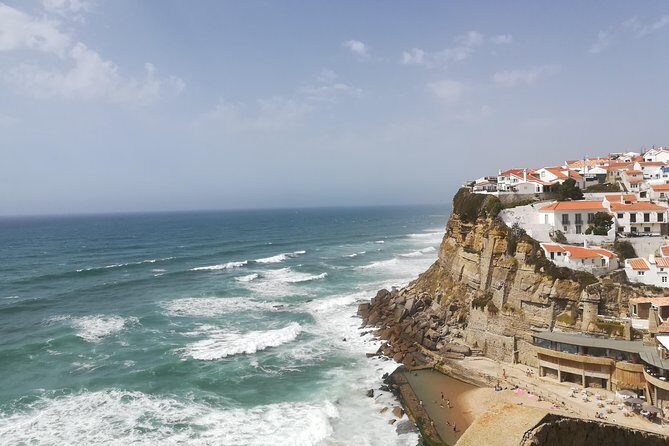
Then you roll into Nazaré, a town known worldwide for its waves. But the payoff is that Nazaré isn’t only about surf. Before that modern reputation, it was a major pilgrimage destination. You’ll get about 1 hour 15 minutes here, and your guide frames it as both seaside drama and spiritual tradition.
If you’re the type who likes understanding the “why” behind a place, Nazaré can be more interesting than you might expect from a first glance.
Ending Day 1 with the Porto Panorama from Vila Nova de Gaia
Day 1 ends with a quick but meaningful shift across the river. You’ll stop in Vila Nova de Gaia (about 15 minutes) for one of the best Porto views from Serra do Pilar, the city-facing side of the Douro.
This is a smart placement in the itinerary. Instead of forcing you to arrive in Porto already exhausted and then immediately walk a long route, the tour gives you a skyline moment first. It sets expectations for what Porto looks like when you’re finally on the riverfront the next day.
Then you’ll be dropped off in your hotel in Porto or Gaia. That hotel drop-off is important: you’ll go into day two rested rather than searching for transport.
Day 2 Walking Circuit: Porto Cathedral, São Bento, Rua das Flores, and Ribeira
Day 2 is built around Porto’s most walkable highlights, with short guided segments and enough breathing room to actually absorb the city.
Catedral do Porto area: outside viewing that still matters
You’ll start at Catedral do Porto, with about 20 minutes focused on the outside while the vehicle is parked. Even from the outside, the cathedral area helps you get oriented fast. Porto has a steep topography, and the start point gives you a sense of how the city layers above the river.
São Bento Railway Station: tiles that turn into a storybook
Next is São Bento Railway Station for about 20 minutes. The famous part is the station’s walls covered with Portuguese historical scenes. You don’t need to be a train fan to enjoy this stop; it’s visual history you can read as you wander.
It’s also a good “reset” break. You get a fixed point to look at, rather than trying to find it in the middle of a busy walk.
Rua das Flores: elegance and shopping streets with a local spine
After that, you’ll stroll Rua das Flores (about 20 minutes). This is a stylish pedestrian street with a history tied to goldsmiths and aristocracy, and today it’s known for restored townhouses, boutiques, and street performers. It’s one of those city links that feels like Porto moving between its levels—upper district to riverfront.
Cais da Ribeira: where Porto’s river identity clicks
Then comes the moment many people came for: Cais da Ribeira (about 45 minutes). This is the iconic waterfront district along the Douro River. You’ll enjoy free time while the guide retrieves the vehicle, so you can do what matters most here: look closely at the colorful medieval houses, watch the river activity, and take in the view of Luís I Bridge. You’ll also see traditional Rabelo boats gliding by.
This is the stop that tends to convert first-time Porto visitors into repeat visitors. The city feels lived-in, not staged.
Clerigos, Carmo, and Livraria Lello: What Each Stop Really Gives You
Porto has three famous sights people often build their day around: Livraria Lello, Torre dos Clerigos, and Igreja do Carmo. This tour treats them as part of a walking circuit, with timing that makes sense and clear guidance on what’s included.
Livraria Lello: plan for exterior photos and optional interior time
You’ll get about 10 minutes at Livraria Lello. The highlight here is the neo-Gothic façade, plus the well-known pop-culture connection that draws big crowds. Because entry lines can be long, the plan is to provide history and best exterior photo opportunities. You can return independently if you want to see the interior.
This is one of the tour’s smartest “time-for-value” decisions. You get the impact without losing your whole afternoon to a queue that can eat up your day.
Torre dos Clerigos: a Baroque landmark with a lighthouse past
Next is Torre dos Clerigos (about 10 minutes, and again not included for admission). You’ll stop at the base of Porto’s most iconic landmark. It’s an 18th-century Baroque tower by Nicolau Nasoni, and it once served as a lighthouse guiding ships navigating the Douro. Even if you don’t climb, the scale is the point here, especially because it’s right near Lello.
Igreja do Carmo and the Hidden House: tiles, scale, and a quirky architectural detail
You’ll also visit Igreja do Carmo for about 10 minutes. The main draw is the church’s blue-and-white tile-covered façade—big in scale and instantly recognizable once you see it. Your stop also includes the “Hidden House,” described as the world’s narrowest residence wedged between two churches.
You won’t get a long visit here, but it’s exactly the kind of quick hit that helps Porto feel like more than postcard scenery.
A Panoramic Drive Before Fátima: Seeing Porto From the Van Window
After the walking circuit, you get a final panoramic drive through Porto before heading south. This part is less about a single building and more about helping you connect the dots.
From the comfort of the private van, you’ll navigate iconic avenues and historic neighborhoods for a visual “big picture.” This is useful if Porto’s hills and river levels leave you a little turned around. By the time you’re back on the road, you’ll understand where you walked and how the city sits.
Fátima on the Return: Chapel of the Apparitions and the Two Basilicas
The last major stop is Fátima (about 1 hour 30 minutes) on the way back to Lisbon. This is a different kind of travel moment—less walking, more reflection.
You’ll visit the Shrine of Fátima, including the Chapel of the Apparitions built on the spot where the Virgin Mary appeared to the three shepherd children in 1917. Then you’ll see the two grand basilicas. The experience is described as a powerful moment with peace and global devotion, and it’s also a nice way to end a packed two days with something slower and more grounded.
If your goal is to see more than just cities, this stop matters. It gives the trip a spiritual and cultural ending that doesn’t feel like an afterthought.
Value and Cost: What $585.55 per Person Really Buys You
At $585.55 per person for a private 2-day route, you’re paying for two things at once: logistics and guidance.
Here’s what you’re getting that usually costs extra if you try to DIY it:
- Private transportation in an air-conditioned vehicle (not shared shuttles)
- Guided tours at the stops
- WiFi on board during driving time
- Insurance required by Portuguese authorities
And what you’re not getting:
- Hotels and meals are not included
- Food and beverages are not included
- Some admissions are not included (Livraria Lello, Torre dos Clerigos, Igreja do Carmo)
So the real value depends on your group size and your comfort level with long planning days. For a couple or a small group, private transport can feel very reasonable because it removes the headache of coordinating drives and timings yourself. For a solo traveler, it can feel pricey, but the benefit is that you’re not losing time on transfers or figuring out intercity routes while still trying to see places like Óbidos and Nazaré in one go.
A practical budgeting tip: since tickets are marked as not included for a few big-name sights, set aside funds for those entries and any lunches/dinners you want during free time.
How the Guide Style Changes the Feel of the Trip
The itinerary is solid on paper. What makes it work in real life is how the guide handles timing and flexibility.
In the feedback you can clearly see a pattern: Rui is praised for logistics and for making guests feel welcome, and Fatima is praised for being friendly, funny, and patient. There’s also a specific kind of reassurance here: when plans had to shift due to weather, they were flexible and still helped the group see the key Porto sights.
That matters for two reasons:
- You’re traveling between cities, so weather can disrupt schedules.
- A private tour is only as good as the person managing your day.
If you like the idea of a smooth plan with room for small adjustments—like optional side stops if time allows—this tour matches that approach.
Who This Private Lisbon–Porto–Lisbon Tour Suits Best
This tour is a strong match if you want:
- A guided, comfortable way to connect Lisbon and Porto without complicated planning
- A mix of small towns (Óbidos, Alcobaça, Nazaré) and major Porto highlights
- An end cap in Fátima instead of returning to Lisbon and feeling like the trip ended too abruptly
It may be less ideal if you want long free hours in Porto to roam independently for most of the day. The schedule is structured, and walking stops are time-boxed. You do get free time at places like Ribeira, but this is still a guided itinerary.
If you’re traveling with family, friends, or a group that prefers one vehicle and shared timing, this private format usually feels like the easiest way to see a lot without constantly changing plans.
Should You Book This 2-Day Private Tour?
If your goal is Lisbon and Porto in a tight window, I’d seriously consider booking. The best reason is simple: you get a complete “Portugal sampler” that doesn’t demand you become a transportation planner. From Óbidos’s walls to Porto’s tile-and-river stops to Fátima’s major shrine sites, the route hits famous places while still leaving you time to actually look.
Book it if:
- You value comfort and guided interpretation
- You like the idea of arriving in Porto with context, not confusion
- You’re okay paying for private logistics rather than DIY planning
- You’re prepared to handle meals and hotel separately
Skip it (or compare alternatives) if:
- You want mostly independent time in Porto for 6+ hours
- You want every admission included in one price
- Your budget is tight for a private, cross-country format
FAQ
What is the start time for this tour?
The tour starts at 7:00 am.
Where do you get picked up?
Pickup is from your hotel name and street address in Lisbon. If your hotel is inside the Big Lisbon area, pickup has no extra charge.
Is this a private tour?
Yes. It’s a private tour, meaning only your group participates.
What’s included in the price?
Included features are air-conditioned vehicle, WiFi on board, private transportation, guided tours, and insurance required by Portuguese authorities.
Are hotel and meals included?
No. Hotels and food and beverages are not included.
Are attraction tickets included?
Many admissions are listed as free, but Livraria Lello, Torre dos Clerigos, and Igreja do Carmo are marked as not included.
What language is the tour guide?
The tour is offered in English.
What’s the cancellation approach if weather affects plans?
The experience requires good weather. If it’s canceled due to poor weather, you’ll be offered a different date or a full refund.